How Much Time Does It Take to Run a Successful Dropshipping Business?
Imagine waking up, checking your store’s orders, and knowing exactly which tasks to tackle first without spending hours figuring out what needs your attention. That’s the power of good dropshipping time management. The reality is, the time for dropshipping varies depending on your products, marketing strategy, and daily responsibilities—but when you know how to manage dropshipping business activities effectively, you can focus on growth, not chaos.
In this guide, we’ll walk you through where to spend your hours to make your store run efficiently and profitably.

The Real Time for Dropshipping: Products, Sourcing and Fulfillment
Choosing, testing, and delivering products form the core of every dropshipping operation. These activities significantly shape the weekly time for dropshipping, especially in the beginning.
Finding Winning Products: Your First Step in Dropshipping Time Management
Finding hit products consistently is the engine driving business growth, yet it remains a quintessential time investment characterised by high input and high returns. One of the most time-intensive early tasks is finding winning products. A profitable item must solve a clear problem, appeal to a defined audience, and offer healthy margins. Expect to spend several hours per week:
- Researching trending products across TikTok, Instagram, Google Trends, and marketplaces
- Analyzing competitors' ads and store layouts
- Comparing suppliers and production quality
- Running small-budget tests to validate performance
This is a time-consuming stage because you must sift through a great deal of noise to find the signal. But once successful, a hit product can generate months or even years of stable income, meaning that every minute invested upfront yields an exceptionally high return when averaged out. A good benchmark is testing at least 2–3 products weekly until you identify consistent performers. As your experience grows, dropshipping time management becomes easier—you'll know what signals to look for and how to skip weak products quickly.
Sourcing and Vetting Suppliers
Suppliers are your silent partners between you and your customers; choosing the right one can save you countless hours dealing with after-sales issues. Even the strongest product can fail with the wrong supplier. Proper vetting protects your brand reputation and saves countless support hours in the future. This step includes:
- Requesting sample units
- Testing shipping speed and packaging
- Evaluating message responsiveness
- Checking refund and replacement policies
Taking the time to test samples personally is essential, as images and descriptions can be misleading. The physical product, however, conveys your brand message to customers through every detail—from quality to packaging. Communicating with suppliers typically takes 1–3 hours per week. Good communication habits also help you manage dropshipping business operations more smoothly as sales scale.
Managing Order Fulfillment and Shipping
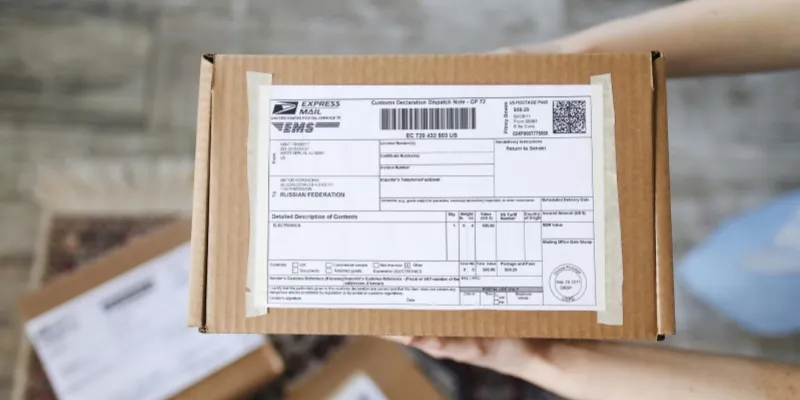
Order processing is the lifeblood of the business, requiring a steady rhythm. However, as order volumes increase, manual operations can quickly become a time-consuming burden. Order fulfillment is a daily task, though the time requirement varies depending on sales volume. If done manually:
- Confirming orders
- Sending order details to suppliers
- Checking tracking
- Communicating exceptions
This can take 30–90 minutes per day. As you grow, tools that automate dropshipping workflows can reduce this to a few minutes a day.
The Time for Dropshipping Store Design: Building a Store That Converts
Your store design determines whether curious visitors turn into paying customers. A high-converting site can dramatically reduce advertising costs and customer service load.
Web Design & Usability
Before you invest heavily in driving business, a trustworthy shop is the cornerstone for converting sales. Investing time in this builds an efficient "conversion vessel" for all subsequent marketing activities. Creating a clean, trustworthy shopping experience requires attention to:
- Navigation
- Mobile responsiveness
- Fast loading speeds
- Clear product categorization
Building a store from scratch may take 8–15 hours the first time. After that, weekly updates may only require 1–2 hours.
Conversion Rate Optimization (CRO)
Once your store is live, improving conversion rates is an ongoing process. This includes:
- Refining your value proposition
- Optimizing banner images
- Simplifying checkout
- Improving trust elements, like reviews or badges
CRO typically takes 1–3 hours weekly, but even small changes can increase revenue significantly, improving your overall dropshipping time management.
Product Page Optimization
Your product page is your silent salesperson, which has to perform the multiple tasks of introducing the product, building trust, overcoming objections, and sealing the deal. Because product pages drive purchases, they deserve special attention. Tasks include:
- Rewriting descriptions
- Updating visuals
- Adding benefits-oriented copy
- Ensuring high-quality lifestyle photos or videos
Please remember that customers don't buy product features—they buy the experience or solution the product provides. An effective product page should focus on the latter and proactively address potential customers' concerns.

The Time for Marketing: Finding and Keeping Customers
Marketing is often the largest ongoing time investment. Even top stores must continually attract new audiences.
Doing Content Marketing and SEO
Content marketing is a classic “slow and steady wins the race” strategy, requiring patience to sow seeds in the early stages but yielding sustained returns of targeted business-relevant traffic without additional cost. Long-term SEO strategy includes:
- Writing blog posts
- Building backlinks
- Optimizing metadata
- Creating keyword-targeted content
This typically takes 2–5 hours weekly but pays dividends with free traffic over time.
Growing Your Social Media Presence
Social media is not a billboard, but rather a platform for genuine dialogue to build authentic relationships within your community. Short-form video platforms have made organic marketing faster, but still require consistent effort:
- Filming short videos
- Posting 3–5 times weekly
- Engaging with comments
- Collaborating with influencers
This usually takes 30–60 minutes per day.

Running Paid Ads
Paid advertising allows you to trade money for time and certainty, enabling you to swiftly test and directly understand what resonates with your target audience. Paid advertising requires frequent monitoring, especially in the testing phase:
- Creating and launching ads
- Tracking performance
- Adjusting bids and targeting
- Testing creatives
Expect 1–3 hours daily during product testing and about 30 minutes daily once campaigns stabilize. This process is crucial when learning how to manage dropshipping business tasks effectively.
The Time for Dropshipping Customer Service: Building and Maintaining Customer Relationships
Customer support is essential for long-term success. A business with poor dropshipping customer service will struggle with chargebacks, refunds, and negative reviews.
Managing Daily Customer Inquiries and Issues
Customer service is the "passive" component of time investment—customer actions trigger it, yet its efficiency is entirely determined by your system design. Depending on your order volume, customer inquiries may include:
- Tracking questions
- Delivery delays
- Product complaints
- Payment questions
The reason this aspect proves difficult to manage is that enquiries are both random and varied. The key to efficiency lies not in typing faster, but in minimising the need for customer queries at source through comprehensive FAQs, clear logistics policies, and proactive order updates. This takes 30–90 minutes per day for small stores, and significantly more for larger ones unless you use automation or outsourcing.

Processing Returns and Managing Refunds
Returns processing presents a hidden opportunity to build trust; a generous and seamless returns process can actually enhance long-term customer loyalty. Return handling includes:
- Reviewing evidence
- Contacting suppliers
- Approving or rejecting requests
- Issuing refunds
This may take 1–2 hours weekly.
Using Tools for Efficient Customer Support
To reduce support hours, many owners use:
- Helpdesk apps
- Automated email replies
- Chatbots
- Knowledge bases
Investing in a well-structured help centre not only reduces customer service workload immediately but also enables your customers to access instant assistance at any time, thereby enhancing the overall experience. These tools significantly streamline how you manage dropshipping business obligations and free up time for growth.
Saving Time in Dropshipping
As you scale, efficiency becomes crucial. This section focuses on practical strategies to protect your time and improve workflow.
Manage Dropshipping Business Operations Through Smart Automation
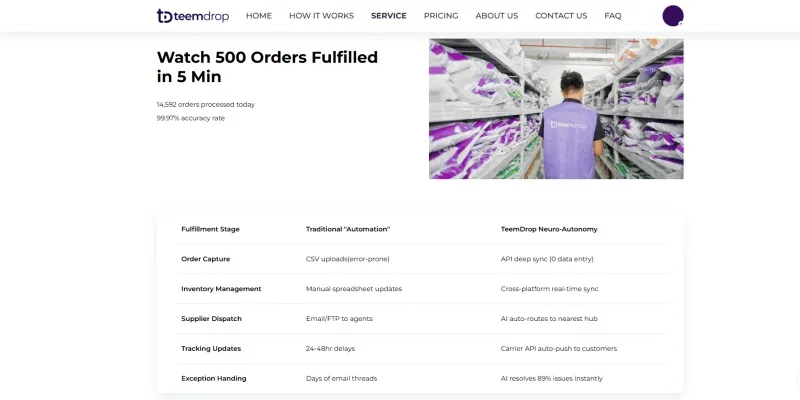
Order fulfillment is one of the easiest tasks to automate, and this is where platforms like TeemDrop make a real difference. With Teemdrop, you can:
- Sync orders to suppliers
- Automatically send customer tracking
- Reduce manual spreadsheet work
TeemDrop’s automatic fulfillment system saves hours every week and improves order accuracy, making dropshipping time management far more efficient and stress-free.
Create Simple Systems
Systems help you develop a predictable weekly workflow. Examples include:
- Daily checklists
- Supplier communication templates
- Standard operating procedures for returns
- Fixed schedule for marketing tasks
These systems make the time for dropshipping more manageable over the long term.
Outsource the Rest
Outsourcing can include:
- Customer support agents
- Video editors
- Ad management specialists
- Copywriters
Begin outsourcing those time-consuming tasks with clear standards that contribute little to your business's core value. Calculate the value of your time per hour; if the outsourcing cost falls below this figure, it represents a wise investment. Delegating repetitive tasks often adds 5–10 extra hours of free time each week—time you can reinvest into scaling the business.
Beyond Time Management: How to Invest Saved Time Wisely
Once your core operations are automated or delegated, the next step is to reinvest your time into strategic activities.

Find and Test New Products
Successful product testing is not merely about identifying bestsellers; it is a dynamic process that spans the entire product lifecycle. Through continuous validation and new product launches, we not only drive product iteration but also enhance the competitiveness and profitability of our stores.
Improve and Optimize Your Ads
Analyzing ad data helps you:
- Identify winning creatives
- Lower cost per acquisition
- Scale profitable campaigns
In addition to monitoring click-through rates and conversion rates, conducting an in-depth analysis of audience overlap frequency and ad fatigue levels can help you refresh your advertising creative in good time before competition intensifies. Even 30 minutes daily can drastically improve results.
Improve Your Product Pages
High-performing product pages evolve over time. By updating visuals, tightening product descriptions, and improving credibility elements, you increase conversions and reduce future support issues.
Conclusion
Running a profitable dropshipping store demands steady effort, but smart systems and the right tools turn chaos into scalable growth. As you gain momentum, the real game-changer is partnering with a platform that handles the heavy lifting. TeemDrop, our AI-powered global fulfillment engine, automates sourcing, syncs orders in real-time, and delivers in 5-10 days to over 200 countries—no monthly fees, just transparent pricing and 24/7 support. Trend insights and smart inventory keep you ahead without guesswork. Focus your saved hours on testing winners and scaling ads, while TeemDrop ensures flawless execution. Dropshipping isn’t passive, but with TeemDrop streamlining fulfillment and logistics, it becomes a lean, high-margin machine. Start optimizing today—your next breakthrough is one automated workflow away.
FAQs
What tasks should I automate first?
Start by automating order fulfillment, tracking updates, and basic customer support responses. These tasks consume the most time and are the easiest to streamline with tools.
How long until I start seeing sales?
Most beginners see initial sales within 2–6 weeks, depending on product selection, advertising skills, and store optimization.
How can I balance marketing and fulfillment efficiently?
Automate fulfillment and create a weekly schedule that dedicates fixed time blocks to ads, content creation, and customer support. This helps maintain a steady workflow without burnout.