How to Start Dropshipping on Amazon in 2026: Build the Right System From Day One
If you’re googling "how to start dropshipping on Amazon" in 2026, you’ve probably seen the same 2019-style tutorials a hundred times: open an account, find a cheap supplier, copy listings, run some ads, profit. That used to work, but it barely does now—and it definitely won’t keep your account alive past the next policy sweep.
The game has changed from "can you make it work" to "can you survive long-term." Based on observations in seller communities, 99% of suspensions aren't due to bad products or lack of reviews — they stem from a collapsed fulfillment system.
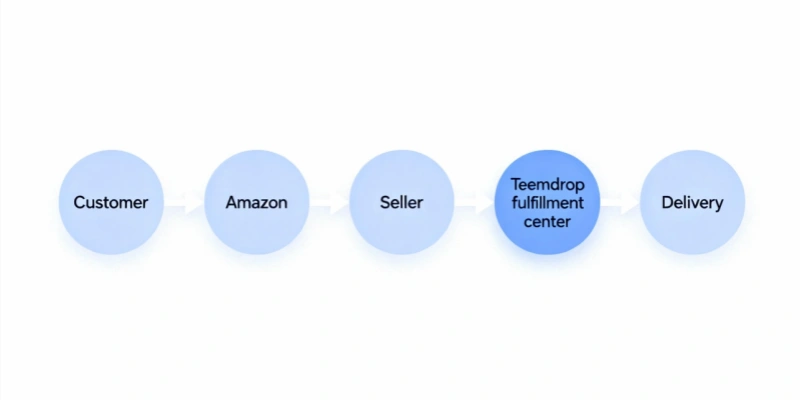
This guide is built on one core idea: in 2026, the real starting point is a rock-solid fulfillment backbone. Currently, for thousands of active sellers, that backbone is Teemdrop.
Why the "Old Way" of Amazon Dropshipping Is Dead
A few years ago, Amazon dropshipping was simpler. Sellers listed products, forwarded orders to suppliers, and focused mainly on traffic and pricing.
That approach no longer works.
Amazon has become far more sensitive to fulfillment quality, delivery consistency, and customer experience. At the same time, competition has increased, margins are tighter, and tolerance for operational mistakes is significantly lower.
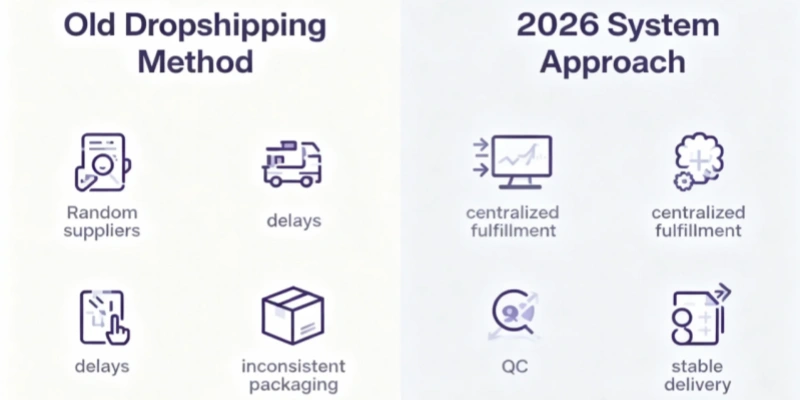
The "old way" was reactive:
- Fix issues after customers complain
- Change suppliers when something breaks
- Think about compliance only after warnings appear
In 2026, Amazon expects sellers to be proactive. If your fulfillment process is shaky or disconnected, the platform detects it faster than ever — and penalties come quickly.
What Amazon Actually Cares About in 2026
Customer Experience > Seller Method
Contrary to popular belief, Amazon does not care whether you manufacture products, hold inventory, or use dropshipping. What Amazon cares about is the end result.
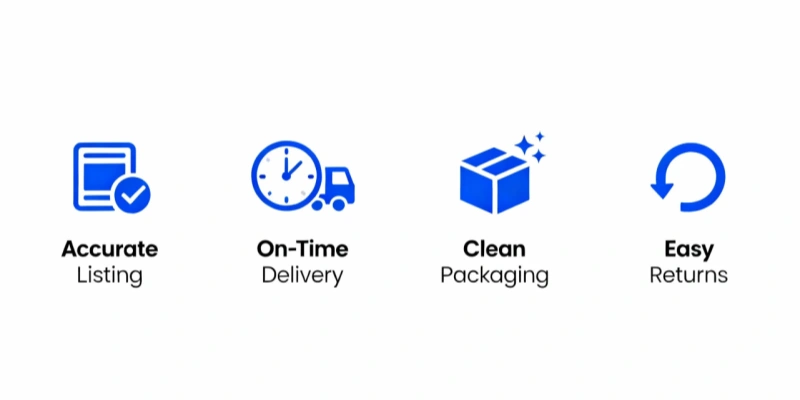
From Amazon’s perspective, every order should feel predictable:
- Accurate product descriptions
- On-time delivery
- Clean packaging
- Smooth returns and support
If those expectations are met, your business model is irrelevant. If they aren’t, your account is at risk — regardless of how you source products.
Uncontrolled Supply Chains = Account Risk
The most common reason new dropshipping sellers fail on Amazon isn’t low sales — it’s loss of control.
When listings, suppliers, shipping, and support all operate independently, problems compound:
- Suppliers change shipping times without notice
- Product packaging conflicts with Amazon policies
- Inventory mismatches lead to cancellations
- Customer complaints escalate into account warnings
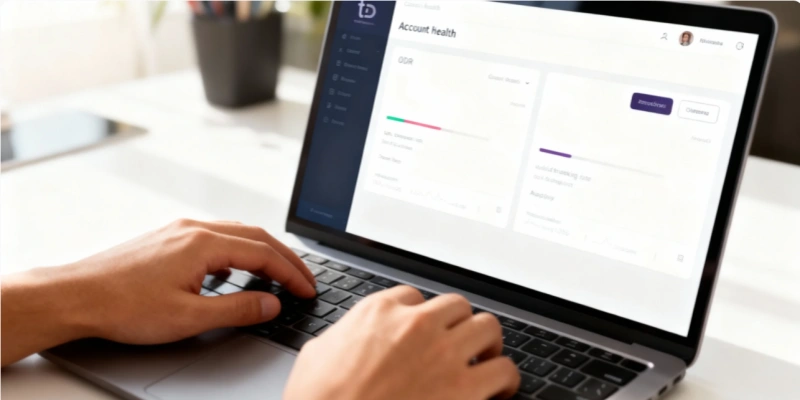
Amazon holds the seller accountable for all of this. Without a controlled fulfillment structure, even small issues can snowball into serious account health problems.
Is Amazon Dropshipping Legal in 2026?
Yes — dropshipping on Amazon is still completely legal in 2026, but only if you play by the rules. Amazon is fine with it as long as:
- You are the seller of record
- All customer-facing materials identify you, not the supplier
- You control the fulfillment and customer experience
Unsupervised, random vendors almost always violate these rules without you even realizing it. That's why fulfillment control is no longer just an operational matter-it's a direct compliance requirement. The safest approach is to centralize and lock down the compliance process from day one.
Real Costs of Amazon Dropshipping in 2026
Most new Amazon sellers only consider two numbers:
product cost + shipping cost.
But the real expenses show up somewhere else:
- Customer service time
- Refunds and return labels
- Delays caused by inconsistent suppliers
- Negative reviews that hurt conversions
- Account health risks from late deliveries
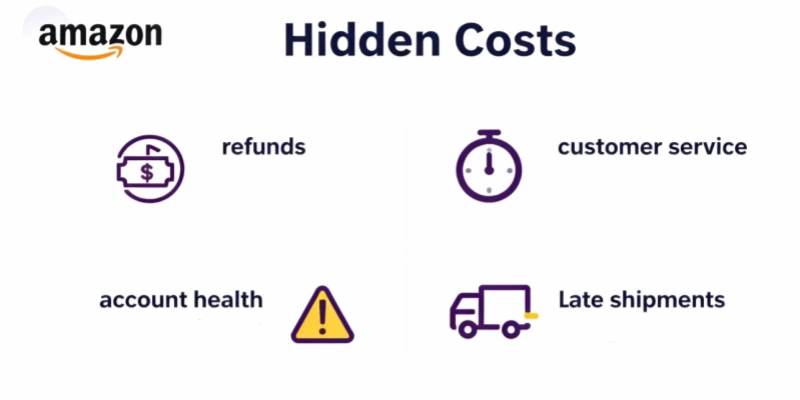
These "invisible costs" add up fast — sometimes faster than the actual product cost itself. And this is why the cheapest supplier often ends up being the most expensive. Low prices usually come with:
- Weak or no Quality Control
- Unpredictable delivery times
- Uncontrollable inventory changes
Each small issue turns into a cost: more customer messages, higher refund rates, and a greater chance of Amazon flagging your account for performance risks.
This is where Teemdrop changes the equation. It's built-in QC intercepts quality issues before they reach customers, while centralized fulfillment ensures consistent shipping times and packaging. This reduces those small but costly problems that trigger complaints or late-delivery strikes.
For Amazon sellers, a controlled and reliable fulfillment system isn’t just operational convenience — it’s what keeps real costs down and protects long-term profitability.
Step-by-Step: Start Amazon Dropshipping the Right Way
Most guides start with product research. But in Amazon’s system, that’s actually the least important first step. Successful sellers begin with something far more fundamental:
a fulfillment setup that Amazon can count on.
This is where Teemdrop changes the order of operations. Instead of "find a product → find a supplier → hope it works," the process becomes structured, predictable, and compliant from Day One.
Step 1: Start With Fulfillment, Not With Products
Before choosing anything to sell, it’s worth asking:
"If I sell this, can I fulfill it consistently?"
Most account issues on Amazon don’t come from bad products — they come from unstable fulfillment: late deliveries, inconsistent packaging, or inventory surprises.
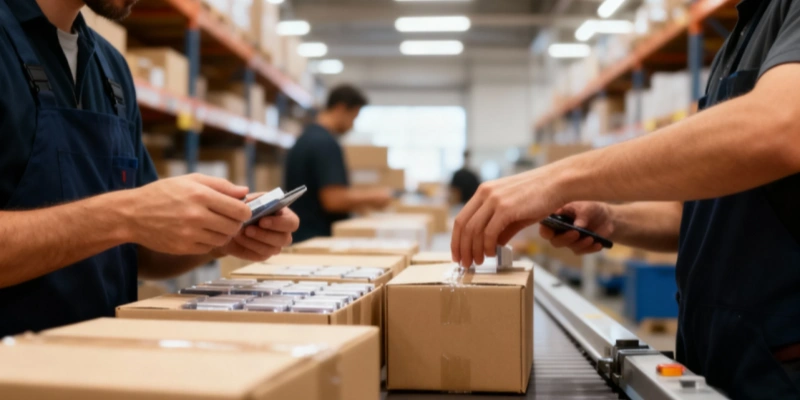
Teemdrop solves this upfront. It acts as the fulfillment center of your business, giving you a fixed workflow for storage, QC, packaging, and delivery before you even list your first item. Once the fulfillment system is stable, choosing products becomes easier — because you already know what you can deliver well.
Step 2: Source Products That Fit Amazon’s Rules
Instead of chasing "viral" items, Amazon dropshipping works better when you choose fulfillment-friendly products:
Teemdrop's catalog naturally leans toward this type of product, and its sourcing flow favors items that are easier to maintain long-term. This lets you focus on listings and pricing without worrying about operational surprises.
Step 3: Connect Listings to a Controlled Fulfillment Process
A common mistake is assuming that whatever your listing promises, your supplier will simply follow.
But Amazon doesn’t evaluate suppliers —
it evaluates you.
This is why a controlled fulfillment process matters. With Teemdrop, the delivery times, QC standards, and packaging rules don’t change from order to order. Your listing commitments match your actual execution, which is exactly what Amazon wants to see.
Step 4: Manage Orders, QC, and Customer Experience in One Place
Running Amazon dropshipping across multiple suppliers quickly becomes messy —
different shipping windows, different communication channels, different return processes.
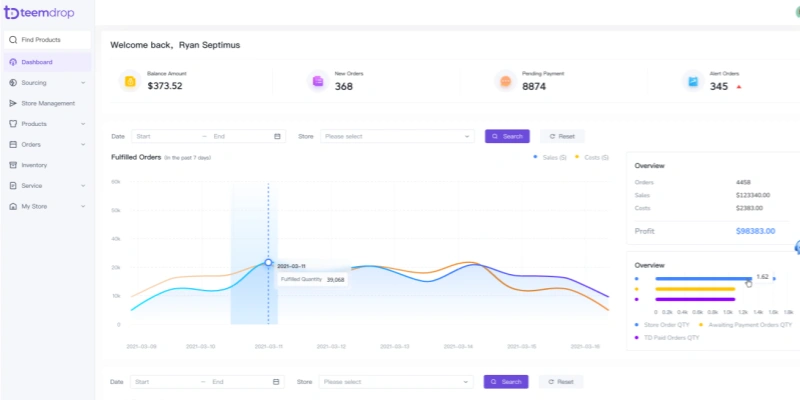
Teemdrop centralizes the entire flow: orders, QC photos, dispatch timelines, Auto Fulfill and issue handling all run through the same system. This keeps operations consistent and removes a huge amount of mental load from the seller. Instead of firefighting daily problems, you manage the business from one dashboard.
Step 5: Operate With Account Health as the Primary KPI
Scale doesn't come from adding more products —
it comes from keeping your account healthy.
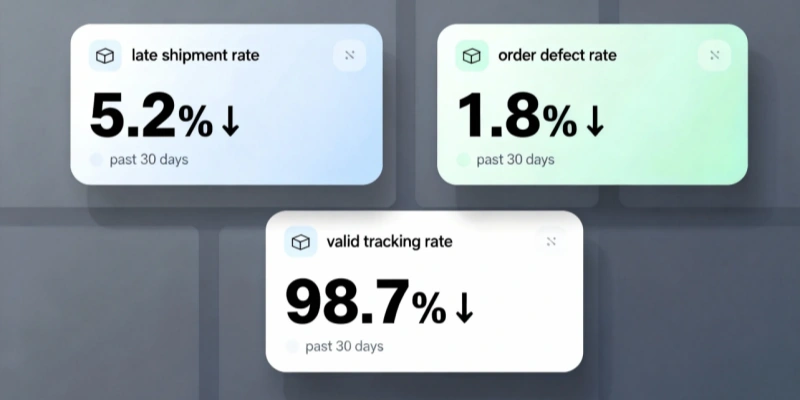
Sellers using Teemdrop typically find it easier to maintain stable metrics because:
-
QC reduces defect-related complaints
-
centralized fulfillment prevents late shipments
-
consistent packaging reduces returns
-
fewer moving parts = fewer unexpected issues
With the right system behind you, Amazon dropshipping stops being a guessing game and starts becoming a repeatable operation — and that’s where Teemdrop makes the biggest difference.
How Teemdrop Solves This From Day One
Most beginners hear: "Just find products, list them, run ads, get sales." Then the first orders come in—and the real nightmare begins.
End Operational Chaos for Beginners
99% of new sellers fall into the same three deadly traps:
-
Product info doesn’t match what actually ships. You list 128GB, the supplier sends 64GB → instant A-to-Z claim, account health drops the same day.
-
Suppliers go rogue, and your SLA collapses. "Out of stock," "shipping delay," "forgot to ship"—you have zero control, late shipment rate spikes, and Amazon sends warnings.
-
Every single complaint chips away at account health. Wrong return address, late tracking, negative review → a few of these, and performance metrics never recover.
Tutorials say "start messy, fix later." On Amazon, "later" usually never comes—your account dies first.
One Compliant Fulfillment Source
The right way to start isn’t "grab any 1688 supplier and pray." It’s to own fulfillment from Day 1.
Teemdrop doesn’t give you fancy "efficiency" features at the beginning. It gives you the three things that actually keep new sellers alive:
-
Control: Orders are pulled in real time. You review and release them. Suppliers never see your customers or touch your listings.
-
Visibility: One dashboard shows every parcel from pickup to final delivery—no more guessing where the package is.
-
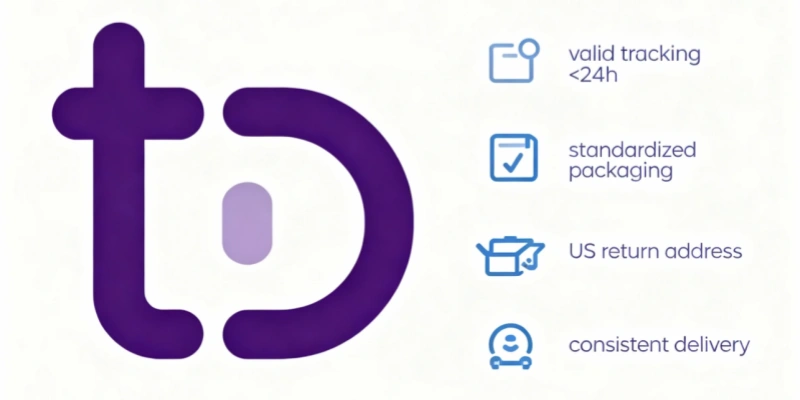
Compliance safety: Valid tracking uploaded in <24h, U.S. return address ready, late shipment rate stays under 0.5% from the very first order. This is achieved through a network of local fulfillment centers that ensure fast, policy-compliant shipping within key markets.
Using Teemdrop isn’t about scaling faster later. It’s about never experiencing account suspension in the first place.
Real Day 1 sequence for new sellers: Open store → Connect Teemdrop → List products → Get sales → Ship 100% compliantly → Reinvest profits into ads and optimization.
Kill the part that kills most beginners—before it ever gets the chance. Everything after that is just about making more money.
When Amazon Dropshipping Becomes Easier
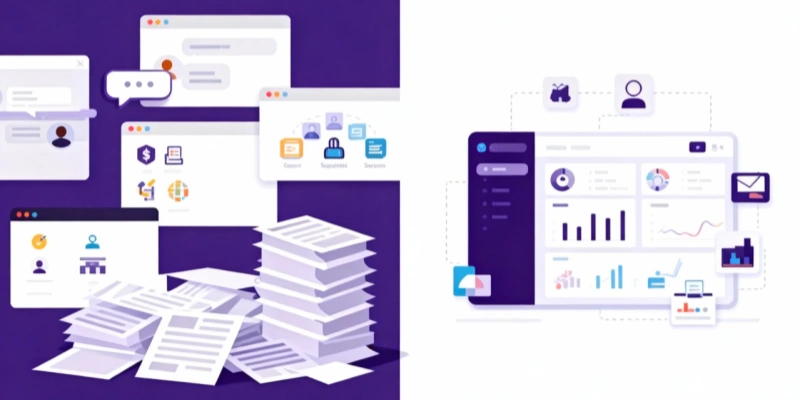
Amazon dropshipping doesn’t magically become simple — it becomes clearer.
Once systems are in place:
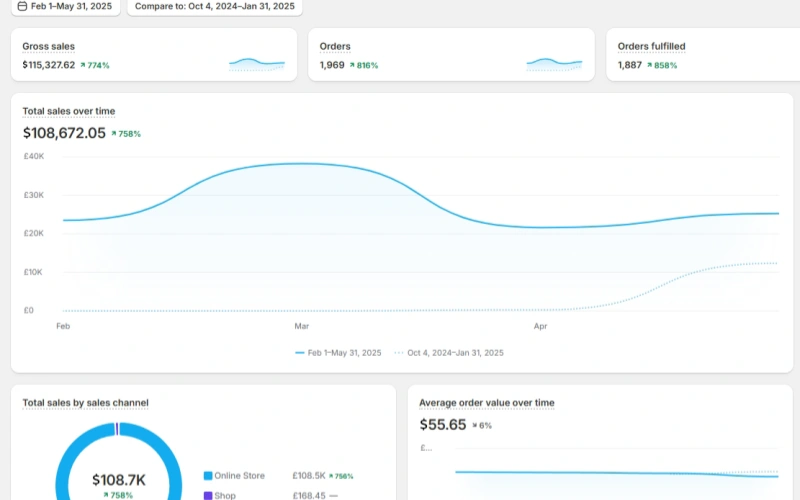
Most successful sellers reach this stage not by working harder, but by working with fewer unknowns. With a foundation that supports both local fulfillment for speed and global delivery for reach, you can expand your market confidently.
FAQ
Can beginners start Amazon dropshipping using Teemdrop?
Yes. In fact, beginners often benefit the most from starting with a structured fulfillment system instead of patching together solutions later.
Do I still need individual suppliers?
Suppliers still matter, but managing them through a centralized system reduces risk and complexity significantly — especially on Amazon.
Is Teemdrop suitable for small order volumes?
Yes. Starting small with a stable system is often safer than scaling quickly with poor foundations.
Conclusion
Starting Amazon dropshipping isn’t the hard part—doing it sustainably is. Many new sellers waste time fixing avoidable problems: inconsistent suppliers, missing visibility, and compliance risks that build up over time. These issues usually come from the structure, not the strategy.
Teemdrop offers a cleaner starting point. Not an add-on, but a stable foundation that keeps your catalog accurate, fulfillment compliant, and operations predictable. If you’re exploring how to start dropshipping on Amazon, begin with a framework designed for long-term health instead of short-term shortcuts. When the base is solid, everything you build becomes easier to grow.