Advantages and Disadvantages of Dropshipping in 2026: Is It Still Worth It?
Starting a successful ecommerce business begins with choosing the right business model. Understanding the advantages and disadvantages of dropshipping helps you decide whether it's the right fit for your goals. While many entrepreneurs are attracted by its low startup costs and flexibility, others wonder whether dropshipping is a good business in today's competitive market.
In this guide, we'll explain the key benefits and challenges of dropshipping, share practical tips to reduce common risks, and show how TeemDrop helps sellers build more reliable and scalable ecommerce businesses through AI-powered sourcing, quality inspection, branding, and global fulfillment.
Quick Answer
The advantages and disadvantages of dropshipping mainly involve flexibility and control. Benefits include low startup costs and easy scalability, while challenges include supplier dependence and competition. With reliable sourcing and fulfillment partners like TeemDrop, many of these challenges can be reduced.
What Is Dropshipping?
Dropshipping is an ecommerce fulfillment model where you sell products without purchasing inventory in advance. Instead of storing products yourself, your supplier prepares and ships every order directly to your customer after a purchase is made.
The process is simple:
Customer → Your Online Store → Supplier → Customer
Because sellers don't need warehouses or inventory, dropshipping has become one of the easiest ways to launch an online business with relatively low upfront investment.
However, low investment doesn't mean effortless success.
Today's successful sellers focus on choosing reliable suppliers, creating professional brands, and providing excellent customer experiences instead of simply listing popular products.
According to Shopify, dropshipping removes many operational barriers for new entrepreneurs, allowing them to focus more on marketing and business growth rather than inventory management.[1]

Is Dropshipping Still Worth It in 2026?
After years of headlines claiming that dropshipping is "dead," many entrepreneurs still ask is dropshipping worth it in 2026, especially as competition continues to increase.
The reality is quite different.
The ecommerce market continues to expand globally, and flexible fulfillment models remain attractive for both new and experienced sellers.[2] What's changed isn't the business model itself—it's what customers expect.
Today's shoppers want:
- Faster shipping
- Better product quality
- Transparent communication
- Reliable customer support
- Trustworthy brands
That means success depends less on selling trending products and more on creating a complete shopping experience.
This shift also explains why many entrepreneurs ask, "Is dropshipping a good business?"
The answer is yes—if you're willing to treat it like a long-term business instead of a short-term opportunity.
Platforms like TeemDrop help sellers meet these new expectations through AI-powered sourcing, verified suppliers, quality inspection, global fulfillment, and branding services that improve customer satisfaction while reducing operational complexity.
The Biggest Advantages of Dropshipping
Understanding the advantages of dropshipping isn't just about identifying its strengths—it's about recognizing why millions of entrepreneurs continue choosing this business model every year.
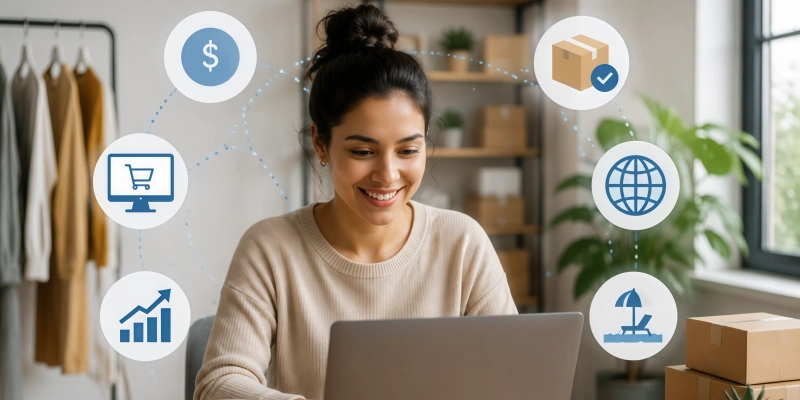
Rather than listing isolated benefits, it's easier to group the major dropshipping advantages into four categories that directly influence business growth.
Financial Benefits
One of the biggest reasons entrepreneurs choose dropshipping is its affordability.
Unlike traditional retail, you don't need to invest thousands of dollars in inventory before making your first sale. Products are purchased only after customers place orders, significantly reducing financial risk.
Some of the biggest financial advantages include:
- Low startup costs
- No warehouse expenses
- No inventory storage fees
- Better cash flow
- Lower operational overhead
Many beginners search for free dropshipping business opportunities because they're looking for businesses with minimal upfront investment. While every successful ecommerce business still requires spending on marketing and website development, dropshipping removes one of the largest startup expenses—buying inventory.
This makes it easier to test different products and niches before committing larger budgets.
Operational Benefits
Running a traditional ecommerce business often means managing inventory, packing orders, and handling shipping logistics.
Dropshipping removes much of that complexity.
Suppliers handle fulfillment while sellers focus on growing their businesses.
The main operational benefits include:
- No inventory management
- Easier order fulfillment
- Faster product launches
- Flexible product testing
- Simplified daily operations
TeemDrop streamlines this process even further by integrating AI sourcing, supplier management, quality inspection, inventory synchronization, and global fulfillment into one platform.
Instead of switching between multiple software tools, sellers can manage their operations from a single dashboard.
Business Growth Benefits
Another major benefit of dropshipping is scalability.
Traditional retailers often need additional warehouse space, inventory investment, and employees before expanding.
Dropshipping allows businesses to grow more efficiently because suppliers handle storage and fulfillment.
Growth opportunities include:
- Expanding into international markets
- Testing new product categories
- Launching seasonal collections
- Quickly replacing low-performing products
- Managing multiple ecommerce stores
According to Grand View Research, the global dropshipping market continues to grow as ecommerce adoption increases worldwide.[2]
Meanwhile, Statista reports that global retail ecommerce sales continue to rise year after year, providing a larger customer base for ecommerce businesses of all sizes.[3]
With AI-powered sourcing and verified suppliers, platforms like TeemDrop help sellers scale more confidently while maintaining product quality and operational efficiency.
Lifestyle Flexibility
One of the most recognized advantages of dropshipping is flexibility.
Because you don't manage physical inventory, you can operate your business from almost anywhere with an internet connection.
This flexibility allows entrepreneurs to:
- Build a side business
- Work remotely
- Manage multiple stores
- Travel while running a business
- Focus more on strategy than logistics
However, flexibility shouldn't be confused with passive income.
Successful ecommerce brands continuously optimize their websites, analyze customer data, improve marketing campaigns, and strengthen customer relationships.
The businesses that succeed in 2026 are the ones that combine operational efficiency with long-term brand building.
Advantages at a Glance
| Advantage |
Business Value |
| Low startup costs |
Lower financial risk |
| No inventory management |
Simplified operations |
| Easy product testing |
Faster market validation |
| Flexible business model |
Work from anywhere |
| Easy scalability |
Grow without large infrastructure investments |
The Biggest Disadvantages of Dropshipping
While the advantages of dropshipping make it an attractive business model, understanding the disadvantages of dropshipping is equally important. Most challenges aren't deal breakers—they simply require better planning and the right business partners.
Supplier Dependence
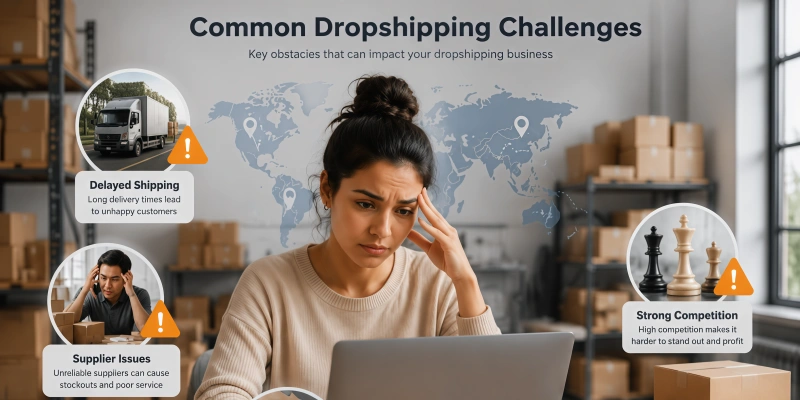
One of the biggest dropshipping cons is relying on suppliers to fulfill every order.
If a supplier runs out of stock, ships an incorrect product, or delivers late, your customers associate those problems with your brand.
This is one of the most common risks of dropshipping, especially for new sellers working with unreliable suppliers.
How to reduce this challenge
Choose verified suppliers instead of simply selecting the lowest price. TeemDrop connects sellers with trusted manufacturers and provides dedicated sourcing support, helping improve product availability and fulfillment reliability.
Limited Control Over Product Quality
Another major downside of dropshipping is limited quality control.
Since products are shipped directly from suppliers, sellers often don't inspect items before customers receive them. This can lead to damaged products, inconsistent quality, and unnecessary returns.
This is also why some people ask, "Why is dropshipping bad?"
In reality, dropshipping isn't the problem—poor supplier management is.
How to reduce this challenge
Quality inspection before shipping can dramatically improve customer satisfaction. TeemDrop offers professional product inspection services to help sellers reduce defects and maintain consistent product quality.
Strong Competition
Because dropshipping is easy to start, competition is naturally higher than in many traditional businesses.
Selling identical products without a unique brand often leads to price wars and lower customer loyalty.
Instead of competing on price, successful sellers focus on:
- Building a recognizable brand
- Creating original product content
- Offering better customer service
- Delivering faster shipping
- Improving the overall shopping experience
Customers are far more likely to return to brands they trust than stores selling the cheapest products.
Lower Profit Margins
When comparing the pros and cons of dropshipping, profit margins are often discussed.
Since suppliers handle warehousing and fulfillment, product costs can be higher than wholesale purchasing.
However, successful stores improve profitability by:
- Selling higher-value products
- Increasing average order value
- Offering bundles and upsells
- Building repeat customers
- Working directly with manufacturers
Long-term success comes from improving customer lifetime value rather than relying on a single sale.
Disadvantages at a Glance
| Challenge |
How to Minimize It |
| Supplier dependence |
Work with verified suppliers |
| Product quality issues |
Use quality inspection services |
| Strong competition |
Build a unique brand |
| Lower profit margins |
Increase customer lifetime value |
How to Reduce the Risks of Dropshipping
Although every ecommerce business faces challenges, most risks of drop shipping can be reduced with the right strategy.
Here are five best practices followed by successful sellers:
Choose Reliable Suppliers
Reliable suppliers improve product quality, shipping speed, and customer satisfaction.
Build a Brand, Not Just a Store
Invest in your brand through private label dropshipping, custom packaging, and valuable content. Strong branding creates trust and encourages repeat purchases.
Focus on Customer Experience
Quick responses, transparent shipping updates, and excellent after-sales support help build long-term customer relationships.
Make Decisions Based on Data
Track product performance, customer behavior, and conversion rates instead of relying on guesswork. Data-driven decisions lead to more sustainable growth.
Use an Integrated Fulfillment Platform
Managing sourcing, fulfillment, inventory, and logistics across multiple tools can quickly become inefficient without an AI-powered dropshipping warehouse to streamline operations. An integrated platform simplifies daily operations and makes scaling much easier.
Why More Sellers Choose TeemDrop
Many dropshipping platforms focus on only one part of the business, such as product importing or order automation.
TeemDrop takes a different approach by providing a complete ecommerce infrastructure that supports sellers through dropshipping product sourcing and end-to-end delivery services.
| Common Challenge |
How TeemDrop Helps |
| Finding reliable suppliers |
AI-powered sourcing and verified manufacturers |
| Product quality concerns |
Professional quality inspection before shipment |
| Slow shipping |
Global fulfillment and overseas warehouses |
| Weak brand recognition |
Private labeling and custom packaging |
| Managing daily operations |
Automated sourcing, fulfillment, and inventory management |
Instead of simply helping sellers process orders, TeemDrop helps businesses improve efficiency, strengthen their brand, and create a better customer experience.
Whether you're launching your first Shopify store or scaling an existing ecommerce business, TeemDrop provides the tools and services needed for sustainable growth.
Conclusion
Understanding the advantages and disadvantages of dropshipping allows you to make smarter business decisions before launching your store.
The advantages of dropshipping—including low startup costs, operational flexibility, and easy scalability—continue to make it one of the most accessible ecommerce business models. At the same time, supplier management, branding, and competition require careful planning to achieve long-term success.
Rather than asking whether dropshipping still works, the better question is how to build a business that stands out. Sellers who focus on reliable sourcing, strong branding, and excellent customer experience will continue to find opportunities in the growing ecommerce market.
If you're ready to build a sustainable dropshipping business, choosing the right partner can make all the difference.
FAQ
What are the advantages and disadvantages of dropshipping?
The biggest advantages include low investment, no inventory management, and scalability. The main disadvantages include supplier dependence, quality control challenges, and strong competition.
Can beginners succeed with dropshipping?
Yes. Beginners can succeed by starting with a focused niche, choosing reliable suppliers, creating a professional brand, and continuously improving their marketing and customer service.
How does TeemDrop help reduce the cons of dropshipping?
TeemDrop combines AI-powered sourcing, supplier verification, quality inspection, global fulfillment, overseas warehousing, and branding services in one platform. This helps sellers overcome many traditional dropshipping challenges while building a more reliable and scalable business.
Why is dropshipping bad for some sellers?
Many people ask why dropshipping is bad, but the business model itself isn't the problem. Most failures result from poor supplier selection, unrealistic expectations, weak branding, or ineffective marketing.
Can you start dropshipping with no inventory?
Yes. One of the biggest benefits of dropshipping is that you don't need to purchase or store inventory before making sales. Suppliers fulfill orders on your behalf after customers place an order.
References
[1] Shopify. What Is Dropshipping and How Does It Work?
https://www.shopify.com/blog/what-is-dropshipping
[2] Grand View Research. Dropshipping Market Size, Share & Trends Analysis Report.
https://www.grandviewresearch.com/industry-analysis/dropshipping-market
[3] Statista. Retail E-commerce Sales Worldwide.
https://www.statista.com/topics/871/online-shopping/