AI Dropshipping in the UK: A Practical Guide for Beginners
Starting a dropshipping business involves more than finding a product and putting it online. You still need to research products, manage store content, process orders, and make sure customers receive what they ordered.
This is where AI dropshipping can help.
TeemDrop combines AI-powered product sourcing with sourcing, quality control, and automated fulfillment to help sellers build a more connected dropshipping workflow.
The UK also remains an important ecommerce market. According to the Office for National Statistics, online spending values rose by 3.0% in the three months to July 2026 compared with the previous three-month period and were 11.0% higher than the same period in 2025.[1]
But AI is not a shortcut to a fully automated business. You still need to choose the right products, validate suppliers, and manage the customer experience.
This guide explains how AI dropshipping UK works and how you can use AI to build a smarter workflow.
Quick Answer
AI dropshipping in the UK means using artificial intelligence to support tasks such as product research, content creation, market analysis, and workflow automation.
AI can help sellers work faster, but it does not replace suppliers, product checks, or fulfillment. A practical workflow combines AI tools with reliable sourcing and order fulfillment.
Key Takeaways
- AI dropshipping helps reduce repetitive work rather than replacing the seller.
- AI can support product research, content creation, and store automation.
- Products still need to be validated before you start selling them.
- Reliable sourcing and fulfillment remain essential for UK customers.
- TeemDrop connects AI product sourcing, quality control, and automated fulfillment in one workflow.
- The best approach is to use AI to improve decisions—not to automate everything.

What Is AI Dropshipping in the UK?
AI dropshipping is a dropshipping model where artificial intelligence helps sellers complete or improve certain business tasks.
These tasks may include:
- Finding product ideas
- Analyzing market information
- Creating product content
- Reviewing customer feedback
- Automating repetitive workflows
The basic dropshipping model does not change.
You sell products through an online store without managing traditional inventory yourself. When a customer places an order, the supplier or fulfillment partner handles the physical process of preparing and shipping the product.
For sellers targeting the UK, AI can make the digital side of the business easier to manage.
However, AI does not make every decision for you.
You still need to understand your products, check supplier reliability, and make sure customers receive accurate information and a good delivery experience.
AI Dropshipping vs. Traditional Dropshipping
| Traditional Dropshipping |
AI-Assisted Dropshipping |
| More manual product research |
AI can assist with research |
| Content created manually |
AI can help create content |
| Information analyzed manually |
AI can process information faster |
| More repetitive tasks |
More automation opportunities |
The main difference is simple: AI helps sellers work more efficiently.
It does not remove the need for business decisions.
How AI Helps with Dropshipping in the UK
AI is most useful when it solves practical problems in your daily workflow.
1. AI Product Research for Dropshipping
Finding products can take a lot of time, especially for beginners.
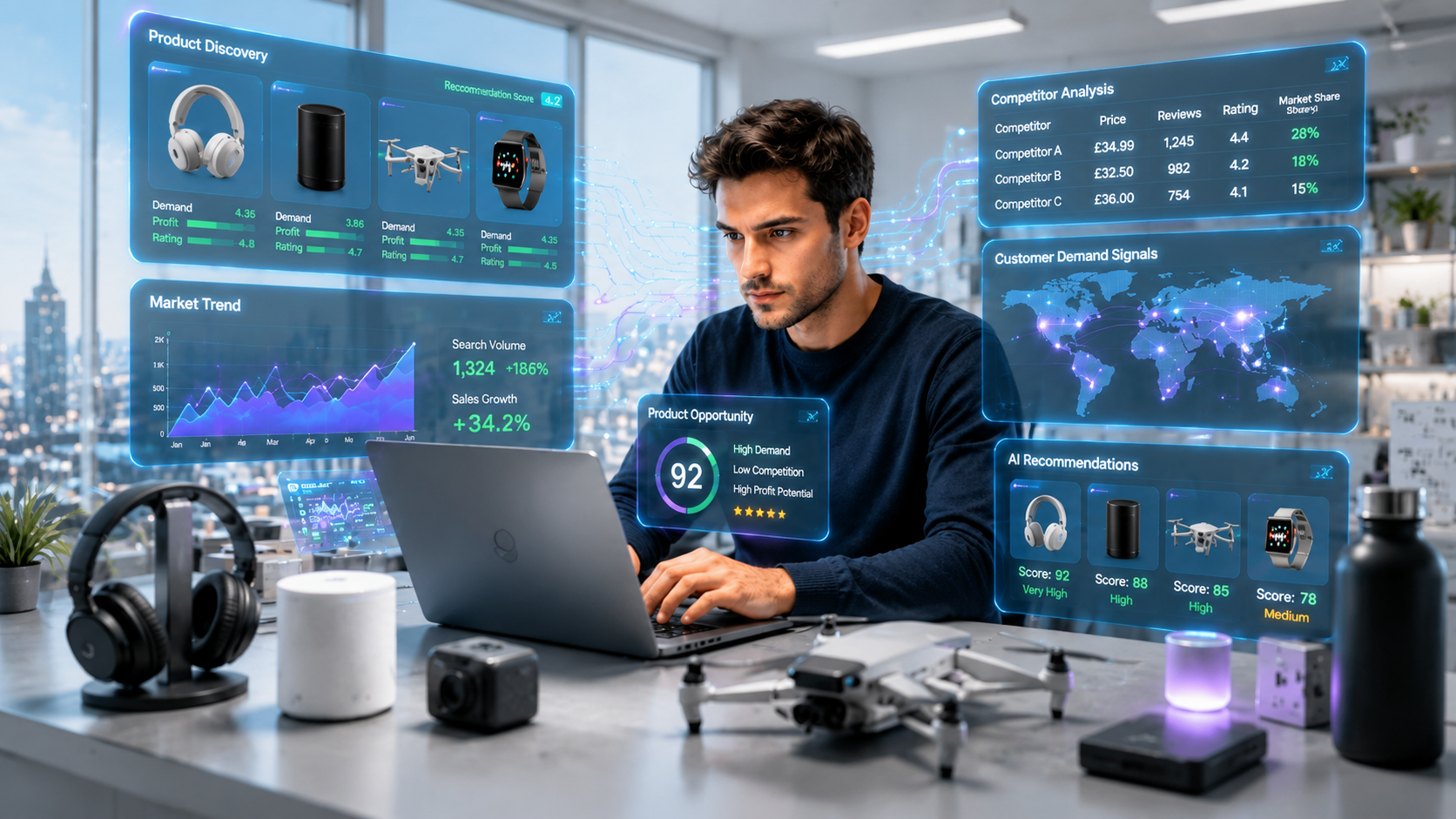
AI product research can help sellers generate ideas, organize product information, identify trends, and compare potential opportunities.
For example, TeemDrop's AI-powered product sourcing helps connect product discovery with supplier sourcing, making it easier to move from an initial product idea to the next stage of evaluation.
However, AI should not make the final decision for you.
Before selling a product, check:
- Actual market demand
- Product costs
- Competition
- Shipping feasibility
- Supplier reliability
- Product quality
AI can help you find opportunities, but it cannot guarantee that a product will sell.
2. AI for Product and Store Content
AI can also help with content creation.
You can use it to draft:
- Product titles
- Product descriptions
- Product features
- FAQs
- Basic marketing copy
This can save time, especially when you are building your first store.
But accuracy matters.
Always check AI-generated content against real product information. Do not publish incorrect specifications, misleading claims, or unrealistic delivery information simply because AI generated the text.
AI can help you write faster. You are still responsible for what your customers see.
3. AI Customer and Market Analysis
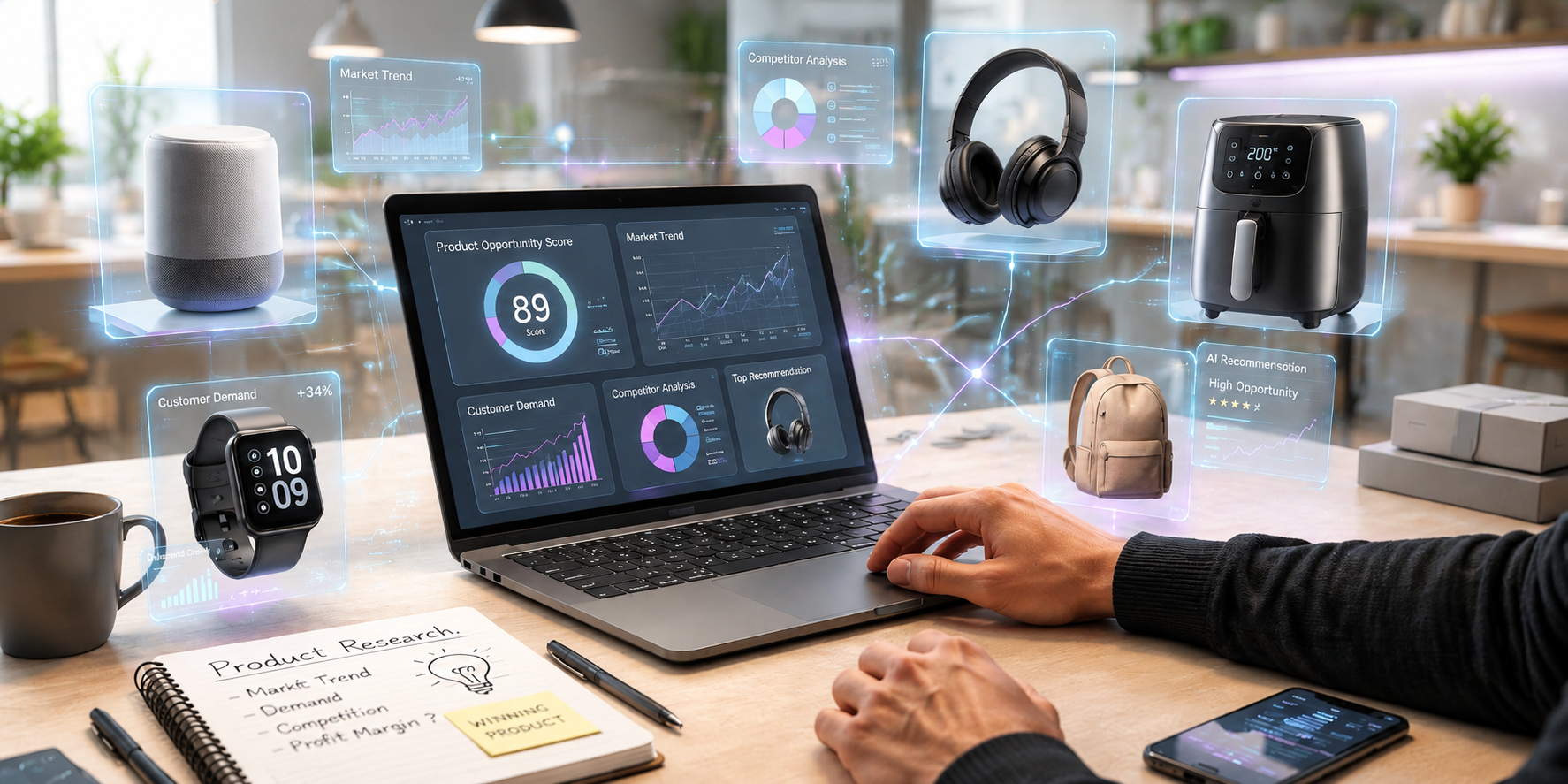
AI can help sellers organize large amounts of information.
For example, it can help identify:
- Common customer questions
- Repeated complaints
- Product strengths and weaknesses
- Competitor positioning
- Potential market opportunities
This can help you understand what customers actually care about.
For beginners, you do not need complicated data analysis.
Start by using AI to summarize useful information, then review the results and decide what actions make sense for your store.
4. AI Automation for Dropshipping Tasks
As your store grows, repetitive tasks can take up more time.
Depending on your setup, dropshipping automation can help with:
- Product information syncing
- Inventory updates
- Order processing
- Fulfillment workflows
- Tracking updates
However, automation only works well when the systems behind it are reliable.
Automatically processing orders will not solve problems caused by inaccurate product information or unreliable suppliers.
That is why automation should work together with sourcing and fulfillment rather than being treated as a separate process.
How to Start AI Dropshipping in the UK
You do not need to automate your entire business from day one.
A better approach is to build a simple workflow first.
Step 1: Choose a Product Direction
Start with a general product direction instead of immediately searching for a single "winning product."
Think about:
- What problem does the product solve?
- Who might buy it?
- Is it practical to ship?
- Is the market highly competitive?
- Can customers quickly understand its value?
AI can help you generate and organize ideas.
But product research should always go beyond an AI recommendation.
Step 2: Research and Validate Products with AI
Once you have product ideas, validate them before adding them to your store.
A simple process is:
AI Research → Market Research → Product Validation → Supplier Check
Look at more than product popularity.
You should also consider:
- Product costs
- Potential selling price
- Customer demand
- Competition
- Shipping requirements
- Supplier information
This is where connecting AI product research with actual sourcing becomes important. If you already have a product idea but need help finding a supplier, you can also learn how to post a sourcing request on TeemDrop.
A product may look promising online but still create problems if the supplier is unreliable or the product is difficult to deliver.
Step 3: Build Your Online Store
Your store should be simple and easy to understand.
Focus on the essentials:
- Clear product pages
- Accurate descriptions
- Transparent pricing
- Shipping information
- Return policies
- Easy navigation
You do not need a complicated website when starting.
A clean and trustworthy store is usually more important than adding too many features.
AI can help create product content, but always review the final information before publishing it.
Step 4: Connect Reliable Sourcing and Fulfillment
This is one of the most important parts of AI dropshipping UK.
AI can help you find products online.
But your customers receive physical products.
That means your workflow still depends on:
- Product sourcing
- Supplier coordination
- Quality checks
- Order processing
- Dropshipping fulfillment
- Delivery tracking
TeemDrop connects these stages through its dropshipping workflow, from AI-powered product sourcing to multi-stage quality control and automated order fulfillment.
The goal is not simply to automate more tasks.
The goal is to create fewer disconnected steps between finding a product and delivering it to a customer.
Step 5: Use AI to Improve and Scale
After your store starts receiving orders, AI can help you identify areas for improvement.
For example, you can analyze:
- Product performance
- Customer questions
- Product reviews
- Store content
- Repetitive tasks
You may find that customers repeatedly ask about a specific product feature or that a product description is unclear.
Use this information to improve your store.
The best approach is continuous testing.
AI can help you work faster, but you still need to review results and make decisions.
What Should UK Sellers Consider Before Starting?
Selling to UK customers requires more than simply creating a store.
Shipping Expectations
Customers want clear information about when their orders will arrive.
Make sure your store provides realistic information about:
- Delivery times
- Shipping costs
- Tracking
- Returns
Under UK online selling rules, sellers must provide customers with important information before an order is placed, including product details, pricing, delivery arrangements, and costs.[2]
AI cannot solve poor delivery performance.
A reliable dropshipping fulfillment process remains essential to the customer experience.
Product Information
AI-generated content can save time, but the information must be accurate.
For online selling, customers should receive clear information about the products they are buying and the costs involved.[2]
Always verify:
- Product descriptions
- Product specifications
- Prices
- Delivery information
This is particularly important when using AI-generated content.
Automation should help you improve efficiency—not create inaccurate information.
Business and Tax Requirements
UK sellers should understand the relevant business, tax, VAT, and consumer requirements before launching.
The requirements can vary depending on factors such as how and where products are sold.
This article is not a complete legal or tax guide. Check the latest official guidance and seek professional advice when needed.
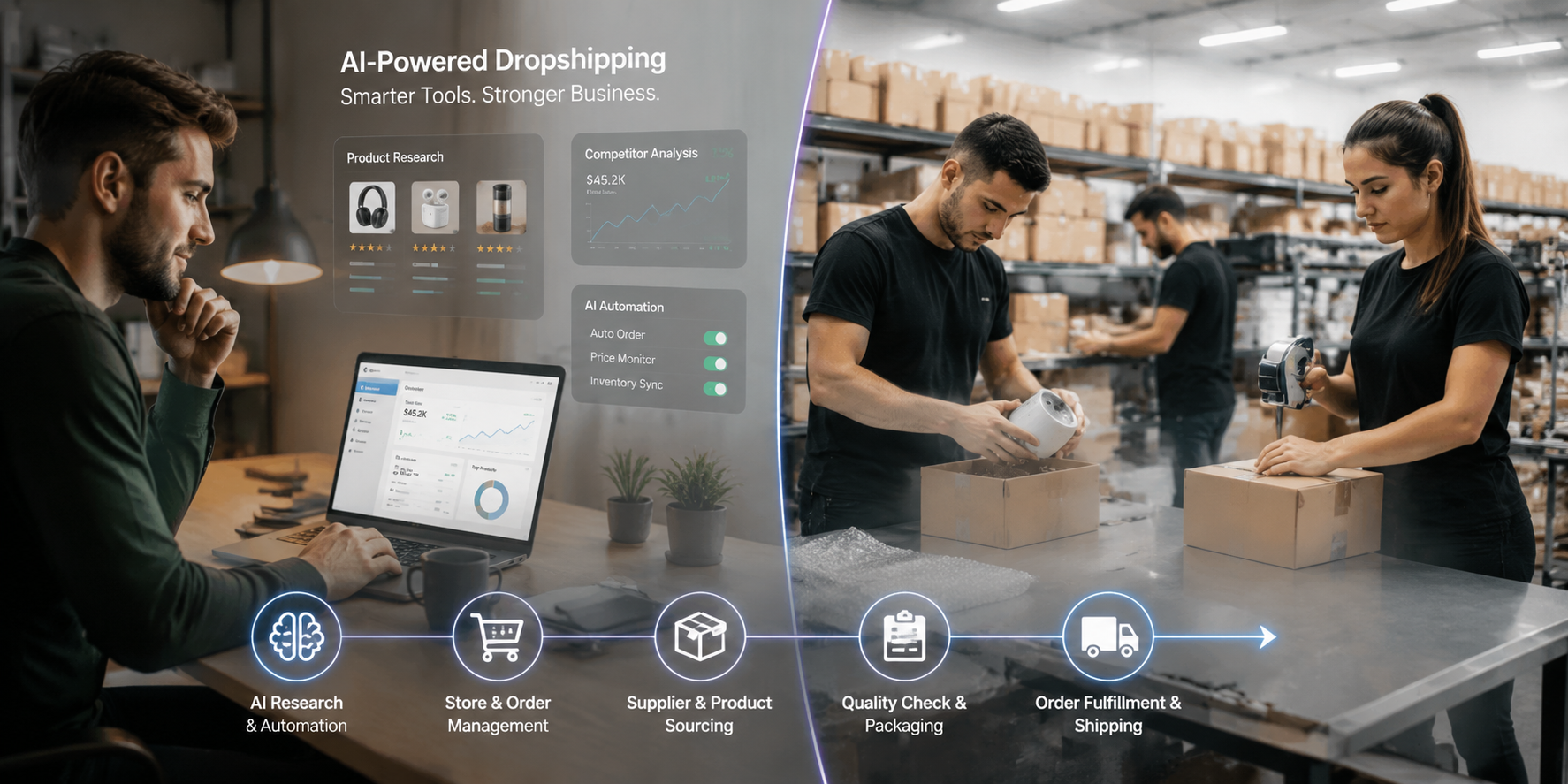
AI Does Not Replace Suppliers and Fulfillment
One common misunderstanding is that AI can completely run a dropshipping business.
It cannot.
AI can help with:
- Research
- Analysis
- Content
- Automation
Your supply chain still needs:
- Reliable suppliers
- Product sourcing
- Quality control
- Order fulfillment
- Delivery tracking
AI cannot physically inspect a product, pack an order, or deliver it to a customer.
This is why a successful AI dropshipping business needs both intelligent technology and reliable ecommerce operations.
A practical workflow connects:
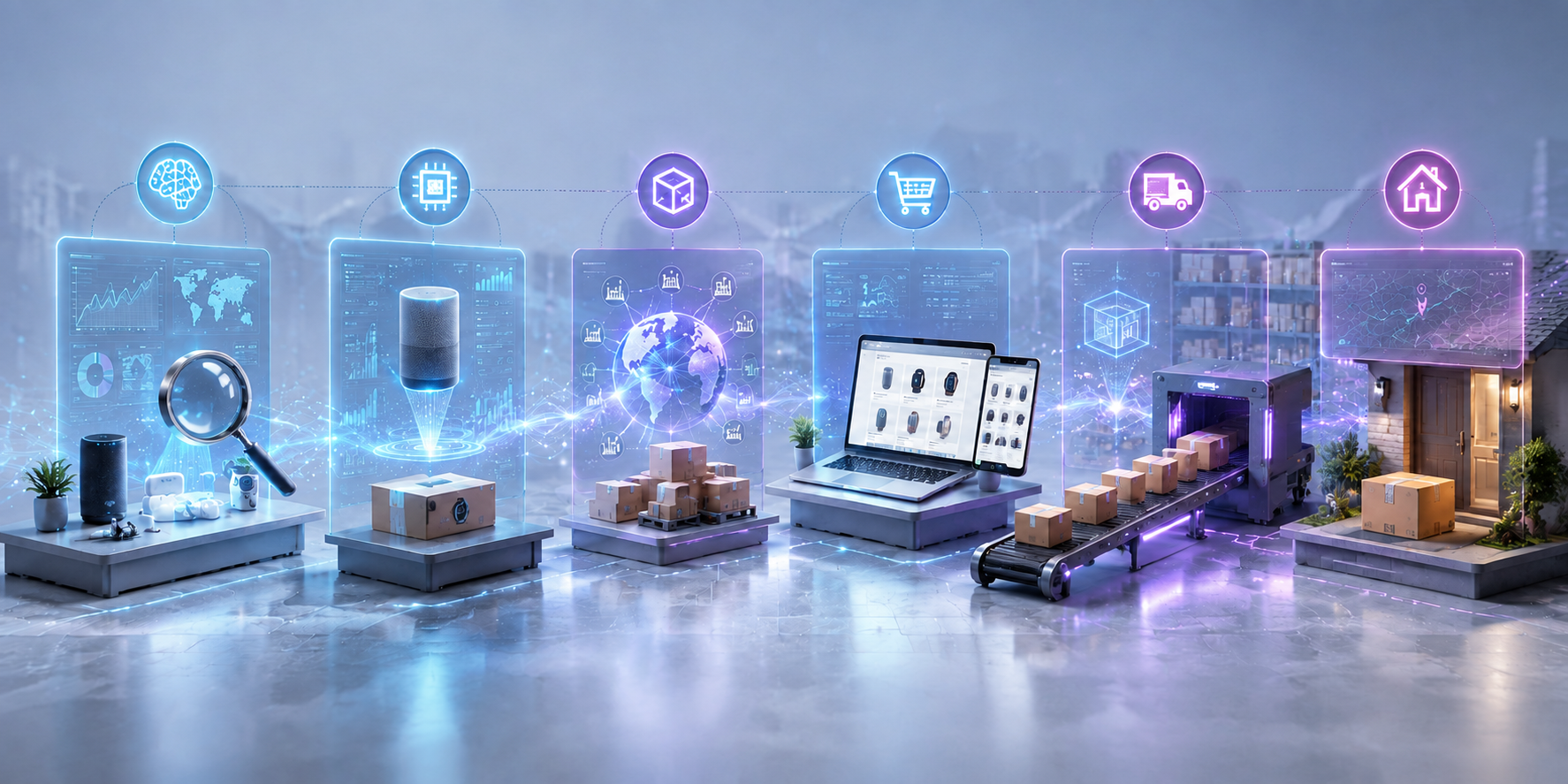
Product Research → Sourcing → Supplier → Quality Control → Order → Fulfillment → Delivery
Each part affects the customer experience.
How TeemDrop Fits Into an AI Dropshipping Workflow
TeemDrop helps connect product discovery with the operational side of dropshipping.
You can think about the workflow in two parts.
AI helps you:
Find → Analyze → Create → Automate
TeemDrop helps you:
Source → Check → Fulfill → Deliver
TeemDrop supports sellers with:
- AI-powered product sourcing
- Supplier sourcing
- Multi-stage quality control
- Auto Fulfill
- Order synchronization
- Shipment tracking
- Global fulfillment
This creates a more connected workflow between finding products and delivering them to customers.
For sellers, the value of AI is not simply generating more ideas.
The real value is using technology to reduce unnecessary manual work while keeping the important parts of the supply chain under control.
Is AI Dropshipping Worth It in the UK?
AI dropshipping can be useful for both beginners and experienced sellers.
It can reduce time spent on research, content creation, and repetitive tasks.
However, AI does not guarantee:
- Profitable products
- Reliable suppliers
- Successful marketing
- Fast shipping
- Customer satisfaction
Results still depend on your decisions and your operations.
The goal should not be to create a business where AI does everything.
Instead, use AI where it can save time and help you make better decisions.
A practical workflow looks like this:
Research with AI → Validate Products → Build Your Store → Connect Fulfillment → Monitor Results → Improve and Scale
FAQ
What is AI dropshipping in the UK?
AI dropshipping uses artificial intelligence to support tasks such as product research, content creation, market analysis, and workflow automation. The basic dropshipping model remains the same.
Can AI run a dropshipping business automatically?
Not completely. AI can automate certain tasks, but sellers still need to make decisions about products, suppliers, fulfillment, and customer experience.
Can AI help me find dropshipping products?
Yes. AI can help generate product ideas and organize market information. However, you should validate products before adding them to your store.
Do I still need a supplier for AI dropshipping?
Yes. AI does not replace the physical supply chain. Suppliers and fulfillment partners are still needed to source, prepare, and ship products.
Is AI dropshipping suitable for beginners in the UK?
Yes. Beginners can use AI to simplify product research and repetitive tasks. It is best to start with a simple workflow rather than trying to automate everything immediately.
Build a Smarter AI Dropshipping Workflow with TeemDrop
AI dropshipping in the UK is not about letting AI run your entire business.
It is about using AI to reduce repetitive work and make smarter decisions.
Use AI to research and analyze. Validate your products. Build a clear store. Then connect your business with reliable sourcing, quality control, and fulfillment.
TeemDrop helps bring these steps together—from AI-powered product sourcing to automated fulfillment—so you can spend less time managing disconnected tasks and more time growing your store.
References
[1] Office for National Statistics. Retail sales, Great Britain: July 2026.
Office for National Statistics – Retail Sales, Great Britain
[2] GOV.UK. Online and distance selling: Online selling.
GOV.UK Online Selling Guidance