Best AI Tools for Dropshipping in 2026: From Product Sourcing to Fulfillment
Artificial intelligence is changing the way ecommerce businesses operate. What once took hours of manual work can now be completed much faster with the help of AI.
According to McKinsey, AI is reshaping retail and ecommerce by improving marketing, operations, and supply chain management.[1] As AI technology becomes more accessible, even small Shopify stores can use it to work more efficiently and compete with larger brands.
For dropshipping sellers, this is especially valuable. Running a store often involves many different tasks, including finding products, sourcing suppliers, creating product images, writing descriptions, launching marketing campaigns, and managing orders.
Instead of handling every step manually, sellers can now use specialized AI tools for different parts of the business. Platforms like TeemDrop are expanding this idea by combining AI product sourcing, ecommerce design, fulfillment, and supply chain management into one workflow.
The goal isn't to let AI run your business. It's to save time, reduce repetitive work, and help you focus on growing your brand.
In this guide, we'll explore how AI fits into modern dropshipping and the best AI tools for each stage of the process.
What Can AI Do for Shopify Dropshipping?
Many people think AI is only useful for writing product descriptions or creating chatbot replies.
In reality, AI can support almost every stage of a dropshipping business.
A typical AI-powered workflow looks like this:
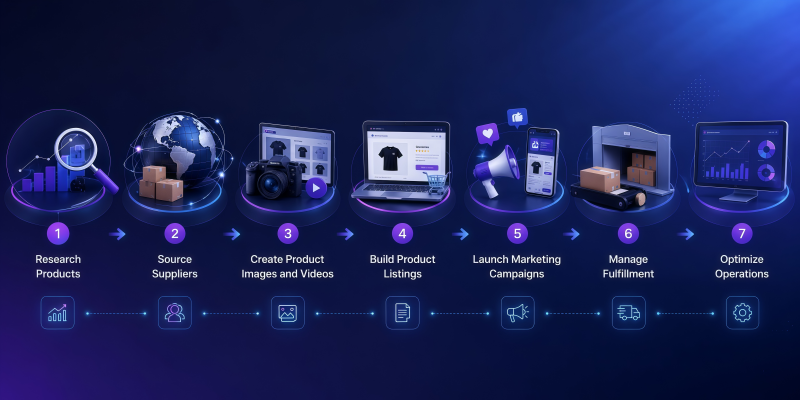
Different AI tools are designed for different tasks. Some help identify trending products, while others create marketing content or simplify order management.
The key is choosing the right tool for the right job instead of expecting one platform to do everything.
Let's look at some of the most useful AI tools for dropshipping sellers.
Best AI Tools for Dropshipping in 2026
Different AI tools solve different problems. Instead of relying on one platform for everything, many successful sellers combine specialized tools.
| Task |
Recommended Tool |
| Product Research |
Dropship.io |
| Market Research |
ChatGPT |
| Product Sourcing |
TeemDrop |
| Marketing Graphics |
Canva AI |
| Ecommerce Design |
TeemDrop AI Design |
| Product Listings |
ChatGPT |
| Long-Form Content |
Claude |
| Order Management |
ShipStation |
| Fulfillment & Supply Chain |
TeemDrop |
Choosing the right combination of tools can save time while improving different parts of your business.
AI for Product Research
Finding the right products is one of the biggest challenges for any dropshipping business. Good product research can reduce risk and improve your chances of success.
Dropship.io
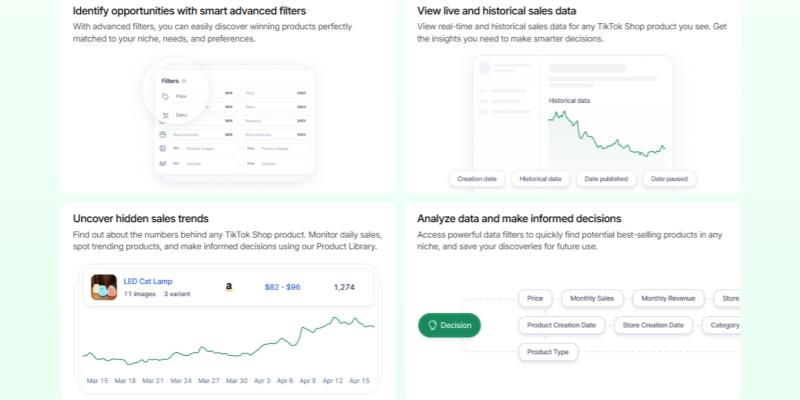
Dropship.io is one of the best-known product research platforms for dropshipping sellers.
It helps users:
- Discover trending products
- Track competitor stores
- Explore different niches
- Analyze product performance
Instead of relying on guesswork, sellers can use data to identify products with strong market potential.
For beginners, this can make the research process much easier.
ChatGPT
While ChatGPT isn't a dedicated product research platform, it can still be a useful assistant.
Many sellers use it to:
- Brainstorm product ideas
- Explore niche markets
- Create customer profiles
- Compare competitors
- Generate marketing angles
For example, you can ask ChatGPT to suggest underserved product categories or identify common customer problems within a niche.
Free tools like Google Trends and TikTok Creative Center can also help confirm whether a product or niche is gaining popularity.
Why AI Product Research Matters
AI can't guarantee a winning product, but it can help sellers make better decisions by organizing information and reducing research time.
The faster you validate ideas, the more time you can spend building your business.
AI for Product Sourcing
Finding a trending product is only the first step. You also need reliable suppliers, stable quality, and efficient fulfillment.
This is where AI can simplify the sourcing process.
Instead of manually comparing suppliers and organizing product information, AI sourcing tools can simplify dropshipping product sourcing and streamline the workflow.
Common sourcing challenges include:
- Finding reliable suppliers
- Comparing product options
- Managing quality expectations
- Organizing product information
- Preparing for fulfillment
TeemDrop
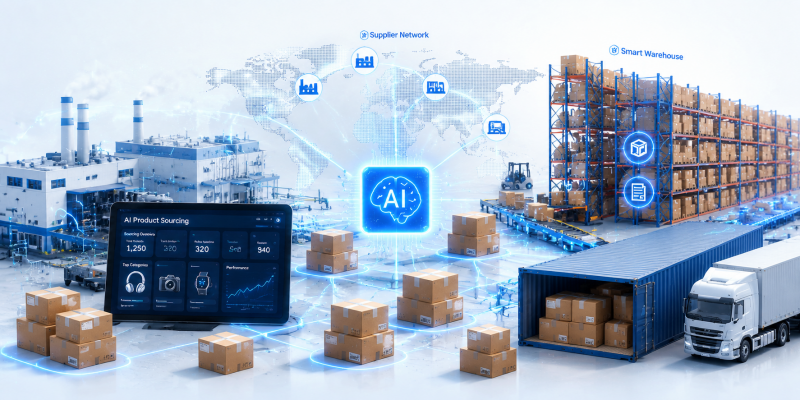
TeemDrop uses AI to simplify product sourcing for ecommerce sellers.
Its AI-powered sourcing workflow can help with:
Supplier Matching
Connect products with suitable suppliers based on business needs.
Product Sourcing
Locate products across large supplier networks and manufacturing resources.
Quality Control Support
Improve dropshipping quality control before products move to fulfillment.
Fulfillment Preparation
Help sellers move products from sourcing to shipping more efficiently.
Unlike general AI writing tools, TeemDrop focuses on operational tasks that are often time-consuming for dropshipping businesses.
Why AI Sourcing Matters
Reliable sourcing affects almost every part of a store, including product quality, shipping speed, customer satisfaction, and profitability.
By reducing manual work, AI sourcing allows sellers to focus more on branding and customer growth instead of supplier management.
AI for Product Design
Product visuals can have a major impact on conversions.
High-quality images, attractive product pages, and engaging marketing materials help customers trust a brand and understand its products.
AI design tools are making professional ecommerce content more accessible for businesses of all sizes.
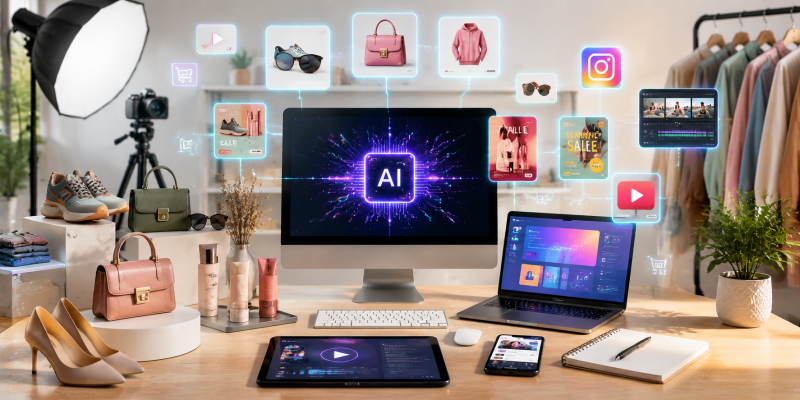
Canva AI
Canva AI has become a popular design tool for ecommerce sellers because it's simple to use.
It can help create:
- Social media graphics
- Promotional banners
- Marketing materials
- Store visuals
For beginners, Canva AI offers an easy way to create professional-looking content without advanced design skills.
TeemDrop AI Design
While general AI design tools work well for marketing graphics, ecommerce businesses often need more specialized assets.
TeemDrop AI Design focuses on content created specifically for online stores.
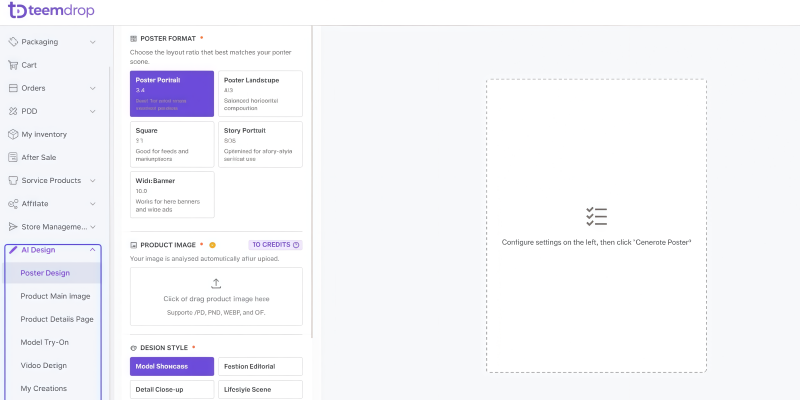
Its features include:
AI Product Main Images
Create clean, professional product visuals for ecommerce listings.
AI Product Details Pages
Generate organized product pages that highlight important features and selling points.
AI Model Try-On
Create realistic product presentations for fashion and apparel products without traditional photoshoots.
AI Poster Design
Produce promotional graphics for online stores and social media campaigns.
AI Video Design
Generate short-form product videos for platforms like TikTok, Instagram, and other digital channels.
Why AI Design Matters
Creating ecommerce content can be expensive and time-consuming, especially for small businesses.
AI design tools help sellers produce professional assets more quickly while reducing production costs.
Rather than replacing creativity, AI enables entrepreneurs to test new ideas and launch products faster.
AI for Product Listings and Marketing
Once you've found a product and sourced a supplier, the next step is turning that product into a compelling offer. AI can help create product pages and marketing content much faster.
ChatGPT
ChatGPT is one of the most versatile AI tools for ecommerce sellers. It can help write:
- Product titles
- Product descriptions
- Email campaigns
- Ad copy
- FAQ sections
- Social media posts
Instead of starting with a blank page, sellers can quickly generate drafts and customize them for their brand.
Claude
Claude is particularly useful for longer content.
Many Shopify sellers use it to create:
- Product guides
- Landing pages
- Blog posts
- Brand stories
- Customer education content
Long-form content can improve SEO while helping customers make informed buying decisions.
For video marketing, tools like CapCut can also simplify editing for TikTok and Instagram content.
Why AI Content Matters
According to McKinsey, generative AI can improve productivity in marketing and customer engagement by helping businesses create content more efficiently.[2]
AI won't replace good branding, but it can reduce the time spent on repetitive writing tasks
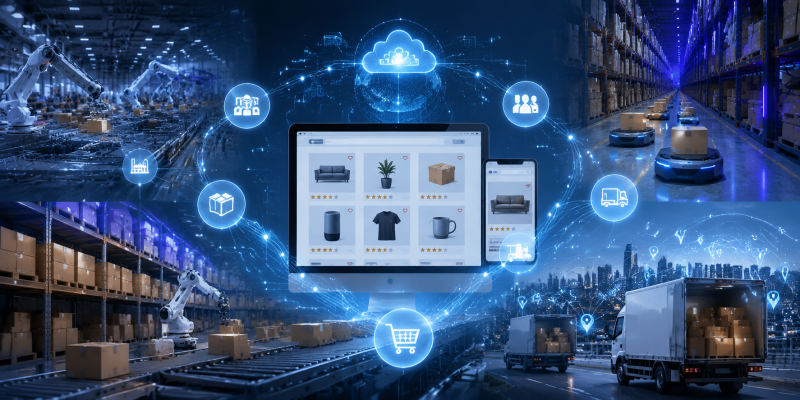
AI for Fulfillment and Supply Chain
A successful dropshipping business doesn't end when a customer places an order.
Order management, shipping, inventory, and supplier coordination all affect the customer experience.
AI can help simplify these operations.
ShipStation
ShipStation is a well-known shipping and order management platform.
It helps businesses:
- Manage orders
- Track shipments
- Print shipping labels
- Organize deliveries
For growing stores, automation can reduce manual work and improve efficiency.
TeemDrop
TeemDrop extends AI beyond sourcing by supporting fulfillment and supply chain operations.
Its AI-powered workflow can help with:
Smart Fulfillment
Automate order processing through modern dropshipping fulfillment services.
Inventory Management
Support inventory planning across different products and markets.
Logistics Coordination
Use logistics AI alerts to help sellers manage shipping and fulfillment activities.
Supply Chain Operations
Improve visibility across sourcing and fulfillment processes.
By connecting sourcing and fulfillment, sellers can reduce operational complexity and focus more on growing their business.
How to Build an AI-Powered Shopify Dropshipping Business
AI works best when it supports a simple workflow.
Here's one approach for beginners.
Step 1: Research Products
Use tools like Dropship.io and ChatGPT to discover product ideas and understand market demand.
Step 2: Source Products
Find reliable Shopify dropshipping suppliers and organize sourcing with AI-powered solutions like TeemDrop.
Step 3: Create Product Assets
Design product images, detail pages, promotional graphics, and videos with AI design tools.
Step 4: Build Product Listings
Use ChatGPT or Claude to write titles, descriptions, and customer-focused content.
Step 5: Launch Marketing Campaigns
Create social media posts, emails, and advertising materials to attract customers.
Step 6: Automate Fulfillment
Simplify order processing and logistics with AI-supported fulfillment systems.
Step 7: Improve and Scale
Review customer feedback, test new products, and optimize operations as your business grows.
AI can't replace business strategy, but it can make daily operations much easier.
Conclusion
AI is changing the way dropshipping businesses operate. From finding products to creating content and managing fulfillment, AI tools can help sellers reduce repetitive work and improve efficiency.
The best approach is to use different tools for different tasks. Dropship.io can support product research, ChatGPT and Claude can simplify content creation, Canva AI helps with marketing graphics, and ShipStation improves shipping operations.
For sellers looking to streamline their ecommerce workflow, TeemDrop brings together AI-powered product sourcing, ecommerce design, fulfillment, and supply chain management on a single platform. Instead of managing multiple disconnected processes, sellers can simplify daily operations and spend more time growing their business.
AI won't build a successful store on its own, but combined with good products, strong branding, and excellent customer service, it can become a valuable advantage for modern Shopify sellers.
FAQ
What are the best AI tools for dropshipping?
Popular choices include Dropship.io for product research, ChatGPT and Claude for content creation, Canva AI for marketing graphics, ShipStation for shipping management, and TeemDrop for sourcing, ecommerce design, fulfillment, and supply chain operations.
Can AI automate dropshipping?
AI can automate many repetitive tasks, including product research, content creation, sourcing, fulfillment, and inventory management. Business decisions and branding still require human involvement.
Can AI create product images?
Yes. AI can generate product images, promotional graphics, product detail pages, and short marketing videos for ecommerce businesses.
Can AI help with product sourcing?
AI sourcing tools can simplify supplier matching, product sourcing, quality management, and fulfillment preparation.
Can AI manage fulfillment?
AI can support order processing, inventory planning, logistics coordination, and shipping management.
Is AI dropshipping worth it in 2026?
AI can save time and improve efficiency, but long-term success still depends on choosing the right products and building a strong brand.
References
[1] McKinsey & Company — Europe's New Ecommerce Agenda: How AI Is Resetting Growth and Competition
https://www.mckinsey.com/capabilities/growth-marketing-and-sales/our-insights/europes-new-ecommerce-agenda-how-ai-is-resetting-growth-and-competition
[2] McKinsey & Company — The Economic Potential of Generative AI: The Next Productivity Frontier
https://www.mckinsey.com/capabilities/quantumblack/our-insights/the-economic-potential-of-generative-ai-the-next-productivity-frontier
[3] McKinsey & Company — What Is Generative AI?
https://www.mckinsey.com/featured-insights/mckinsey-explainers/what-is-generative-ai