How to Run Dropshipping Ads: Choose Platforms, Test Campaigns & Protect Profit
Running dropshipping ads can help you reach potential customers faster, but spending more does not always mean making more sales. You need the right platform, a product people want, and a clear way to measure results.
For new sellers, TeemDrop connects product sourcing, quality control, order fulfillment, and global delivery, helping you prepare the operational side of your business while you work on marketing.
This guide explains which advertising channels to consider, how to test ads without wasting your budget, and what to check before increasing your ad spend.
Quick Answer: What Are the Best Dropshipping Ads?
The best dropshipping ads platform depends on your product, audience, and budget.
- Facebook and Instagram: Test images, videos, and audience targeting.
- TikTok: Promote visually appealing products with short videos.
- Google Ads: Reach shoppers actively searching for products.
- YouTube: Demonstrate products and their benefits.
- Free promotion: Build traffic through social media, SEO, and email.
Start with one suitable channel, test different creatives, and track purchases—not just clicks. Before scaling, ensure your product costs, shipping, and fulfillment can support more orders.
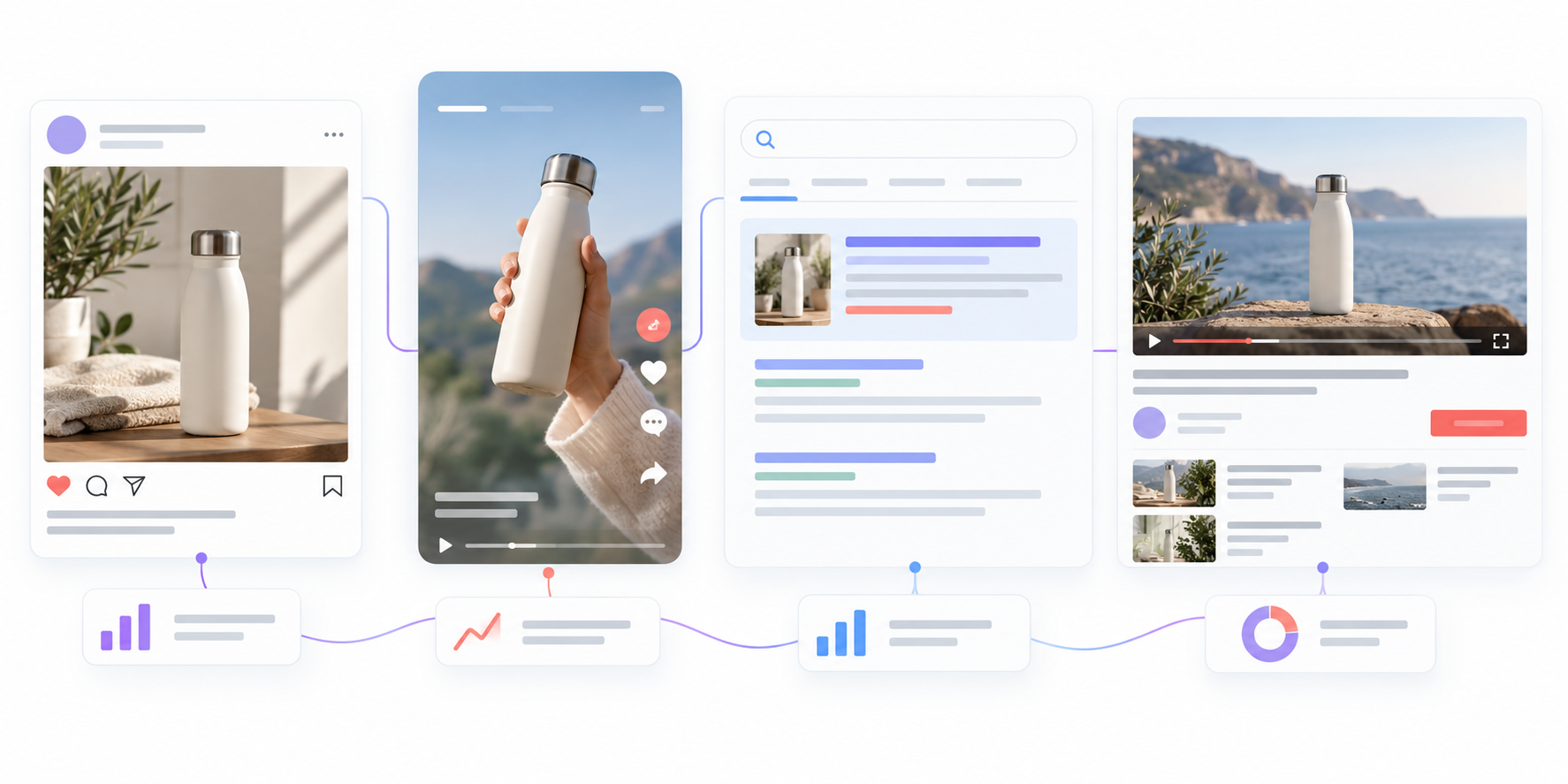
1. How to Choose the Right Dropshipping Ad Platform
Not every platform works equally well for every product. Instead of advertising everywhere, choose a channel based on how customers discover and buy what you sell.
Facebook and Instagram Ads
Facebook and Instagram are useful for products that can be demonstrated visually, such as home accessories, fashion items, and lifestyle products.
You can test product photos, short videos, customer-style demonstrations, and different messages. For example, a storage product might perform better when an ad shows the problem it solves instead of simply displaying the product.
For video placements such as Reels, Meta recommends creative designed for vertical viewing, with clear messaging and suitable audio. Its official guide also recommends testing creative variations to learn what works. [1]
Best for: Sellers who want to test product ideas, demonstrate benefits, and reach audiences through social feeds.
TikTok Ads
TikTok can be useful when a product has a clear visual hook or fits naturally into short videos.
Rather than making every video look like a traditional advertisement, show the product in use. A simple before-and-after demonstration, an unexpected feature, or a common daily problem can give viewers a reason to keep watching.
However, a product that attracts views will not necessarily generate purchases. Track clicks, product-page visits, and sales to understand whether the attention translates into buying interest.
Best for: Products that are easy to demonstrate and can be explained in a short video.
Google Ads
Google Ads for dropshipping serves a different purpose. Instead of relying mainly on users discovering a product while browsing social media, search advertising can reach people actively looking for a product or solution.
For example, someone searching for a specific type of desk organizer may already know what they need. A relevant product page can help them compare options and decide whether to buy.
Start with specific, relevant search terms and make sure the landing page matches the ad. Monitor search terms regularly so that you can identify irrelevant clicks.
Best for: Products with clear search demand and customers who are actively researching a purchase.
YouTube Ads
YouTube is worth considering when a product needs more explanation or demonstration. Video can show how an item works, what makes it different, and how it fits into a customer's daily life.
The trade-off is that video production may require more time and resources. If you are new to advertising, test simpler creative formats first and expand when you have a clearer idea of which product benefits attract buyers.
Best for: Demonstration-based products and campaigns that need more time to explain a product's value.
Paid vs. Free Dropshipping Advertising
| Method |
Main Advantage |
Main Limitation |
| Facebook and Instagram Ads |
Flexible visual creative testing |
Requires an ongoing budget |
| TikTok Ads |
Strong fit for short product videos |
Views may not turn into sales |
| Google Ads |
Can capture existing search demand |
Some keywords can be expensive |
| YouTube Ads |
More room for product demonstrations |
Video production takes effort |
| SEO and organic social |
Can build traffic without paying for every click |
Results often take time |
You do not need to use every channel at once. Choose one that matches your product and resources, then use the results to guide your next decision.
2. How to Test Dropshipping Ads on a Small Budget
The goal of your first campaign is not to spend as much as possible. It is to learn which product message attracts the right customers.
Step 1: Check Your Product Before Advertising
Before paying for traffic, make sure the product solves a clear problem or offers a benefit people can understand quickly.
Ask yourself:
- Who is most likely to buy this product?
- What problem does it solve?
- Can I demonstrate its value in a few seconds?
- Is the selling price reasonable compared with the total cost?
- Can my supplier provide consistent quality and availability?
Product research should go beyond finding something that looks popular. TeemDrop supports product sourcing through its sourcing services, including requests for products that sellers have found elsewhere. You can use this process to explore suitable products before committing to a larger campaign.
Step 2: Create Two or Three Different Ad Creatives
You do not need dozens of advertisements to begin learning. Start with a small set of variations that communicate different benefits.
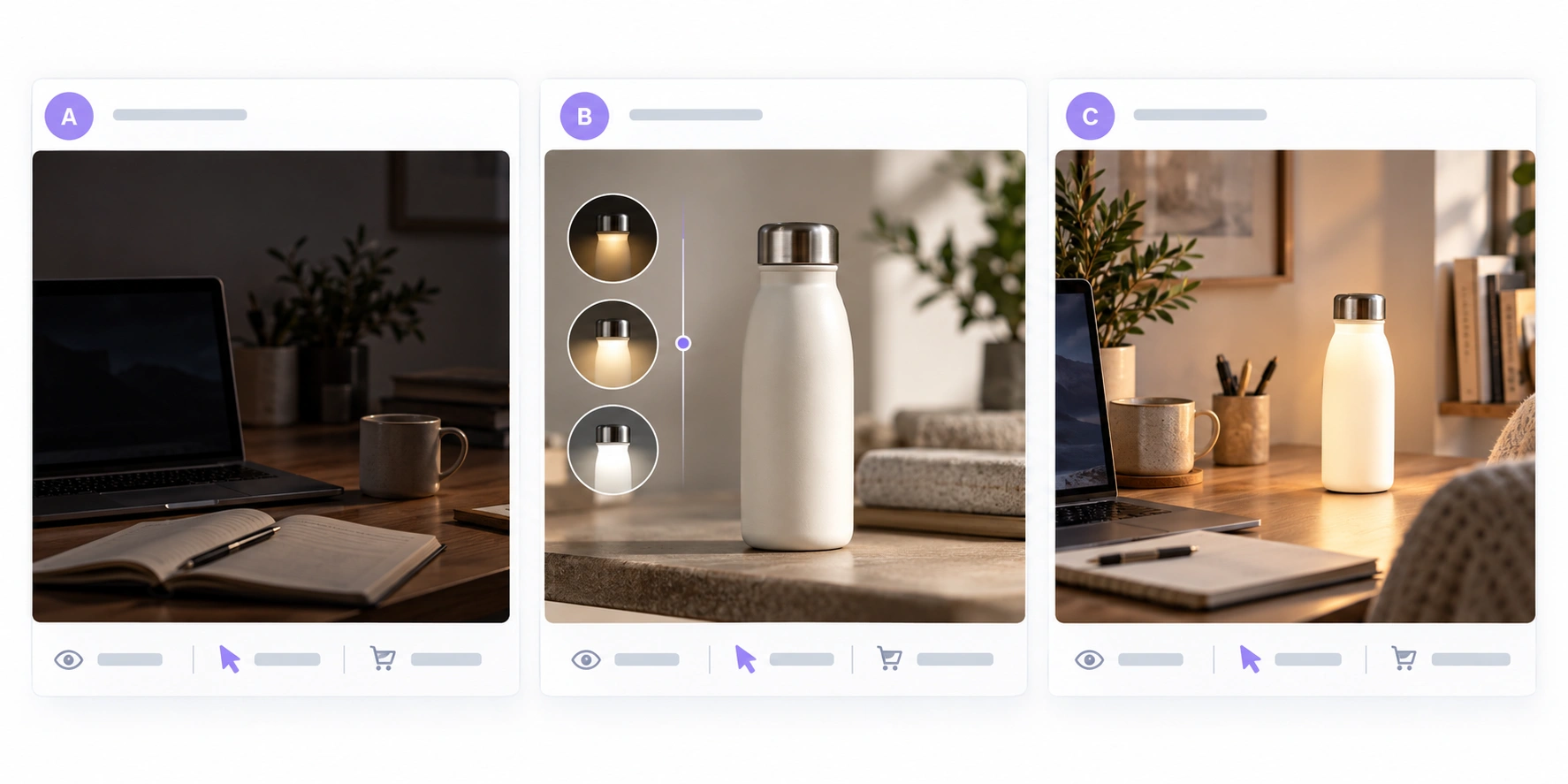
For example, if you are selling a portable desk lamp, test:
- Problem-focused: Show how poor lighting makes desk work uncomfortable.
- Feature-focused: Demonstrate the lamp's adjustable brightness.
- Lifestyle-focused: Show the lamp in a compact home office.
Keep the product and audience reasonably consistent while testing the message. Otherwise, it becomes difficult to understand why one ad performs differently from another.
Step 3: Set a Budget You Can Afford to Test
Choose a daily or campaign budget that you can afford to spend without depending on immediate sales.
There is no universal advertising budget that guarantees results. Costs vary by platform, audience, competition, product, and campaign objective.
Before launching, decide how much you are willing to spend to learn whether a product has potential. Also set a review point so you do not keep funding an advertisement that is clearly failing to attract relevant visitors.
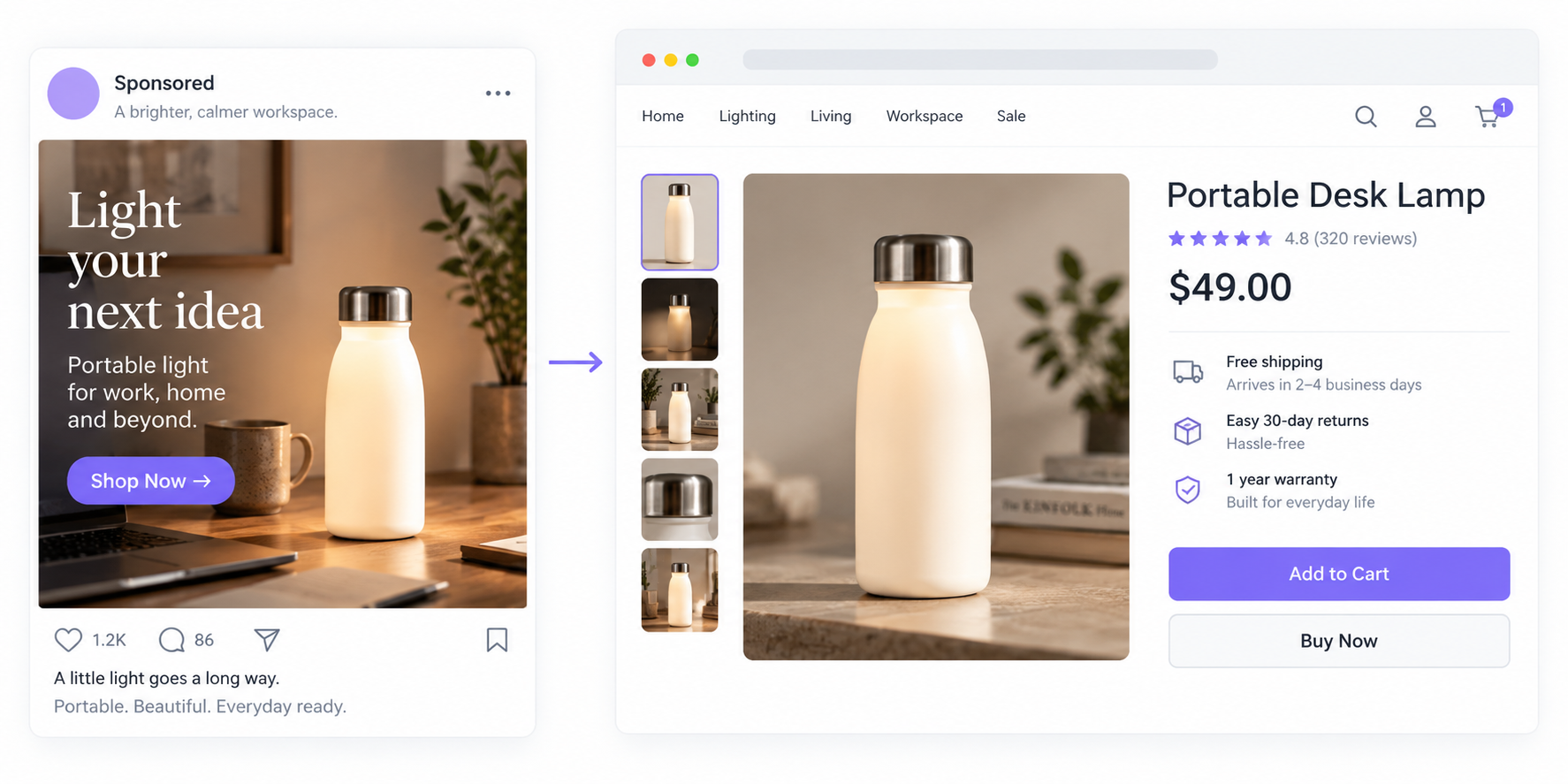
Step 4: Match the Ad to the Product Page
A good ad can still lose sales if the landing page is confusing.
Make sure the product page clearly explains:
- What the product does and who it is for.
- Its main features, images, and variations.
- The total price and relevant shipping costs.
- The estimated delivery time and applicable policies.
- How customers can complete their purchase.
The promise in the advertisement should match the actual product and buying experience. Avoid exaggerated claims or delivery promises you cannot consistently meet.
3. How to Measure Dropshipping Ad Performance
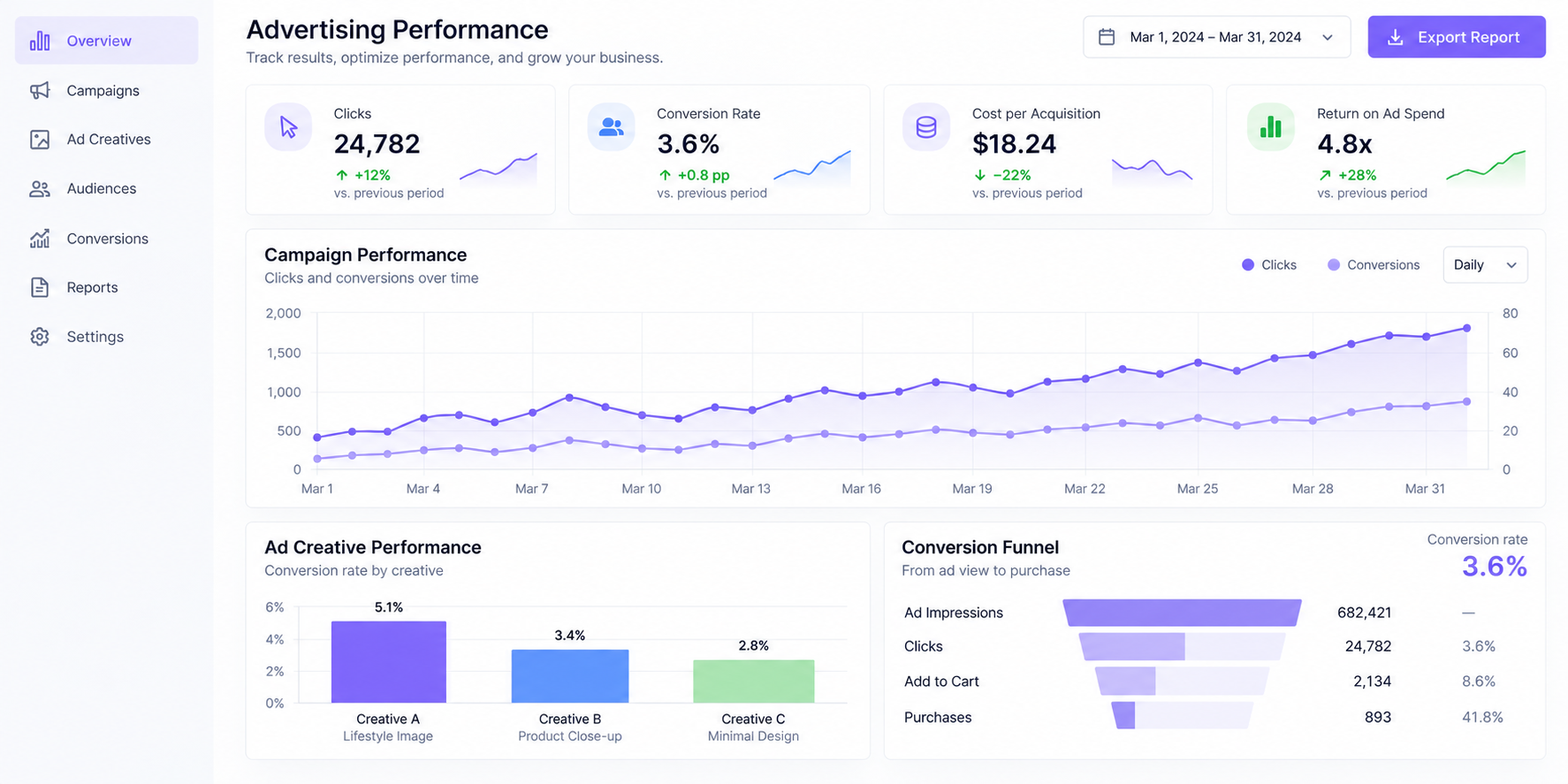
Clicks and views show whether people notice your advertisements. They do not tell you the whole story.
Google Ads conversion measurement allows advertisers to track valuable actions, such as purchases and sign-ups, and use those results to assess campaign performance. [2]
For a beginner, start with these metrics:
How to Interpret Your Results
If people see your ad but rarely click: Review the opening visual, message, and relevance to your audience.
If people click but do not buy: Check the product page, price, shipping information, and checkout experience before blaming the ad alone.
If you get sales but little profit: Recalculate product cost, shipping, advertising spend, platform fees, and other variable expenses.
If sales and profit are improving: Consider testing a higher budget gradually while monitoring results.
Remember that ROAS is not the same as profit. A campaign can generate revenue while losing money if the combined product, shipping, and operating costs are too high.
4. How to Scale a Winning Dropshipping Ad
Finding an advertisement that generates sales is only part of the process. You also need to know whether the business behind it can handle more orders.
Calculate Your Break-Even Ad Cost Before Scaling
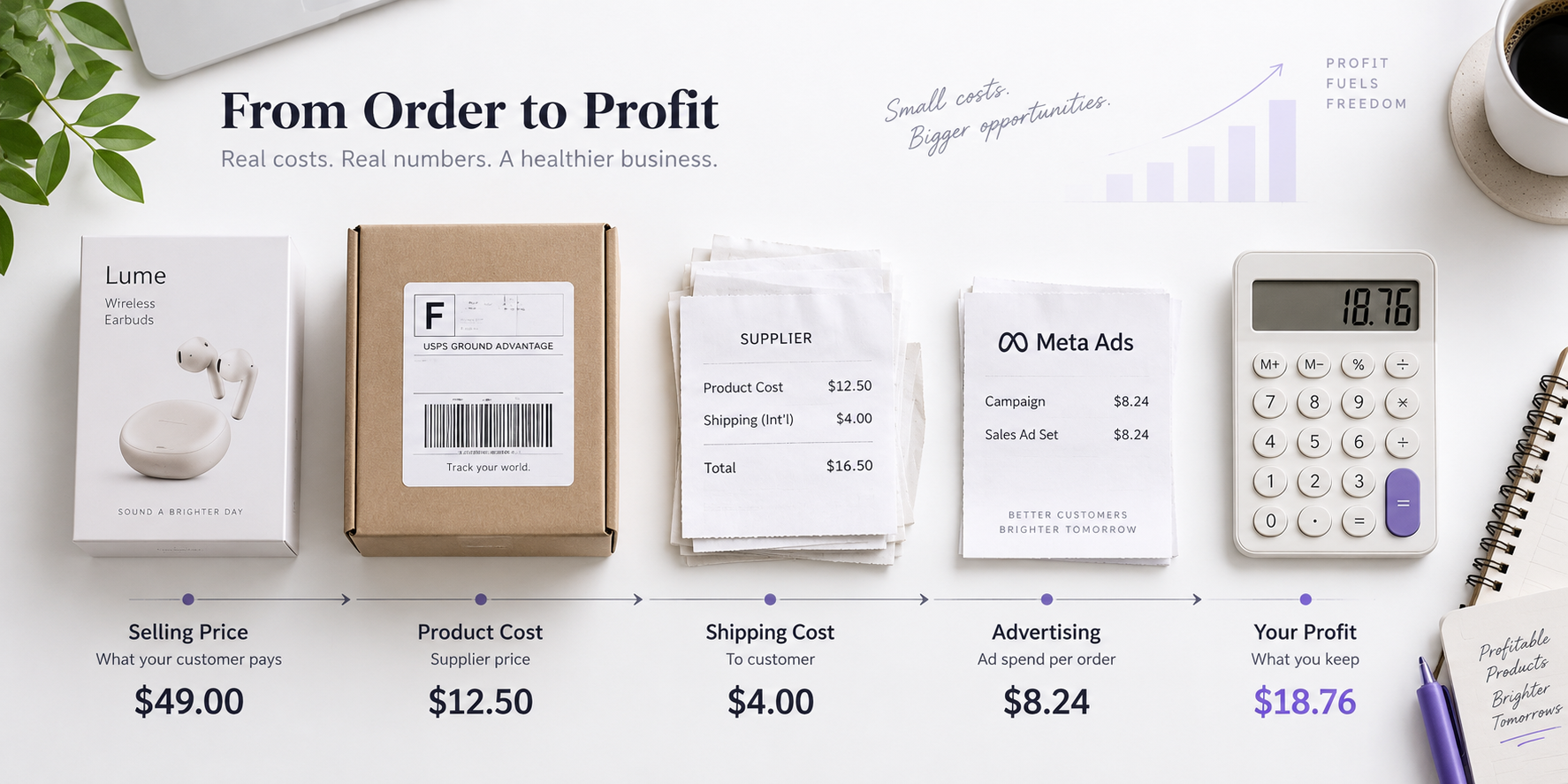
Calculate your approximate profit per order before advertising:
Profit before ad spend = Selling price − Product cost − Shipping cost − Other variable costs
Then subtract the advertising cost associated with acquiring that order.
For example, a product selling for $40 may cost $12 to source and $6 to ship. If other variable costs total $4, you have $18 remaining before advertising and any other expenses not included in the calculation.
If acquiring a customer costs $15, only $3 remains from that example before fixed overhead and other excluded expenses. This is why a low product cost alone does not guarantee a profitable campaign.
Check Product Quality Before Increasing Spend
More advertising can mean more orders, but it can also expose product problems faster.
A product that looks good in supplier photos may have inconsistent materials, sizing, packaging, or functionality. These issues can lead to complaints, refunds, and poor reviews.
TeemDrop's dropshipping quality control service includes pre-shipment inspections, visual confirmation, and defect checks. For sellers preparing to scale, checking product quality is one way to reduce avoidable surprises before orders reach customers.
Prepare for More Orders
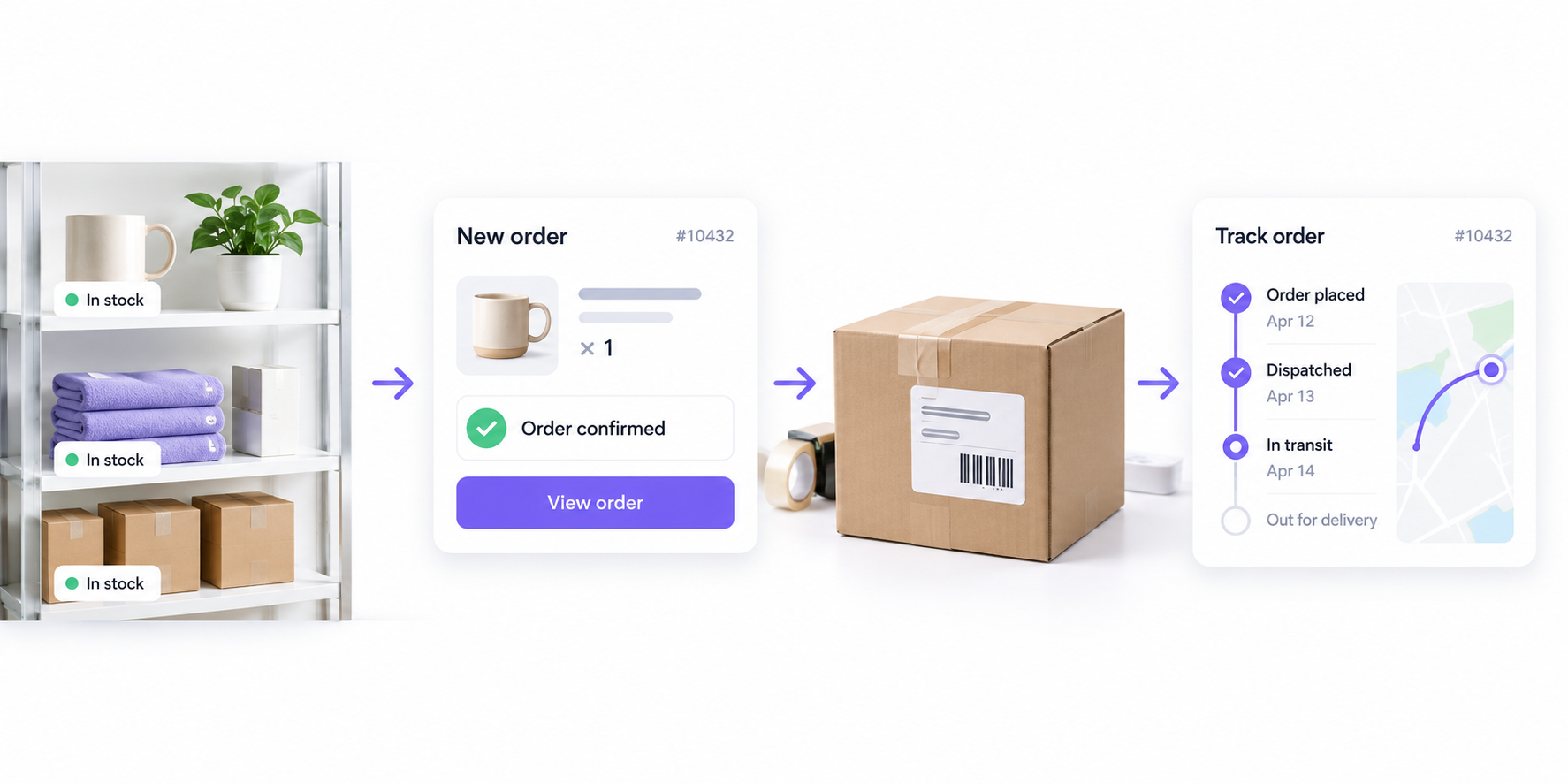
When an advertisement starts performing well, check whether your supplier has enough stock and whether your fulfillment process can handle the additional volume.
TeemDrop combines sourcing with automated order fulfillment and shipping support, helping sellers manage more of the workflow without handling every step manually.
Before increasing ad spend, review:
- Product availability and supplier reliability.
- Order processing and fulfillment capacity.
- Shipping options, costs, and estimated delivery times.
- Tracking information and customer communication.
- A backup plan if demand exceeds available stock.
Scaling should be based on both advertising performance and operational readiness. If either side falls behind, growth can quickly become expensive.
5. How Free Marketing Supports Paid Dropshipping Ads
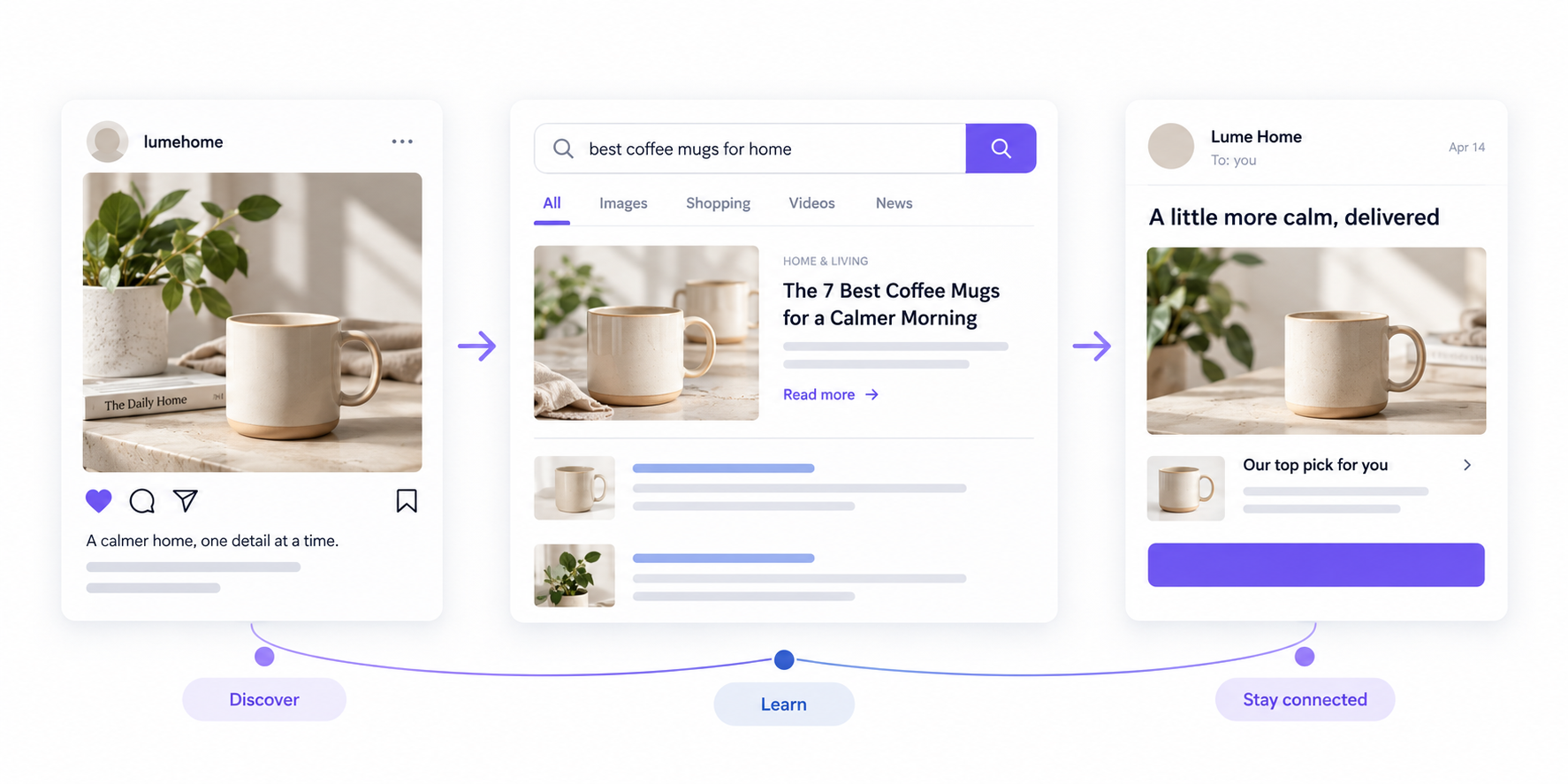
Paid ads are not the only way to attract potential customers. Free dropshipping advertising methods can help you build trust and learn what your audience cares about over time.
Use Organic Social Content
Share product demonstrations, common questions, practical tips, and honest comparisons. These posts can help you learn which benefits generate interest before spending money to promote them.
Build Organic Search Traffic
Write useful content that answers specific customer questions. For example, a store selling home organization products could publish guides about choosing storage solutions for small apartments.
Google recommends creating helpful, reliable, people-first content rather than content made mainly to manipulate rankings. [3]
SEO generally takes time, so treat it as a long-term traffic source rather than an immediate replacement for paid advertising.
Follow Up With Interested Customers
Email marketing can help you communicate with people who have voluntarily subscribed to your updates. Share useful product information, answer common questions, and send relevant offers without overwhelming their inboxes.
These channels can support paid campaigns by helping customers discover your brand through more than one touchpoint.
6. How TeemDrop Supports Your Store After Advertising
Advertising helps bring potential customers to your store. What happens after they place an order also affects customer satisfaction and your ability to grow.
TeemDrop brings together several parts of the dropshipping workflow:
- Product sourcing: Find products and explore supplier options.
- Quality control: Check products before dispatch.
- Order fulfillment: Manage order processing through a connected workflow.
- Global delivery: Review available shipping options for different destinations.
- Print-on-demand: Explore customized products without needing to hold large quantities of finished stock upfront.
These services do not guarantee profitable advertising campaigns. Your results still depend on product demand, pricing, marketing, and customer experience. However, a more organized sourcing and fulfillment process can help you manage the operational work behind a growing store.
FAQ
1. What Is the Best Advertising Platform for Dropshipping?
There is no single best platform for every store. Facebook and Instagram can suit visual product testing, TikTok can suit short demonstrations, and Google Ads can help reach people actively searching for products. Choose based on your audience, product, budget, and available creative resources.
2. How Much Should I Spend on Dropshipping Ads?
Start with a test budget you can afford to lose while learning. Your budget should reflect your product margin, expected acquisition cost, and campaign objective. Set clear review points before increasing spending.
3. Can I Start Dropshipping Without Paid Ads?
Yes. You can use organic social media, SEO, and email marketing to attract and nurture potential customers. These methods may take longer to produce consistent traffic, so choose an approach that fits your time and resources.
4. How Do I Know If My Dropshipping Ads Are Profitable?
Compare attributed sales with advertising spend, then account for product costs, shipping, transaction fees, and other expenses. ROAS is useful, but profit after variable costs gives you a clearer view of whether the campaign is sustainable.
5. When Should I Scale a Winning Dropshipping Ad?
Consider scaling when your campaign has shown consistent results over a meaningful test period, tracking is working, and your profit margin can support the acquisition cost. Check supplier stock, product quality, and fulfillment capacity before increasing spend.
6. How Can TeemDrop Help When My Ads Generate More Orders?
TeemDrop supports product sourcing, quality control, order fulfillment, and global delivery. These services can help you organize the operational side of your dropshipping business as order volume grows. Actual shipping times and costs depend on the product, destination, and available shipping method.
Final Thoughts
Successful dropshipping ads are not just about finding a platform that gets clicks. They require a product customers want, a clear message, careful testing, and a way to measure whether sales are profitable.
Start with one suitable advertising channel, test a few creative ideas, and use real results to guide your next step. Before scaling, make sure your product quality, total costs, and fulfillment process can support more orders.
References
[1] Meta for Business. Instagram & Facebook Reels: Create Short Video Ads.
https://www.facebook.com/business/ads/facebook-instagram-reels-ads
[2] Google Ads Help. About Conversion Measurement.
https://support.google.com/google-ads/answer/1722022
[3] Google Search Central. Creating Helpful, Reliable, People-First Content.
https://developers.google.com/search/docs/fundamentals/creating-helpful-content