Dropshipping Marketing in 2026: Strategies to Drive Traffic & Sales
You’ve found a product, built your store, and started posting on social media. But after weeks of work, traffic is still inconsistent—or people visit your store without buying.
This is where many new dropshipping businesses get stuck.
The problem may not be your product. You may be using the wrong marketing channel, sending traffic to an unoptimized store, or trying to scale before your fulfillment process is ready.
Effective dropshipping marketing is not about being everywhere at once. It is about reaching the right buyers, giving them a reason to trust your store, converting that traffic into orders, and creating an experience that brings customers back.
This guide explains how to build a practical marketing system in 2026, from your first organic post to paid advertising and repeat purchases.
Quick Answer: How Do You Market a Dropshipping Business?
The best way to market a dropshipping business is to combine organic traffic, SEO, paid advertising, UGC, email, and conversion optimization instead of relying on one channel. Start with one or two channels, measure the results, and scale what generates profitable sales.
Basic path:
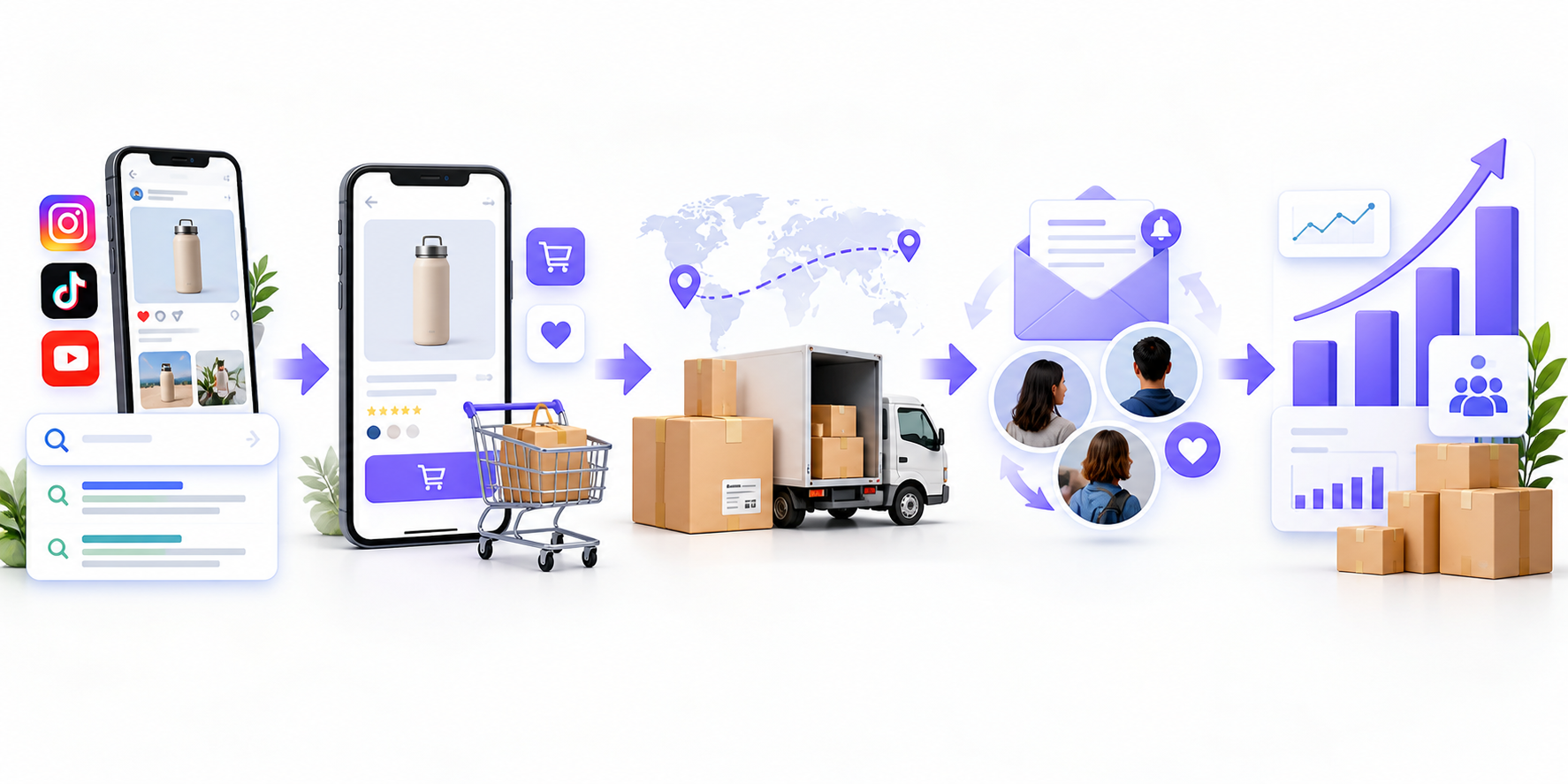
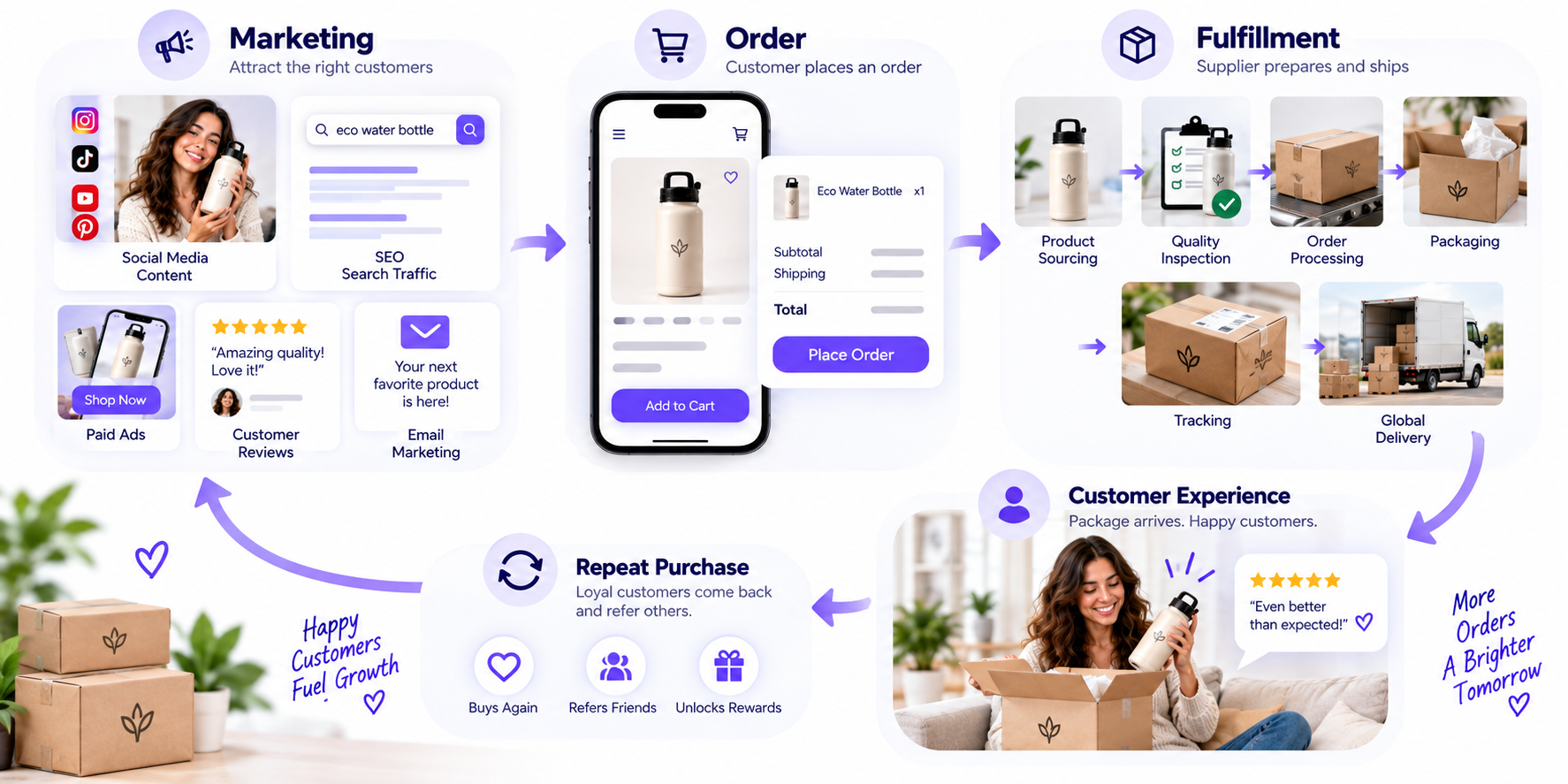
Choose a niche → Optimize your store → Get traffic → Build trust → Convert visitors → Retain customers → Scale
Key Takeaways
- Prepare your store:Validate your niche, products, and product pages.
- Choose the right channels:Use SEO, social content, UGC, ads, and email strategically.
- Improve conversion:Turn existing traffic into more sales with better pages and trust signals.
- Retain customers:Use email, retargeting, and a reliable customer experience.
- Support fulfillment:Fast processing, shipping, tracking, and quality help drive repeat purchases.
What Is Dropshipping Marketing?
Dropshipping marketing is the process of attracting potential customers to your store, turning visitors into buyers, and encouraging existing customers to purchase again.
It includes much more than advertising.
A complete dropshipping marketing strategy can include:
- Organic social media
- SEO and content marketing
- Paid advertising
- UGC and influencer marketing
- Email and retargeting
- Conversion optimization
- Customer retention
The goal is not simply to generate traffic. It is to turn attention into dropshipping sales and build a marketing system that can grow over time.
How to Prepare Your Dropshipping Store for Marketing
Before spending money on ads or investing time in content, make sure your dropshipping store is ready to convert visitors.
Choose and Validate Your Niche
A clear niche makes it easier to decide what products to sell, what content to create, and who to target.
Look at:
- Search demand
- Competitors
- Customer problems
- Product pricing
- Potential profit margins
- Whether customers are already buying similar products
Avoid choosing a product only because it is trending. A trend can create short-term traffic without creating a sustainable business.
Choose Products That Are Worth Marketing
A product needs more than demand to succeed.
Consider its:
- Selling price
- Shipping cost
- Product quality
- Delivery time
- Competition
- Return risk
Before investing heavily in dropshipping advertising, order samples when possible and check the actual customer experience.
Check Your Supplier and Fulfillment
Your marketing promise does not end when someone clicks "Buy." Slow processing, poor quality, missing tracking, or unpredictable delivery can lead to complaints and refunds.
Check your fulfillment process before scaling your marketing.
Optimize Your Store Before Driving Traffic
Make sure visitors can quickly understand:
- What the product does
- Why they need it
- How much it costs
- When it will arrive
- What happens if they want to return it
Your product pages should also work well on mobile.
There is little value in getting thousands of visitors if your store is not ready to convert them.
7 Core Dropshipping Marketing Strategies for 2026
There is no single channel that works for every dropshipping business. The right combination depends on your niche, budget, product, and target customers.
1. Use Short-Form Social Content
Short-form video is one of the easiest ways to test product ideas without starting with a large advertising budget.
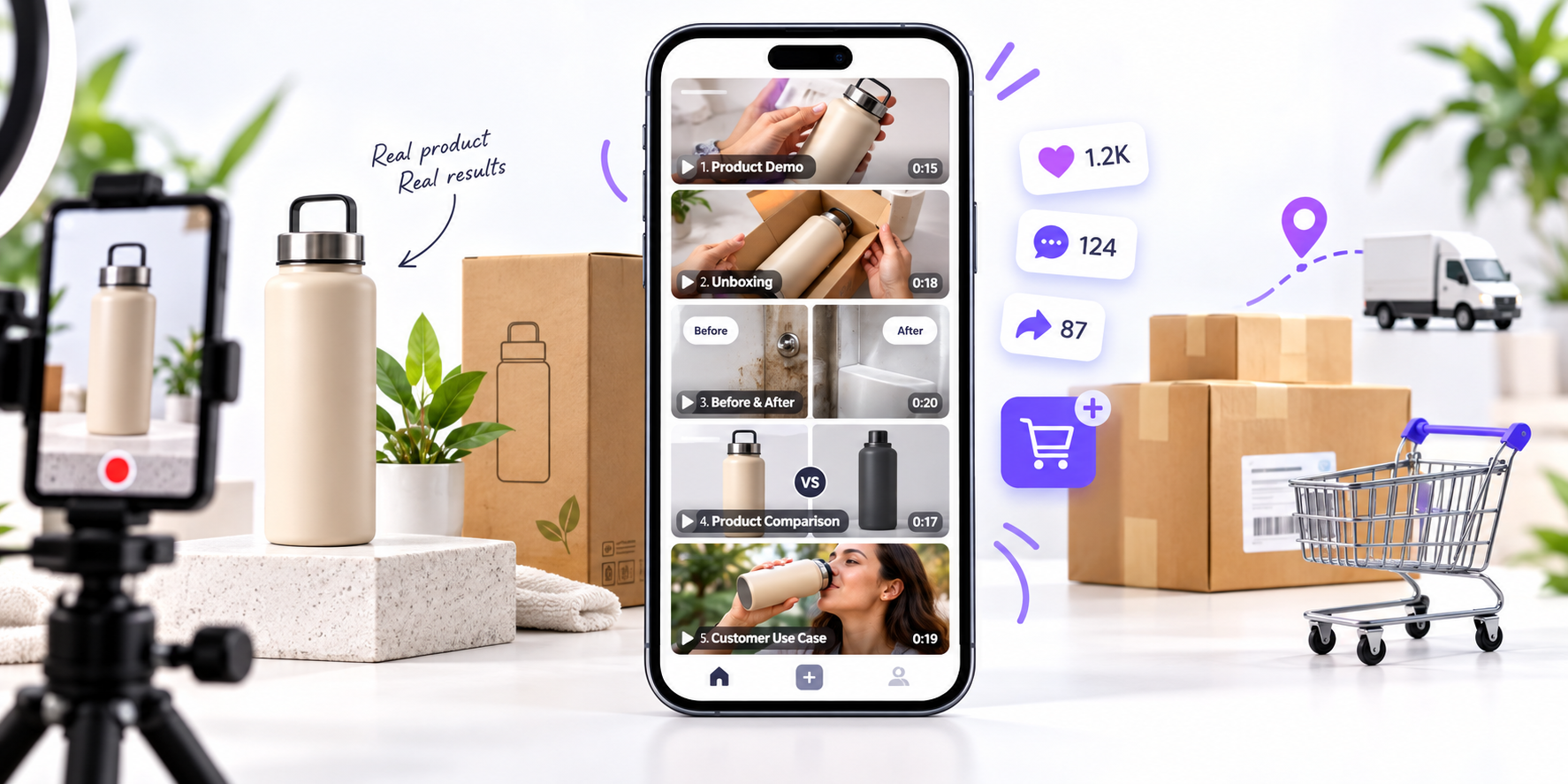
For social media marketing for dropshipping, create content around the product rather than simply posting sales messages.
Try:
- Product demonstrations
- Before-and-after videos
- Problem-and-solution videos
- Unboxing content
- Product comparisons
- Customer use cases
- Behind-the-scenes content
TikTok, Instagram Reels, and YouTube Shorts can all be useful testing grounds.
Pay attention to saves, shares, comments, clicks, and purchases—not just views. A video with fewer views but strong buying intent can be more valuable than a viral video that produces no sales.
2. Use SEO for Dropshipping to Build Organic Traffic
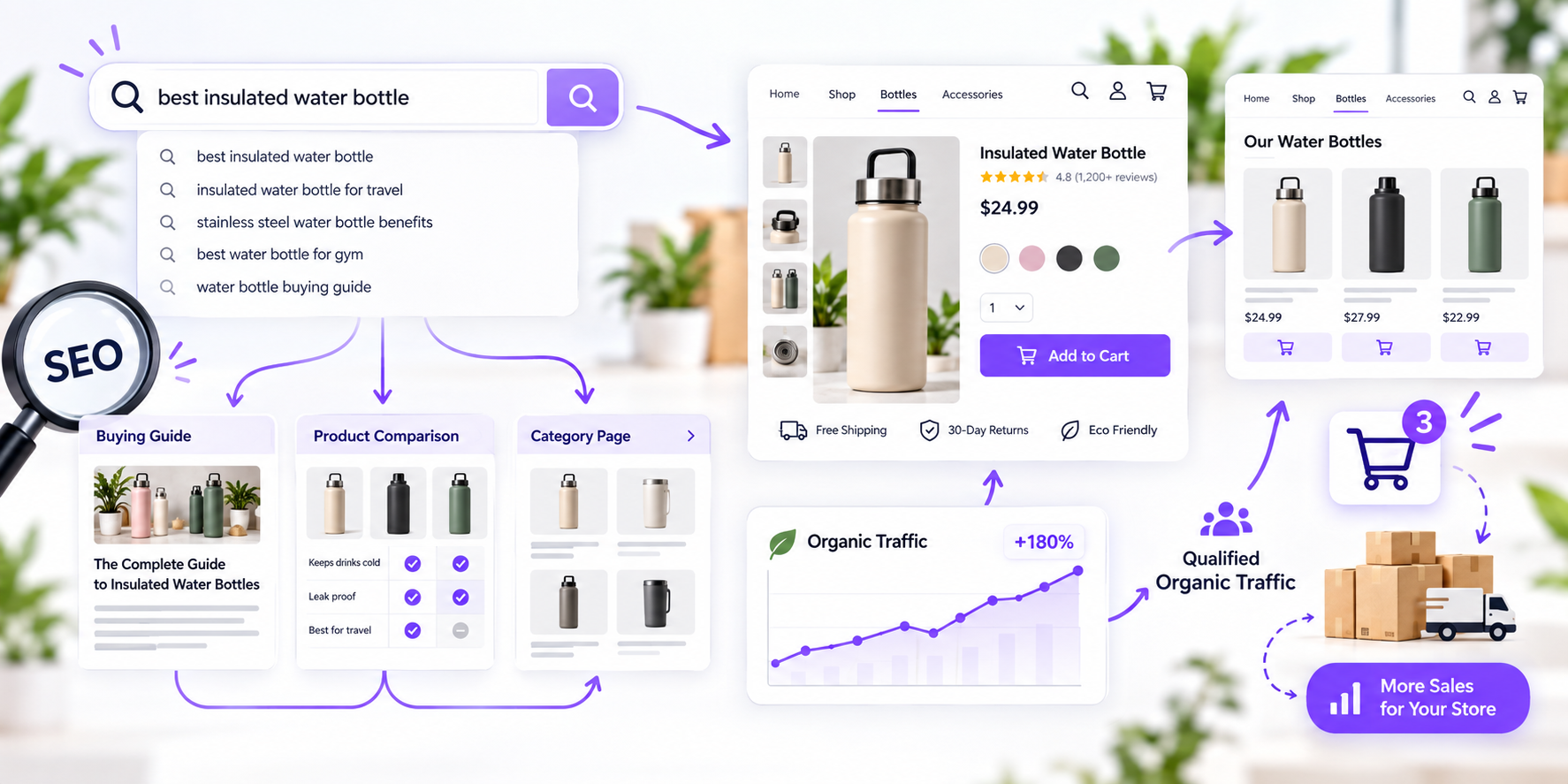
SEO for dropshipping takes longer than paid advertising, but it can create traffic without paying for every click.
Start with the pages closest to a purchase:
- Product pages
- Category pages
- Collection pages
- Comparison pages
- Helpful buying guides
Then create blog content around real customer questions.
For example, instead of writing a generic article about a product, answer questions such as:
"How does this product work?"
"What should buyers look for before purchasing it?"
"What are the best alternatives?"
"How long does shipping take?"
Google recommends making ecommerce content and product information easy for Search to understand, while clear site structure and relevant internal links can help Google discover and understand important pages. [1]
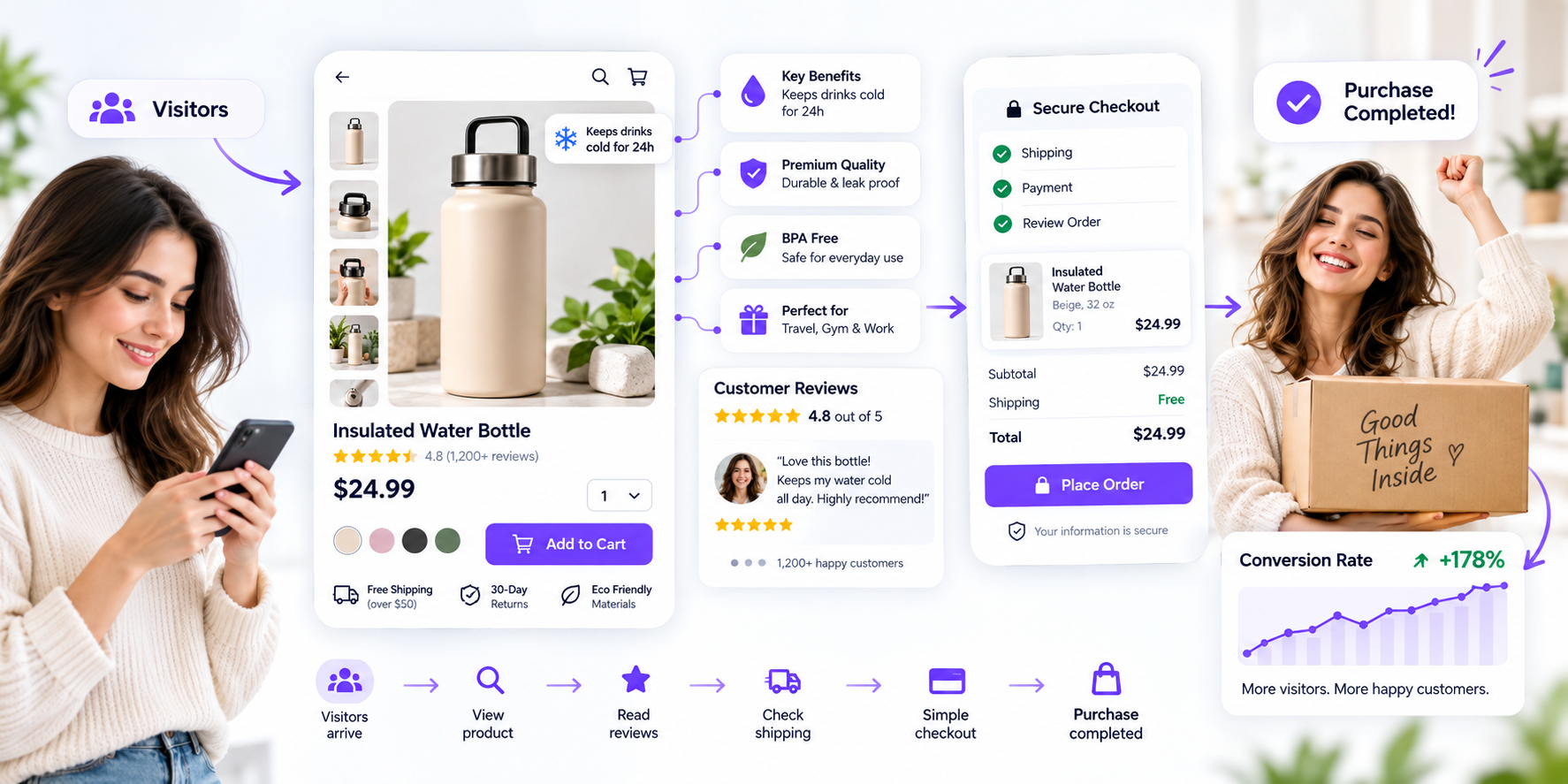
3. Improve Your Dropshipping Store Conversion Rate
More traffic does not automatically mean more sales.
If 1,000 people visit your store and only a few buy, the next step may be improving conversion rather than finding another traffic source.
Check:
- Is the product benefit obvious?
- Are shipping times easy to find?
- Are product photos convincing?
- Is the price competitive?
- Are reviews visible?
- Does the page answer common objections?
- Is checkout simple on mobile?
A small improvement in conversion rate can make your existing dropshipping marketing strategy more profitable without increasing traffic.
4. Use UGC and Micro-Influencers
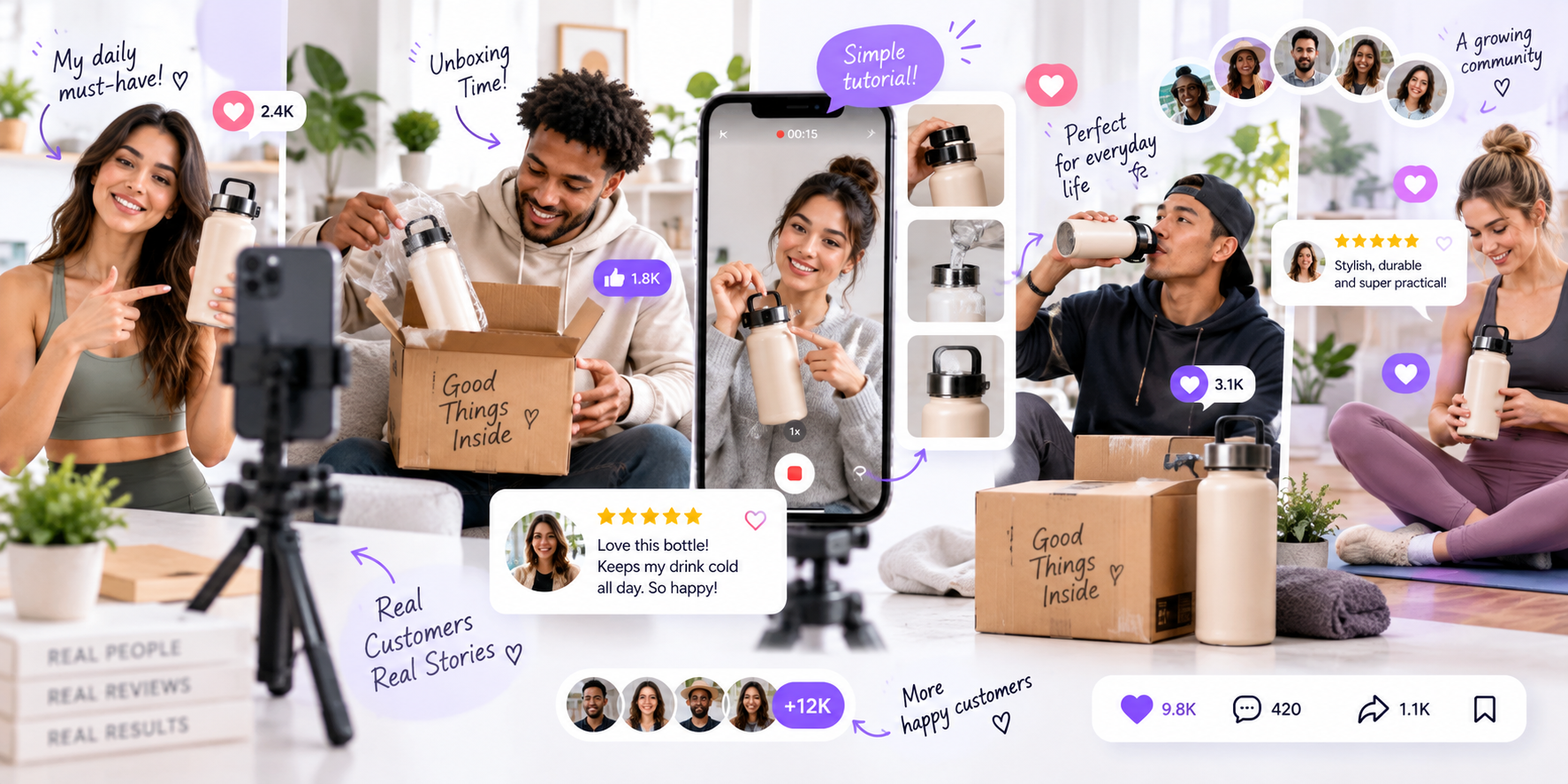
People are often more comfortable buying after seeing someone use a product than after seeing another polished advertisement.
User-generated content (UGC) can include:
- Product demonstrations
- Unboxing videos
- Reviews
- Tutorials
- Customer reactions
You can also work with smaller creators whose audience closely matches your niche.
Instead of asking an influencer to simply say “Buy this product,” give them room to demonstrate how and why they use it.
This makes your dropshipping advertising feel more natural and can give you content that can later be reused in ads.
5. How to Advertise Your Dropshipping Store
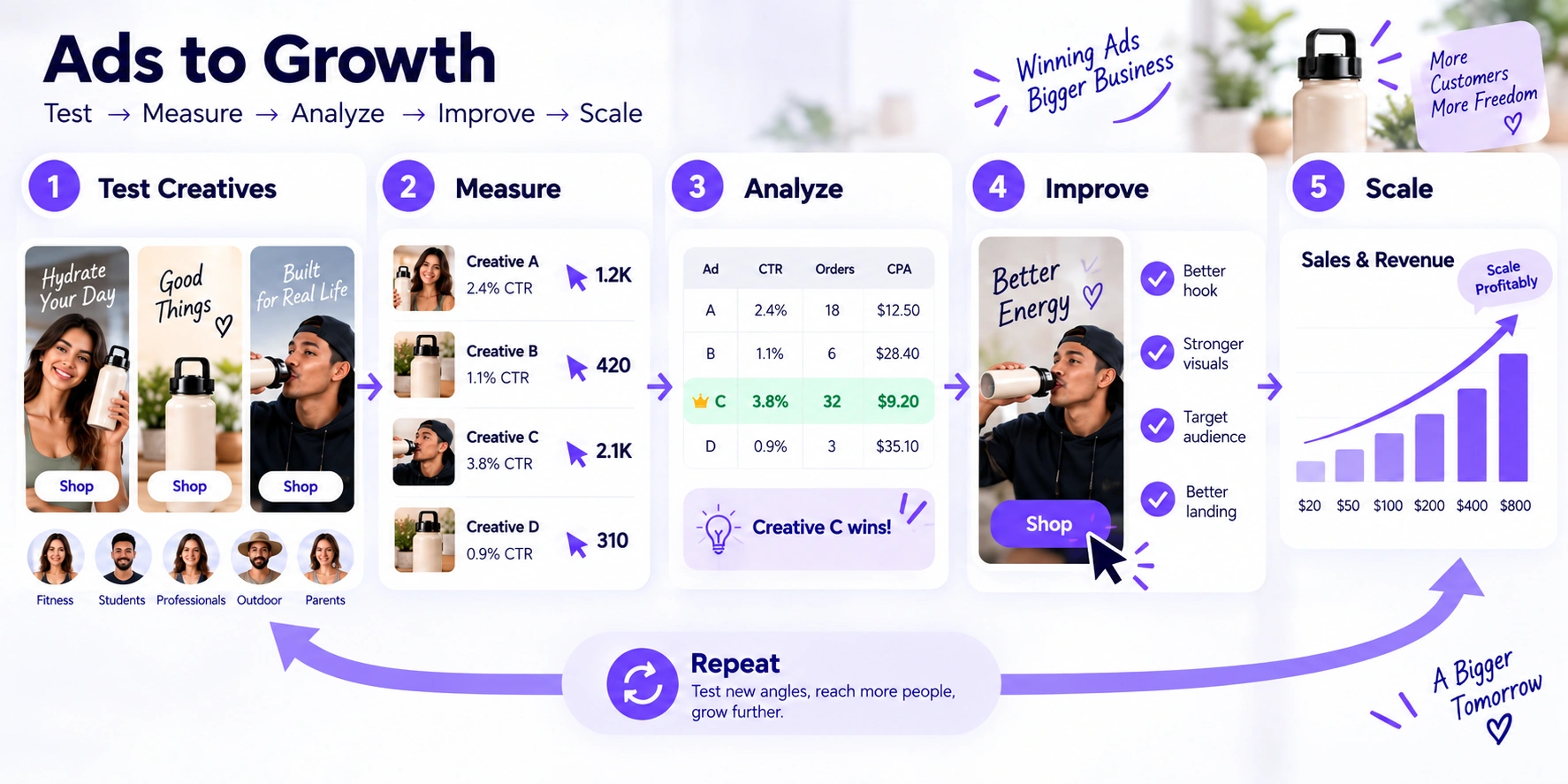
Paid advertising can help you scale faster. A practical approach is:
Test → Measure → Improve → Scale
Start with a small budget and test:
- Different creatives
- Different audiences
- Different product angles
- Different landing pages
If a product receives clicks but no purchases, don't automatically increase the budget. Check the product page, price, shipping information, and offer first.
When you find a combination that generates profitable sales, increase spending gradually.
6. Use Email Marketing to Get Repeat Customers
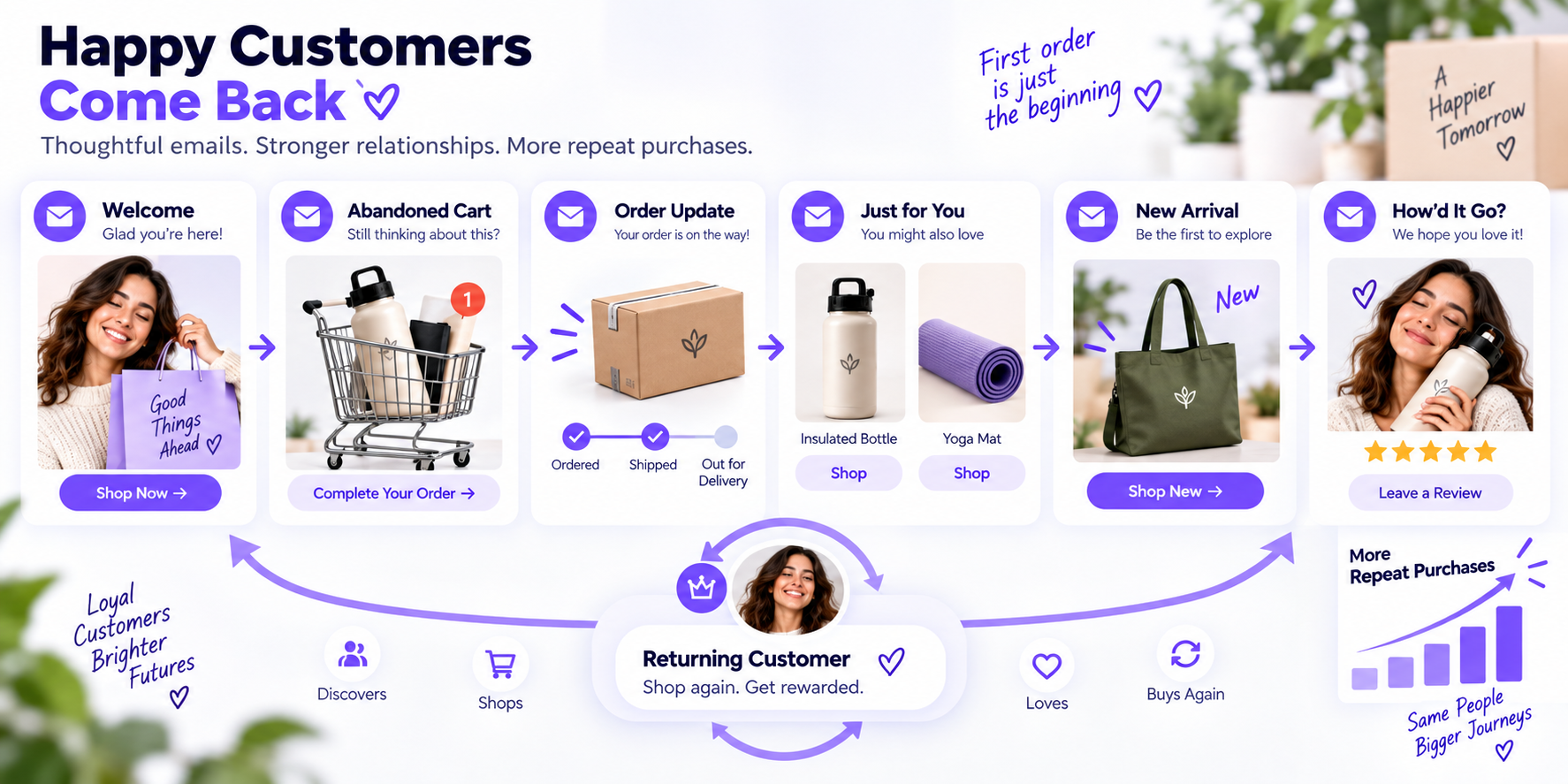
Getting a new customer usually costs more effort than selling again to someone who already knows your store.
Email can help you build that second relationship after the sale and encourage customers to buy again.
Start with simple campaigns:
- Welcome emails
- Abandoned-cart reminders
- Order updates
- Product recommendations
- New product announcements
- Post-purchase follow-ups
Automation can be especially useful. Shopify's 2026 ecommerce data reports that automated emails accounted for just 2% of emails sent in 2025 but generated 30% of email-attributed revenue. [2]
The goal is not to email customers every day. Send useful messages at the right stage of the customer journey.
7. Make Fulfillment Part of Your Marketing Strategy
This is where marketing and operations connect.
Imagine you spend $1,000 getting customers to your store. Your ads work, people buy, and then orders arrive late or products do not meet expectations.
The marketing succeeded—but the customer experience failed.
Shipping speed, tracking, product quality, and order accuracy can affect reviews, refunds, customer support, and repeat purchases.
Reliable fulfillment also supports dropshipping customer service by reducing delivery-related complaints and order issues.
TeemDrop combines sourcing, quality inspection, automated fulfillment, and global delivery so sellers can manage more of this process through one platform.
For a growing store, this matters because marketing brings customers in, while fulfillment helps give them a reason to return.
Which Dropshipping Marketing Strategy Should You Start With?
| Your Situation |
Good Starting Point |
| No marketing budget |
SEO + organic short-form video |
| New store |
Product-page optimization + short-form content |
| Traffic but few sales |
CRO + social proof |
| Many abandoned carts |
Email + retargeting |
| Organic content performs well |
Paid advertising |
| Strong niche audience |
UGC + micro-influencers |
| Existing customers |
Email + bundles |
| Growing order volume |
Fulfillment + inventory planning |
Choose one or two channels based on your current situation, learn what your customers respond to, and expand from there.
A Simple 30-Day Dropshipping Marketing Plan
Week 1: Prepare
- Validate your product and niche
- Improve your product pages
- Set up analytics
- Test your product and fulfillment process
- Prepare your first content
Week 2: Test Organic Content
- Publish short-form videos
- Test different hooks and product angles
- Track clicks, saves, shares, and store visits
- Identify your strongest content
Week 3: Improve Conversion and Test Paid Traffic
- Add reviews and UGC
- Improve product-page copy
- Test a small paid campaign
- Set up abandoned-cart and welcome emails
Week 4: Analyze and Scale
Review:
- Traffic
- Conversion rate
- Customer acquisition cost
- ROAS
- Average order value
- Repeat purchases
Then invest more time and money into what is actually working.
Common Dropshipping Marketing Mistakes
Trying Every Channel at Once
More channels do not automatically mean more sales. Spreading yourself too thin can make it difficult to learn what works.
Running Ads Before Validating the Product
Paid traffic can amplify a good offer, but it can also amplify a bad one.
Focusing Only on Traffic
If visitors are not buying, more traffic may not solve the real problem. Check your product page, offer, trust signals, and checkout experience first.
Copying Competitors Too Closely
Use competitors for research, not imitation. Your product positioning and content should give customers a reason to choose you.
Ignoring Fulfillment
Marketing creates expectations about quality, delivery, and service. Your fulfillment process needs to support them.
Scaling Before Your Operations Are Ready
A sudden increase in orders is only useful if you can source, inspect, process, and deliver them reliably.
Final Thoughts: Build Marketing That Can Scale
Successful dropshipping marketing is not about finding one magic traffic source.
It is about building a system:
Attract → Convert → Deliver → Retain → Scale
Start with a clear niche and a product worth selling. Use organic content and SEO to understand what attracts buyers. Add paid advertising when you know what works. Use UGC, email, and retargeting to improve conversion and repeat purchases.
And as your orders grow, make sure your fulfillment can grow with them.
TeemDrop brings product sourcing, quality control, automated fulfillment, inventory solutions, and global delivery together, helping sellers scale their dropshipping business without treating marketing and fulfillment as separate systems.
FAQ
What is the best marketing strategy for dropshipping?
There is no single best channel for every store. For beginners, organic short-form content and SEO are useful starting points because they allow you to test products and messaging before committing a large advertising budget.
How do I advertise my dropshipping store?
Start by testing different product angles and creatives on platforms such as TikTok, Instagram, Meta, or Google. Track conversion rate and customer acquisition cost, then scale the ads that produce profitable results.
Is SEO important for dropshipping?
Yes. SEO for dropshipping can help your product pages and helpful content appear for relevant, high-intent searches. It is especially useful for building long-term organic traffic.
How much should I spend on dropshipping advertising?
There is no universal starting budget. Begin with an amount you can afford to test, validate your product and creative, and increase spending only when the results are sustainable.
How can I get repeat customers in dropshipping?
Use post-purchase emails, relevant product recommendations, bundles, new-product campaigns, and a reliable delivery experience. Repeat purchases depend on both marketing and customer satisfaction.
Does fulfillment affect dropshipping marketing?
Yes. Slow delivery, poor product quality, or unreliable tracking can damage reviews and customer trust. A reliable fulfillment process helps ensure that the experience matches what your marketing promises.
References
[1] Google Search Central — Documentation
SEO Best Practices for Ecommerce Sites
[2] Shopify — Ecommerce Email Marketing Statistics 2026
Shopify: 61 Email Marketing Statistics for Ecommerce (2026)