Dropshipping Spy Tools in 2026: How to Research Products, Ads & Competitors
You find a product on TikTok that looks like a great dropshipping opportunity. A few stores are selling it, their ads are getting attention, and the product seems to be everywhere.
But then you start asking questions:
Are people actually searching for it? How many competitors are selling it? Which ads are working? Is the demand growing, or is the product simply going viral for a few days?
Guessing based on social media isn't enough.
This is where dropshipping spy tools can help. They let you research products, competitor stores, advertisements, and market trends before you spend money testing a product.
In this guide, we will look at the main types of spy tools, specific websites you can use, and how to combine their data to decide whether a product is worth testing.
Quick Answer
Dropshipping spy tools help you research products, competitors, ads, and market trends before launching a product.
Useful options include AutoDS, Minea, Dropship.io, Koala Inspector, Similarweb, Meta Ad Library, PiPiADS, TikTok Creative Center, and Google Trends.
You do not need all of them. Choose the tools that answer the questions you have about a product.
Key Takeaways
- Use different tools for different research questions.
- Check products from more than one data source.
- Study competitors and ads before copying a product.
- Validate sourcing, costs, and demand before testing.
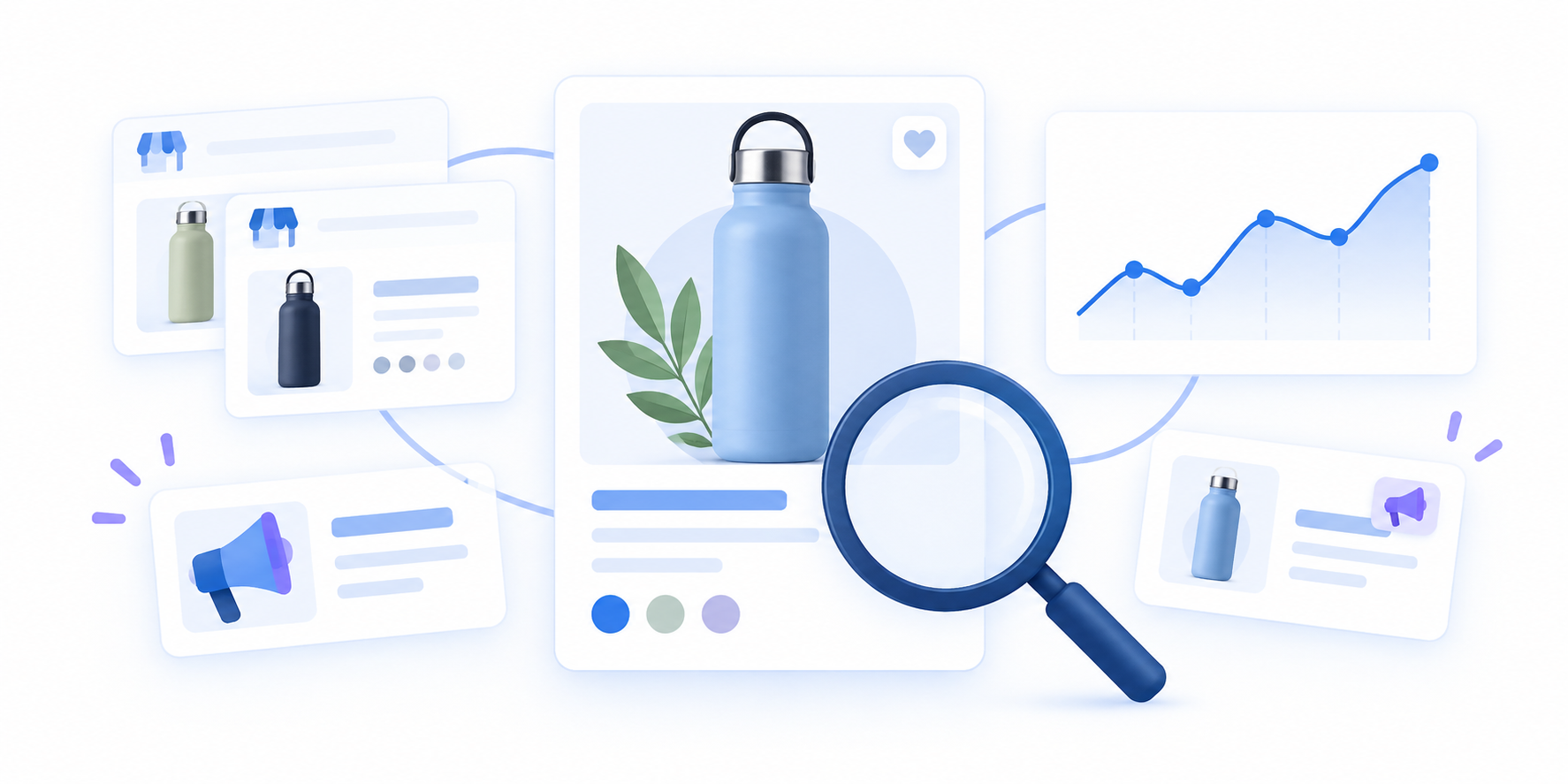
What Can Dropshipping Spy Tools Help You Research?
A product can look promising on the surface but still be a poor choice for your store.
Instead of asking only "Is this product trending?", use spy tools to answer four more useful questions.
1. Is the Product Worth Investigating?
Product research tools help you discover products that are already receiving attention or showing market signals.
Platforms such as AutoDS, Minea, and Dropship.io provide product research features that can help you build an initial product shortlist. AutoDS, for example, combines product discovery with trending products, ad research, and TikTok-related research. [1]
The important point is that these tools should help you find ideas, not make the final decision for you.
2. Who Is Already Selling It?
After finding a product, look at the stores already selling similar products.
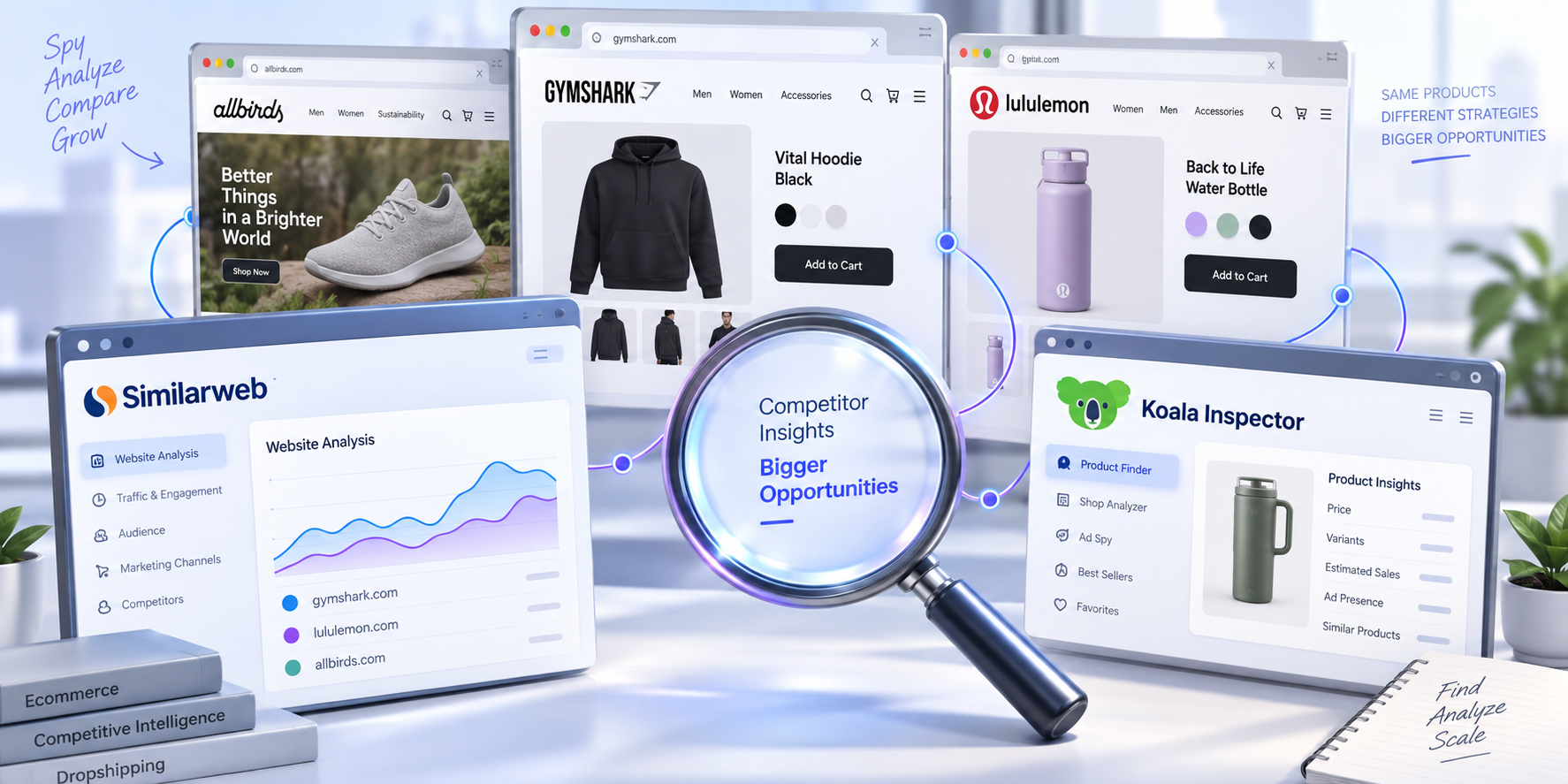
Koala Inspector can provide information about Shopify stores, including products, themes, apps, and other public store data. [2]
Similarweb can help you investigate estimated website traffic and traffic sources when comparing competitors. [3]
This gives you a better idea of how crowded the market is and how other stores position similar products.
3. How Are Competitors Advertising It?
A product may be common, but the way it is marketed can still reveal opportunities.
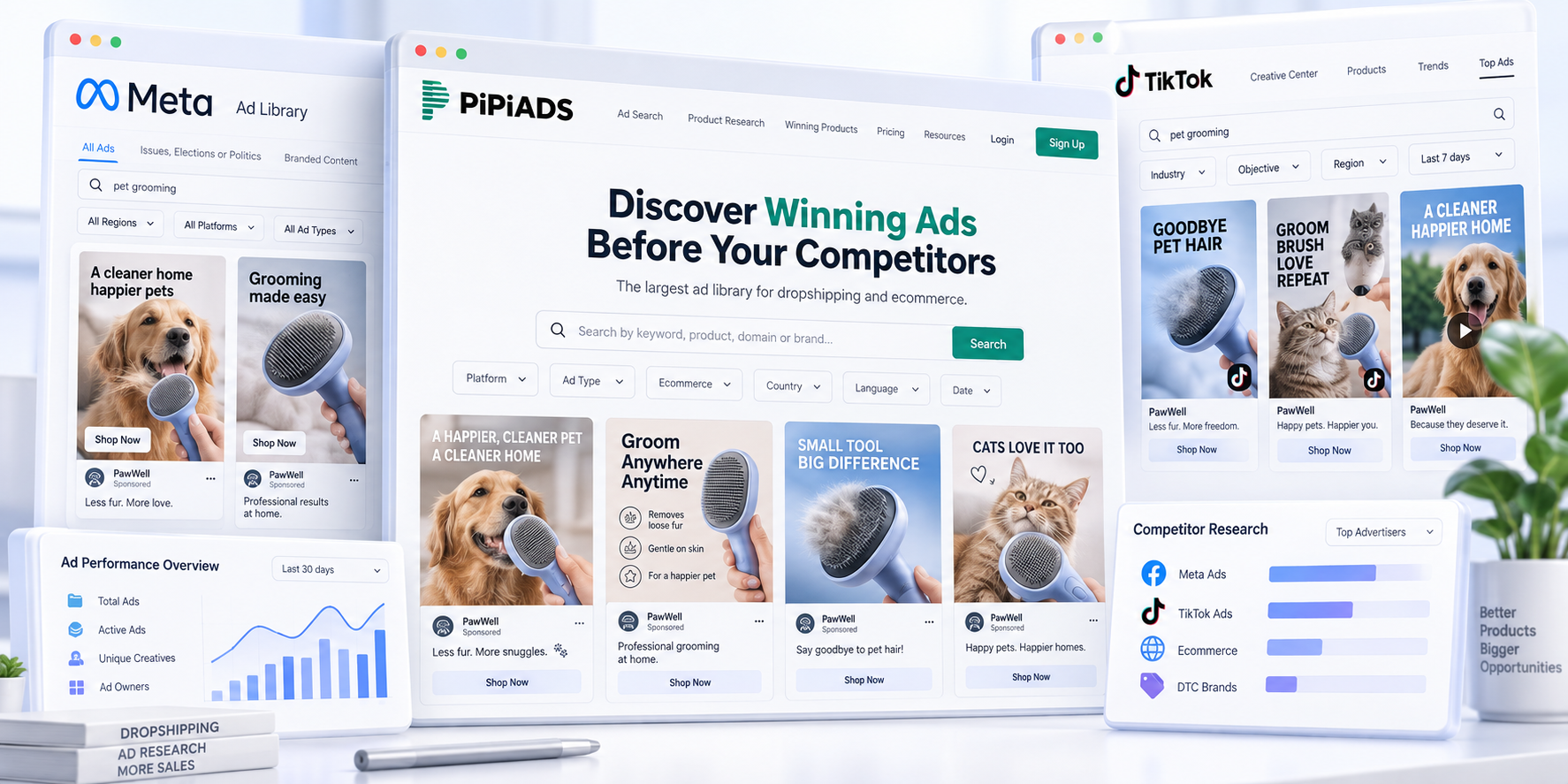
For Facebook and Instagram, Meta Ad Library lets you search ads from advertisers. [4]
For TikTok, TikTok Creative Center provides advertising examples and creative trend information. [5]
Paid tools such as PiPiADS and Minea can make ad research more structured by bringing product and advertising data together.
Instead of simply copying an ad, look for patterns:
- What problem does the ad focus on?
- What type of video is used?
- What benefit is highlighted?
- What offer or price is shown?
4. Is There Real Market Interest?
A product appearing in several ads does not automatically mean that demand is growing.
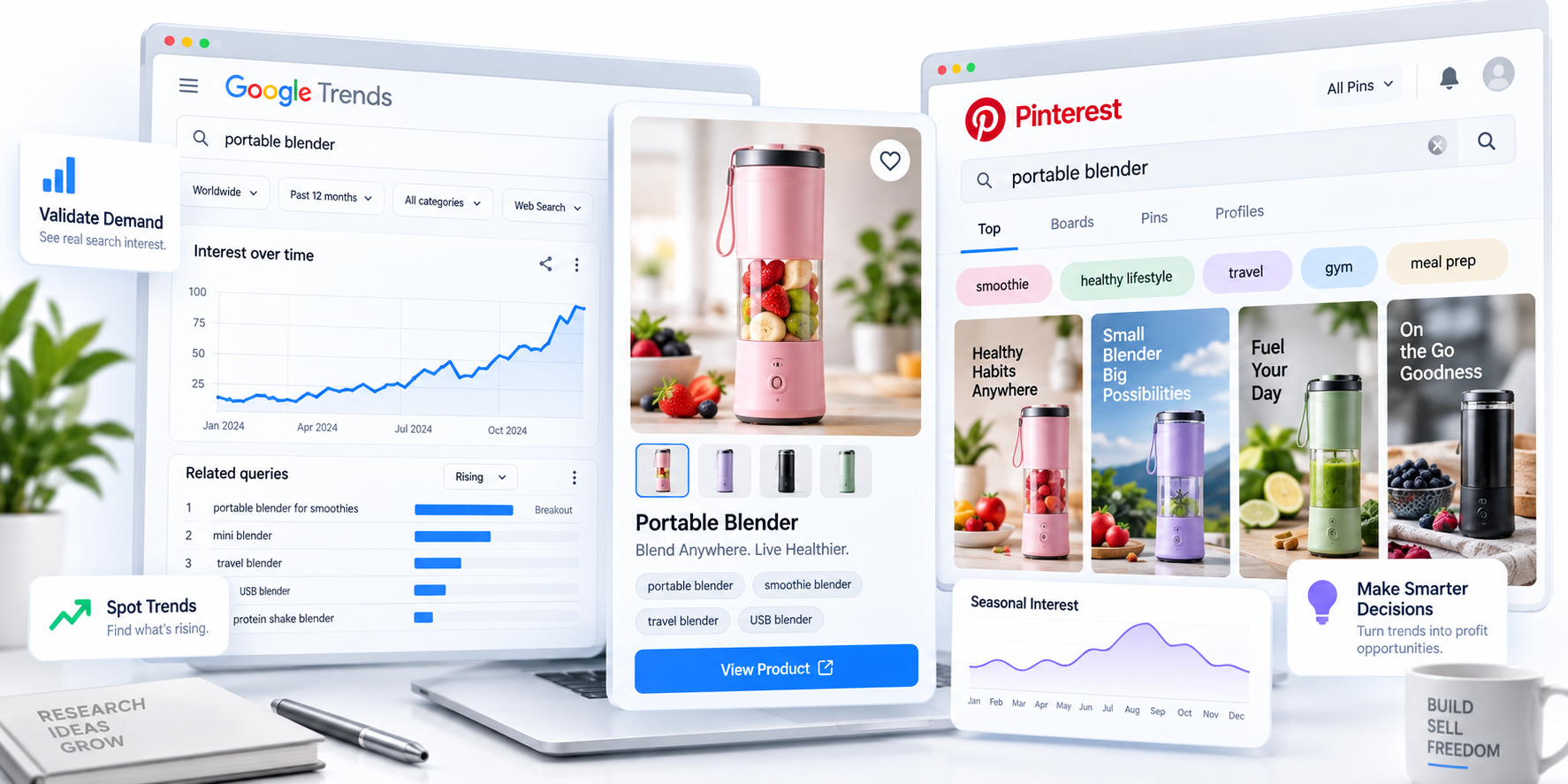
Google Trends can show how search interest changes over time and across locations. [6]
For visual categories, Pinterest Trends can also help identify seasonal and growing interests. [7]
These tools can help you distinguish between a short-lived viral product and a product with more consistent demand.
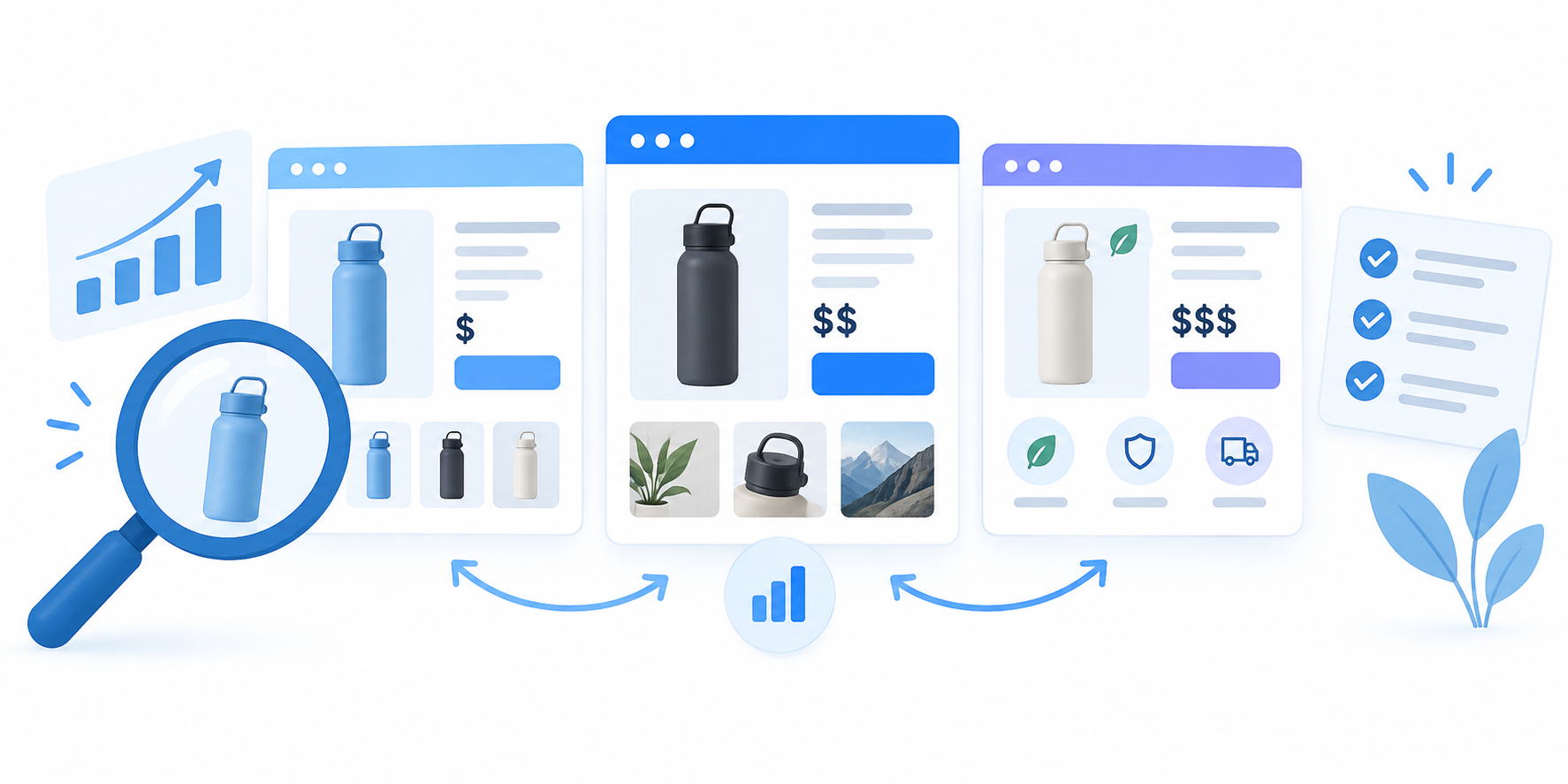
Best Dropshipping Spy Tools by Use Case
There is no need to subscribe to every research platform. The best choice depends on what you are trying to find out.
Product Research Tools
TeemDrop
Best for: Product discovery with integrated sourcing and fulfillment.
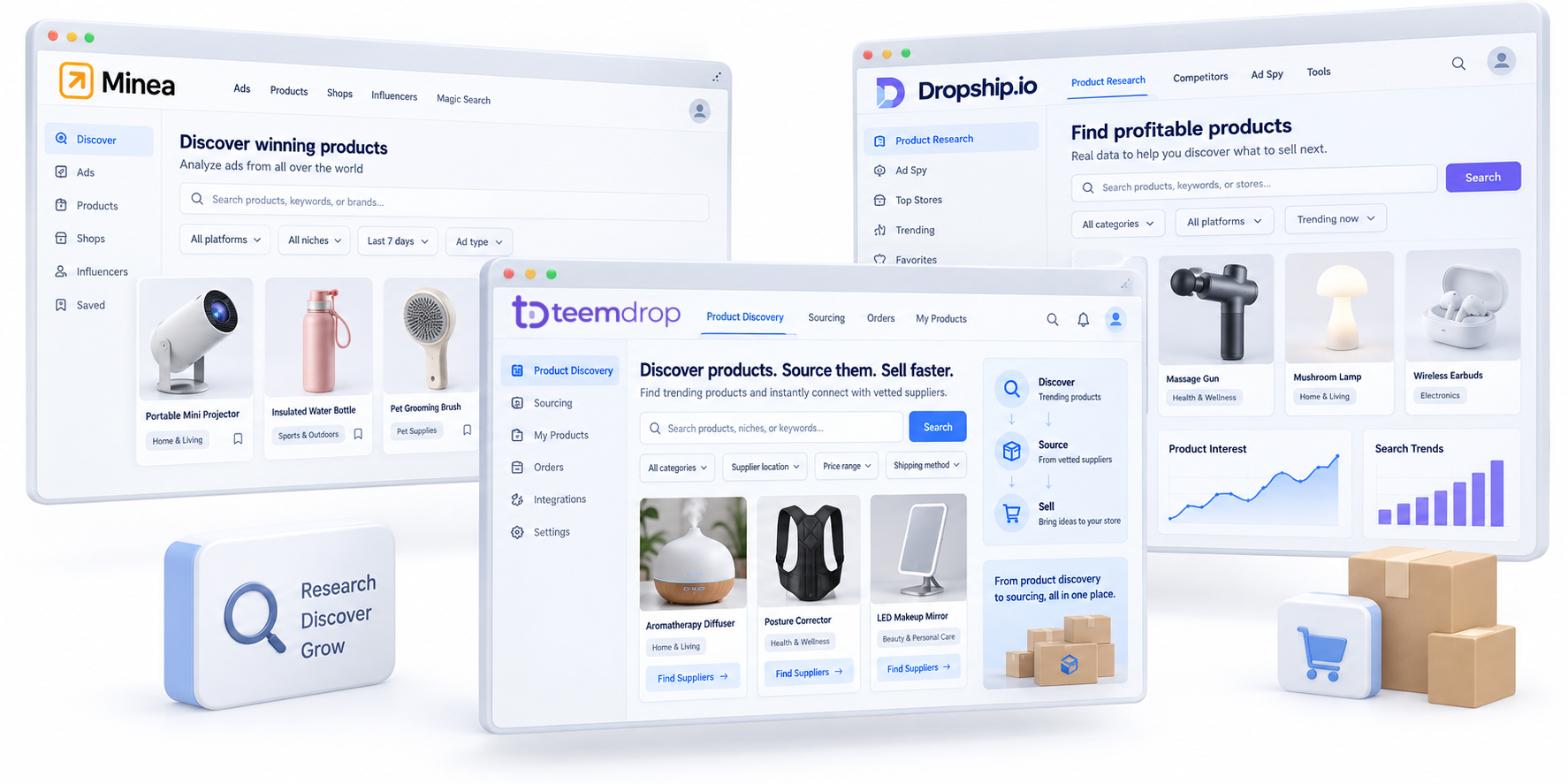
TeemDrop provides product research and discovery features that help dropshippers find potential products and evaluate product opportunities. It also connects product discovery with sourcing and fulfillment, so you can move from researching a product to finding a sourcing option and preparing it for selling.
Limitation: TeemDrop combines product research with sourcing and fulfillment, so it may offer more functionality than you need if you only want a standalone product research tool.
Minea
Best for: Combining product and ad research.
Minea focuses on product discovery, social advertising research, and competitor intelligence. [8]
It is useful when you want to investigate both what products are being promoted and how they are being promoted.
Dropship.io
Best for: Product and competitor research.
Dropship.io provides product research alongside competitor and advertising research. [9]
It can help you compare product opportunities with what other stores are doing.
Tip: Use these platforms to create a shortlist, then verify the products with independent sources such as Google Trends and competitor research.
Competitor Spy Tools
Koala Inspector
Best for: Shopify store research.
Koala Inspector can help you investigate public information from Shopify stores, including products, themes, apps, and other store signals. [2]
Use it when you have found a competitor and want to understand how their store is structured.
Similarweb
Best for: Website traffic and competitor research.
Similarweb provides estimated website traffic, traffic sources, keywords, and other digital market signals. [3]
It is useful when you want to understand where a competitor may be getting visitors.
Remember: traffic figures from third-party platforms are estimates, not the store's private analytics.
Ad Spy Tools
Meta Ad Library
Best for: Free Facebook and Instagram ad research.
Meta Ad Library lets you search ads running across Meta platforms. [4]
You can use it to study:
- Ad creatives
- Product angles
- Offers
- Messaging
- Different versions of an advertiser's ads
It is one of the easiest places to start because you can use it without paying for a dedicated spy platform.
PiPiADS
Best for: TikTok and social media ad research.
PiPiADS provides a dedicated environment for researching TikTok ads, products, and creative patterns.
It can be useful when your target audience is highly active on short-form video platforms.
TikTok Creative Center
Best for: Free TikTok creative and trend research.
TikTok Creative Center provides access to advertising examples, creative trends, and other insights from the TikTok ecosystem. [5]
It is particularly useful for understanding how products are presented, rather than simply finding products to copy.
Trend Research Tools
Google Trends
Best for: Search demand and seasonality.
Google Trends lets you compare search interest over time, locations, and related queries. [6]
For example, if you are considering a seasonal product, compare its interest across several months instead of judging it from one current spike.
Pinterest Trends
Best for: Visual and seasonal product trends.
Pinterest Trends provides insights into search trends on Pinterest. [7]
It can be particularly useful for categories such as:
- Home decor
- Fashion
- Beauty
- Gifts
- Seasonal products
TikTok Creative Center
TikTok Creative Center can also be used for trend research, especially when you want to understand which creative styles, topics, or products are gaining attention on the platform. [5]
Product Sourcing Tools
Spy tools help you research the opportunity. They do not solve the next problem: Can you actually source and fulfill dropshipping products reliably?
This is where platforms such as TeemDrop, CJdropshipping, and Spocket serve a different purpose.
TeemDrop provides product sourcing and fulfillment, including sourcing from 1688 and Taobao, supplier matching, quality control, and order fulfillment.
CJdropshipping provides product sourcing and fulfillment services, while Spocket focuses on supplier discovery with an emphasis on US and EU suppliers.
These platforms are useful when you need to move from product research to working with dropshipping suppliers after identifying a product worth investigating.
A simple process is:
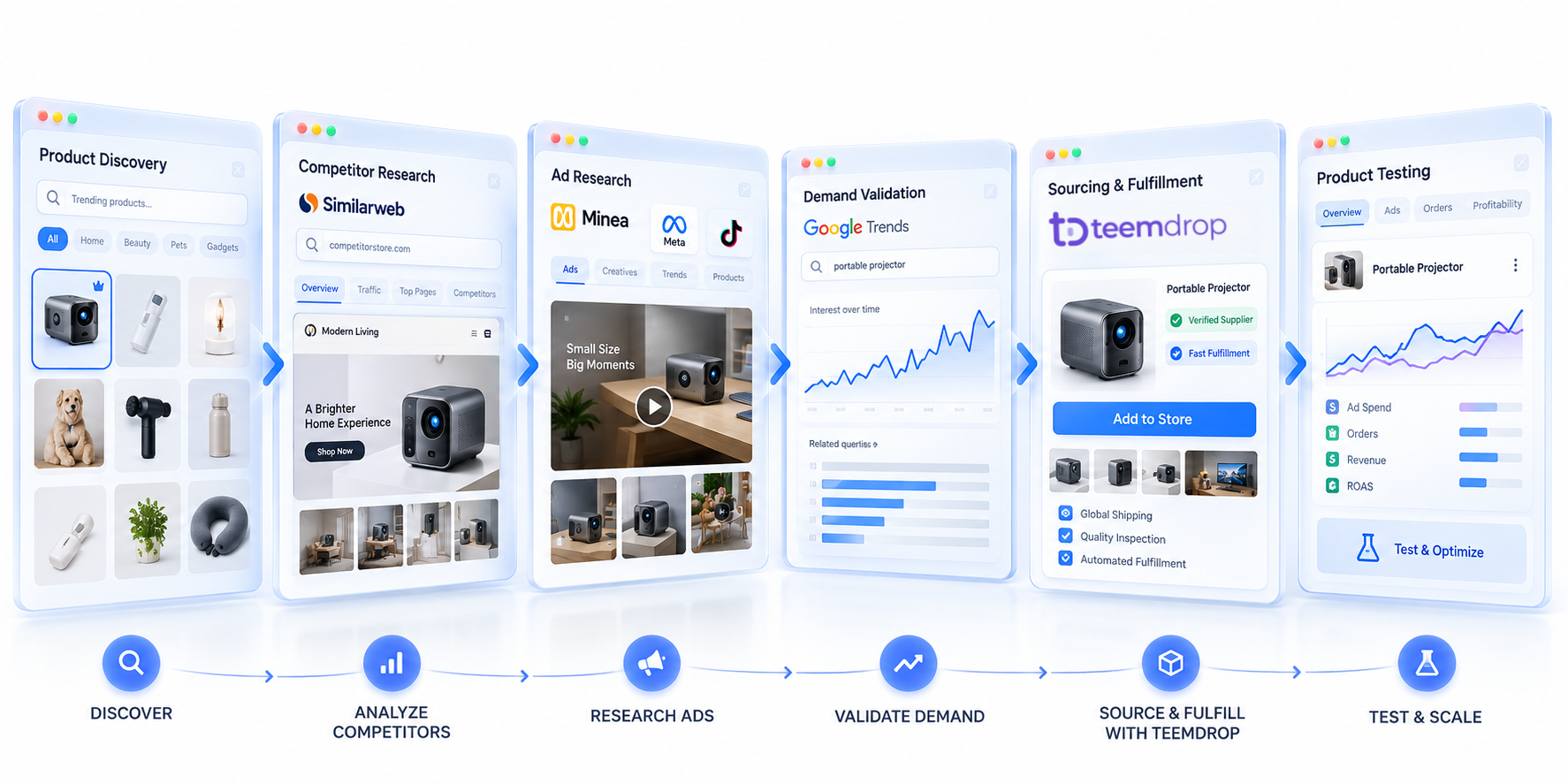
Research → Validate → Source → Test → Scale
How to Use Dropshipping Spy Tools to Validate a Product
Finding a product is only the first step. The real value comes from combining the information.
1. Find a Product Opportunity
Start with TeemDrop, Minea, Dropship.io, or another product research platform.
Create a shortlist of products after you find dropshipping products instead of immediately choosing the first product that looks popular.
Ask:
Why does this product look interesting?
Maybe it solves a clear problem, has strong visual appeal, or is appearing across several channels.
2. Check the Competition
Search the product on Google and look at stores already selling it.
Then use tools such as Koala Inspector or Similarweb to investigate relevant competitors.
Check:
- Selling price
- Product positioning
- Store quality
- Product variations
- Main selling points
- Traffic signals
The goal is not to copy a competitor. It is to find out what customers can already buy.
3. Study the Ads
Search for the product or competing brands in Meta Ad Library, TikTok Creative Center, PiPiADS, or Minea.
Look for repeated patterns.
If multiple sellers emphasize the same customer problem, that may tell you something about how the market understands the product.
At the same time, look for gaps in the existing advertising. A crowded market may still leave room for a different audience, offer, or creative angle.
4. Check Demand
Now move beyond competitor activity.
Use Google Trends to see whether interest is:
- Growing
- Stable
- Seasonal
- Declining
Compare related keywords where possible.
A product that is heavily advertised but has weak or falling search interest deserves more careful investigation.
5. Check Sourcing and Fulfillment
Before testing, calculate the basic economics.
Check:
- Product cost
- Shipping cost
- Delivery time
- Product quality
- Available variants
- Expected selling price
This is where sourcing platforms such as TeemDrop can help you move from product research to actual product testing.
6. Test Before Scaling
No spy tool can guarantee sales.
Even if a product has strong demand signals, successful stores still depend on pricing, creative quality, targeting, customer experience, and fulfillment.
Start with a controlled test. Use your own sales and customer data to decide what to change or scale.
Can One Dropshipping Spy Tool Do Everything?
Some platforms combine several research functions, but you do not need one tool to answer every question.
Think about the question first:
This approach keeps your research focused and prevents you from paying for features you do not need.
How to Choose the Right Dropshipping Spy Tools
Before subscribing to a tool, identify the information you are missing.
If you need product ideas, start with product research platforms.
If you need competitor information, use store and traffic research tools.
If you need advertising inspiration, start with Meta Ad Library or TikTok Creative Center before paying for an ad spy platform.
If you need to understand market demand, Google Trends is a useful starting point.
And once a product passes your research stage, move to sourcing and fulfillment research.
The goal is not to collect the most tools.
The goal is to collect enough reliable information to make a better product decision.
FAQ
What are dropshipping spy tools?
Dropshipping spy tools are research platforms that help sellers investigate products, competitors, advertisements, stores, or market trends.
Are dropshipping spy tools accurate?
They provide useful signals, but third-party estimates should not be treated as exact sales or traffic data. Always compare information from multiple sources.
What is the best free dropshipping spy tool?
For different research tasks, free options include Meta Ad Library, Google Trends, and TikTok Creative Center. They can cover basic ad, search, and trend research without requiring a paid spy platform.
Can spy tools find winning products?
They can help you discover promising products, but they cannot guarantee sales. You still need to validate demand, competition, pricing, sourcing, and fulfillment.
Do I need a spy tool if I already have a supplier?
Not necessarily. A supplier helps you source and fulfill products, while a spy tool helps you research the market. They solve different problems.
Final Takeaway
A good dropshipping spy tool does not tell you exactly what to sell.
It gives you better information to make that decision.
Use product research tools to find opportunities, competitor tools to understand the market, ad tools to study marketing angles, and trend tools to check demand.
Then validate the product's cost, quality, shipping, and fulfillment before testing it.
The goal is not simply to find what other stores are selling.
It is to understand why a product may have demand and whether you can build a better offer around it.
References
[1] AutoDS, Product Finding Hub.
AutoDS Product Finding Hub
[2] Koala Inspector, Shopify Store Research.
Koala Inspector
[3] Similarweb, Website Traffic & Competitor Research.
Similarweb
[4] Meta, Ad Library.
Meta Ad Library
[5] TikTok, Creative Center.
TikTok Creative Center
[6] Google, Google Trends.
Google Trends
[7] Pinterest, Pinterest Trends.
Pinterest Trends
[8] Minea, Ad Spy & Product Research.
Minea
[9] Dropship.io, Product & Competitor Research.
Dropship.io