Best Ecommerce Fulfillment Services in 2026: A Complete Guide for Growing Online Stores
As your online store grows, handling orders manually becomes harder. Packing boxes, printing shipping labels, updating tracking numbers, and managing inventory can quickly take up most of your day. That's why many businesses turn to an ecommerce fulfillment service to manage the entire order process.
Whether you're running a Shopify store, selling through TikTok Shop, or managing multiple sales channels, choosing the right fulfillment partner can improve customer satisfaction while giving you more time to focus on marketing and growing your business.
This guide explains how ecommerce fulfillment works, the different fulfillment models available, and what to look for when comparing the best ecommerce fulfillment services in 2026. Along the way, we'll also explore how modern platforms like TeemDrop simplify fulfillment with product sourcing, automation, and global delivery—all in one place.
Ecommerce Fulfillment at a Glance
| Feature |
Traditional 3PL |
Self Fulfillment |
Dropshipping Platform (TeemDrop) |
| Inventory Storage |
✔ |
Limited |
✔ |
| Product Sourcing |
✖ |
✔ |
✔ AI-assisted |
| Quality Inspection |
Limited |
✔ |
✔ Multi-stage QC |
| Order Automation |
Basic |
✖ |
✔ |
| Global Shipping |
✔ |
✔ |
✔ |
| Branding Options |
Limited |
Limited |
✔ |
| Best For |
Established brands |
New sellers with low order volume |
Growing ecommerce businesses |
What Is Ecommerce Fulfillment?
Ecommerce fulfillment is the complete process of receiving, processing, packing, shipping, and tracking customer orders after a purchase is made. According to Shopify, fulfillment also includes inventory management and handling returns, making it a critical part of the customer experience. [1]
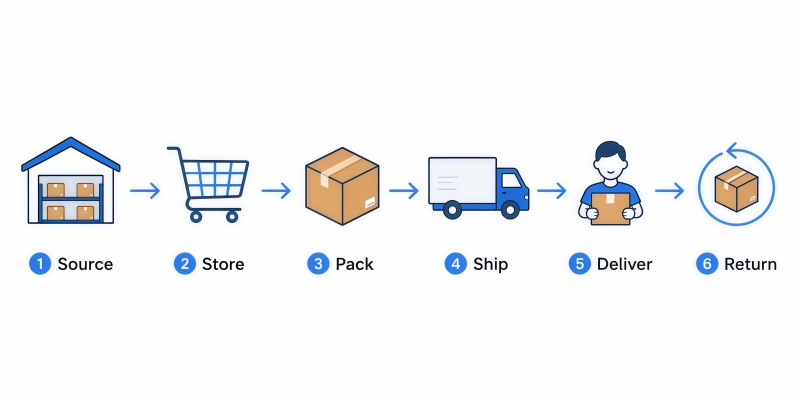
A typical ecommerce fulfillment service includes several steps:
- Inventory is stored in a fulfillment warehouse.
- A customer places an order.
- The order is automatically sent to the warehouse.
- Products are picked and packed.
- The package is shipped.
- Tracking information is sent to the customer.
- Returns are processed if needed.
Although the process sounds simple, each step directly affects customer experience. Slow processing, incorrect orders, or delayed shipping can quickly lead to negative reviews and lost sales.
For this reason, many businesses partner with an experienced order fulfillment provider instead of managing logistics internally.
How Ecommerce Fulfillment Works
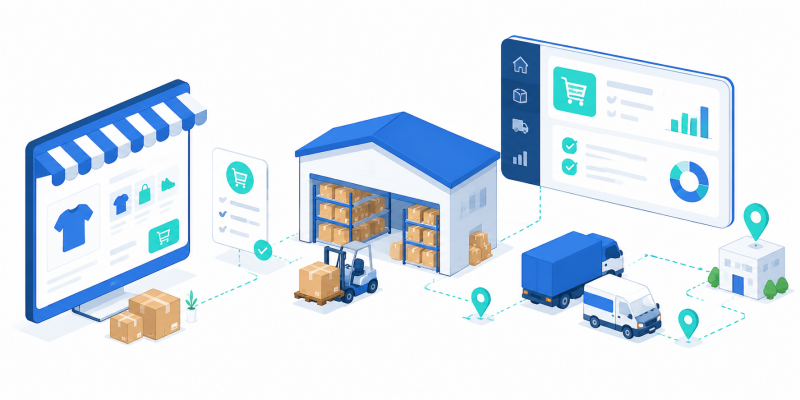
Although every provider has its own workflow, most ecommerce order fulfillment services follow the same basic steps.
1. Product Sourcing
Before products can be shipped, they must be sourced from reliable suppliers.
Some modern ecommerce fulfillment solutions, including TeemDrop, combine product sourcing and fulfillment into one platform. This helps merchants avoid managing multiple suppliers while improving product consistency.
2. Inventory Storage
Products are stored inside a fulfillment center for ecommerce, where inventory levels are monitored in real time.
Accurate dropshipping inventory management helps prevent overselling, stock shortages, and delayed shipments.
3. Order Processing
When a customer completes a purchase, the order is automatically sent to the fulfillment system.
Modern online fulfillment services integrate directly with platforms like Shopify, WooCommerce, and TikTok Shop, reducing manual work and minimizing errors.
4. Picking and Packing
Warehouse staff supported by AI-powered warehouse locate the ordered products, inspect them if necessary, and package them for shipment.
Reliable providers often perform quality checks before shipping to reduce damaged or incorrect orders.
5. Shipping
The package is handed over to shipping carriers and delivered to customers.
Many businesses choose providers offering multiple shipping options to balance delivery speed and shipping costs. DHL's Ecommerce Trends Report also highlights that delivery speed, shipment visibility, and flexible fulfillment have become key factors influencing online purchasing decisions. [2]
6. Returns Management
If customers request returns or exchanges, the fulfillment provider handles the reverse logistics process and updates inventory records.
Why Businesses Use an Ecommerce Fulfillment Service
Managing fulfillment internally works for very small stores, but it becomes difficult as sales increase.
Working with a professional order fulfillment provider offers several important advantages.
Save Time
Instead of packing orders every day, you can focus on marketing, product development, and customer service.
Faster Shipping
Many shipping fulfillment services operate warehouses in multiple countries, reducing delivery times and improving customer satisfaction.
Research from PwC's Global Consumer Insights Survey found that delivery speed remains one of the most important factors influencing online purchase decisions.[3]
Lower Operating Costs
Professional fulfillment companies often negotiate lower shipping rates because they ship large order volumes.
For many growing businesses, outsourcing fulfillment can be more cost-effective than managing warehouse space independently.
Better Customer Experience
Fast shipping, accurate order processing, and real-time tracking all contribute to positive customer reviews and repeat purchases.
Types of Order Fulfillment Services
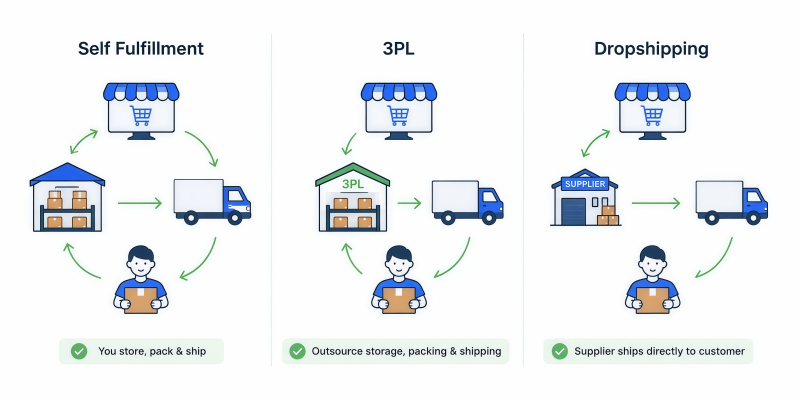
Not every business needs the same fulfillment model. Understanding the main options makes it easier to choose the right fulfillment solution for your store.
Self-Fulfillment
With self-fulfillment, business owners store inventory, pack products, and ship every order themselves.
Best for
- New businesses
- Low order volume
- Limited product catalog
Pros
- Full control
- Low startup costs
Cons
- Time-consuming
- Difficult to scale
- Higher shipping costs
Third-Party Logistics (3PL)
A 3PL acts as an order fulfillment company that stores inventory and handles shipping on behalf of your business.
Many established brands use 3PL providers once order volume becomes too large for in-house fulfillment.
Best for
- Medium to large ecommerce brands
- Businesses with consistent inventory
Pros
- Professional warehouse operations
- Lower shipping rates
- Scalable fulfillment
Cons
- Storage fees
- Less flexibility for product sourcing
- Additional setup costs
Dropshipping Fulfillment
Dropshipping allows suppliers to ship products directly to customers after an order is placed.
Instead of purchasing inventory upfront, sellers focus on marketing while suppliers handle storage and shipping.
Modern platforms like TeemDrop combine dropshipping with product sourcing, quality inspection, warehouse management, and automated fulfillment, offering a more complete online order fulfillment solution than traditional dropshipping alone.
Best for
- Beginners
- Shopify sellers
- Product testing
- Low-risk business models
Pros
- Low upfront investment
- No inventory risk
- Easy to launch new products
Cons
- Less control over suppliers
- Shipping speed depends on fulfillment partner
- Product quality varies without proper inspection
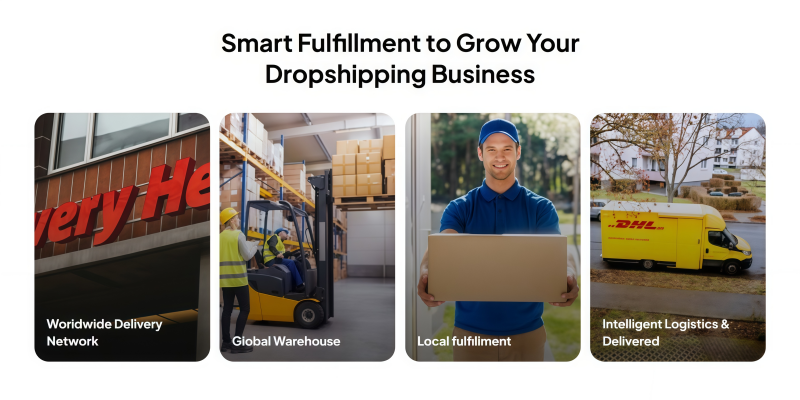
How to Choose the Right Ecommerce Fulfillment Service
Not every ecommerce fulfillment service offers the same level of support. Before choosing a provider, compare these key factors.
1. Shipping Speed and Coverage
Fast shipping has become a competitive advantage. If your customers are mainly located in North America or Europe, choose a provider with optimized shipping routes or local warehouses.
Ask questions such as:
- What are the average delivery times?
- Which countries are supported?
- Are tracking numbers provided?
- Are expedited shipping options available?
Reliable shipping fulfillment services should provide transparent delivery timelines, insured international shipping, and consistent performance.
2. Product Sourcing Capabilities
Some providers only handle warehousing and shipping, while others also help merchants source products.
Choosing an online order fulfillment solution that includes sourcing can simplify operations, especially if you're running a dropshipping business.
For example, TeemDrop combines AI-assisted product sourcing with supplier verification, helping sellers find reliable products without switching between multiple platforms.
3. Quality Control
One of the biggest challenges in ecommerce is inconsistent product quality.
A dependable order fulfillment provider should inspect products before shipment to reduce defects, incorrect items, and customer complaints.
Look for providers that offer:
- Product inspections
- Packaging checks
- Photo verification
- Return handling
Quality control is especially important when working with overseas suppliers.
4. Platform Integrations
Your ecommerce fulfillment company should integrate with the platforms you already use.
Popular integrations include:
- Shopify
- WooCommerce
- TikTok Shop
- Amazon
- eBay
Automatic order synchronization reduces manual work and minimizes fulfillment errors.
5. Transparent Pricing
Pricing structures vary between providers.
Some charge monthly subscriptions, while others charge only when orders are fulfilled.
When comparing an order fulfillment company, look beyond storage fees and consider:
- Receiving fees
- Pick and pack fees
- Shipping costs
- Return processing fees
- Value-added service charges
Understanding the total fulfillment cost helps you protect your profit margins.
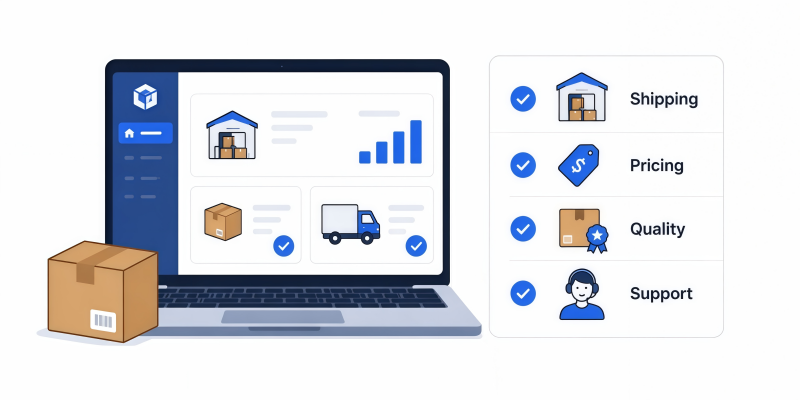
Why More Ecommerce Brands Choose TeemDrop
Many fulfillment providers specialize in only one part of the supply chain. Some focus on warehousing, while others concentrate on shipping.
Businesses are also investing in AI dropshipping tools to improve operational efficiency. IBM notes that AI and intelligent automation are becoming increasingly important for modern commerce as retailers look to streamline supply chain operations and improve customer experiences. [4] TeemDrop takes a more integrated approach by bringing sourcing, fulfillment, quality control, and logistics together in one platform.
Here's how TeemDrop helps growing ecommerce businesses.
| Feature |
Traditional 3PL |
TeemDrop |
| Product Sourcing |
Separate suppliers required |
AI-powered sourcing from verified manufacturers |
| Quality Inspection |
Limited or optional |
Multi-stage quality inspection before shipment |
| Order Automation |
Depends on provider |
Automated order fulfillment and inventory sync |
| Global Shipping |
Available |
Optimized global shipping routes and local fulfillment options |
| Platform Integration |
Varies |
Shopify, WooCommerce, TikTok Shop, and more |
| Dedicated Support |
Usually ticket-based |
Dedicated customer support team |
Instead of managing multiple tools and service providers, merchants can use TeemDrop as a complete fulfillment solution for sourcing, inventory management, and order delivery.
This streamlined workflow is particularly valuable for businesses that want to scale efficiently without increasing operational complexity.
Common Fulfillment Mistakes to Avoid
Even with a reliable fulfillment partner, avoid these common mistakes.
Choosing Based Only on Price
Low fulfillment costs may come with slower shipping or limited customer support.
Always compare the overall value instead of focusing on the lowest price.
Ignoring Shipping Times
Long delivery times often lead to customer complaints and refund requests.
Review estimated shipping times before selecting a provider.
Not Planning for Growth
A provider that works for 20 orders per month may struggle with 2,000 orders.
Choose a fulfillment solution that can scale alongside your business.
Overlooking Quality Control
Without product inspections, defective items may reach customers, increasing return rates and damaging your store's reputation.
Conclusion
Choosing the right ecommerce fulfillment service is about more than getting orders out the door. The right partner should help you simplify operations, improve the customer experience, and support your business as it grows.
Instead of managing product sourcing, warehousing, shipping, and inventory across multiple providers, many businesses now prefer an integrated ecommerce fulfillment solution that brings everything together in one place.
If you're looking for a flexible platform that combines AI-assisted product sourcing, quality control, automated order fulfillment, and global shipping, TeemDrop provides an efficient solution designed for modern ecommerce businesses. With fewer tools to manage and a streamlined fulfillment process, you can spend less time on operations and more time growing your brand.
FAQ
What is an ecommerce fulfillment service?
An ecommerce fulfillment service stores products, processes customer orders, packs items, ships them, and often handles returns. It allows online businesses to outsource logistics and focus on growing sales.
What is the difference between a 3PL and an ecommerce fulfillment solution?
A traditional 3PL mainly provides warehousing and shipping. A modern e-commerce fulfillment solution may also include product sourcing, inventory management, automation, supplier coordination, and quality inspection.
How do I choose the best order fulfillment company?
Look for providers with transparent pricing, reliable shipping, platform integrations, inventory management, responsive customer support, and quality control. The best partner should also scale with your business.
What are the best ecommerce fulfillment services for Shopify stores?
The best choice depends on your business needs. Platforms like TeemDrop are well suited for Shopify sellers who want sourcing, fulfillment, automation, and global shipping in one platform, while traditional 3PL providers may be a better fit for brands managing their own inventory.
Can small businesses use online fulfillment services?
Yes. Many fulfillment providers support startups and small businesses with low order volumes, allowing them to scale without investing in warehouses or hiring fulfillment staff.
Is fulfillment better than shipping products myself?
For businesses with only a few weekly orders, self-fulfillment can be cost-effective. As sales grow, outsourcing to professional ecommerce and fulfillment partners usually saves time, improves shipping speed, and creates a better customer experience.
References
[1] Shopify. Order Fulfillment: Definition, Process, and Best Practices.
https://www.shopify.com/blog/order-fulfillment
[2] DHL. Ecommerce Trends Report.
https://www.dhl.com/global-en/microsites/ec/ecommerce-insights.html
[3] PwC. Global Consumer Insights Survey.
https://www.pwc.com/gx/en/industries/consumer-markets/consumer-insights-survey.html
[4] IBM Institute for Business Value. The Future of Commerce.
https://www.ibm.com/thought-leadership/institute-business-value