Does Facebook Marketplace Charge Fees? Everything Sellers Need to Know in 2026
Selling on Facebook Marketplace is one of the easiest ways to reach millions of potential buyers without building your own online store. Whether you're selling used items, handmade products, or running a dropshipping business, understanding marketplace fees is essential for protecting your profit.
At TeemDrop, we help ecommerce sellers source products, automate fulfillment, and improve profit margins. In this guide, you'll learn how Facebook Marketplace fees work, when selling is free, how much Facebook charges, and practical ways to reduce your overall costs.
Quick Answer
Does Facebook Marketplace fees affect every sale?
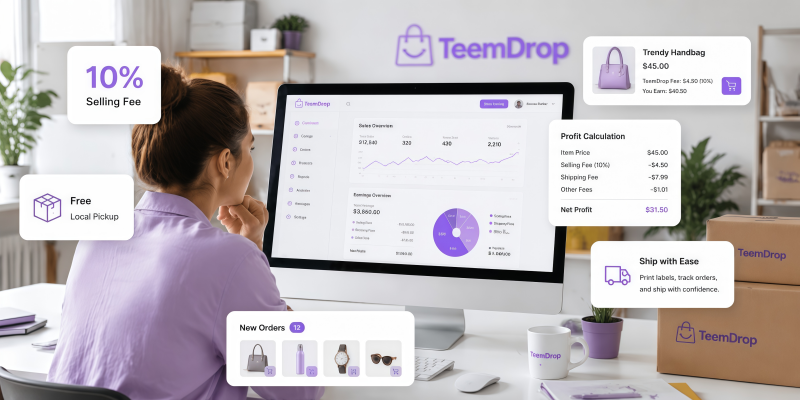
Yes—but not for every sale. If you sell locally and arrange payment outside Facebook, there are typically no selling fees. However, Marketplace Checkout orders are subject to Facebook's selling fee policy.[1] Understanding these rules helps sellers price products correctly and avoid unexpected costs.
At a Glance
| Sale Type |
Selling Fee |
Best For |
| Local Pickup |
Free |
Local sellers |
| Marketplace Checkout |
10% of total order (minimum $0.80) |
Nationwide shipping |
| Product Listings |
Free |
All sellers |
| Monthly Subscription |
None |
Beginners |
| Boosted Listings |
Optional advertising cost |
Growing sales |
What Is Facebook Marketplace?
Facebook Marketplace is Meta's built-in buying and selling platform that allows individuals and businesses to sell products locally or nationwide. Listings are free, but certain selling methods involve marketplace fees, which we'll explain below.
Does Facebook Marketplace Charge Fees?
The short answer is yes—but only in certain situations.
Many new sellers ask:
Does Facebook Marketplace charge fees for every sale?
The answer depends on how you complete the transaction.
If you meet buyers in person and receive payment through cash or another payment method, Facebook generally does not charge a selling fee.
However, if you sell products using Marketplace Checkout and ship orders through Facebook's payment system, Facebook selling fees apply.
This flexible pricing model makes Marketplace attractive for beginners because you only pay fees when using Facebook's built-in commerce features.
To understand exactly when Facebook charges fees—and when selling is completely free—let's break down each type of Marketplace transaction below.
Understanding Facebook Marketplace Fees
Before listing products, it's important to understand exactly when Facebook Marketplace charges selling fees and when selling is completely free.
Unlike many ecommerce platforms, Facebook does not charge sellers upfront to start selling.
There are generally:
- No listing fees
- No monthly subscription fees
- No store setup fees
Instead, Facebook mainly charges transaction-based selling fees when you use Marketplace Checkout for shipped orders.
The type of sale determines whether fees apply.
Here's a complete breakdown.
Local Pickup Sales
If you arrange a local pickup and accept payment outside Facebook, there is usually no platform commission.
This means:
- Listing your product is free.
- Facebook does not process the payment.
- You keep the full selling price.
For many casual sellers, this is the most cost-effective option because there are virtually no marketplace fees involved.
However, local pickup isn't ideal for businesses looking to reach customers nationwide.
Shipped Orders Through Marketplace Checkout
When you enable shipping through Facebook Checkout, Facebook market fees apply.
Currently, Facebook charges:
- 10% of the total order amount
- Minimum fee: $0.80 per order
The percentage is calculated using the total transaction value, including:
- Product price
- Shipping charges
- Applicable taxes
Because the fee is based on the complete order value, sellers should include this cost when calculating product pricing.
Ignoring this expense is one of the biggest reasons new sellers experience lower-than-expected profits.
Chargebacks and Disputes
Customer disputes are relatively uncommon, but they can become expensive.
If Facebook determines that a buyer's claim is valid, sellers may also pay dispute-related fees in addition to losing the original sale.
What Percent Does Facebook Marketplace Take?
Many sellers also ask:
What percent does Facebook Marketplace take?
For most shipped Marketplace Checkout orders, Facebook charges 10% of the total transaction, with a minimum charge of $0.80.
Let's look at a few examples.
| Sale Price |
Estimated Facebook Fee |
Seller Receives* |
| $10 |
$1.00 |
$9.00 |
| $25 |
$2.50 |
$22.50 |
| $50 |
$5.00 |
$45.00 |
| $100 |
$10.00 |
$90.00 |
| $200 |
$20.00 |
$180.00 |
*Before product cost, shipping expenses, taxes, and advertising.
These examples show why pricing strategy is so important. A 10% fee may seem small, but it can significantly reduce profits if your product margins are already thin.
Why Understanding Fees Matters for Dropshipping
If you're running a facebook dropshipping business, every percentage point affects your profitability.
Unlike casual sellers, dropshippers typically process dozens or even hundreds of orders each month. Small fees can quickly add up.
That's why successful sellers don't just focus on reducing Facebook Marketplace fees—they also optimize product sourcing, shipping costs, inventory management, and fulfillment efficiency.
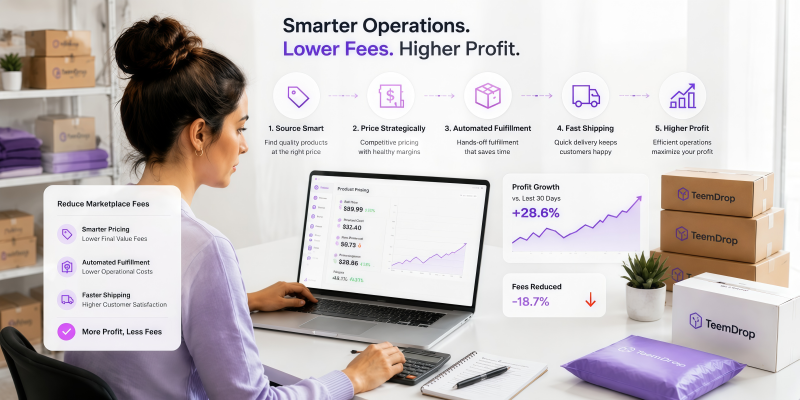
This is where a platform like TeemDrop can make a difference. While TeemDrop doesn't change Facebook's platform fees, it helps sellers improve overall margins by sourcing directly from manufacturers, offering AI dropshipping solutions, automating order fulfillment, providing quality inspection, and supporting faster global shipping. Lower operating costs can offset platform fees and make your business more competitive.
How to Reduce Facebook Marketplace Fees
While you can't eliminate marketplace fees, you can reduce their impact on your business by improving your pricing strategy and operating more efficiently.
Here are some proven ways to keep more of your profits.
1. Build Fees Into Your Pricing
One of the biggest mistakes new sellers make is setting prices based only on product costs.
Before listing an item, calculate:
- Product cost
- Shipping cost
- Facebook selling fees
- Payment processing (if applicable)
- Advertising budget
- Desired profit margin
This ensures every sale remains profitable, even after platform deductions.
2. Sell Higher-Margin Products
Low-cost products often leave very little room after fees.
For example, a $10 product with a 10% platform fee generates far less profit than a $60 product with a similar cost percentage.
Instead of competing on the cheapest items, focus on products with higher perceived value and healthier margins.
3. Source Products at Lower Costs
Reducing product costs is often easier than reducing platform fees.
Working directly with manufacturers instead of multiple middlemen can significantly improve profitability.
TeemDrop helps sellers source products from verified manufacturers, compare supplier pricing, and automate procurement, allowing businesses to offset Facebook market fees through lower sourcing costs rather than simply increasing selling prices.
4. Improve Fulfillment Efficiency
Fast shipping reduces cancellations, disputes, and negative reviews.
Reliable dropship fulfillment services also help build customer trust, encouraging repeat purchases that lower customer acquisition costs over time.
Platforms like TeemDrop support automated order fulfillment, supplier management, quality inspection, and global shipping, helping sellers operate more efficiently beyond Facebook Marketplace itself.
Facebook Marketplace Fees vs Other Selling Platforms
Choosing the right sales channel isn't just about traffic—it's also about total selling costs.
Here's how Facebook Marketplace fees compare with several popular ecommerce platforms.
| Platform |
Listing Fee |
Selling Fee |
Monthly Subscription |
| Facebook Marketplace |
Free |
Typically 10% for shipped orders |
None |
| eBay |
Free (limited listings) |
Varies by category |
Optional |
| Etsy |
Listing fee + transaction fee |
Yes |
Optional |
| Shopify |
No marketplace fee |
Payment processing only |
Monthly subscription |
Each platform has advantages.
Facebook Marketplace is attractive because sellers can begin without paying monthly fees, making it an excellent choice for beginners and small businesses testing new products.
Meanwhile, Shopify offers greater control over branding and customer relationships, making it a strong long-term option for growing ecommerce businesses.
Many successful sellers actually combine both—using Facebook Marketplace to generate sales while building an independent Shopify store for long-term growth.
Common Mistakes That Reduce Your Profits
Understanding Facebook fees is only part of running a successful business.
These common mistakes often cost sellers much more than the platform's selling fee.
Ignoring Total Costs
Many beginners calculate profit using only:
Selling price − Product cost
But real profit should also include:
- Marketplace fees
- Shipping
- Advertising
- Returns
- Packaging
- Taxes
Missing just one of these expenses can turn a profitable product into a loss.
Selling Restricted Products
Facebook prohibits certain product categories under its Commerce Policies, including regulated goods and restricted items.[2]
Before listing products, review Meta's Commerce Policies to ensure compliance.
Selling prohibited items may result in removed listings or account restrictions.
Conclusion
Understanding Facebook Marketplace fees is the first step toward pricing your products correctly and protecting your profit margin.
So, does Facebook Marketplace charge fees? Yes—but only for certain transactions. Local pickup sales are generally free, while shipped orders through Marketplace Checkout are subject to selling fees based on the total order value. Knowing when these marketplace fees apply allows you to build them into your pricing and avoid unexpected costs.
If you're running a dropshipping business, lowering your overall operating costs is just as important as understanding Facebook selling fees. By sourcing products at competitive prices, streamlining fulfillment, and improving shipping efficiency, you can offset platform fees and keep more profit from every order.
TeemDrop helps sellers do exactly that with AI-powered product sourcing, direct manufacturer access, automated fulfillment, and global shipping support. While it can't eliminate Facebook's selling fees, it can help you build a more efficient and profitable ecommerce dropshipping business.
FAQ
Does Facebook Marketplace charge fees for local sales?
Generally, no. Local pickup transactions arranged outside Facebook typically do not include platform selling fees, making them one of the most cost-effective selling methods.
Does it cost to sell on Facebook Marketplace?
Creating listings is free. You only pay selling fees when using Marketplace Checkout for shipped orders or when purchasing optional advertising.
What percent does Facebook Marketplace take?
For most shipped Marketplace Checkout orders, Facebook charges approximately 10% of the total transaction amount, subject to applicable minimum fees and current platform policies.
How much money does Facebook Marketplace take from you?
The amount depends on your selling method, product price, shipping costs, and any optional advertising expenses. Local pickup sales generally avoid platform transaction fees, while shipped orders incur selling fees.
Are Facebook Marketplace fees higher than eBay?
It depends on the product category and selling method. Some eBay categories have higher final value fees, while Facebook Marketplace offers free listings and no monthly subscription, making it competitive for many sellers.
References
[1] Meta. About Selling on Facebook Marketplace.
https://www.facebook.com/business/help
[2] Meta. Commerce Policies.
https://www.facebook.com/policies_center/commerce