Facebook Marketplace UK Selling Fees in 2026: What Sellers Need to Know
You list a product on Facebook Marketplace in the UK and receive interest from a potential buyer. Before completing the sale, one important question comes up:
How much will it actually cost to sell?
The answer is not always as simple as looking at a platform fee. Depending on how you sell and fulfill an order, your real costs can also include the product itself, shipping, packaging, returns, and other business expenses.
For ecommerce sellers, this is where TeemDrop can help with the parts of selling that happen beyond the marketplace itself, including product sourcing, quality control, and order fulfillment.
This guide explains Facebook Marketplace UK selling fees in 2026, what costs sellers should consider, and how to calculate whether a product can remain profitable.
Quick Answer
Facebook Marketplace UK selling fees in 2026 can vary depending on the selling method and Marketplace features available to UK users.
Meta's available Marketplace features can vary by location. For UK users, Meta's Help Centre currently indicates that selling with delivery is not available in that location, with Marketplace focused on local selling arrangements.[1]
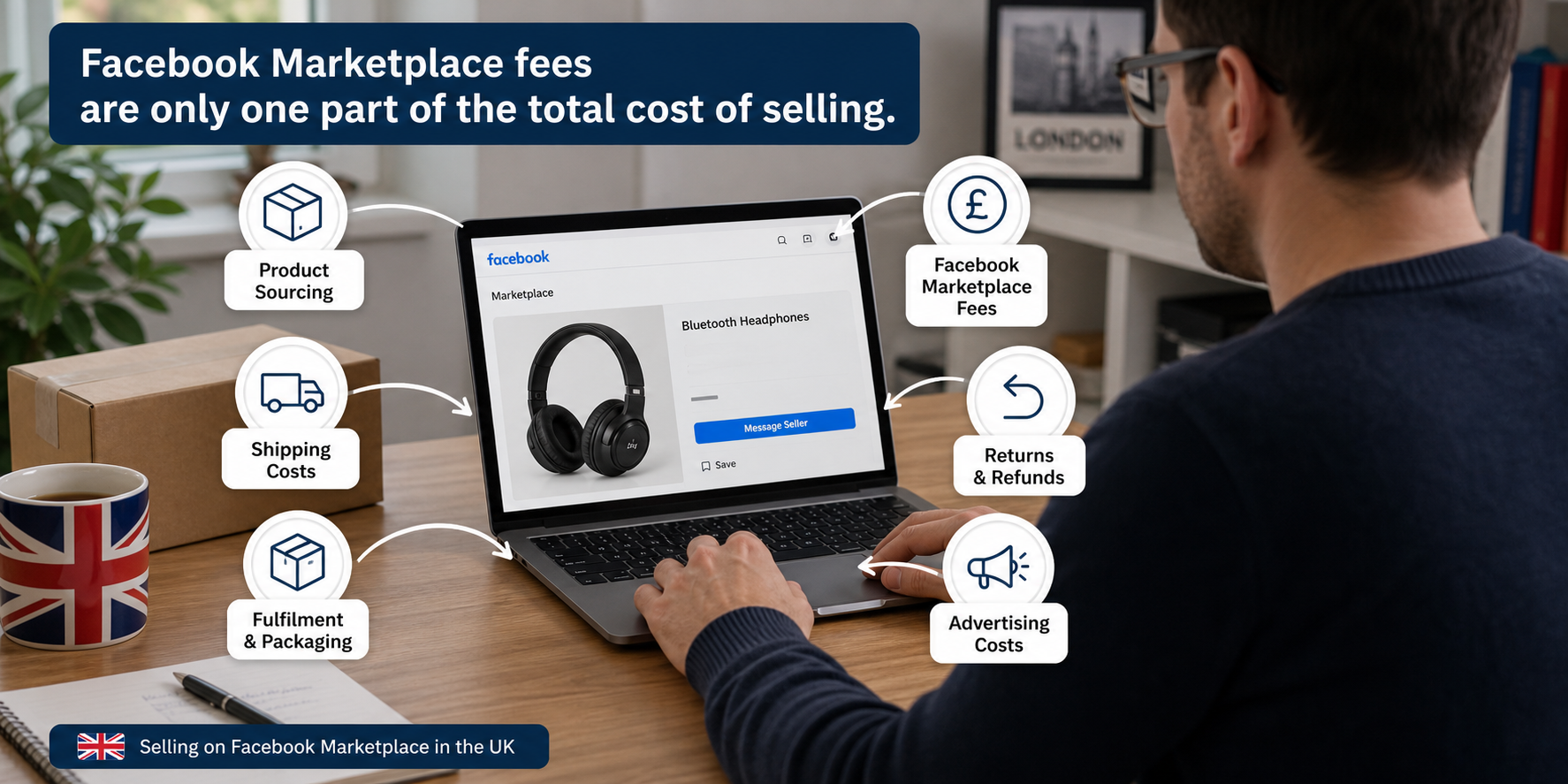
However, Facebook Marketplace fees are only one part of the total cost of selling. Sellers should also consider product costs, shipping, fulfillment, returns, and other operating expenses before setting a price.
The key question is not only:
"Does Facebook Marketplace charge a selling fee?"
It is also:
"Will the product remain profitable after all selling costs are included?"
Key Takeaways
- Facebook Marketplace UK selling fees are not the only cost sellers should consider.
- Selling arrangements and available Marketplace features can vary by location.
- Your product cost can have a major impact on your final profit.
- Shipping and fulfillment costs should be included when calculating margins.
- UK online sellers may need to provide customers with clear pricing and delivery information.[2]
- A connected sourcing and fulfillment workflow can help sellers manage costs more effectively.
Does Facebook Marketplace Charge Selling Fees in the UK?
Available Marketplace features, payment options, and delivery arrangements can vary by location.
Meta's UK Help Centre currently states that selling with delivery on Facebook Marketplace is not available in that location and focuses Marketplace activity on local selling arrangements.[1]
For this reason, UK sellers should check Meta's latest official guidance before relying on a specific Facebook Marketplace selling fee.
Even when there is no separate platform fee for a particular selling arrangement, sellers should still calculate their full product, delivery, and operating costs before deciding whether a sale is profitable.
Check the Selling Method Before Calculating Fees
Before listing a product, check how your Facebook Marketplace transaction will actually work in the UK.
Consider:
- How the product will be sold
- How the buyer will receive the product
- Whether payment is handled through a Marketplace-supported feature
- Which selling features are currently available in the UK
- Whether you use optional promotional or advertising tools
These factors can affect your selling process and overall costs.
Meta may update Marketplace features and policies over time, so sellers should always check the latest official guidance before relying on a specific fee structure or selling model.
Are Facebook Marketplace Fees the Same for Every Sale?
Not necessarily.
The available Marketplace features and costs connected to a sale can depend on the transaction setup, seller location, and services used.
This is why looking for one universal Facebook Marketplace UK selling fee can be misleading.
Instead of focusing only on a possible platform charge, separate your costs into two categories:
Platform Costs
These are costs directly connected to the marketplace or optional selling and promotional tools.
Business Costs
These include the costs of sourcing, preparing, and delivering the actual product.
For ecommerce sellers, business costs can sometimes have a bigger impact on profit than the platform fee itself.
That is why sellers should calculate their total selling costs before setting a price.
What Costs Should Facebook Marketplace UK Sellers Consider?
A product can have a low platform cost and still be unprofitable.
For that reason, sellers should calculate their total selling cost, not just focus on Marketplace fees.
| Cost Type |
What It May Include |
| Product cost |
Supplier price |
| Platform cost |
Applicable marketplace or selling-related charges |
| Shipping cost |
Delivery expenses |
| Fulfillment cost |
Order processing and packaging |
| Returns |
Return-related expenses |
| Advertising |
Optional promotional spending |
| Other costs |
Taxes, payment-related or operating costs |
The exact costs will vary by business model.
For example, someone selling a used item locally may have a very different cost structure from an ecommerce seller sourcing products from suppliers.
Product Cost
This is the amount you pay to obtain the trending dropshipping products you plan to sell.
If you use a supplier, consider more than the listed product price. You may also need to think about:
- Product variations
- Packaging
- Supplier pricing changes
- Quality issues
- Replacement costs
A cheap product is not automatically a profitable product.
Poor quality can lead to complaints, refunds, and additional costs later.
Shipping and Fulfillment Costs
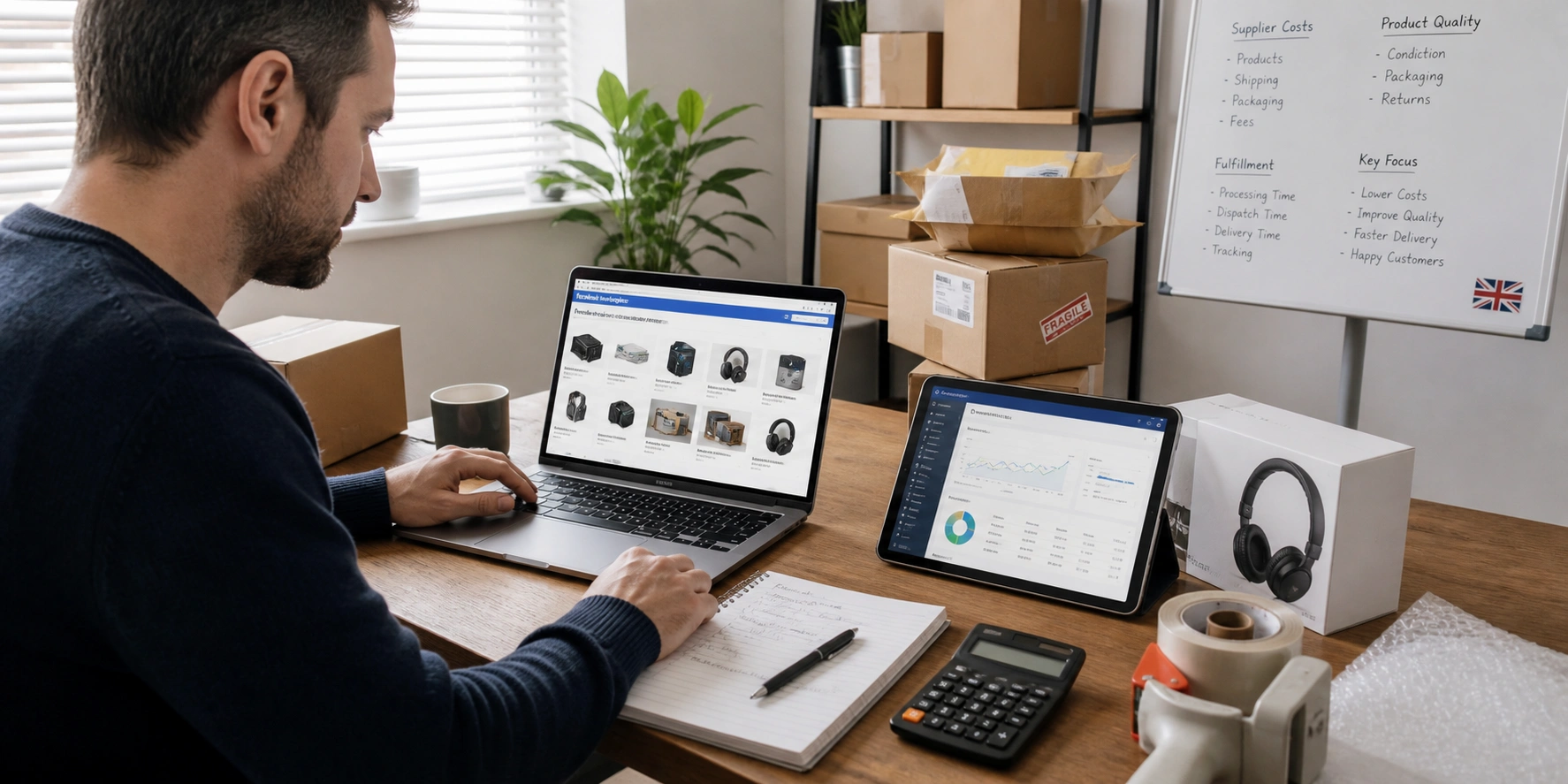
For ecommerce sellers, shipping is often one of the biggest expenses after the product itself.
Your costs may include:
- Preparing the order
- Packaging
- Shipping
- Tracking
- Delivery-related support
This is where reliable dropship fulfillment services become important.
The cost of getting a product to a customer can directly affect the price you need to charge.
Returns and Customer Service
Returns can also affect your final margin.
If you sell online to consumers, UK rules may require sellers to provide specific information before an order is placed, including product details, pricing, delivery arrangements, and costs.[2]
UK distance-selling rules also include consumer cancellation rights in applicable situations, so sellers should understand their responsibilities before selling online.[3]
For businesses, it is better to think about potential return costs before setting the selling price.
How Much Does It Cost to Sell on Facebook Marketplace UK?
The total cost of selling on Facebook Marketplace depends on more than a possible platform fee.
The easiest way to understand your potential profit is to calculate all relevant costs together.
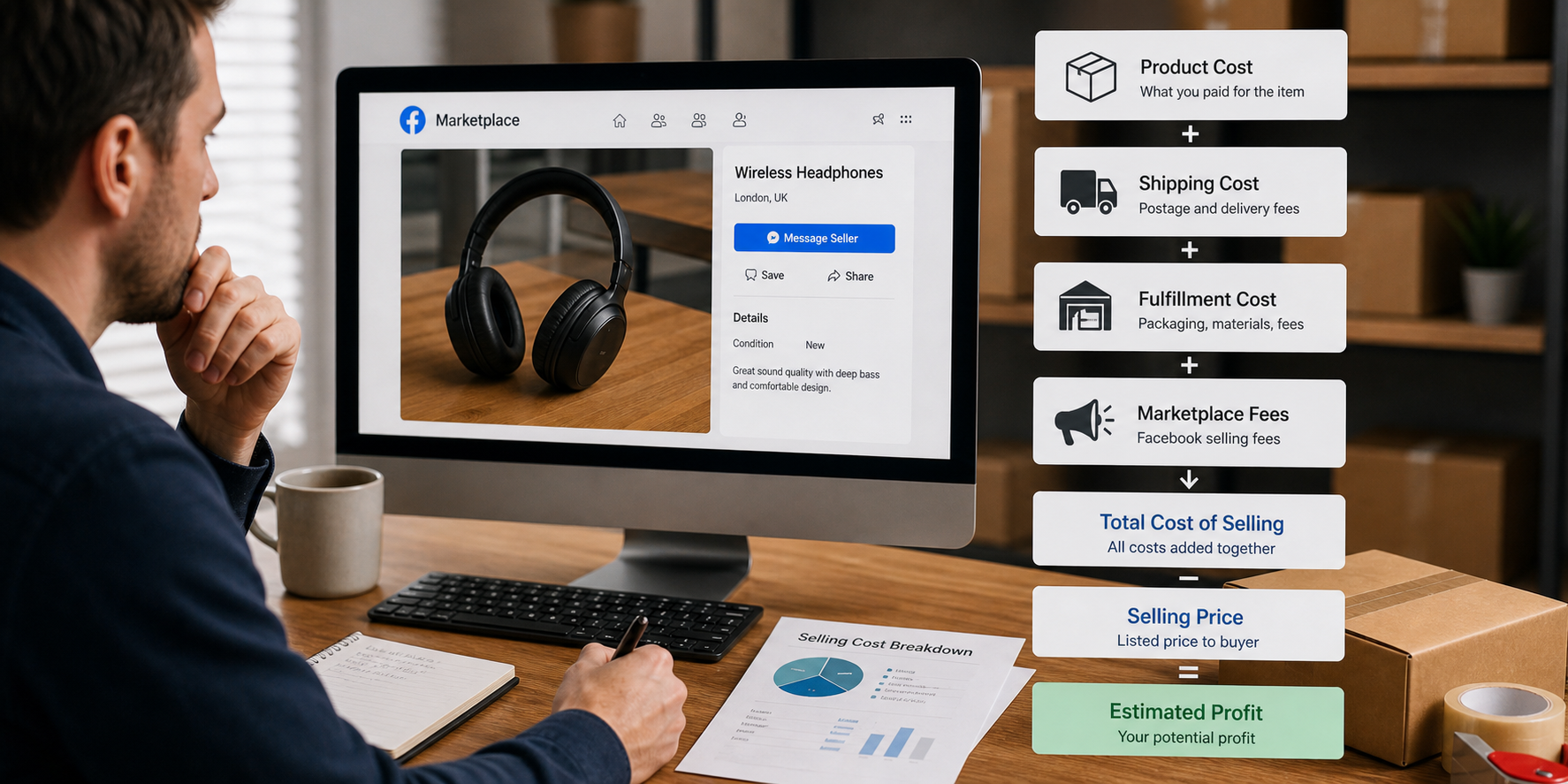
A Simple Selling Cost Formula
Total Selling Cost = Product Cost + Platform Costs + Shipping + Fulfillment + Other Expenses
Then:
Estimated Profit = Selling Price − Total Selling Cost
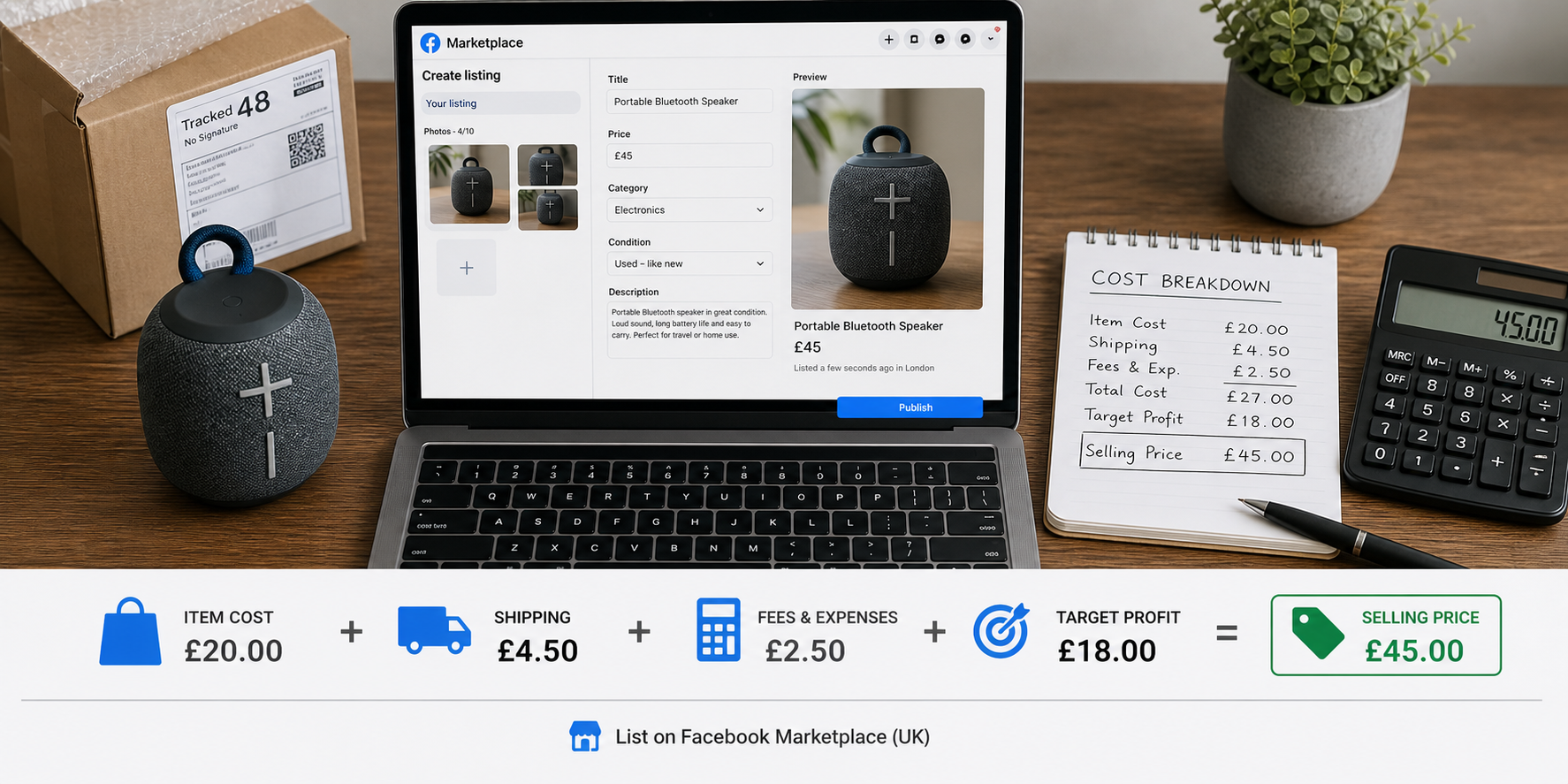
For example:
- Product cost: £20
- Fulfillment and shipping: £8
- Other selling costs: £X
Your total cost would be:
£28 + any additional applicable costs
The remaining amount after deducting all costs from the selling price determines your estimated dropshipping profit margin.
This simple calculation can prevent a common beginner mistake:
Setting a selling price based only on the supplier's product cost.
How to Calculate Your Facebook Marketplace Selling Price
When setting a price, start with your actual costs rather than choosing a number based only on competitors.
A simple process is:
Step 1: Calculate the Product Cost
Find out exactly how much you pay for the product.
Step 2: Add Fulfillment and Shipping Costs
Include the cost of processing and delivering the order.
Step 3: Include Other Applicable Costs
Consider any additional business or selling expenses.
Step 4: Decide on Your Target Profit
Determine how much profit you want to make after all relevant costs.
Step 5: Review the Final Price
Ask yourself:
- Is the price competitive?
- Is the product still profitable?
- Does the customer understand what they are paying for?
- Have all relevant costs been considered?
Pricing should be clear and transparent.
UK government guidance states that online sellers should provide customers with clear information about the total price and delivery costs or how those costs will be calculated.[2]
Facebook Marketplace Fees vs Other Selling Costs
This is one of the most important distinctions for sellers.
Facebook Marketplace Fees
These relate to the platform or specific selling features that may be available to you.
Total Selling Costs
These can include:
- Product sourcing
- Product cost
- Order processing
- Packaging
- Shipping
- Fulfillment
- Returns
- Marketing
The two are not the same.
You may pay little in direct marketplace costs but still have a low profit margin because your sourcing or delivery costs are too high.
That is why successful ecommerce dropshipping requires a complete view of your operations.
How Shipping and Fulfillment Affect Your Selling Costs
When a customer places an order, the product still needs to move through several stages.
Product → Supplier → Order Processing → Fulfillment → Shipping → Customer
Each stage can affect your cost and customer experience.
For example, a seller may find a product with a good purchase price but later discover that:
- Shipping is expensive
- Processing takes too long
- The supplier has inconsistent quality
- Tracking is difficult to manage
These problems can reduce profit and create customer service issues.
A better approach is to think about product sourcing and fulfillment together.
How TeemDrop Helps Sellers Manage Product and Fulfillment Costs
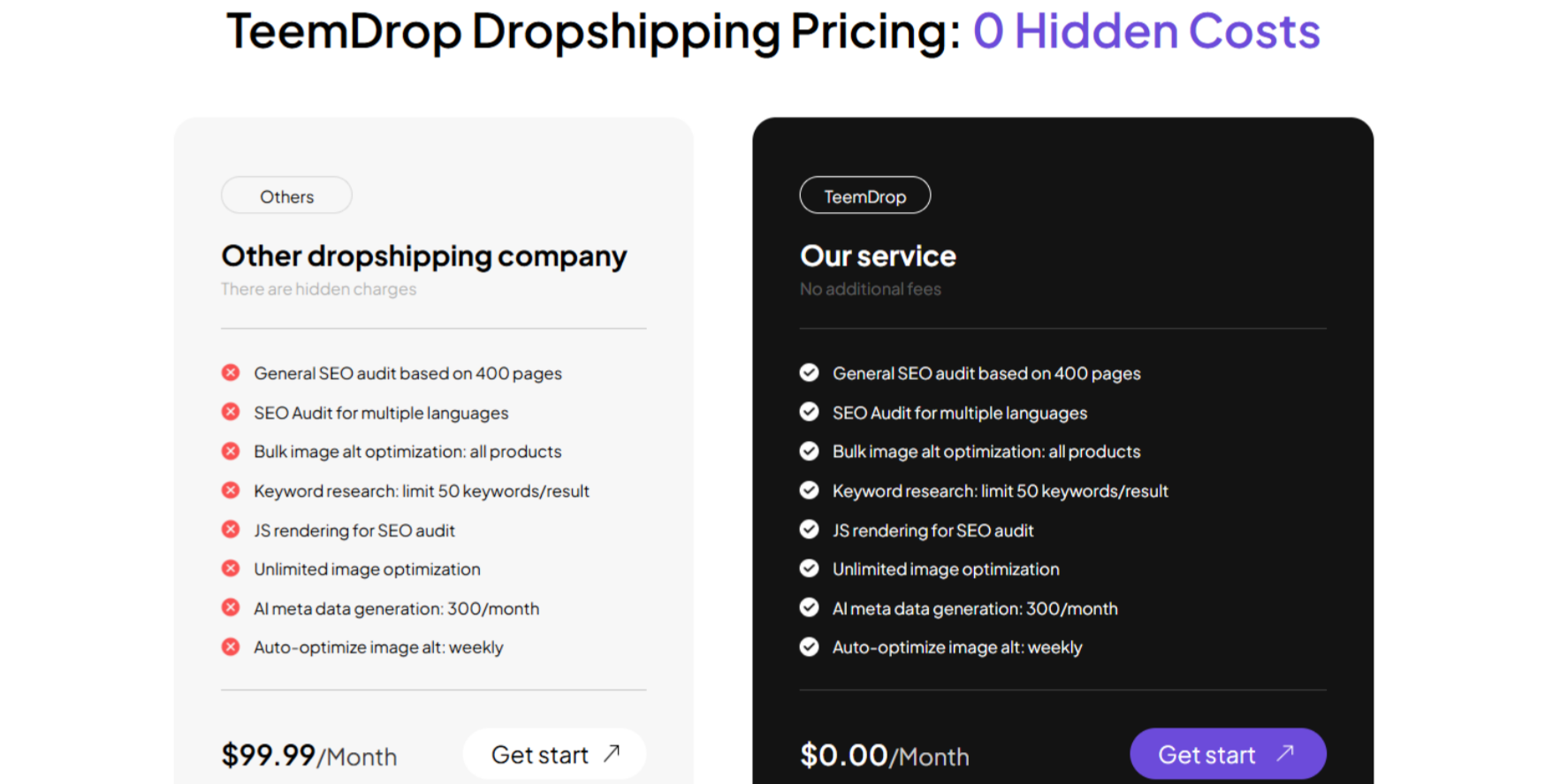
TeemDrop does not control Facebook Marketplace's platform fees.
However, sellers can still improve the other parts of their cost structure.
TeemDrop helps connect key stages of the ecommerce workflow, including:
- Product sourcing
- AI-powered product discovery
- Supplier coordination
- Multi-stage quality control
- Automated fulfillment
- Order synchronization
- Shipment tracking
- Global fulfillment
Instead of treating sourcing and delivery as completely separate processes, sellers can build a more connected workflow.
This matters because profit is affected by more than the price shown on a marketplace.
The full customer journey matters:
Find a Product → Source It → Check Quality → Process the Order → Fulfill → Deliver
By reducing unnecessary manual steps between these stages, sellers can spend more time focusing on product selection, pricing, and business growth.
How Can UK Sellers Improve Their Profit Margins?
Improving profit margins does not always mean increasing prices.
Sometimes the better option is to improve your cost structure.
1. Calculate Costs Before Listing a Product
Do not wait until you receive orders to understand your margins.
Calculate:
- Product cost
- Shipping
- Fulfillment
- Other expected expenses
before deciding whether to sell the product.
2. Avoid Ignoring Shipping Costs
Shipping can quickly reduce your margin.
Always check how the delivery process affects the final cost of an order.
A product with a low supplier price may still be expensive to deliver.
3. Review Supplier Pricing Regularly
Supplier prices can change.
Check your product costs regularly, especially if you sell the same product over a longer period.
4. Focus on Product Quality
Low-quality products can create expensive problems.
These may include:
- Customer complaints
- Refund requests
- Replacements
- Negative reviews
A proper quality control process can help reduce avoidable issues.
5. Build an Efficient Fulfillment Workflow
As your order volume grows, manually managing every order can become difficult.
A connected fulfillment workflow can help reduce repetitive work and keep order information organized.
For sellers using a dropshipping model, automation can be particularly useful when managing product information and order processing.
Are Facebook Marketplace Selling Fees Worth It?
The answer depends on your overall business costs.
A low or zero platform fee does not automatically mean a product is profitable.
Likewise, a platform cost does not automatically make a product unprofitable.
The real question is:
How much money remains after every relevant cost is deducted?
Before selling, review:
- Product costs
- Applicable platform costs
- Shipping
- Fulfillment
- Returns
- Customer support
- Your target profit
This gives you a more realistic picture of your potential margin.
FAQ
Does Facebook Marketplace charge selling fees in the UK?
Selling features and arrangements can vary by location and transaction type. Meta's current UK Marketplace guidance should be checked for the latest information before relying on a specific fee structure.[1]
How much does it cost to sell on Facebook Marketplace UK?
Your total cost can include more than any applicable platform charges. Consider the product cost, shipping, fulfillment, returns, and other business expenses when calculating profitability.
Are Facebook Marketplace fees the same for every seller?
Not necessarily. Available features and selling arrangements may vary depending on location and how a transaction is completed.
What costs should I include when pricing a product?
Include the product cost, applicable platform costs, shipping, fulfillment, returns, and other relevant operating expenses.
Who pays for shipping on Facebook Marketplace?
This depends on the selling arrangement. Sellers should clearly understand how the transaction and delivery process work before listing products.
Can you make a profit after Facebook Marketplace fees?
Yes, but profitability depends on your total costs rather than platform fees alone. Calculate your full cost structure before setting a selling price.
Final Thoughts
Understanding Facebook Marketplace UK selling fees in 2026 is useful, but platform fees are only one part of the equation.
To build a sustainable selling business, you also need to understand where your products come from, how much they cost, and what happens after a customer places an order.
The best workflow is simple:
Calculate Costs → Price Carefully → Source Reliably → Fulfill Efficiently → Monitor Results
TeemDrop helps sellers manage the sourcing and fulfillment side of this process through AI-powered product sourcing, quality control, and automated fulfillment.
When you understand your full cost structure, you can make smarter pricing decisions and build a business with a stronger foundation.
References
[1] Meta. About Delivery on Facebook Marketplace.
Facebook Help Centre – About Delivery on Marketplace
[2] GOV.UK. Online and Distance Selling: Online Selling.
GOV.UK – Online Selling Guidance
[3] GOV.UK. Online and Distance Selling: Distance Selling.
GOV.UK – Distance Selling Guidance