How to Use Google Trends for Dropshipping Product Research
Finding a product that looks popular is easy. Knowing whether that interest is strong enough to support a real dropshipping business is harder.
That is where Google Trends for dropshipping can help. With a free Google tool, you can see how search interest changes over time, compare product ideas, identify seasonal patterns, and see where interest is strongest.
But there is an important distinction: a rising trend does not automatically mean a profitable product.
For dropshippers, the better approach is to use Google Trends to validate demand first, then check sourcing, competition, product quality, costs, and shipping before deciding what to sell. TeemDrop helps connect those next steps through product sourcing, quality control, and fulfillment.
Quick Answer
Google Trends for dropshipping helps you understand whether interest in a product or niche is growing, stable, seasonal, or declining. You can also compare products and see which countries show stronger search interest.
However, Google Trends does not show exact sales, profit, or supplier quality. Its data is normalized to a 0–100 scale for relative comparison, so it should be treated as one research signal rather than proof that a product will sell.
Key Takeaways
- Use Google Trends to check product demand before committing to a product.
- Look at both long-term and recent trends.
- Compare similar products instead of judging one product alone.
- Check geographic and seasonal demand.
- Do not confuse search interest with actual sales.
- Validate sourcing, quality, margins, and shipping before launching.
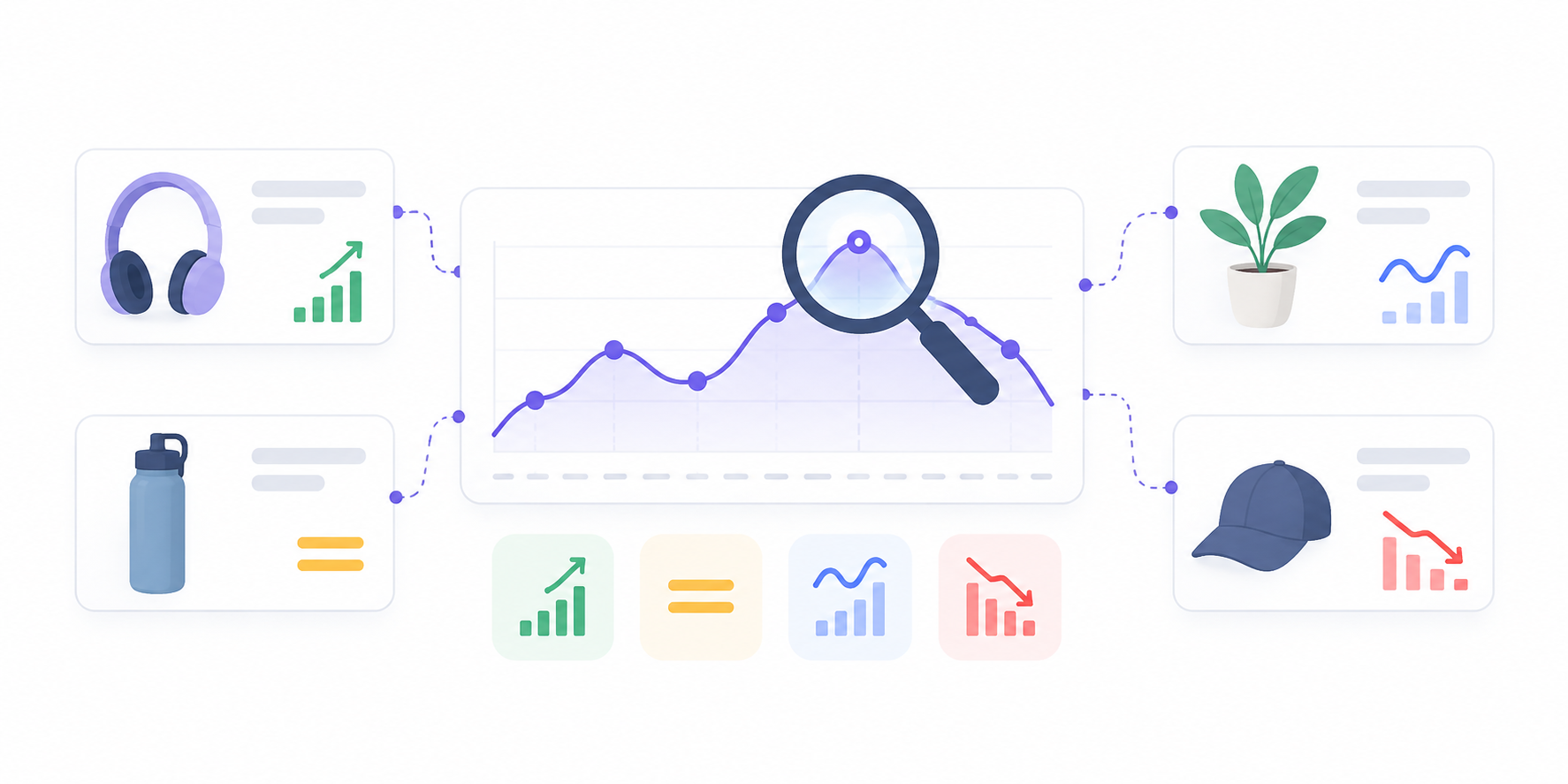
What Does Google Trends Tell You About Dropshipping Demand?
Google Trends uses a sample of actual Google searches and presents search interest in a normalized format. The numbers are scaled from 0 to 100 based on relative popularity, rather than showing the exact number of searches.[1]
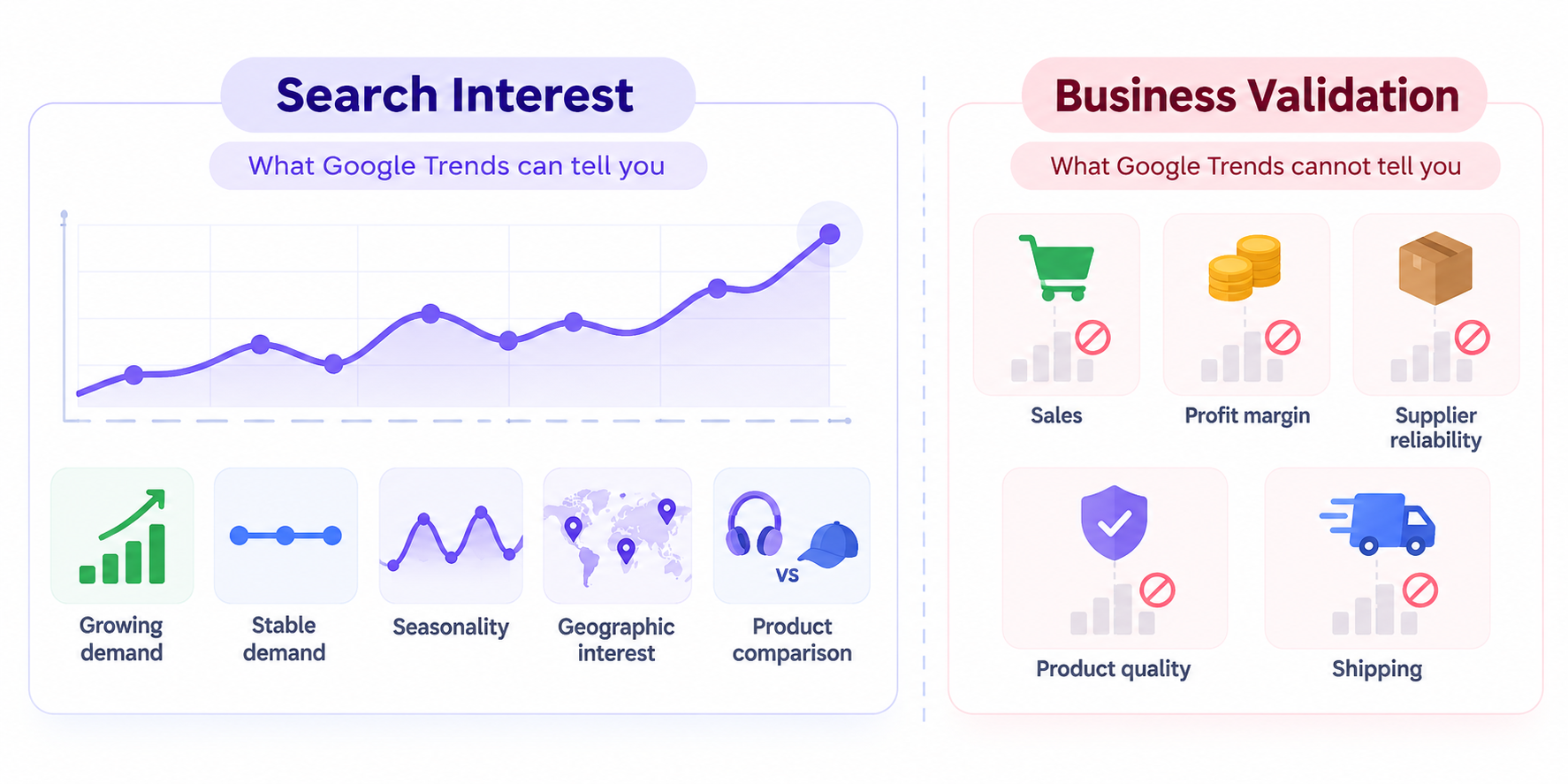
That makes Google Trends especially useful for answering questions such as:
- Is interest in this product increasing?
- Is demand stable throughout the year?
- Is the product highly seasonal?
- Which countries show stronger interest?
- Is one product gaining more interest than another?
- Are new related searches starting to appear?
It is less useful for questions such as:
- How many units will I sell?
- What is the exact monthly search volume?
- What will my profit margin be?
- Is a supplier reliable?
- Will customers actually buy the product?
That difference matters when evaluating profitable dropshipping niches and products.
Think of Google Trends as a demand validation tool, not a complete product research system.
How to Read Google Trends for Dropshipping
You do not need advanced analytics skills to use Google Trends. Start with three simple checks.
1. Check the 5-Year Trend
A longer timeframe helps you see the bigger picture.
A product with steady or gradually increasing interest may have stronger long-term potential than one that suddenly reaches a peak and then disappears.
Look for:
Steady growth: potentially growing demand.
Stable interest: an established product or niche.
Repeated yearly peaks: likely seasonal demand.
One sharp spike: possibly a short-lived trend.
Do not make a decision from one graph alone. Use the graph to decide what deserves further research.
2. Check the Last 12 Months
After looking at the long-term trend, zoom in.
The five-year view tells you where the product has been heading. The 12-month view tells you whether that pattern is still relevant.
For example, a product may have grown strongly over five years but started declining recently. Another may have remained flat for years and only begun gaining interest in the last few months.
That difference can change your dropshipping product selection.
3. Compare Similar Products
Instead of asking: "Is this product trending?"
ask: "How does this product compare with other products customers could choose?"
For example, you could compare several types of drinkware, home accessories, or fitness products.
A comparison gives you more useful context than looking at a single line in isolation.
How to Use Google Trends to Find Dropshipping Product Opportunities
Google Trends can help you evaluate trending products for dropshipping, but it should not be treated as a machine that automatically finds winning products.
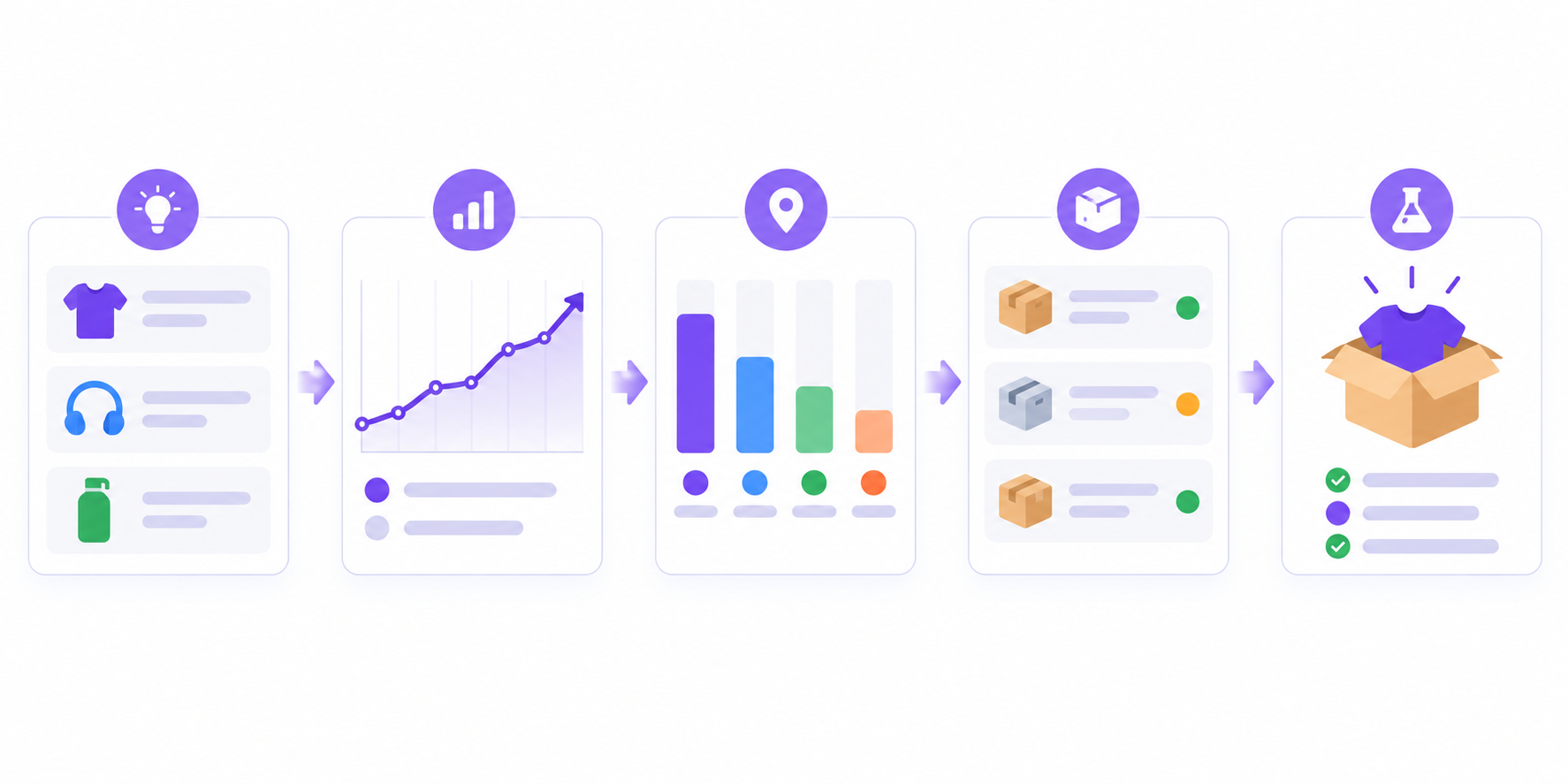
A better process is:
Product idea → trend check → market check → sourcing check → product test
Start with a product you are already considering. Then use Google Trends to determine whether its demand supports further research.
Example
Suppose you are considering a portable kitchen product.
First, check its five-year trend.
Then compare it with two or three related products.
Next, check the last 12 months.
Finally, look at the countries where interest is strongest.
If the trend looks promising, move to the next stage instead of immediately adding the product to your store.
This prevents one of the most common dropshipping product research mistakes: choosing a product simply because it appears to be trending.
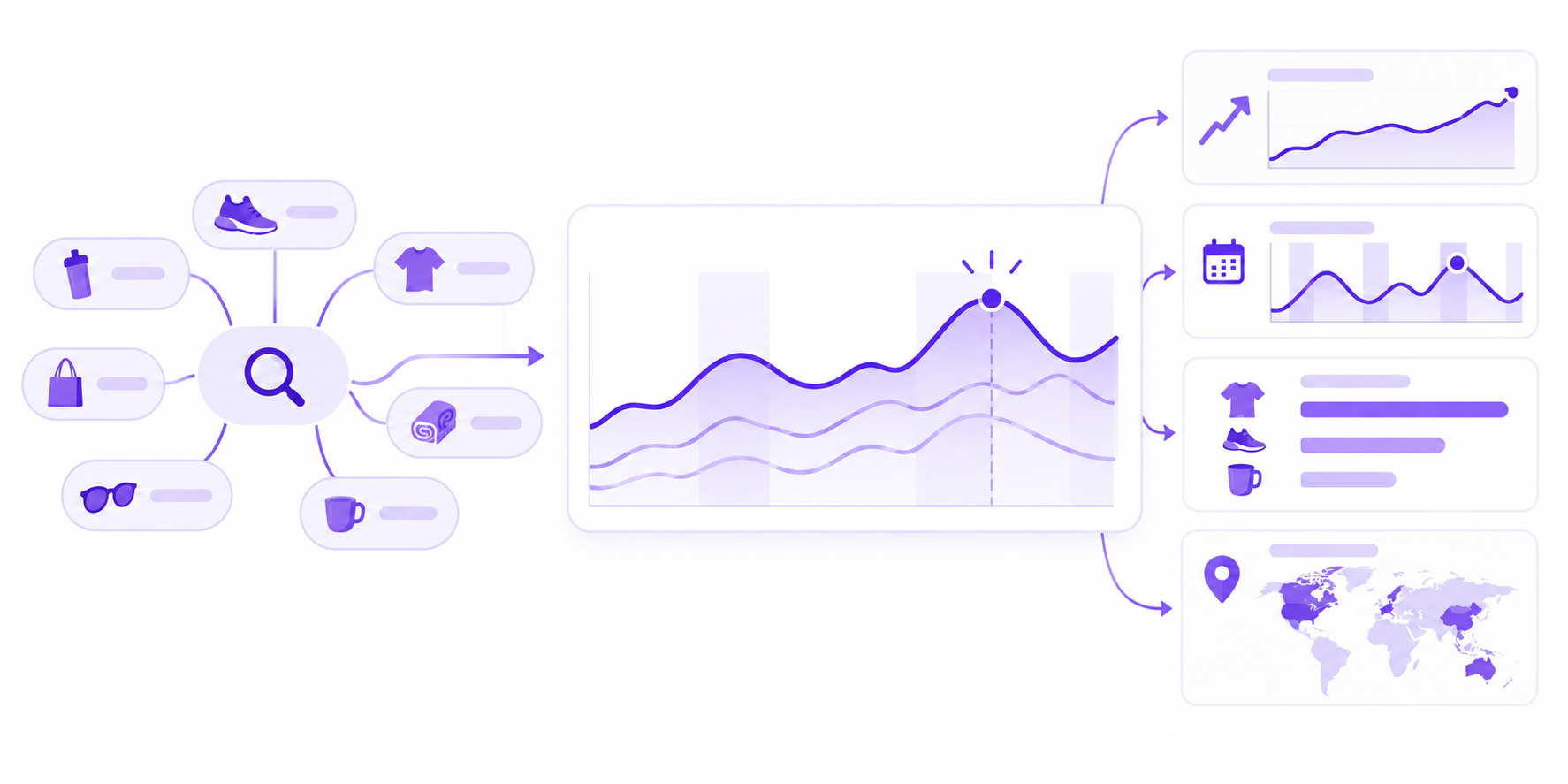
How to Validate a Dropshipping Product Trend
A spike in Google Trends can be interesting, but it does not necessarily mean customers are ready to buy.
Google itself warns that a spike in search interest does not automatically mean a topic is "winning." Trends data should be considered alongside other information before making decisions.[1]
Use these four checks:
| Trend Pattern |
What It May Mean |
What to Do |
| Steady growth |
Growing interest |
Research the product further |
| Stable demand |
Established interest |
Check competition and margins |
| Repeated seasonal peaks |
Seasonal demand |
Prepare before peak periods |
| Sudden short spike |
Temporary attention |
Investigate before committing |
Also check related searches. If interest is growing across several related searches rather than one isolated phrase, you have a stronger reason to investigate the market.
The goal is not to find the biggest spike.
The goal is to find a demand pattern worth testing.
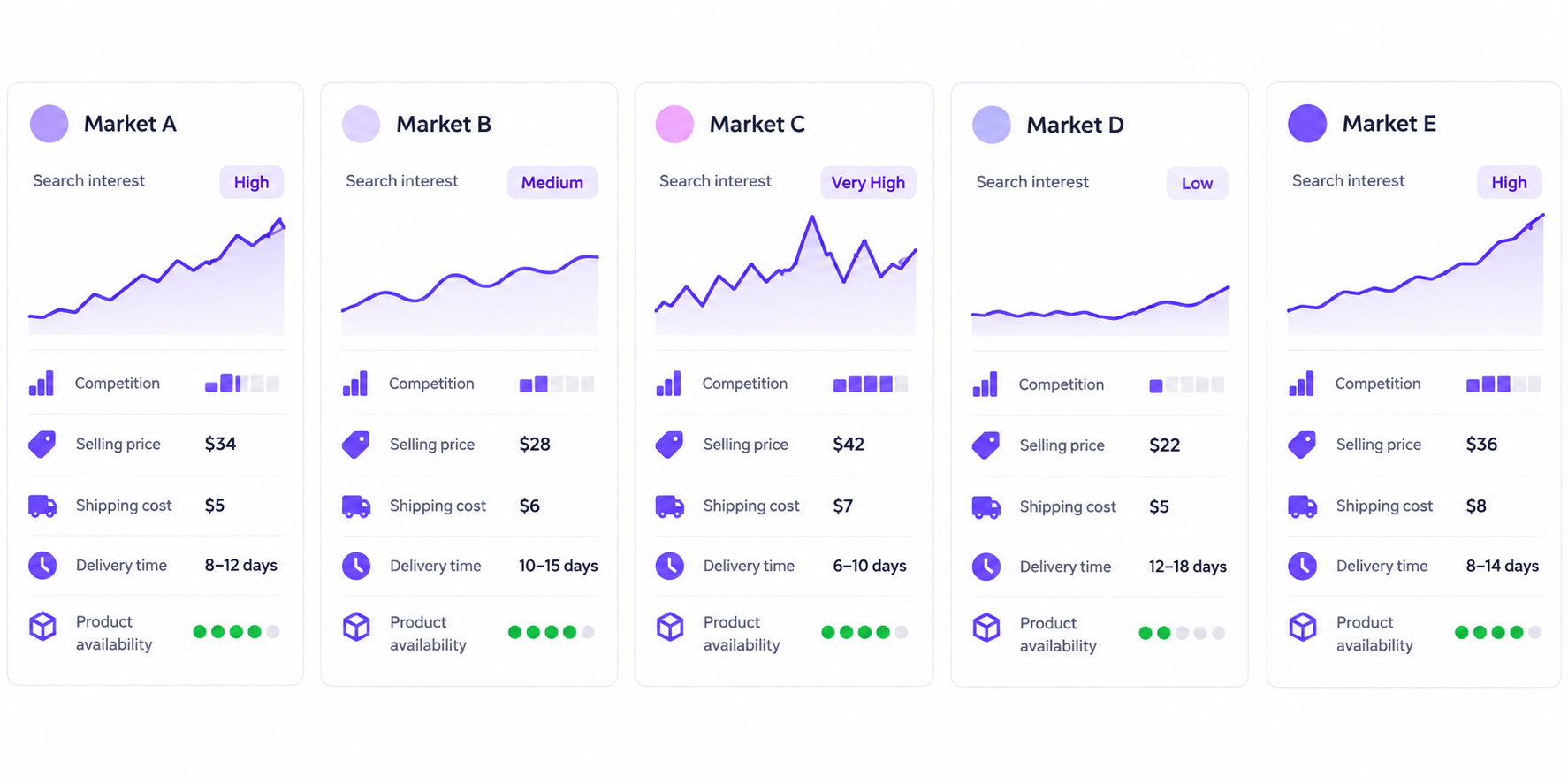
How to Use Google Trends to Find a Dropshipping Market
A product does not have to perform equally well everywhere.
Google Trends lets you compare search interest by location, which can help you identify markets that deserve closer attention.[1]
For example, if a product shows stronger interest in the United States than in Canada, that does not automatically mean the US dropshipping marketplace will generate more sales. It simply gives you a reason to investigate the US market further.
You should then check:
- Local competition
- Selling prices
- Customer expectations
- Shipping costs
- Delivery times
- Product availability
This is where global dropshipping fulfillment becomes important.
TeemDrop supports delivery to 200+ countries and combines sourcing, warehouses, fulfillment, and shipping services, allowing sellers to evaluate market opportunities alongside practical fulfillment considerations.
Use Google Trends to Plan Seasonal Dropshipping Products
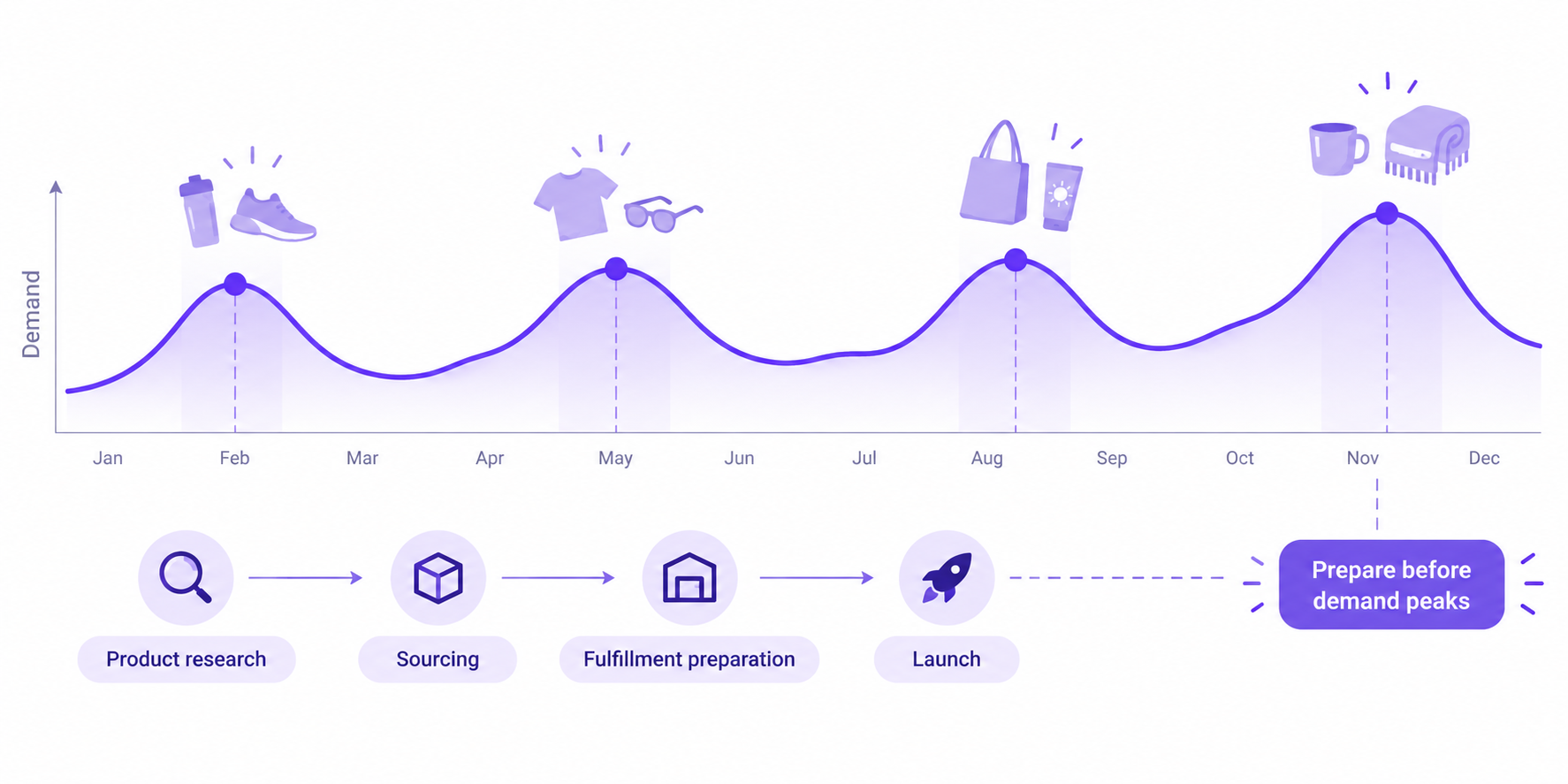
Seasonality can be a major opportunity for dropshippers.
A product may receive much more search interest during a particular season, holiday, or recurring event. Looking at several years of Google Trends data can help you identify these patterns.
For example, if interest repeatedly increases before a particular holiday, waiting until the peak arrives may leave you with limited time to prepare.
A better approach is:
Identify the seasonal pattern → research the product early → confirm sourcing → prepare fulfillment → launch before peak demand.
This is particularly important when your product needs custom packaging, quality checks, or additional preparation.
Google Trends for Dropshipping Keyword Research
Google Trends can also support keyword research for dropshipping, but it should not replace dedicated SEO keyword tools.
Its biggest value is helping you understand how interest changes.
You can use it to:
- Compare different ways of describing a product.
- Find related rising searches.
- Identify seasonal search terms.
- Compare interest across countries.
- Find topics worth creating content around.
For example, if several related product terms show growth, you may have opportunities for both product pages and educational content.
But remember: Google Trends shows relative interest, not the same type of absolute monthly search volume provided by traditional keyword research tools.[1]
Google Trends Is Not Enough: Validate the Product Before Selling
This is the step that turns Google Trends product research into a real business decision.
Before adding a product to your store, ask:
| Question |
What to Check |
| Is there demand? |
Google Trends |
| Is demand growing? |
Long-term + recent trends |
| Where is demand strongest? |
Geographic data |
| Is it seasonal? |
Multi-year trend |
| Is competition manageable? |
Competitor research |
| Can I source it profitably? |
Product and supplier costs |
| Is the quality reliable? |
Product samples and QC |
| Can I ship it competitively? |
Shipping options and delivery times |
| Can I scale it? |
Supplier and fulfillment capacity |
Google Trends validates interest. It does not validate the entire business.
TeemDrop can help with the next part of the process. Its sourcing service connects sellers with supplier resources, while its quality control process includes pre-shipment inspections, visual checks, defect detection, and inspection reports.
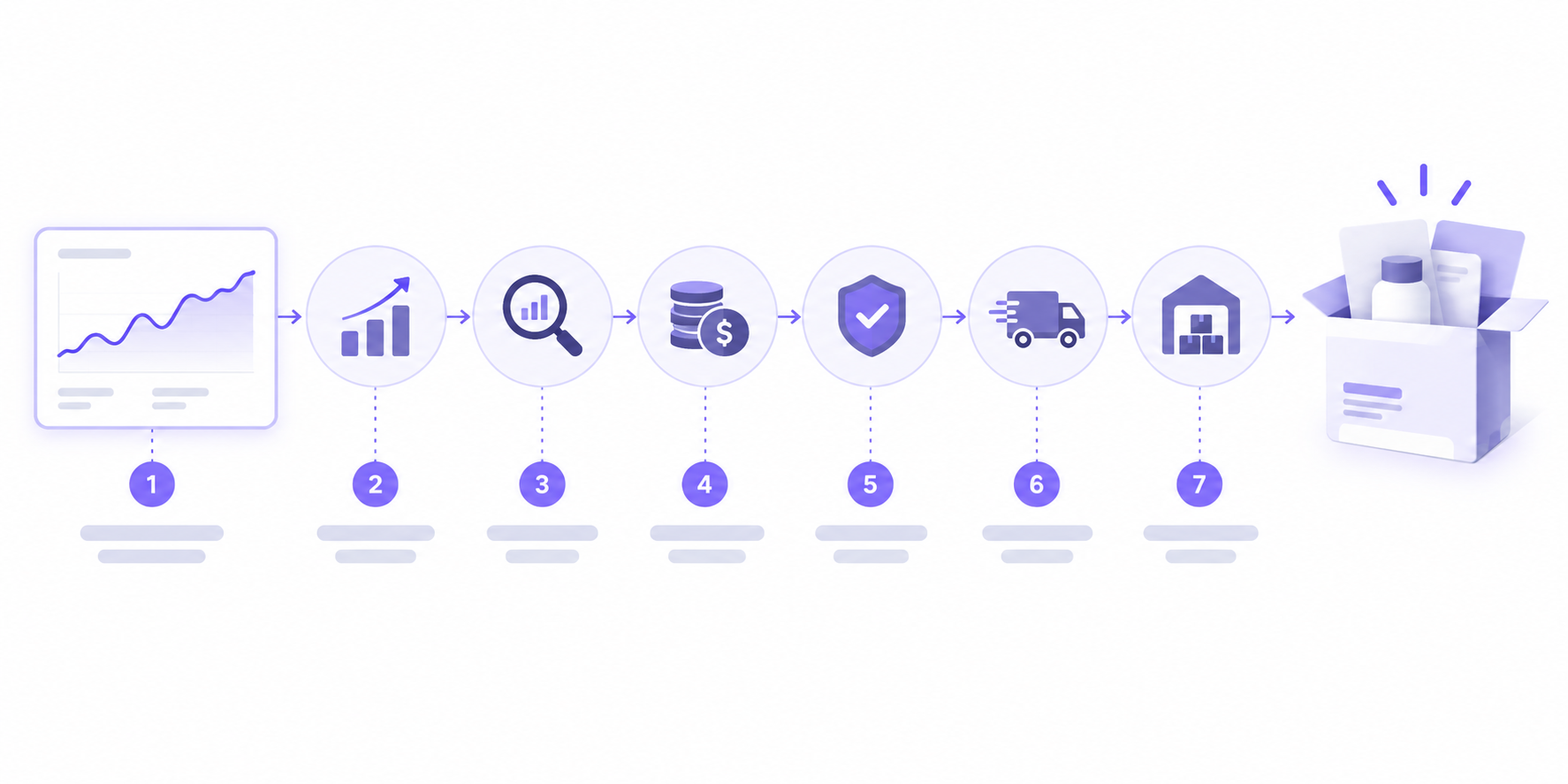
That creates a more complete path from:
Trend → Product → Sourcing → Quality Control → Fulfillment → Customer
From Google Trends Research to Dropshipping Execution
Once a product passes your initial demand check, you need to turn the opportunity into an actual test.
With TeemDrop, you can move from product sourcing to fulfillment without building the entire process around disconnected suppliers and tools.
TeemDrop combines:
- AI-powered product sourcing
- Supplier matching
- Quality control
- Automated order fulfillment
- Global and local warehouse options
- Real-time shipment tracking
- Logistics support
Its AI-powered sourcing system also analyzes search demand and other signals to identify products with market potential, while supplier evaluation and sourcing tools help move promising ideas toward execution.
This does not mean AI can guarantee a winning product. It means you can reduce manual research and spend more time validating the opportunities that actually make sense for your store.
Common Google Trends Mistakes for Dropshippers
1. Treating 100 as 100 searches
A score of 100 represents the highest relative interest within the selected comparison, time, and location. It does not mean 100 searches.
2. Assuming every spike means strong demand
A spike may come from news, social attention, an event, or another temporary reason.
3. Looking at only one timeframe
A 12-month graph can hide recurring seasonal patterns. Check the longer trend as well.
4. Choosing a product based on trends alone
Search interest is only the first validation step.
5. Ignoring fulfillment
A product can have strong demand and still be difficult to sell profitably if sourcing, quality, or shipping costs do not work.
FAQ
Is Google Trends good for dropshipping?
Yes. Google Trends is useful for checking product demand, comparing product ideas, identifying seasonality, and exploring geographic interest. It should be combined with competition, sourcing, cost, and fulfillment research.
Can Google Trends find winning dropshipping products?
Not by itself. It can identify products with promising search interest, but it cannot guarantee sales or profitability.
What does 100 mean on Google Trends?
100 represents the highest relative search interest for the selected data set. It does not represent a fixed number of searches.
Can Google Trends show which country is best for a product?
It can show where relative search interest is stronger. However, you should also compare market size, competition, pricing, and dropshipping shipping options before choosing a target market.
Is Google Trends free?
Yes. Google Trends is a free Google tool that can be used to explore search interest over time and across locations.
What should I do after finding a trending product?
Do not rush to list it. First validate competition, sourcing cost, supplier reliability, product quality, expected margin, and shipping. Then consider a small product test.
Conclusion
Google Trends for dropshipping is most useful when you use it to answer one question:
Is this product worth researching further?
Look beyond a single spike. Compare products, study long-term demand, check seasonality, and identify promising markets.
Then validate what Google Trends cannot tell you: sourcing, quality, cost, competition, and fulfillment.
That is where a connected dropshipping platform can make the next step easier. With TeemDrop, you can move from product research into sourcing, quality control, automated fulfillment, and global delivery through one connected workflow.
References
[1] Google Trends Help — FAQ about Google Trends data
Google Trends data methodology and limitations