How to Handle Dropshipping Returns and Refunds
A customer receives a damaged product and requests a refund. You contact the supplier, but they have not responded yet. Meanwhile, your customer is waiting for a solution.
This is one of the challenges of running a dropshipping business. Unlike traditional retailers, dropshipping sellers do not usually hold or inspect products before they reach customers. They rely on suppliers to manage product preparation, packaging, and shipping. When something goes wrong, the seller must coordinate between the customer and the supplier.
For sellers using platforms like TeemDrop, understanding how to manage these situations is important for maintaining customer trust and controlling operating costs.
This guide explains how to handle dropshipping returns and refunds, work with suppliers, choose suitable solutions, and prevent recurring after-sales problems.
Quick Answer: How Do You Handle Dropshipping Returns and Refunds?
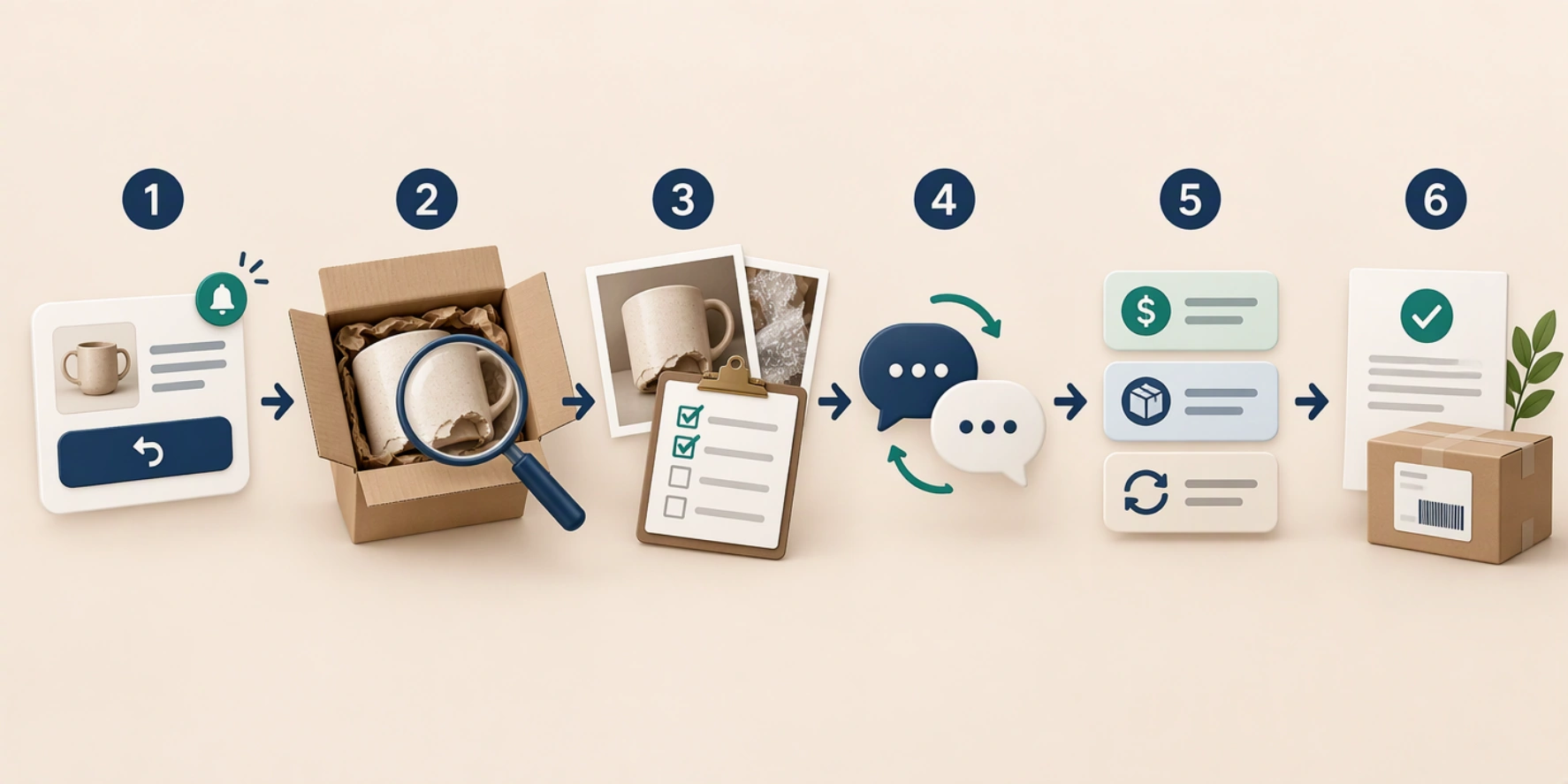
To handle dropshipping returns and refunds, follow these six steps:
- Review the customer's request and your store's return policy.
- Identify why the customer wants a return or refund.
- Collect supporting evidence, such as product photos, videos, or tracking records.
- Contact the supplier or fulfillment partner when the issue involves product quality, shipping, or order accuracy.
- Choose a suitable solution, such as a refund, replacement, exchange, or return.
- Complete the resolution and record the issue to prevent similar problems.
Handle the customer's request according to your store policy and applicable consumer laws. Pursue supplier compensation separately rather than making the customer wait for the supplier's response.
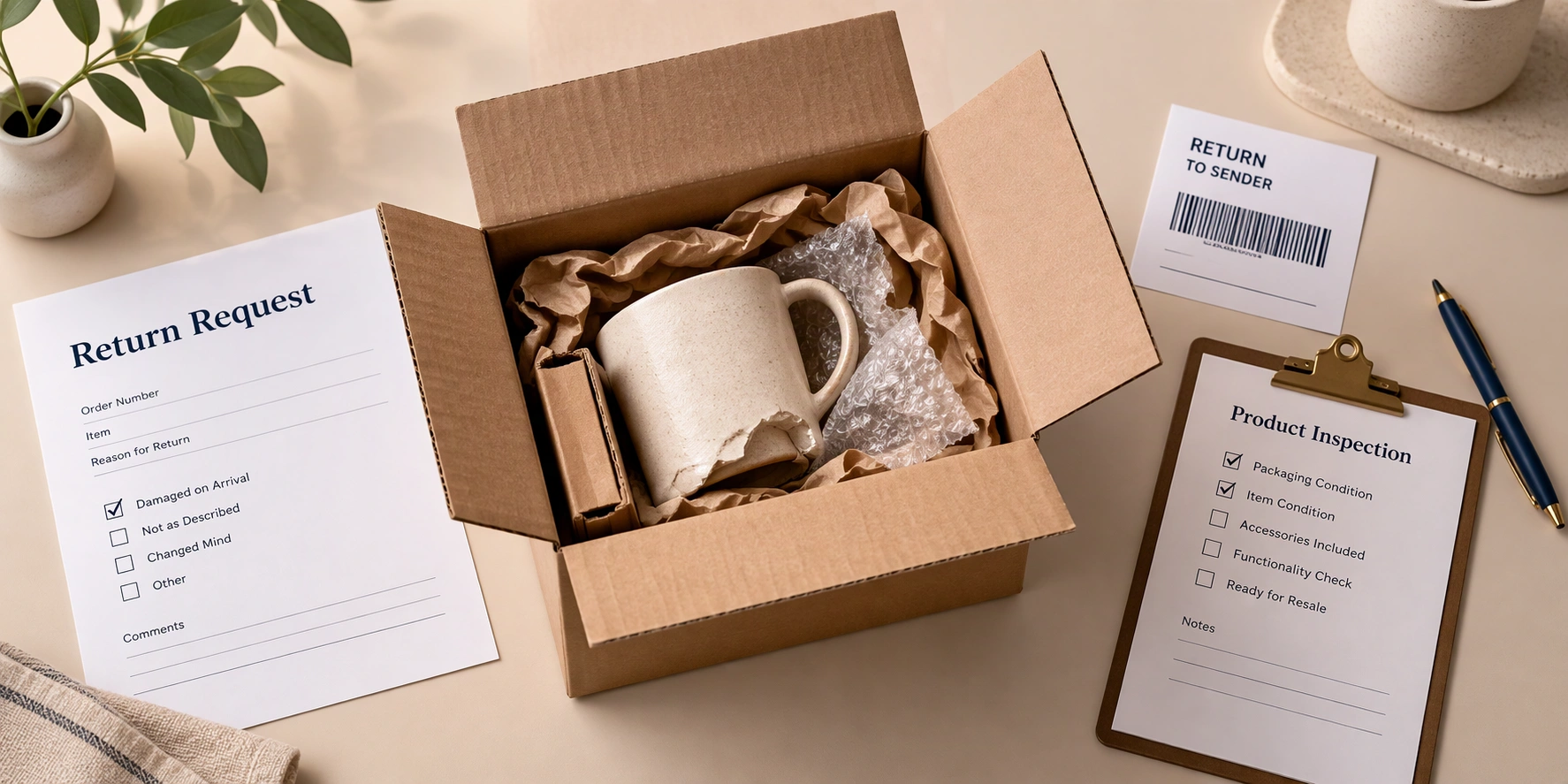
Why Are Dropshipping Returns and Refunds More Complicated?
Dropshipping returns involve more than a customer sending a product back. Since a third-party supplier handles fulfillment, sellers often need to coordinate several parties to resolve an issue.
There are three common challenges.
1. Sellers Do Not Directly Control Inventory
Dropshipping sellers usually do not handle products before shipment. This makes it harder to check product quality, confirm packaging conditions, or inspect returned items.
If a customer receives a defective product, the seller may need to request photos or videos before asking the supplier to investigate.
2. Supplier Policies May Differ From Store Policies
Your store's return policy may differ from your supplier's terms. For example, a supplier may accept quality-related claims only within a limited period, while your store promises customers a longer return window. In that case, you may need to cover costs that the supplier will not reimburse.
Before listing dropshipping products, confirm the supplier's return conditions, claim deadlines, refund eligibility, and replacement arrangements.
3. International Return Shipping Can Be Expensive
Many dropshipping orders travel across international borders. Returning a low-cost product to its original shipping location may cost more than the product itself.
In some cases, offering a replacement or refund without requiring a physical return may be a more practical solution, provided it complies with your policy and applicable consumer protection rules.
Returns vs. Refunds in Dropshipping: What's the Difference?
A return means the customer sends a product back, while a refund means the customer receives money back. They can happen together, but a refund does not always require a physical return.
| Term |
Meaning |
Example |
| Return |
Customer sends the product back |
Customer returns a damaged item |
| Refund |
Customer receives money back |
Seller refunds the purchase amount |
| Replacement |
Customer receives another item |
Supplier sends a new product |
| Exchange |
Customer swaps the product for another option |
Customer exchanges a different size |
Not every refund requires a return. There are three common arrangements:
- Return with a refund: The customer sends the product back, and the seller refunds the payment according to the applicable policy.
- Refund without a return: The seller refunds the customer without requiring the product to be shipped back, often when return shipping is not economical.
- Replacement without a refund: The customer keeps or disposes of the original item while a replacement is sent.
The right option depends on the product issue, return costs, supplier agreement, store policy, and applicable consumer laws.
How to Handle Dropshipping Returns and Refunds: A Step-by-Step Process
Use these six steps to manage a dropshipping refund process consistently, from reviewing the customer's request to recording the final resolution.
Step 1. Review the Customer's Request
Start by checking the customer's order and understanding what they are asking for.
Review the following details:
- Order number and purchase date
- Product name, size, color, and variant
- Delivery status and tracking information
- Reason for the return or refund
- The solution requested by the customer
Do not promise a refund or ask the customer to ship the product back before understanding the issue. First, check whether the request meets your store's return policy.
Step 2. Identify the Reason for the Return or Refund
First, classify the request by its main cause:
- Product quality or damage
- Incorrect or missing items
- Product not as described
- Delayed or lost shipment
- Change of mind or incorrect order
The reason determines what evidence you need and which resolution to consider. The following sections explain how to handle each situation.
Step 3. Collect Supporting Evidence
Before contacting the supplier, collect enough information to explain the problem clearly.
| Issue |
Evidence to Collect |
| Damaged product |
Photos or videos showing the damage |
| Wrong item |
Photos of the received product and order details |
| Missing components |
Photos of the package and its contents |
| Product not as described |
Product listing and photos of the actual item |
| Delivery problem |
Tracking number and carrier updates |
Ask customers to provide relevant evidence without making the process unnecessarily difficult. Keep the original order details and customer communication for reference.
Step 4. Contact the Supplier and Confirm Available Solutions
Once you have the evidence, contact the supplier or fulfillment partner if the problem involves product quality, incorrect fulfillment, or shipping.
Explain the issue and provide:
- The original order number
- A clear description of the problem
- Photos, videos, or tracking records
- The customer's preferred solution
Confirm whether the supplier can offer compensation, a replacement, or another solution. Also ask whether the product must be returned, where it should be sent, and who pays the shipping cost.
Save the supplier's response for your records. You remain responsible for communicating with the customer, so do not ask them to negotiate directly with the supplier or wait indefinitely for an update.
Step 5. Choose the Most Suitable Resolution
After reviewing the evidence and available options, choose a solution that addresses the customer's problem.
| Resolution |
When to Consider |
| Full Refund |
The product is defective or the order cannot be fulfilled |
| Partial Refund |
A minor issue can be reasonably resolved without a full return |
| Replacement |
The customer still wants the product |
| Exchange |
Another size, color, or variant is available |
| Returnless Refund |
Return shipping is uneconomical or unnecessary |
For a low-cost damaged product, a returnless refund or replacement may cost less than international return shipping. However, the final decision must follow your published policy and applicable consumer laws.
Step 6. Complete the Resolution and Keep Records
Once a solution is agreed upon, explain the next steps and expected timeline to the customer. For refunds, confirm the payment method and processing status. For replacements, share the new tracking information when available. For approved returns, provide the correct return address and instructions.
Record the order details, reason for the request, evidence, supplier response, resolution, and total cost. Reviewing these records can help identify recurring defects, inaccurate product descriptions, and fulfillment errors.
How to Handle Different Dropshipping Return Scenarios
The right response depends on why the customer is requesting a return or refund. Use these guidelines for common dropshipping scenarios.
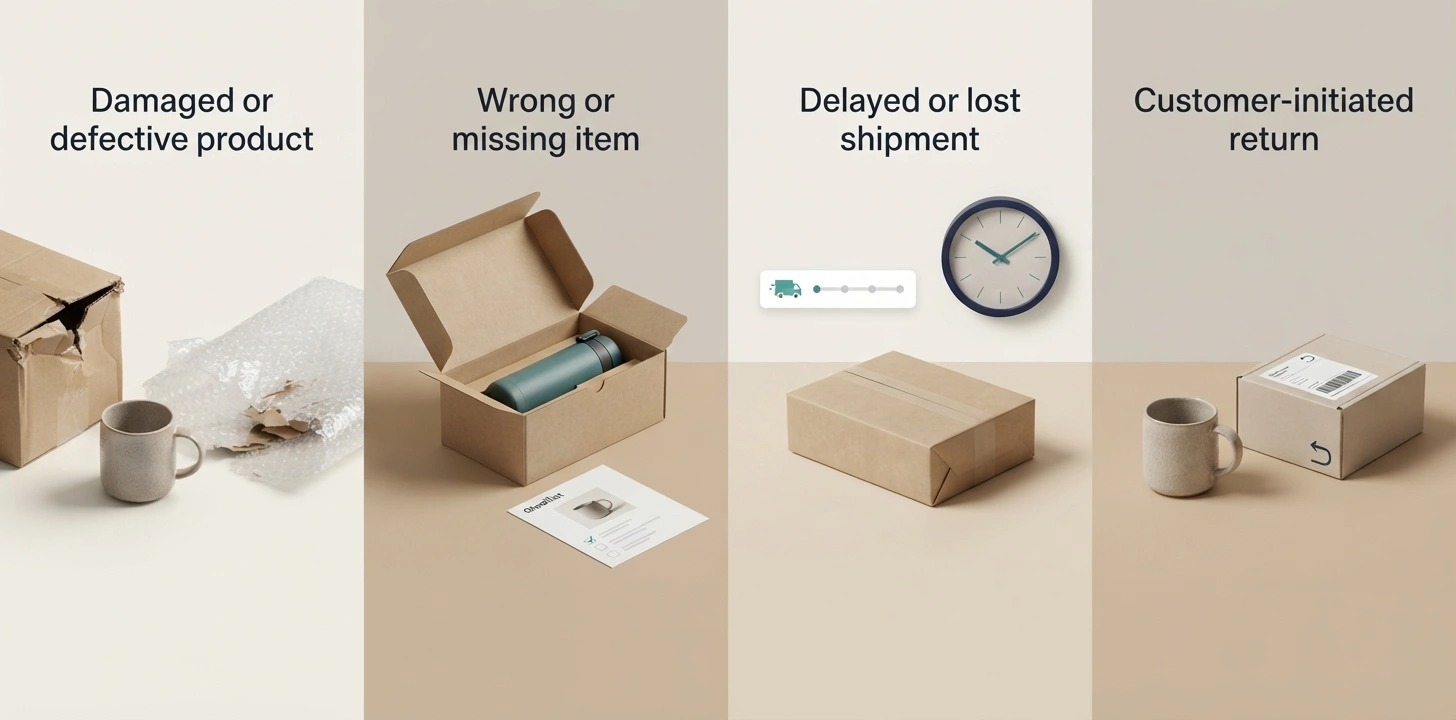
1. Damaged or Defective Products
Request photos or videos of the damage and compare them with the product specifications. Send the evidence to the supplier to request a replacement or compensation. If the same defect appears repeatedly, review the product's quality and reconsider the supplier.
2. Wrong or Missing Items
Compare the customer's order with the product received. Check the selected variant, packing details, and fulfillment records.
If the supplier sent the wrong item or left out components, request a correction, replacement, or appropriate refund.
3. Delayed or Lost Shipments
Check the tracking history before deciding how to resolve the complaint.
A package that is delayed is not necessarily lost. Contact the carrier or fulfillment partner when tracking information stops updating or shows an unusual delivery status.
For US orders, the FTC requires sellers to notify customers about shipping delays and explain their cancellation and refund rights when they cannot meet the promised shipping time [2].
4. Customer-Initiated Returns
Sometimes customers simply change their minds, order the wrong size, or no longer need the product.
Check your published return policy, product condition requirements, and applicable consumer laws before approving the request. Explain who pays for return shipping and whether an exchange or refund is available.
Who Pays for Dropshipping Returns and Refunds?
Who pays for return shipping depends on the return reason, the supplier agreement, the store's policy, and applicable consumer protection laws.
| Return Reason |
Potential Cost Responsibility |
| Supplier sends a defective product |
Supplier may cover product or replacement costs |
| Supplier sends the wrong item |
Supplier may cover correction costs |
| Carrier loses the package |
Depends on shipping terms and carrier claims |
| Customer changes their mind |
Customer or seller, depending on policy and applicable law |
| Customer orders the wrong variant |
Depends on store policy and applicable rules |
| Supplier rejects a valid customer-facing claim |
Seller may need to cover the difference |
Before approving a return, compare three costs: the original product cost, return shipping, and replacement shipping.
For example, if a product costs $8 but international return shipping costs $20, a returnless refund or replacement may be more economical. However, cost savings must not override the customer's legal rights or your published return policy.
How to Create a Dropshipping Return and Refund Policy
A clear dropshipping return policy sets customer expectations and helps prevent disputes. It should explain:
| Policy Element |
What to Include |
| Return Window |
How long customers have to request a return |
| Eligible Products |
Which products qualify for returns |
| Product Condition |
Requirements for returned items |
| Return Shipping |
Who pays for return shipping |
| Refund Method |
How customers receive refunds |
| Refund Timeline |
When refunds are processed |
| Damaged Products |
How customers report product issues |
| International Returns |
How cross-border returns are handled |
TeemDrop return policy explains the after-sales, refund, replacement, and return procedures that apply to merchants using its platform. These are platform-level terms; they do not replace the separate consumer-facing return policy required for your own store.
Your policy must also comply with the laws of the markets where you sell. For example, eligible online purchases in the European Economic Area generally have a 14-day withdrawal period, subject to exceptions. Shopify also recommends clearly stating return periods, return addresses, shipping costs, and refund information [1].
Common Dropshipping Returns and Refunds Mistakes to Avoid
Even with a clear process, some mistakes can increase costs and damage customer relationships.
| Common Mistake |
Why It Matters |
How to Avoid It |
| Copying supplier policies without reviewing them |
Creates conflicting customer promises |
Check supplier terms before publishing your policy |
| Delaying customer responses |
Reduces customer trust |
Acknowledge requests promptly |
| Requesting returns without checking shipping costs |
Creates unnecessary expenses |
Compare return costs with product value |
| Refunding without reviewing available evidence |
Can lead to avoidable losses |
Verify the issue fairly |
| Ignoring recurring product problems |
Causes repeated complaints |
Track return reasons and supplier performance |
| Making unclear refund promises |
Creates disputes and misunderstandings |
Explain conditions and timelines clearly |
Review return records regularly. Repeated complaints about the same defect may mean you need a different supplier or stronger quality checks, not just faster refunds.
How TeemDrop Helps Reduce Dropshipping Returns and Fulfillment Issues
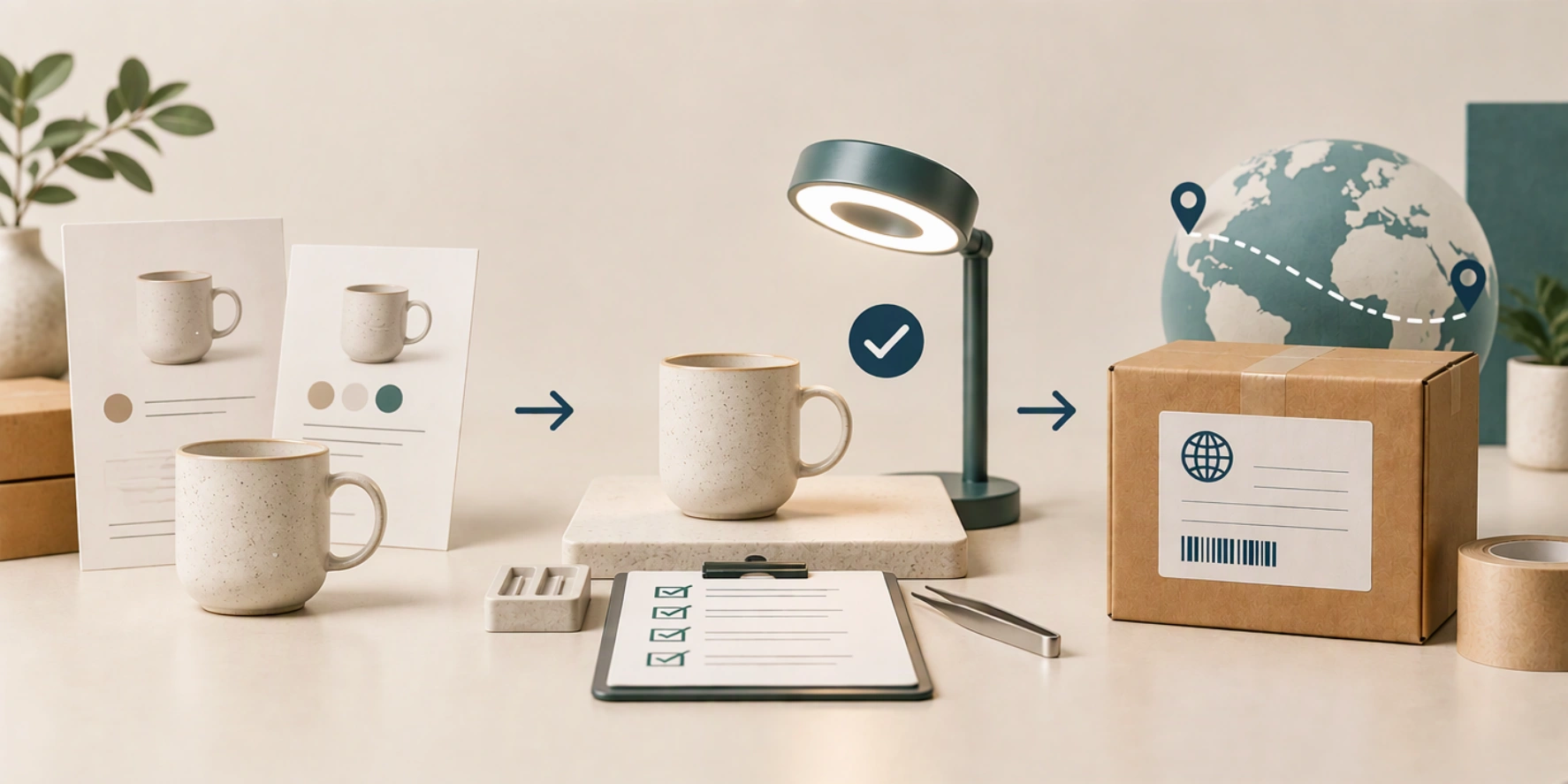
Not every return can be prevented, but better sourcing, product inspection, and fulfillment checks can reduce avoidable problems before orders reach customers. TeemDrop brings these operations together through one dropshipping sourcing and fulfillment platform.
AI-Assisted Product Sourcing
TeemDrop provides AI product sourcing to help sellers source products from 1688 and Taobao and review supplier and product information before listing items in their stores. Better sourcing decisions can reduce risks associated with unsuitable products or unreliable suppliers.
Pre-Shipment Quality Inspection
TeemDrop's dropshipping quality control service includes pre-shipment inspections, photo and video confirmation, and defect detection. These checks can help identify product issues before dispatch.
Coordinate Order Fulfillment and Shipping
TeemDrop supports automated order fulfillment, real-time tracking, and worldwide delivery. Sellers can connect their stores and manage orders through a more coordinated sourcing and fulfillment workflow.
This helps merchants monitor order progress and respond to shipping-related issues more effectively.
By improving sourcing, product inspection, and fulfillment management, sellers can address potential problems earlier and build a more reliable dropshipping store.
FAQs
1. Who Is Responsible for Handling Returns in Dropshipping?
The seller is responsible for handling customer return and refund requests, even when a third-party supplier fulfills the order. The seller should communicate with the customer and coordinate with the supplier when necessary.
2. Do Dropshipping Suppliers Accept Returns?
Some suppliers accept returns for defective or incorrect products, while others offer replacements or refunds under specific conditions. Always check the supplier's return policy before listing products in your store.
3. Who Pays for Return Shipping in Dropshipping?
Return shipping costs depend on the reason for the return, supplier agreements, store policies, and applicable consumer laws. Customers may pay for eligible change-of-mind returns, while supplier-related issues may qualify for compensation.
4. Can You Refund a Dropshipping Customer Without Returning the Product?
Yes. A returnless refund may be suitable when the product is low-cost, damaged, or too expensive to ship back. However, sellers must consider their policies and applicable consumer protection requirements.
5. How Can Dropshipping Sellers Reduce Refund Requests?
Choose reliable suppliers, verify product descriptions, inspect product quality, provide accurate shipping information, and monitor recurring customer complaints. Addressing problems before shipment can reduce avoidable refunds and improve customer satisfaction.
References
[1] Shopify Help Center. Dropshipping: Legal Responsibilities, Returns and Refund Policies.
https://help.shopify.com/en/manual/compliance/legal/dropshipping
[2] Federal Trade Commission. Selling on the Internet: Prompt Delivery Rules.
https://www.ftc.gov/business-guidance/resources/selling-internet-prompt-delivery-rules