Start a Dropshipping Business in Spain: 9 Steps for 2026
You have found a product that could sell well in Spain. You have a supplier in mind, but then the practical questions start: How should you build your store? How will products reach Spanish customers? What costs should you expect? And what do you need to know before taking your first order?
Starting a dropshipping business in Spain involves more than uploading products to an online store. You need to choose the right products, find a reliable supplier, set up your store, understand the basic selling requirements, and create a fulfillment process that can handle customer orders.
TeemDrop can support this process by connecting AI product sourcing, supplier coordination, quality control, and automated fulfillment in one workflow.
This guide walks through the process step by step, with a focus on what beginners actually need to do before launching.
Quick Answer: How Do You Start Dropshipping in Spain?
To start dropshipping in Spain, you need to:
- Choose a niche and products.
- Research demand and competition.
- Find a reliable supplier.
- Choose an ecommerce platform.
- Build and localize your store.
- Check tax and legal requirements.
- Set up shipping and fulfillment.
- Launch your marketing.
- Test, measure, and scale.
Start with a small product selection, test demand, and scale the products that perform well.
Key Takeaways
- Research the Spanish market before choosing products.
- Choose suppliers based on quality, shipping, and reliability.
- Localize your store for Spanish customers.
- Check tax, legal, and consumer requirements before selling.
- Test your products before scaling.
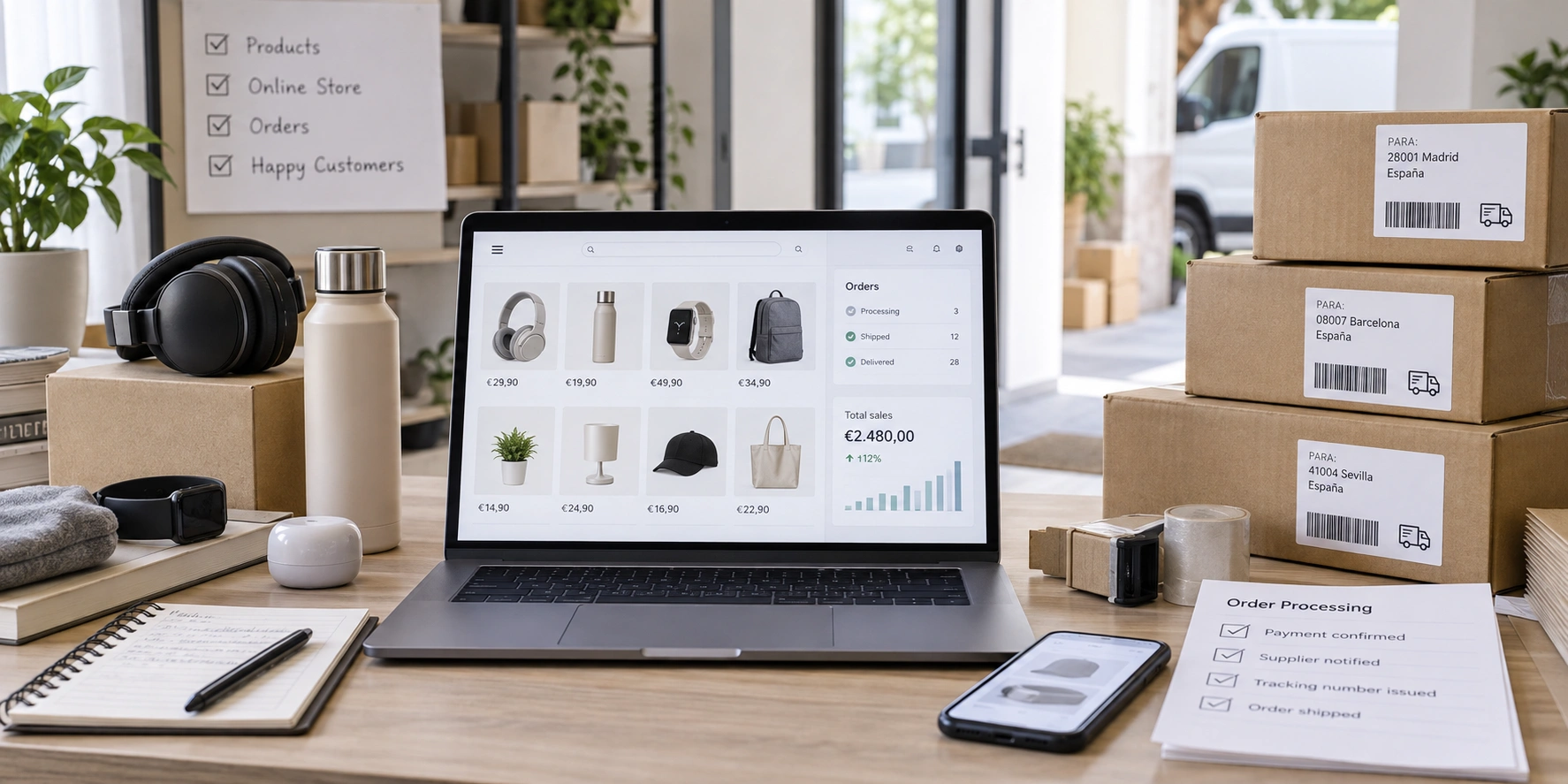
Step 1: Choose a Dropshipping Niche for the Spanish Market
Your first decision is not which supplier to use. It is what you are going to sell.
A product that sells well in another country is not automatically a good fit for Spain. Look for products with clear demand, manageable competition, enough margin, and practical shipping requirements.
What Makes a Good Dropshipping Niche in Spain?
Consider these four factors:
Demand: Are Spanish consumers already searching for or buying similar products?
Competition: Can your store offer something different through price, product selection, content, service, or branding?
Profit potential: Can the selling price cover product costs, shipping, marketing, payment fees, and other expenses?
Shipping and compliance: Is the product relatively easy to ship, and are there any product-specific requirements you need to understand?
For beginners, simple, lightweight, non-fragile products can often be easier to manage than products that are expensive to ship or difficult to handle.
How to Validate Dropshipping Products in Spain
Do not rely only on a "winning product" list. You can also compare best selling dropshipping products 2026 with current Spanish market demand before deciding what to test. Check:
- Google search trends
- Marketplace listings and reviews
- Social media discussions
- Competitor stores
- Customer complaints and unmet needs
The goal is not to find a product with zero competition. It is to find evidence that people want the product and that you can build a viable offer around it.
If you want to speed up this research process, TeemDrop's AI product sourcing system can analyze product trends and connect sellers with suppliers, helping reduce some of the manual work involved in product research.
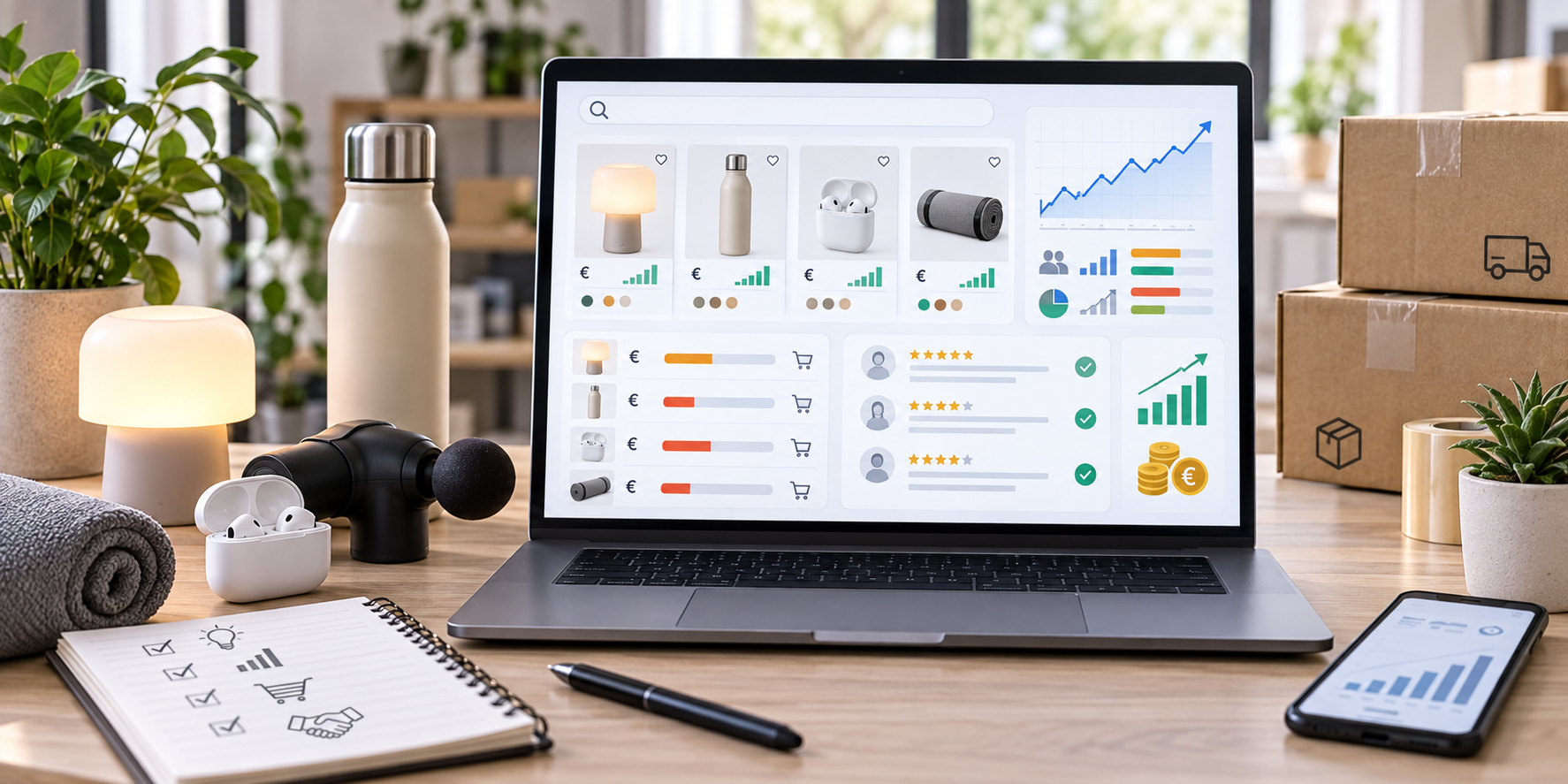
Step 2: Find a Reliable Dropshipping Supplier
Once you have a product idea, you need a supplier that can consistently deliver the product your customers expect.
Price is only one part of the decision.
What to Look for in a Dropshipping Supplier
| Factor |
Why It Matters |
| Product quality |
Reduces complaints and returns |
| Processing time |
Affects delivery speed |
| Stock availability |
Helps prevent stockouts |
| Shipping options |
Affects delivery cost and speed |
| Tracking |
Helps customers monitor orders |
| Quality control |
Reduces defective orders |
| Returns support |
Makes after-sales service easier |
| Store integration |
Reduces manual order processing |
A supplier that saves you €1 on a product is not necessarily the better choice if poor quality creates refunds and negative reviews.
For stores that want more control over quality, TeemDrop combines sourcing with multi-stage quality control, including pre-shipment inspections and visual checks before orders are dispatched.
China Suppliers vs. EU Fulfillment
You do not necessarily need a supplier located in Spain.
China-based sourcing can offer a broad product selection and competitive sourcing costs. However, delivery times, customs, and cross-border fulfillment need to be considered.
EU-based fulfillment can shorten the delivery distance for eligible products and may improve the customer experience, although product availability and costs can differ.
The right choice depends on your product, order volume, target delivery time, and profit margin.
Step 3: Choose an Ecommerce Platform
Your ecommerce platform is where customers will discover products, place orders, and communicate with your store.
Shopify Dropshipping in Spain
For beginners, Shopify dropshipping is one of the simplest ecommerce approaches to consider because Shopify provides tools for:
- Building an online store
- Managing products
- Processing orders
- Connecting ecommerce integrations
- Managing customer information
TeemDrop supports Shopify connections and can sync products and orders into its fulfillment workflow, allowing sellers to move from store setup to automated order processing without manually forwarding every order.
Other Ecommerce Platforms for Dropshipping
WooCommerce can be useful if you want more control over your website and already work with WordPress.
Online marketplaces can also be considered if you want to test demand through an established shopping platform.
For a beginner building a dedicated brand, however, the important thing is not choosing the platform with the most features. Choose one that you can manage consistently.
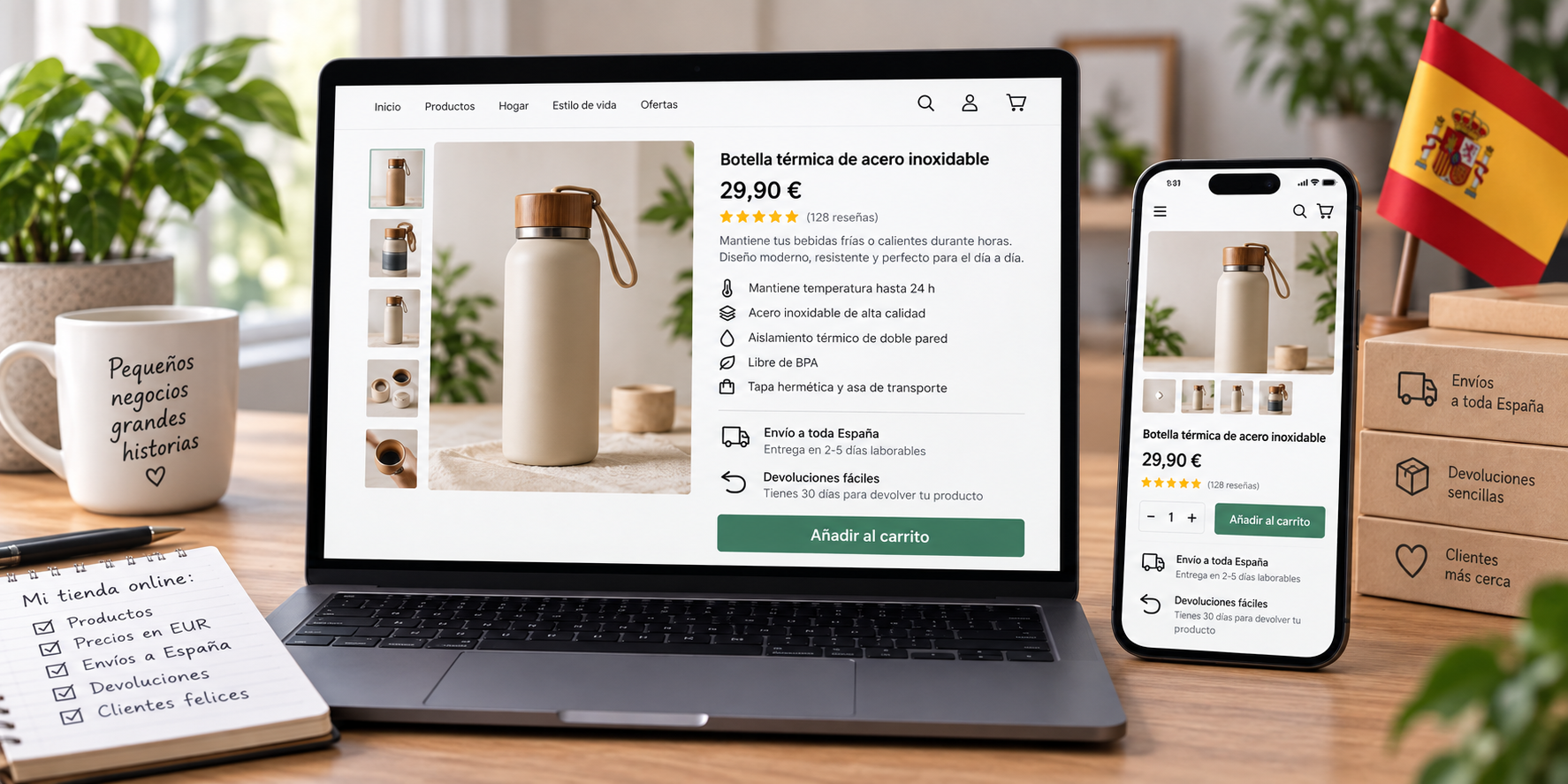
Step 4: Build Your Dropshipping Store for Spanish Customers
A store targeting Spain should feel like a store built for Spanish customers—not simply a translated version of another website.
Localize Your Product Pages
Make sure your product pages provide:
- Clear product descriptions
- Accurate specifications
- EUR pricing
- Product images
- Estimated delivery times
- Shipping information
- Return information
Avoid making promises you cannot support. If delivery normally takes several business days, say so clearly instead of using vague claims such as "fast shipping."
Set Your Pricing
Do not calculate your price using only:
Product cost × markup = selling price
Your actual cost can include:
Product cost + shipping + marketing + payment fees + platform costs + expected returns and other expenses
Understanding this before launch will help you avoid products that generate sales but little profit.
Set Clear Shipping and Return Policies
Customers should be able to understand:
- Where the product ships from
- How long delivery may take
- Whether tracking is provided
- What happens if an order is delayed
- How returns are handled
Clear information can reduce confusion after the sale and make customer support easier.
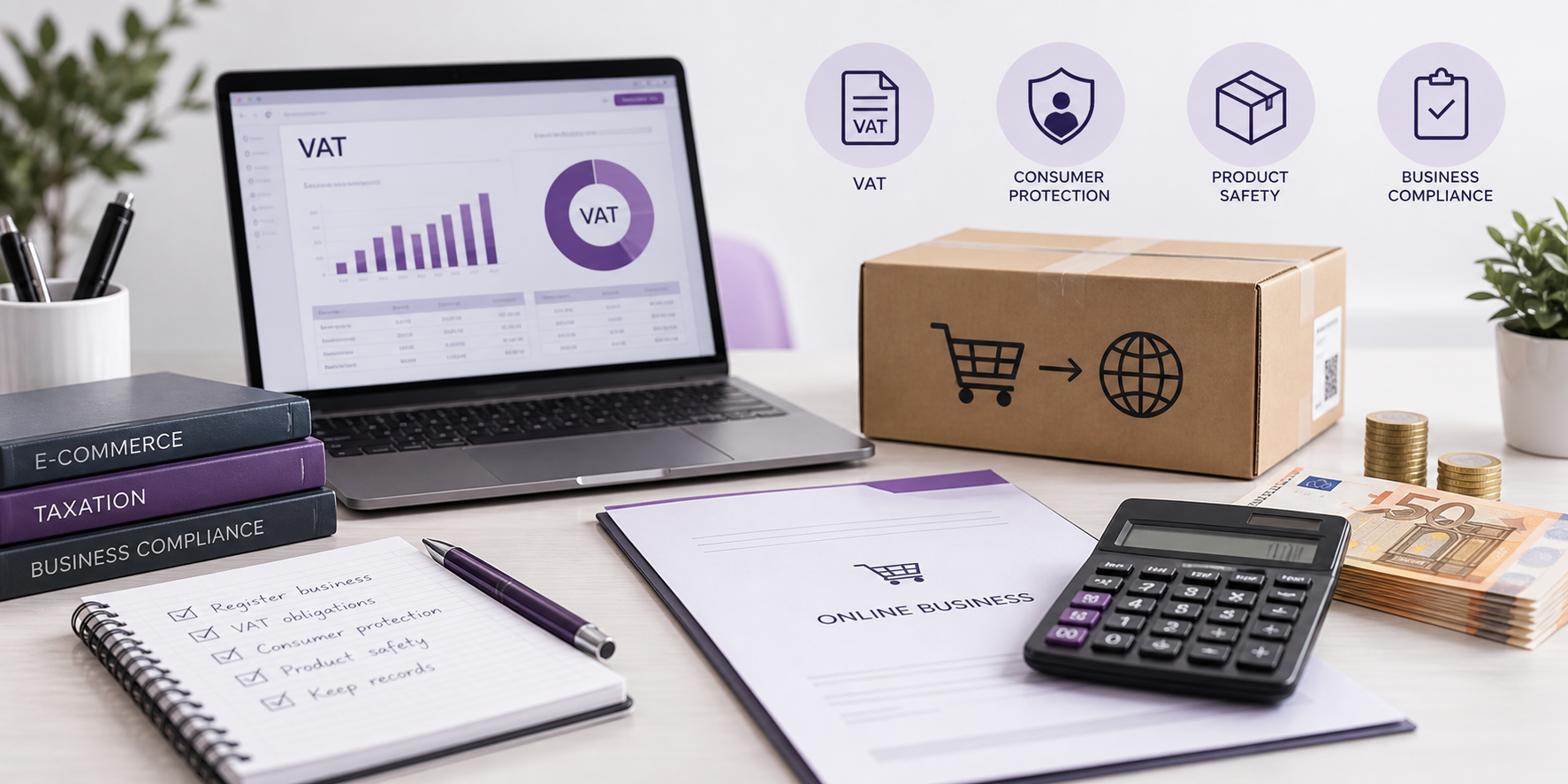
Step 5: Understand Dropshipping Taxes and Legal Requirements in Spain
You do not need to become a tax expert before launching, but you should not ignore the rules either.
Is Dropshipping Legal in Spain?
Yes, dropshipping is a legal ecommerce business model in Spain. However, using dropshipping does not remove your responsibilities as a seller.
Depending on your situation, you may need to consider business registration, taxes, VAT, consumer protection, product safety, and other ecommerce requirements.
Your exact obligations can depend on factors such as where your business is established, where your customers are located, and where products are shipped from.
For online sales in the EU, consumer rules can include a 14-day right of withdrawal for eligible purchases, as well as legal guarantees for goods. [1]
What About VAT and Taxes?
VAT treatment and dropshipping taxes can become more complicated when products cross borders.
For eligible imported goods valued at no more than €150, the EU's Import One-Stop Shop (IOSS) provides a system for handling VAT on qualifying distance sales of imported goods. Spain's Tax Agency explains that the IOSS regime is designed for these low-value imported goods and allows VAT to be collected through the scheme rather than handled as import VAT in the usual way. [2]
This is an area where your business structure and fulfillment model matter, so check the rules that apply to your situation before launch.
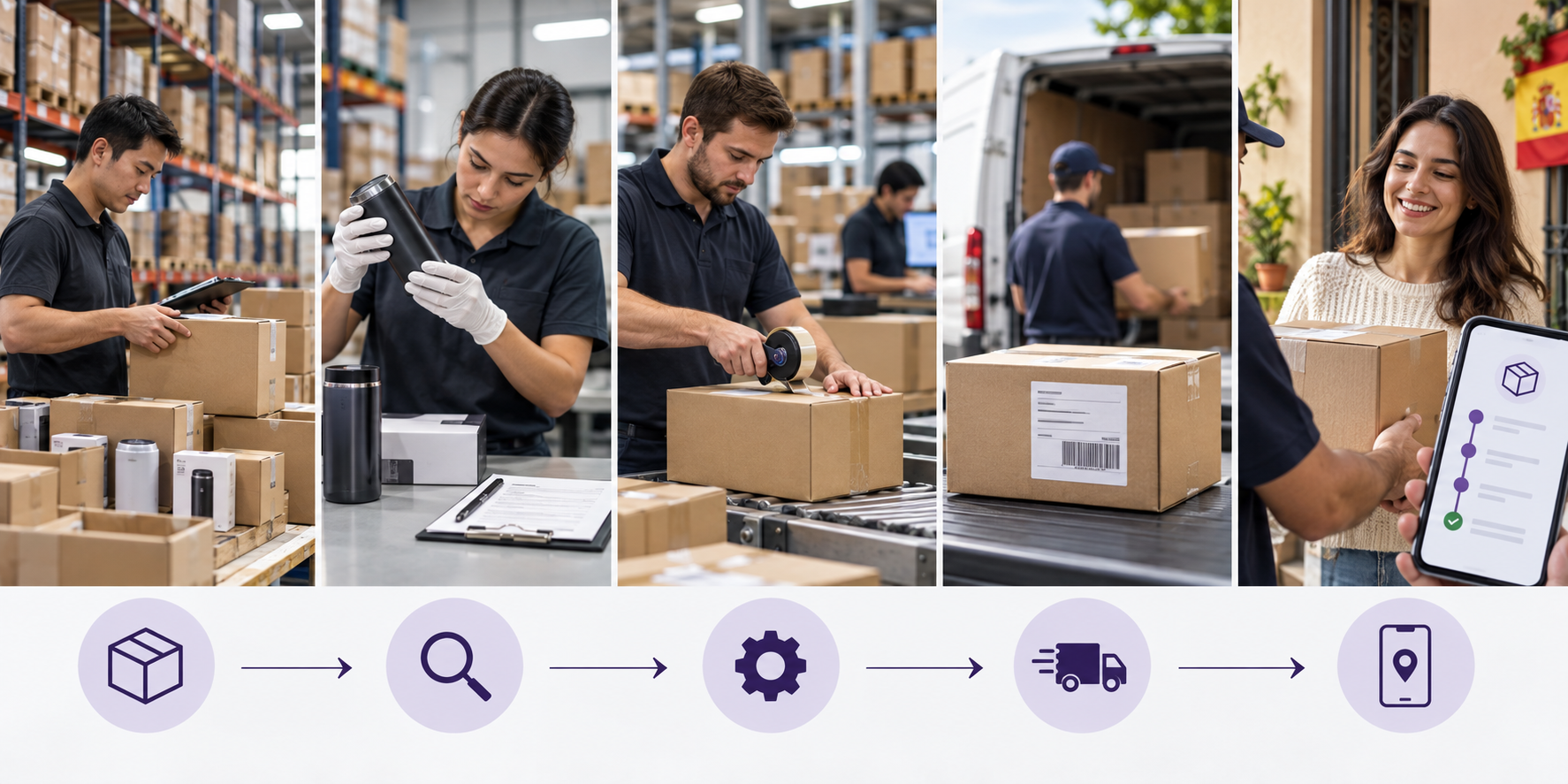
Step 6: Set Up Shipping and Fulfillment
Getting a product sold is only half the job. You also need a reliable process for getting it to the customer.
Choose a Shipping Strategy
There are two common approaches.
Direct shipping:
Supplier → Customer
This can give you access to a wide product catalog without holding inventory yourself.
Fulfillment:
Supplier → dropshipping warehouse → Customer
This approach can add another layer of control over inventory, quality checks, order processing, and shipping.
When choosing a fulfillment setup, compare:
- Delivery speed
- Shipping cost
- Tracking
- Destination coverage
- Order processing
- Return handling
There is also an important 2026 change to consider when products are shipped directly from outside the EU. Since July 1, 2026, the EU has applied a temporary €3 customs duty for each different category of goods in eligible small parcels valued below €150 entering the EU. [3] The measure is part of the EU's transition toward a new customs system.
This means sellers should include applicable customs costs in their pricing and fulfillment calculations rather than assuming low-value imports are automatically duty-free.
Why Fulfillment Matters as You Grow
When you have only a few orders, manually checking products and forwarding orders may seem manageable.
As sales increase, the workflow becomes:
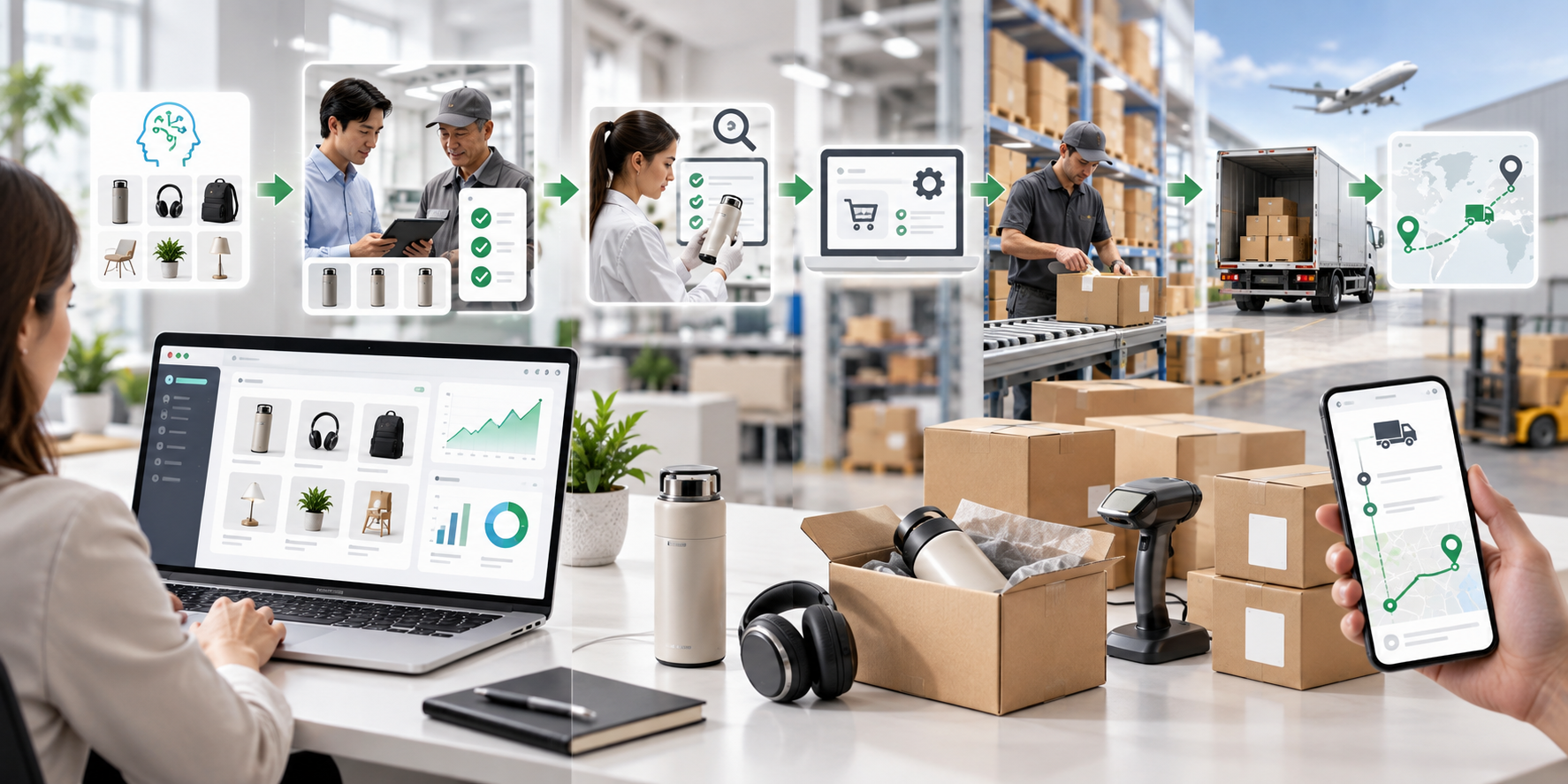
Product sourcing → Quality control → Order processing → Fulfillment → Shipping → Tracking
TeemDrop connects these stages through automated fulfillment, product sourcing, quality control, global warehouses, and real-time tracking. Its network supports delivery to 200+ countries, with stated 8–12 business day delivery available for major markets including Europe.
For a seller targeting Spain, the benefit is not simply faster shipping. It is having fewer disconnected steps to manage as order volume grows.
Step 7: Calculate Your Dropshipping Profit Margin
Before increasing your advertising budget, calculate what you actually make from each order. This is an important part of how to make money dropshipping because revenue alone does not show whether a product is sustainable.
A simple formula is:
Estimated Profit = Selling Price − Product Cost − Shipping − Marketing − Platform/Payment Fees − Other Costs
For example:
- Selling price: €35
- Product + shipping: €12
- Marketing: €8
- Other costs: €3
- Estimated pre-tax profit: €12
The numbers will vary by product and business model, but the principle is the same.
Sales volume alone does not mean a product is profitable.
Track your actual costs and update your calculation as your store grows.
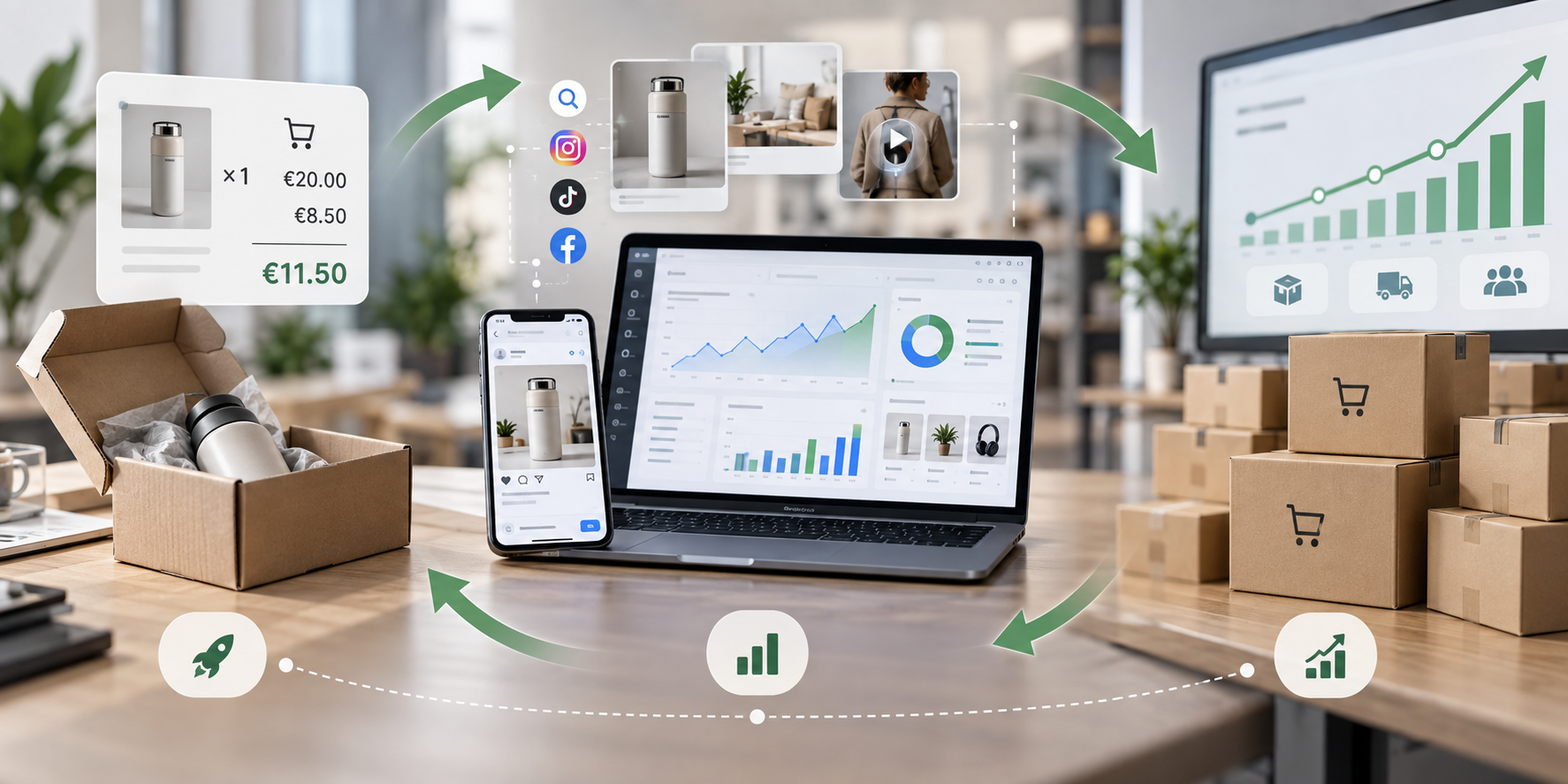
Step 8: Launch Your Marketing Strategy
You do not need to use every marketing channel at once.
Choose channels based on how your target customers discover products.
Google
Useful when customers already search for a specific product or solution.
Meta
Useful for visually appealing products and interest-based advertising.
TikTok
A strong option for products that can be demonstrated through short videos.
Influencer Marketing
Spanish-language creators can help you reach a more localized audience and demonstrate products in a way that feels more natural than traditional advertising.
Start with one or two channels, measure the results, and invest more in the channels that produce profitable customers.
Step 9: Test Before You Scale
A common mistake is to increase spending as soon as a product gets a few sales.
Instead, use a simple cycle:
Launch → Measure → Improve → Scale
Key Dropshipping Metrics to Track
| Metric |
Why It Matters |
| Conversion rate |
Shows how well your store converts visitors |
| Customer acquisition cost |
Shows marketing efficiency |
| Average order value |
Shows revenue per order |
| Profit margin |
Shows whether the product is sustainable |
| Refund rate |
Highlights product or service problems |
| Delivery time |
Affects customer satisfaction |
If a product sells but creates high refund rates or poor delivery experiences, increasing your ad budget may only make the problem bigger.
Common Mistakes When Starting Dropshipping in Spain
1. Choosing products without researching Spanish demand
Global popularity does not guarantee local demand.
2. Choosing a supplier based only on price
Low product costs mean little if quality and delivery create expensive problems.
3. Ignoring delivery times
Customers want to know when their order will arrive. Set realistic expectations.
4. Underestimating total costs
Include shipping, marketing, payment fees, returns, and other operating costs when calculating profit.
5. Treating legal and tax requirements as an afterthought
Understand your obligations before you start accepting orders.
6. Scaling before validating profitability
First prove that the product, store, marketing, and fulfillment process work together.
How Much Does It Cost to Start Dropshipping in Spain?
There is no single amount that every new seller needs.
Your starting budget may include:
- Domain and ecommerce platform
- Product samples
- Product and shipping costs
- Marketing
- Payment fees
- Returns and refunds
- Optional tools and services
The main advantage of the dropshipping model is that you do not normally need to purchase large quantities of inventory before testing demand.
However, low inventory requirements do not mean zero startup costs.
Start with a manageable budget, test products carefully, and increase spending only when your numbers support it.
FAQ
Is dropshipping legal in Spain?
Yes. Dropshipping is a legal ecommerce model in Spain, but sellers still need to follow applicable tax, consumer protection, product safety, and business requirements.
How much money do I need to start dropshipping in Spain?
There is no fixed amount. Your costs depend mainly on your ecommerce platform, product testing, marketing budget, shipping, and other operating expenses.
Can I dropship from China to Spain?
Yes. You can source products from China and sell them to Spanish customers. Before choosing this model, consider delivery times, shipping costs, customs, VAT, tracking, and returns.
Is Shopify good for dropshipping in Spain?
Shopify is a practical option for beginners because it simplifies store creation, product management, order management, and integrations with dropshipping and fulfillment services.
How long does dropshipping take in Spain?
Delivery time depends on the product's origin, fulfillment location, shipping method, and carrier. Always check the actual processing and transit times offered by your supplier or fulfillment partner before publishing delivery estimates.
Do I need a supplier in Spain?
No. A supplier does not have to be located in Spain. What matters is whether the supplier can provide suitable products, reliable fulfillment, reasonable delivery times, tracking, and the support your customers need.
What products can I dropship in Spain?
There is no single best product category. Look for products with proven demand, manageable competition, sufficient margins, practical shipping requirements, and appropriate compliance considerations.
Start Your Spain Dropshipping Business with TeemDrop
Starting a dropshipping store is easy to understand. Building a reliable operation is the harder part.
With TeemDrop, you can connect your store with AI product sourcing, supplier coordination, quality control, Auto Fulfill, global fulfillment, and real-time shipment tracking. The platform supports integrations with Shopify, WooCommerce, eBay, and other ecommerce channels, helping you manage more of the process from one workflow.
If your goal is to test products in Spain and build a store that can grow beyond the first few orders, having a reliable sourcing and fulfillment system in place from the beginning can save time and reduce operational problems later.
References
[1] European Union — Consumer Rights Directive / Right of Withdrawal
EUR-Lex: Consumer Rights Directive
[2] Spanish Tax Agency — VAT e-Commerce and IOSS
Agencia Tributaria: VAT e-Commerce / IOSS
[3] Council of the European Union — New Customs Duty Rules for Small Parcels
Council of the EU: €3 Customs Duty on Small Parcels