How to Start Dropshipping in the UK: A Practical Beginner’s Guide for 2026
You have found a product that looks promising and can already imagine UK customers buying it. But before launching your store, important questions come up: Do you need to register a business? What about VAT, suppliers, and shipping?
If you're wondering how to start dropshipping UK, this guide walks you through the key steps, from choosing products and suppliers to shipping and fulfillment.
TeemDrop can support sellers with product sourcing and fulfillment as they grow, without a monthly subscription.
Quick Answer: Can You Start Dropshipping in the UK?
Yes. Dropshipping in the UK is a legal ecommerce model that lets you sell products without holding inventory yourself. When a customer places an order, your supplier or fulfillment partner handles the product and shipping.
To get started, focus on choosing the right products, working with reliable suppliers, understanding your tax responsibilities, and providing a good delivery experience.
Key Takeaways
- Dropshipping UK for beginners can be started without buying large amounts of inventory upfront.
- Reliable suppliers, realistic shipping times, and product quality are essential for long-term success.
- TeemDrop can help sellers simplify product sourcing and order fulfillment as they grow.
How Does Dropshipping Work in the UK?
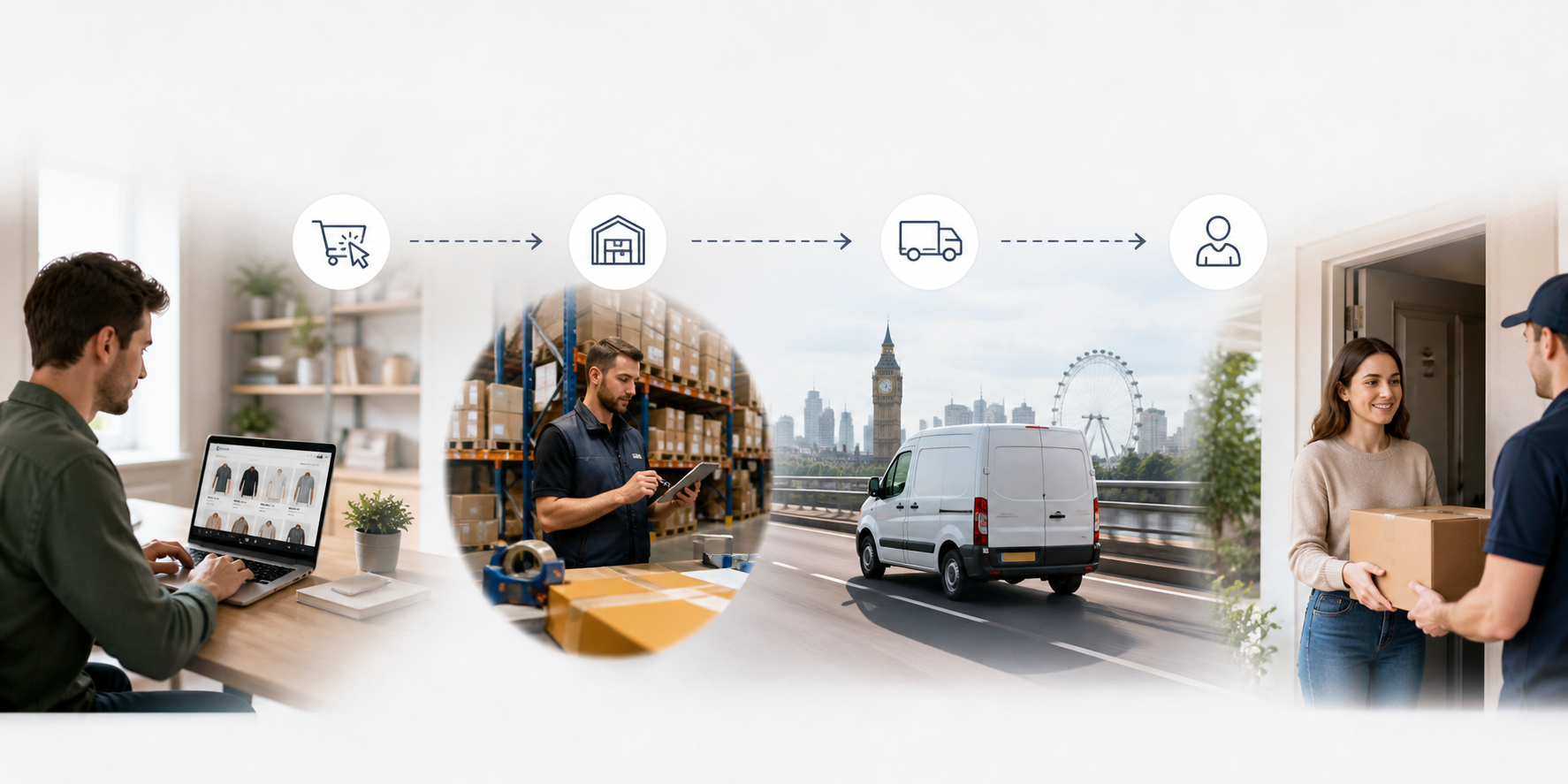
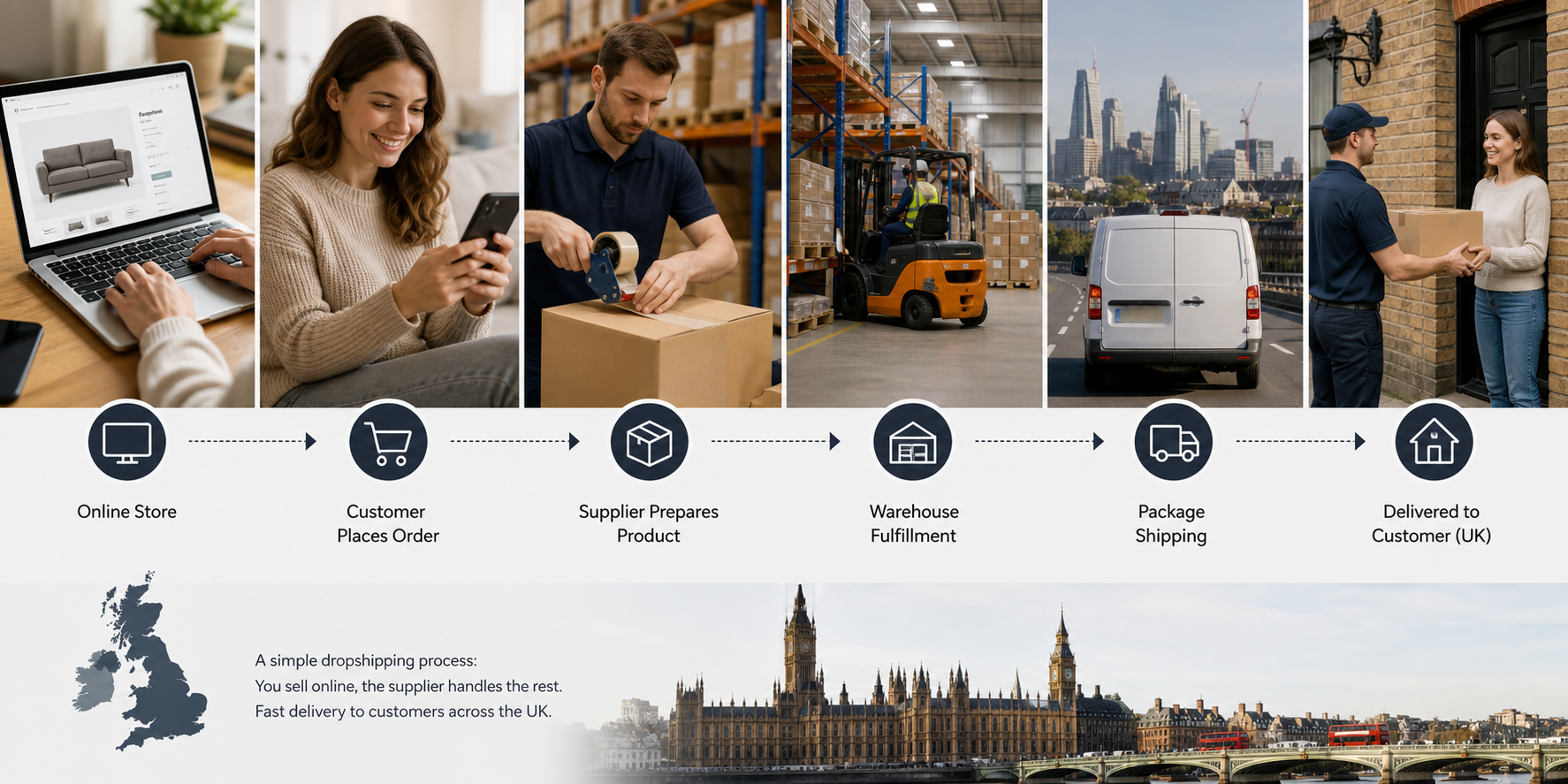
The process is simple:
- You create an online store and list products.
- A customer places an order.
- Your supplier or fulfillment partner processes the order and ships it to the customer.
- You manage the customer relationship and keep the remaining profit after business costs.
Unlike traditional retail, you usually do not need to buy and store inventory in advance. However, you are still responsible for the customer experience, including product quality, delivery, returns, and support.
Is Dropshipping Legal in the UK?
Yes, dropshipping is legal in the UK.
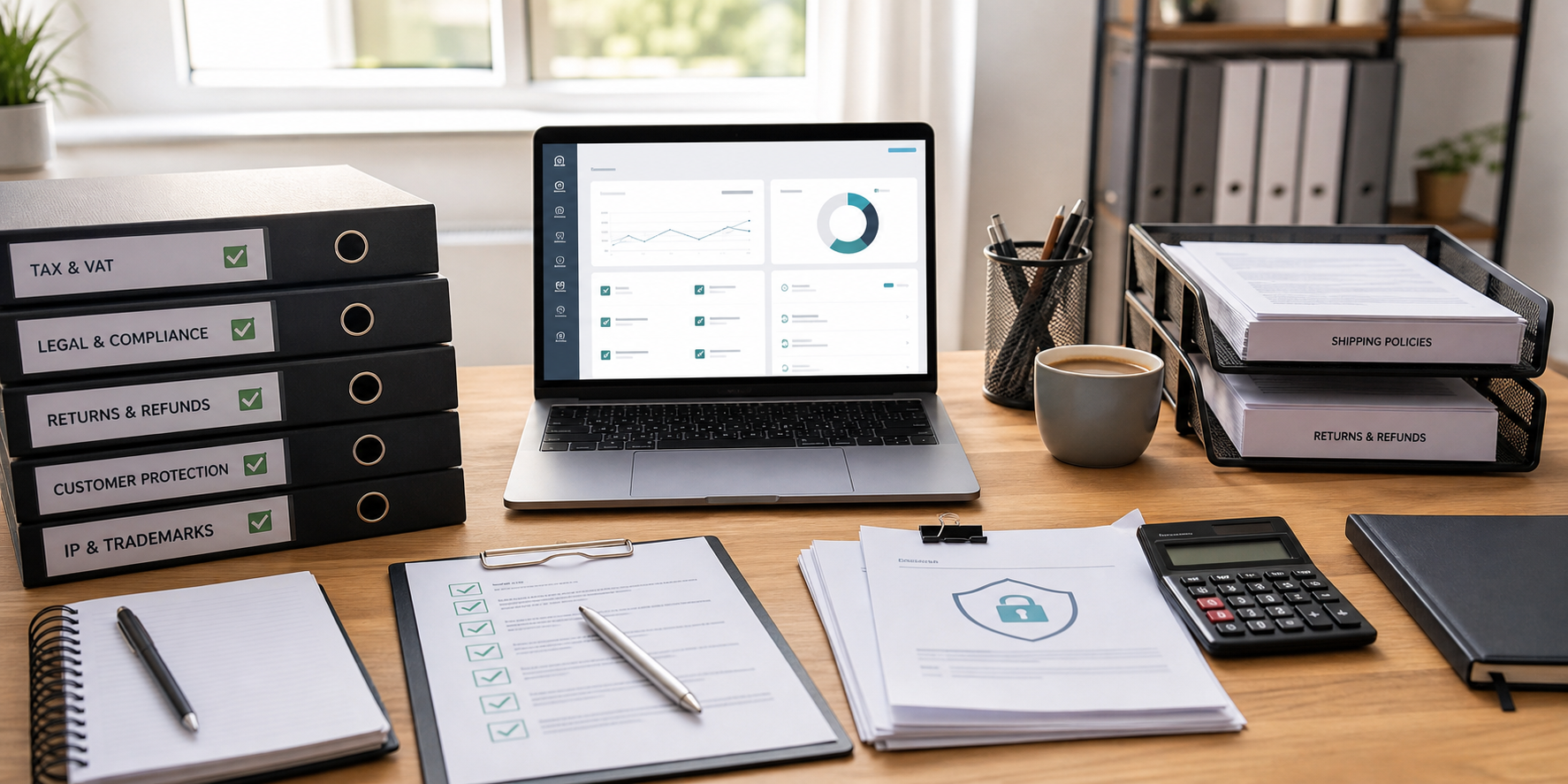
But selling products online comes with responsibilities. Depending on your products and business setup, you may need to consider:
- Consumer protection rules
- Product safety requirements
- VAT and tax obligations
- Accurate product descriptions
- Returns and refund policies
- Intellectual property rights
For example, selling unsafe or counterfeit products can create serious problems regardless of your business model.
If you are selling to UK customers from overseas, VAT requirements may also differ from those for UK-established businesses. HMRC provides guidance for both direct sales and online marketplace transactions. [1]
The important point is simple: being a dropshipper in UK does not remove your responsibilities as a seller.
Do You Need to Register a Business and Pay VAT?
This is one of the most common questions from people researching dropshipping united kingdom opportunities.
The answer depends on factors such as:
- Where your business is established
- Where your goods are located
- Whether you sell directly or through an online marketplace
- The value of the goods being imported
If You Are Based in the UK
Your business and tax responsibilities depend on your circumstances and business structure.
Before launching, check the current rules from HMRC and GOV.UK rather than relying only on advice from social media or ecommerce forums.
If You Are Selling to UK Customers From Overseas
The rules may be different for overseas sellers.
According to HMRC guidance, VAT treatment can depend on where goods are located when sold and how they reach the UK customer. [1]
Understanding the £135 Rule
For goods sold directly to customers in Great Britain from outside the UK, consignments valued at £135 or less may have UK VAT charged at the point of sale under specific conditions. Goods above that value can fall under normal import VAT and customs rules. [2]
This is why beginners should not simply copy another store's pricing or tax setup.
Check the latest official guidance before making tax decisions.
Is Dropshipping in the UK Still Profitable?
It can be, but profit depends on your numbers.
A simple way to think about it is:
Selling price
− Product cost
− Shipping cost
− Advertising cost
− Platform fees
− Returns and other business costs
= Potential profit
A product that looks cheap to source is not automatically profitable.
For example, a £10 product may look attractive, but your profit can disappear if:
- Shipping costs are high
- Advertising is expensive
- Delivery takes too long
- The product has quality problems
- Customers request refunds
The goal is not simply to find the cheapest product.
The goal is to find products that offer enough demand, margin, and customer value to support a sustainable business.
How to Start Dropshipping in the UK: Step by Step
Step 1: Choose Products to Sell
Start with a clear product direction. Look for products that solve a problem, improve convenience, or match a clear customer interest.
Before choosing a product, consider:
- Who is likely to buy it?
- Does it offer enough room for profit?
- Are there product safety or compliance concerns?
- Can you clearly explain why customers should choose it?
Avoid choosing products only because they are going viral. Demand can change quickly.
Step 2: Research Product Demand in the UK
Before adding products to your store, check whether there is real demand.
Look at:
- Search trends
- Competitor stores
- Customer reviews
- Product pricing
- Common customer complaints
Customer reviews can reveal problems such as poor quality, slow delivery, or bad packaging. These insights can help you build a better offer.
AI-powered product research tools can also help speed up this process.
Step 3: Choose a Selling Platform
You have several options.
Your Own Ecommerce Store
Platforms such as Shopify allow you to build your own branded store and control the customer experience, making it a popular option for Shopify dropshipping.
This can give you more flexibility with:
- Branding
- Product pages
- Pricing
- Marketing
- Customer communication
However, you are also responsible for bringing visitors to your store.
Online Marketplaces
You may also consider marketplaces depending on their policies and your business strategy.
For example, dropshipping on Amazon UK is allowed only under specific conditions. Amazon requires sellers to remain the seller of record and take responsibility for customer returns. [3]
The same applies to amazon to ebay dropshipping UK. Do not assume products can simply be purchased from one retailer and shipped directly to customers on another marketplace. Always check each platform's current policy.
Step 4: Find Reliable Suppliers
A supplier can strongly affect your business. When comparing suppliers, look beyond product price.
| Factor |
Why It Matters |
| Product quality |
Reduces complaints and returns |
| Inventory stability |
Helps prevent stockouts |
| Processing time |
Affects delivery speed |
| Shipping options |
Influences customer experience |
| Communication |
Helps solve problems faster |
| Returns support |
Important when problems occur |
Choose suppliers based on the overall customer experience, not just the lowest price.
Why You Should Not Rely on One Supplier
As your store grows, relying on only one marketplace or supplier can limit your flexibility. Building relationships with reliable ecommerce dropshipping suppliers can give you more sourcing options as your business expands.
TeemDrop offers a different approach by helping sellers source products through a broader supplier network and manage fulfillment from one platform.
This can be useful when you want to move beyond manually placing individual orders.
Step 5: Build Your Store and Product Pages
Your store does not need to be complicated.
Start with the essentials:
- A clear homepage
- Easy navigation
- Detailed product pages
- Contact information
- Shipping information
- Return policies
Your product descriptions should answer real customer questions.
Include:
- What the product does
- Who it is for
- Key features
- Important specifications
- Expected delivery information
Avoid copying supplier descriptions word for word.
Rewrite the information clearly and accurately. You can also review practical ecommerce and dropshipping training courses to improve your product and store content.
Step 6: Set Up Shipping and Returns
Shipping is a major part of the customer experience.
A common beginner mistake is focusing only on the supplier's advertised shipping time.
Instead, calculate:
Processing time + Shipping time = Estimated customer delivery time
For example, if processing takes three days and shipping takes seven days, the customer may wait around ten days.
Be realistic about delivery estimates.
Do not promise three-day delivery if your supplier cannot consistently achieve it.
For stores targeting the UK, you may also want to prioritize:
- Products stored closer to your customers
- Reliable tracking
- Stable shipping routes
- Clear delivery estimates
- A practical return solution
TeemDrop supports global and local fulfillment options, helping sellers manage orders and tracking through a centralized workflow. The platform also provides multi-stage quality control before shipping.
Step 7: Start Marketing Your Store
A store does not automatically receive customers after it launches.
Common marketing channels include:
- Google Shopping
- Social media content
- Paid advertising
- Influencer marketing
- SEO
- Email marketing
For beginners, start small.
Test:
- One product angle
- One audience
- A few creatives
Then review the results.
Do not increase your advertising budget until you understand what is working.
Step 8: Automate Product Sourcing and Fulfillment
In the beginning, manually managing a small number of orders may be possible.
But as sales increase, manual work can become more difficult.
You may need to manage:
- Supplier communication
- Product sourcing
- Inventory changes
- Order processing
- Shipping
- Tracking updates
This is where automation becomes useful.
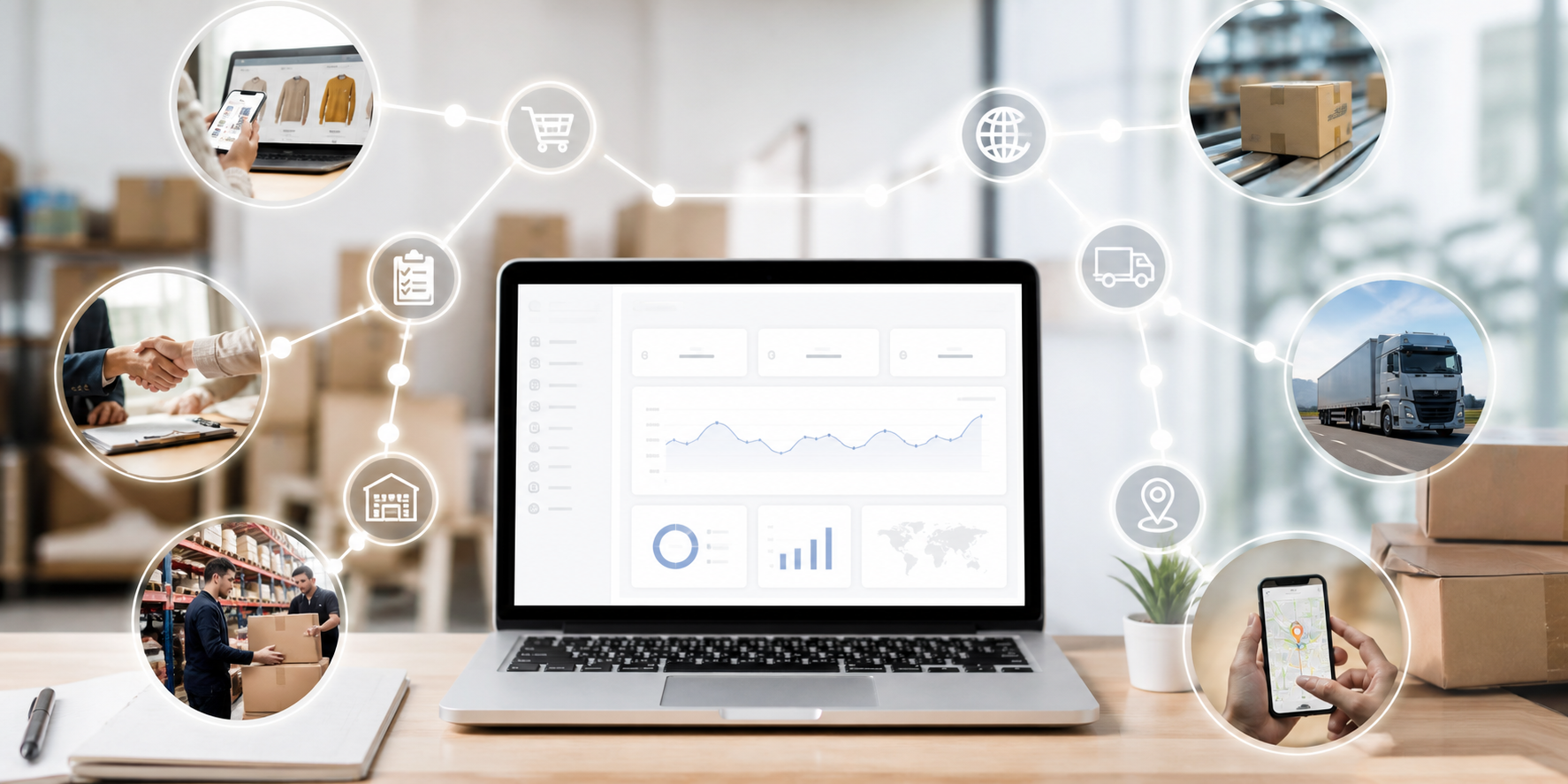
TeemDrop helps connect ecommerce stores with dropshipping sourcing and fulfillment workflows. Sellers can source products, process orders, and manage global shipping without paying a monthly subscription fee for the platform's basic fulfillment model.
For a growing store, reducing repetitive fulfillment tasks can free up time for marketing, customer experience, and product research.
How to Choose the Right UK Dropshipping Supplier
Not every supplier needs to be physically located in England or the UK.
The best choice depends on your product, customer expectations, and shipping needs.
UK-Based Suppliers
These may offer faster domestic delivery.
However, product selection and pricing can vary.
Global Suppliers With Local Warehouses
Some global fulfillment providers offer inventory or warehouse options closer to major markets.
This can help reduce delivery times for selected products.
China-to-UK Suppliers
China-based sourcing can provide a wide product selection and competitive prices.
However, you need to check carefully:
- Production or processing time
- Shipping reliability
- Tracking availability
- Product quality
For businesses interested in dropshipping England or the wider UK market, supplier location should be considered alongside the actual customer delivery experience.
Common UK Dropshipping Mistakes to Avoid
Choosing Products Only Because They Are Cheap
Cheap products can lead to quality problems and low margins.
Focus on customer value.
Ignoring VAT and Compliance
Do not copy tax information from outdated blog posts.
Check official guidance for your specific situation.
Promising Unrealistic Delivery Times
Long delivery times are not always the problem.
Unexpected delivery times are often worse.
Be transparent.
Using Unverified Suppliers
Test products where possible.
Check reviews and evaluate product quality before scaling.
Relying on One Supplier
Inventory can change unexpectedly.
Having sourcing flexibility can help reduce risk.
Ignoring Returns
A return policy should be considered before your first order—not after your first complaint.
Can You Start Dropshipping in the UK for Free?
Many people search for how to start dropshipping UK for free, but running a real ecommerce business is rarely completely free.
You may still need to pay for:
- A store or domain
- Product samples
- Advertising
- Marketplace fees
The goal is to keep upfront costs low and avoid unnecessary fixed expenses.
TeemDrop uses a pay-per-order model rather than charging a monthly subscription for its dropshipping fulfillment service, which can help sellers reduce fixed platform costs while testing their business.
FAQ
How much money do I need to start dropshipping in the UK?
There is no single amount. Your costs may include a store, domain, product samples, marketing, and marketplace or payment fees. You can reduce upfront costs by starting small and avoiding unnecessary fixed expenses.
Can beginners start dropshipping in the UK?
Yes. Dropshipping UK for beginners can be a practical way to learn ecommerce because you do not need to purchase large amounts of inventory upfront. However, beginners should still research suppliers, products, shipping, and legal responsibilities carefully.
Can I use AliExpress for dropshipping in the UK?
Yes. AliExpress dropshipping UK is possible, but delivery times, supplier quality, and product consistency can vary. Check each supplier carefully before selling their products.
Is Amazon dropshipping allowed in the UK?
Amazon dropshipping UK is allowed only when sellers follow Amazon's requirements. You must remain the seller of record and take responsibility for returns. Having another retailer ship directly to customers in a way that violates Amazon's policy is not permitted.
Can overseas sellers dropship to UK customers?
Yes, but overseas sellers may have different VAT and import responsibilities. The correct treatment depends on factors such as where the goods are located, the order value, and how the goods are sold. Check current HMRC guidance.
How long should dropshipping shipping take in the UK?
It depends on the supplier and fulfillment location. Always consider both processing time and shipping time when giving customers an estimated delivery date.
Final Thoughts
Learning how to start dropshipping UK does not require you to understand everything on day one.
Start with the basics:
- Choose a product direction.
- Research UK customer demand.
- Select a selling channel.
- Find reliable suppliers.
- Understand your VAT and business responsibilities.
- Set realistic shipping expectations.
- Test your products and marketing.
- Automate operations as your business grows.
The biggest advantage of dropshipping is that you can start without purchasing large amounts of inventory upfront.
But long-term success depends on the customer experience you create.
With reliable sourcing, quality control, and efficient fulfillment, TeemDrop can help sellers build and scale a more streamlined dropshipping operation for customers in the UK and beyond.
References
[1] GOV.UK / HM Revenue & Customs, Selling Goods Using an Online Marketplace or Direct to Customers in the UK
Selling Goods Using an Online Marketplace or Direct to Customers in the UK
[2] GOV.UK / HM Revenue & Customs, VAT and Overseas Goods Sold Directly to Customers in the UK
VAT and Overseas Goods Sold Directly to Customers in the UK
[3] Amazon UK, Dropshipping Policy
Amazon UK Dropshipping Policy