Is Dropshipping Legal in Spain in 2026?
If you are thinking about selling products to Spanish customers, one of the first questions is simple: Is dropshipping legal in Spain?
Yes. Dropshipping is legal in Spain in 2026. The key is understanding the rules that apply to your business, especially taxes, VAT, customs, product safety, and consumer rights.
For sellers using a model such as China to Spain dropshipping, the important point is not whether you can use dropshipping, but whether you operate your store correctly.
Quick Answer: Is Dropshipping Legal in Spain?
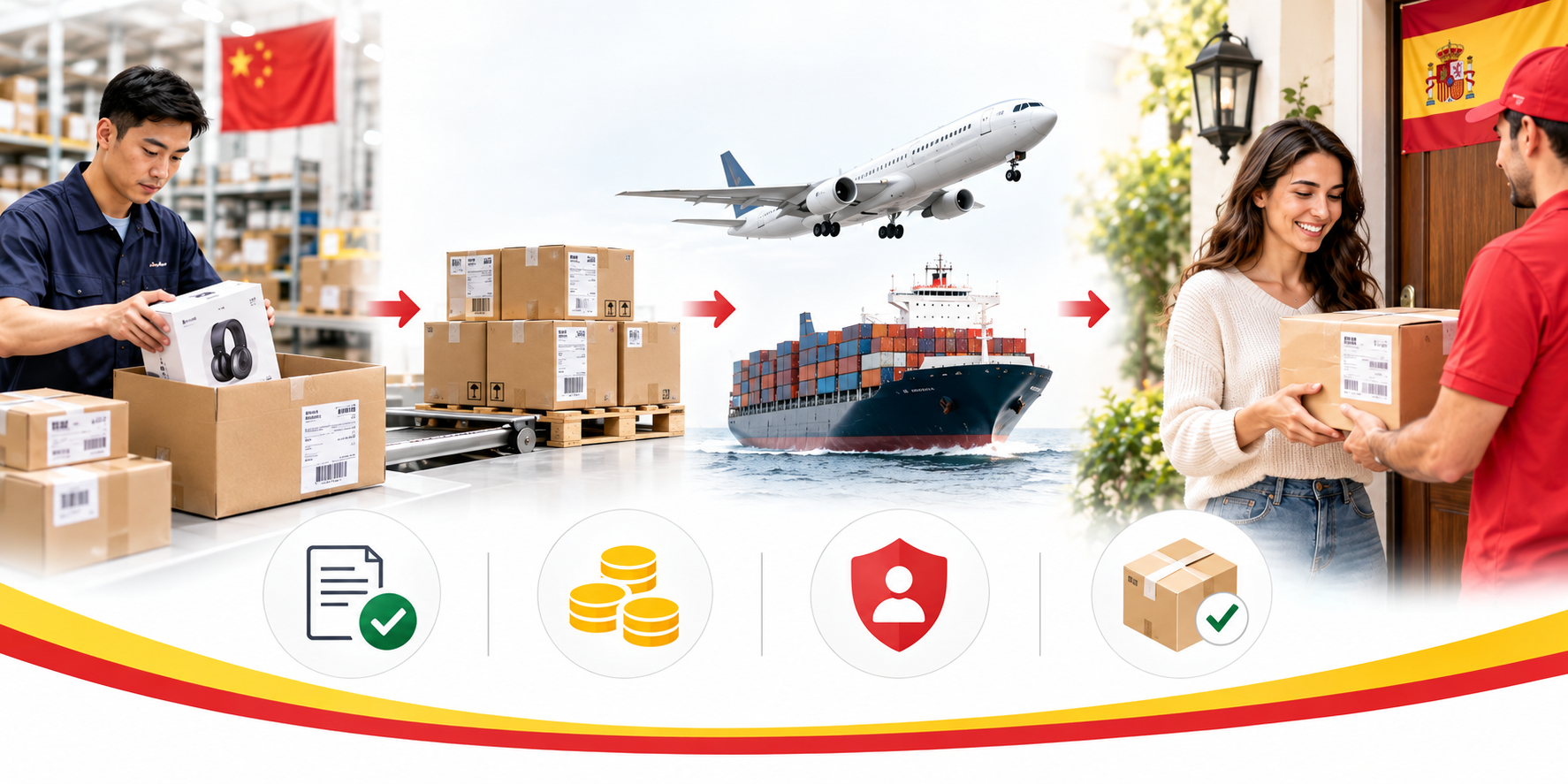
Yes, dropshipping is legal in Spain. You can sell products to customers in Spain and have a supplier in China ship orders directly to them.
The important part is following the rules that apply to your business, including tax, VAT, customs, product safety, and consumer protection.
Key Takeaways
- Dropshipping is legal in Spain, but sellers must follow applicable ecommerce rules.
- Your obligations depend on your business setup, products, and shipping model.
- Selling from China to Spain requires attention to VAT, customs, and customer rights.
- TeemDrop can help simplify the sourcing and fulfillment side of the process.
Is Dropshipping Legal in Spain?
Yes. There is no general ban on the dropshipping business model in Spain.
Dropshipping is simply a way of fulfilling an online order. You sell a product through your store, while a supplier stores or ships the product to your customer. The fact that the supplier may be in China does not by itself make the business illegal.
The legal responsibility comes from how you operate the store.
For example, you still need to consider:
- Whether your business activity must be registered
- How you report your income
- Whether you need to collect VAT
- Whether products meet EU safety requirements
- How you handle returns and refunds
- What information you provide to customers
So, the short answer is:
Dropshipping is legal in Spain, but dropshipping stores must follow the rules that apply to ecommerce businesses.
For sellers building a store with China product sourcing, this distinction is important. The supplier handles fulfillment, but the store owner still has responsibilities toward the customer.
Do You Need to Register as Self-Employed in Spain?
If you are operating your dropshipping business from Spain, you need to check whether you must register as self-employed, or autónomo.
Spain's Social Security system defines self-employed activity as carrying out an economic activity personally, directly, regularly, and for profit.
This means you should not assume that dropshipping is simply a casual side activity that needs no registration.
Consider questions such as:
- Are you regularly selling products?
- Are you doing it for profit?
- Is the business operated from Spain?
- Are you personally managing the store?
If the activity falls within the self-employed regime, the relevant registration and contribution requirements can apply.
Because individual circumstances differ, sellers should confirm their situation with the Spanish tax and Social Security authorities or a qualified professional before starting regular commercial activity.
Do You Need to Pay Taxes on Dropshipping in Spain?
Yes, a profitable dropshipping business can create tax obligations.
But it is important to separate business or income taxes from VAT.
Your tax obligations can depend on:
- Your business structure
- Where you are tax resident
- Where the business is established
- Your sales
- Your expenses
- Where your customers are located
For this reason, there is no single "dropshipping tax" in Spain.
A simple approach is to keep complete records of your sales, product costs, shipping costs, refunds, and other business expenses from the beginning.
This becomes especially important when you work with an overseas supplier and sell to customers in Spain.
How Does VAT Work for Dropshipping From China to Spain?
VAT is one of the most important issues for a dropshipping business in Spain.
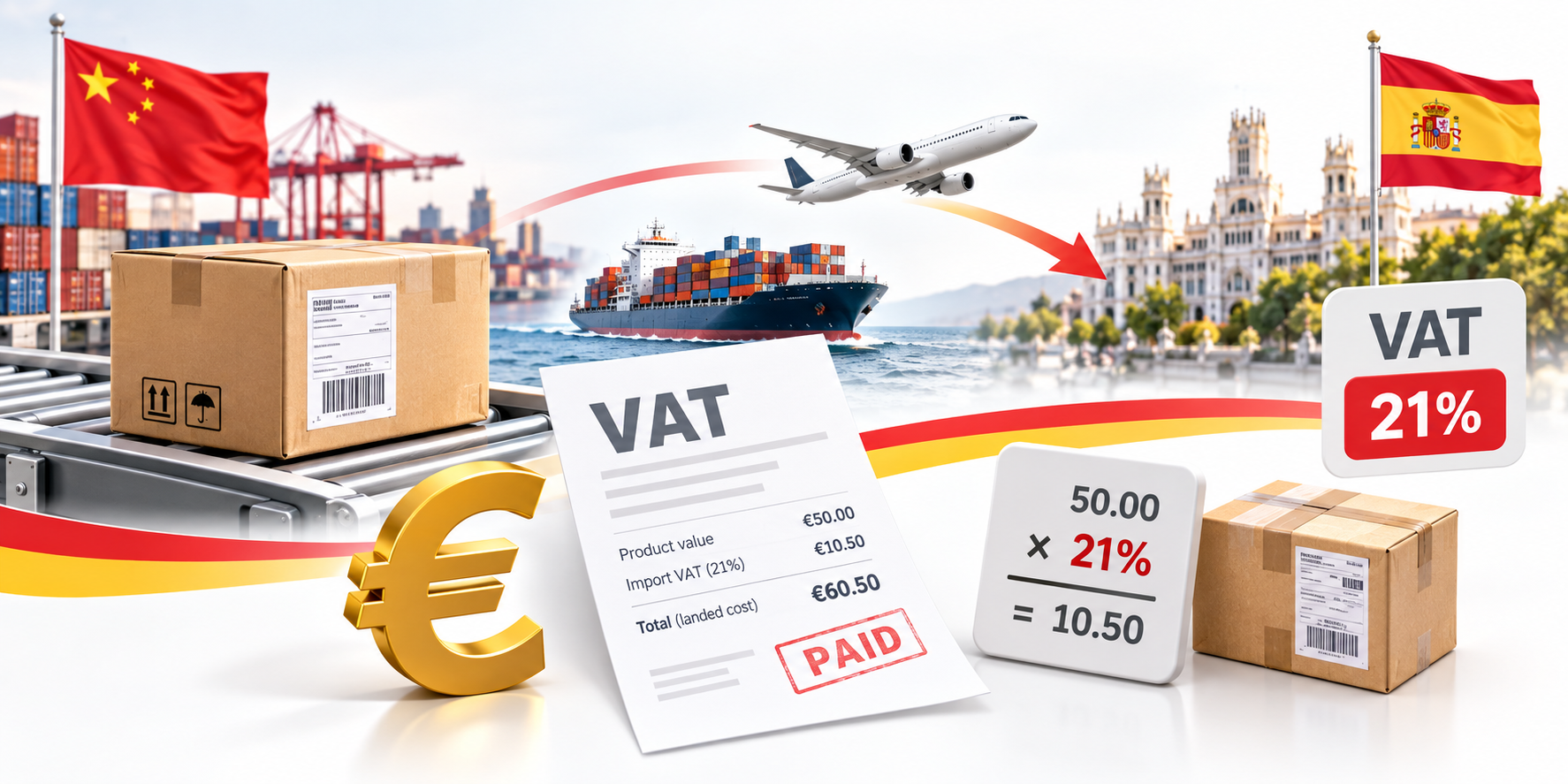
Spain's standard VAT rate is 21%, although some products can qualify for reduced rates.[1] The rate that applies to a particular sale depends on the product and transaction.
For a China-to-Spain order, you also need to consider how the goods are imported into the EU.
Do You Need to Charge VAT on Dropshipping Orders?
VAT may apply when you sell products to Spanish consumers.
The correct treatment depends on factors such as:
- Where your business is established
- Where the goods are located when sold
- Whether the goods are imported
- The value of the shipment
- Whether you use an EU VAT scheme such as OSS or IOSS
Do not assume that the supplier's location determines all your VAT obligations.
How Does IOSS Work for Dropshipping From China?
The Import One Stop Shop (IOSS) is an EU system designed to simplify VAT collection for eligible distance sales of imported goods in consignments with an intrinsic value of no more than €150.[2]
In a typical China-to-Spain dropshipping order, the customer buys the product from your store and the supplier ships it directly from China.
When IOSS applies, VAT can be collected at checkout and reported through the IOSS system instead of being collected from the customer when the parcel arrives.
IOSS is optional, and not every product or transaction qualifies. Excise goods, for example, are excluded from the import scheme.[2]
What Happens When an Order Is Over €150?
The IOSS import scheme is limited to consignments with an intrinsic value of €150 or less.
If an order exceeds that threshold, a different VAT and customs process may apply. You should therefore understand the value and shipping structure of your products before deciding how to sell them into Spain.
What Happens With Customs Duties When Dropshipping From China?
VAT and customs duty are not the same thing.
VAT is a consumption tax. Customs duty is related to goods entering the EU customs territory.
This distinction matters for dropshipping from China to Spain.
What Changed for Low-Value China Imports in 2026?
There is an important 2026 update.
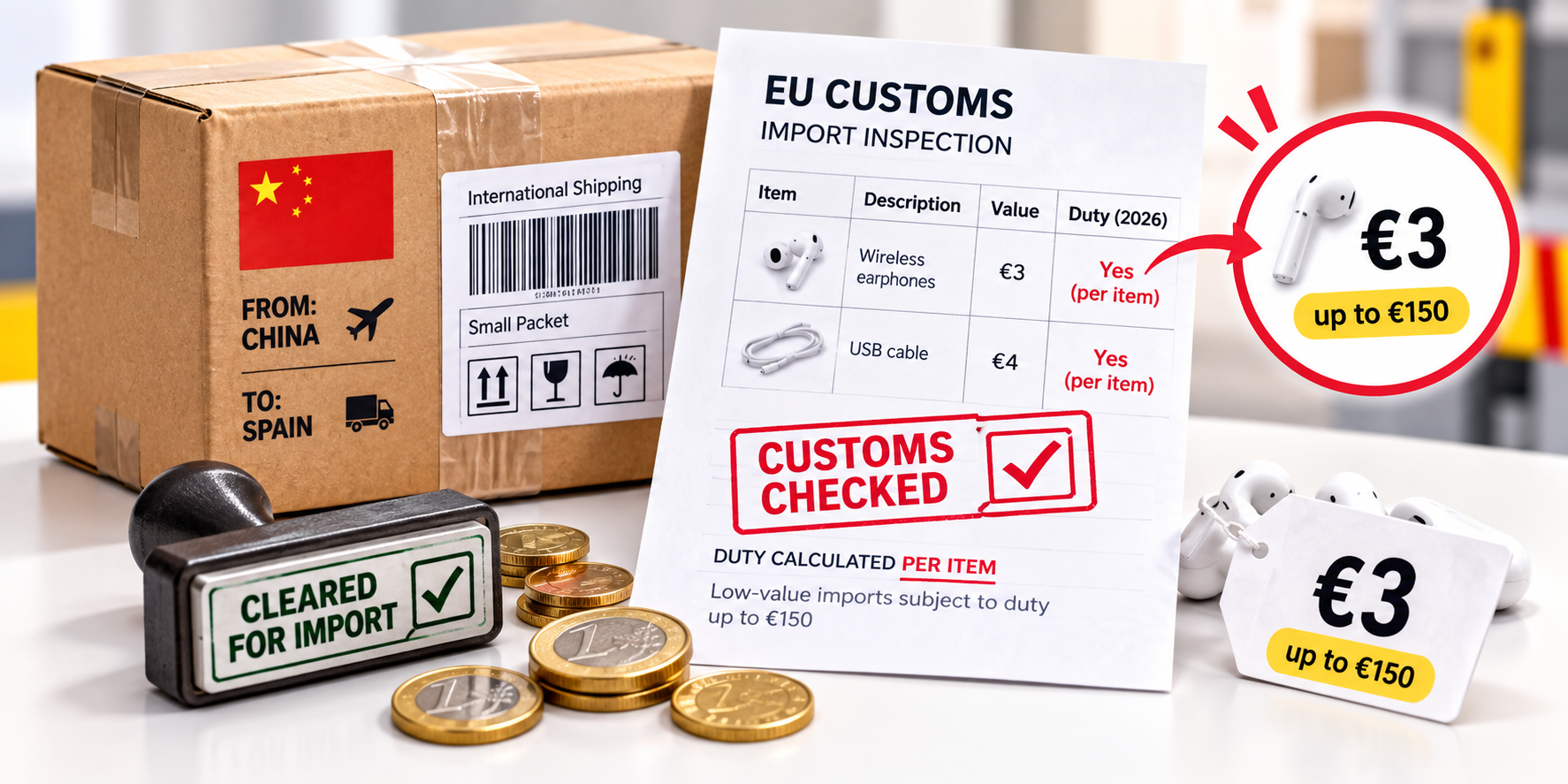
From July 1, 2026, the EU introduced a temporary €3 customs duty per item for qualifying low-value consignments up to €150 imported from outside the EU. This replaced the previous customs duty exemption for these low-value goods and is scheduled to apply until July 1, 2028.
This means older articles that simply say: "Products under €150 have no customs duty."
are no longer accurate for 2026.
For a dropshipping seller, the practical lesson is simple: do not calculate your Spain shipping costs using outdated pre-2026 customs rules.
Your fulfillment and shipping process should account for the current customs requirements and clearly communicate any costs that customers may need to pay.
Do Spanish Customers Have a Right to Return Dropshipping Products?
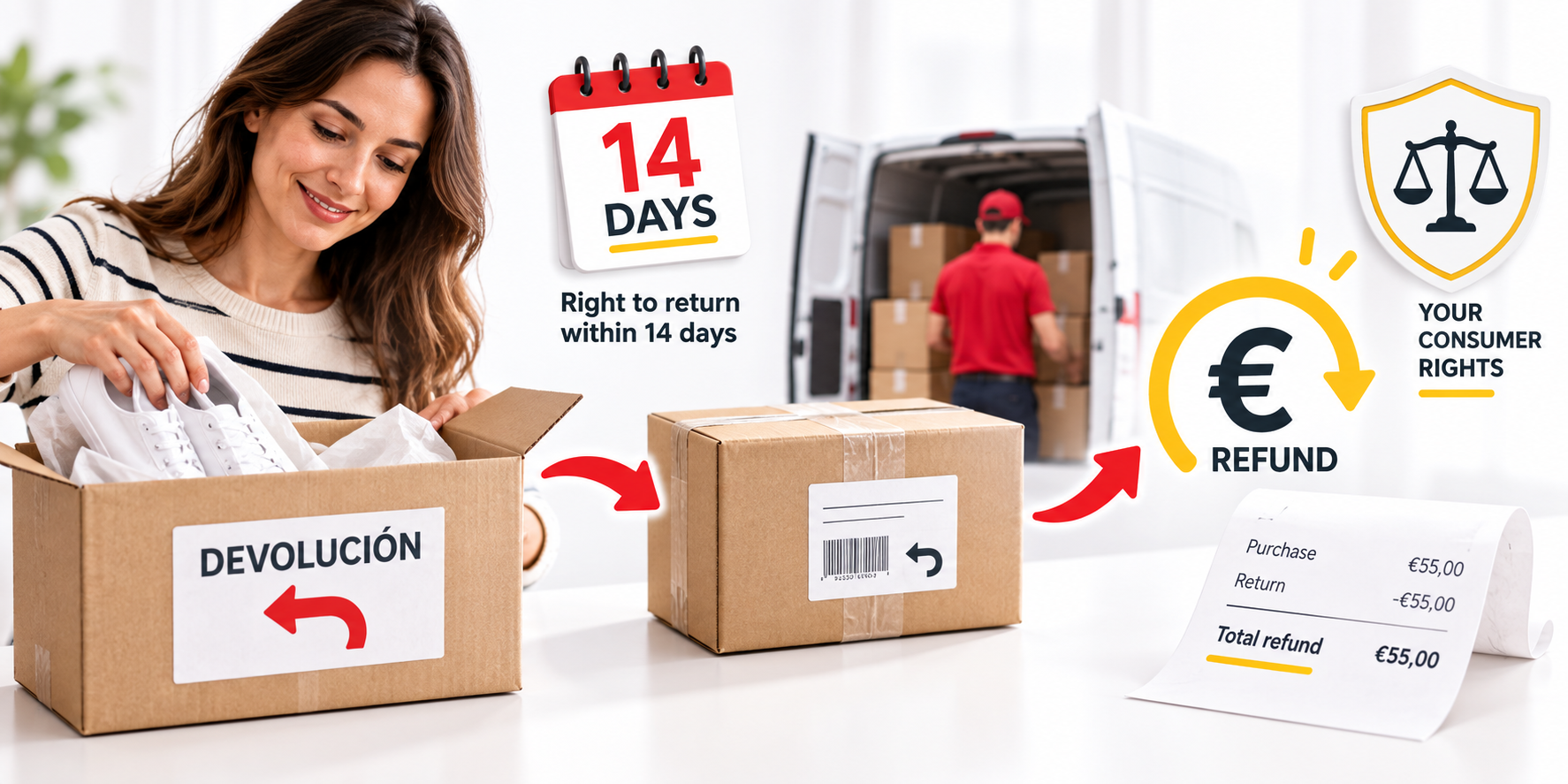
Yes. Online consumers generally have a 14-day right of withdrawal for distance purchases, subject to legal exceptions.[3]
This means a customer can normally cancel an online purchase within 14 days without giving a reason.
For a dropshipping store, this creates an important responsibility: your return policy should not simply say "all sales are final."
You should clearly explain:
- How customers request a return
- Where they send the product
- Who pays return shipping
- When the refund is issued
- Which legal exceptions apply
Who Pays for Return Shipping?
Under EU rules, the customer generally pays the direct cost of returning goods if the seller informed them of this before purchase. If the seller failed to provide that information, the seller may have to cover the return cost.[4]
The seller must also refund the required amount within the applicable timeframe after withdrawal. However, the refund can generally be withheld until the goods are returned or evidence of return is provided.[4]
For dropshipping, this is why having a clear return and fulfillment process matters before you start selling.
Who Is Responsible When a Customer Receives a Defective Product?
This is another common dropshipping misunderstanding.
The fact that your dropshipping suppliers shipped the product does not mean you can simply send the customer to the supplier.
From the customer's perspective, your store is the seller.
EU consumer rules provide a minimum two-year legal guarantee for goods. If a product is faulty or does not match what was advertised, the seller may need to provide a repair, replacement, price reduction, or refund depending on the situation.[5]
Your fulfillment partner should therefore support you with:
- Product quality checks
- Order accuracy
- Tracking
- Replacement orders
- Return handling
- Customer service support
This is one reason reliable quality control and fulfillment processes are important when sourcing products from China.
What Other Legal Requirements Apply to Dropshipping in Spain?
VAT and customs are only part of the picture.
Product Safety and Compliance
Before listing dropshipping products, make sure they can legally be sold in the EU.
Depending on the product category, this can involve:
- Product safety requirements
- Required labels or warnings
- CE marking where applicable
- Packaging requirements
- Rules for electronics, toys, cosmetics, and other regulated products
Do not assume that because a supplier can ship a product from China, the product is automatically compliant for sale in Spain.
Online Store Information Requirements
Your store should give customers clear information before they buy.
This can include:
- Product details
- Total price
- Shipping costs
- Delivery information
- Seller information
- Return and withdrawal terms
- Customer service contact details
EU consumer rules require online traders to provide important information before a consumer completes a purchase.[6]
Privacy and GDPR
A dropshipping store also collects customer information such as names, addresses, emails, and order details.
You therefore need to consider:
- Privacy notices
- Cookie requirements
- Customer data handling
- GDPR obligations
- How customer information is shared with fulfillment partners
Privacy should be part of your store setup, not something added after you start receiving orders.
Is Dropshipping Legal in Spain for Beginners?
Yes. You do not need to be an established large company to start a legal dropshipping business.
If you are still planning your store, learning how to start a dropshipping business can help you understand the basic steps before dealing with Spain-specific requirements.
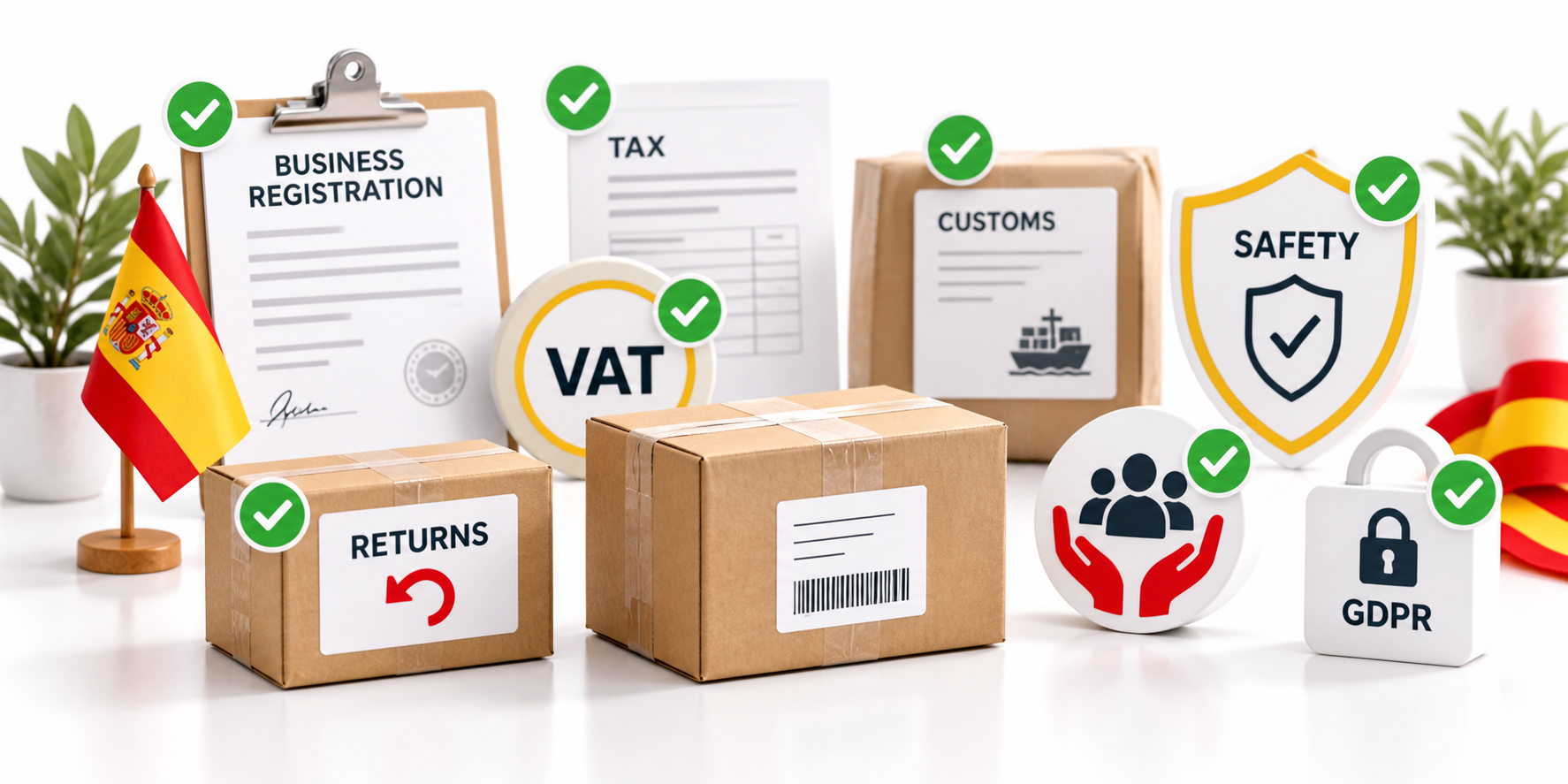
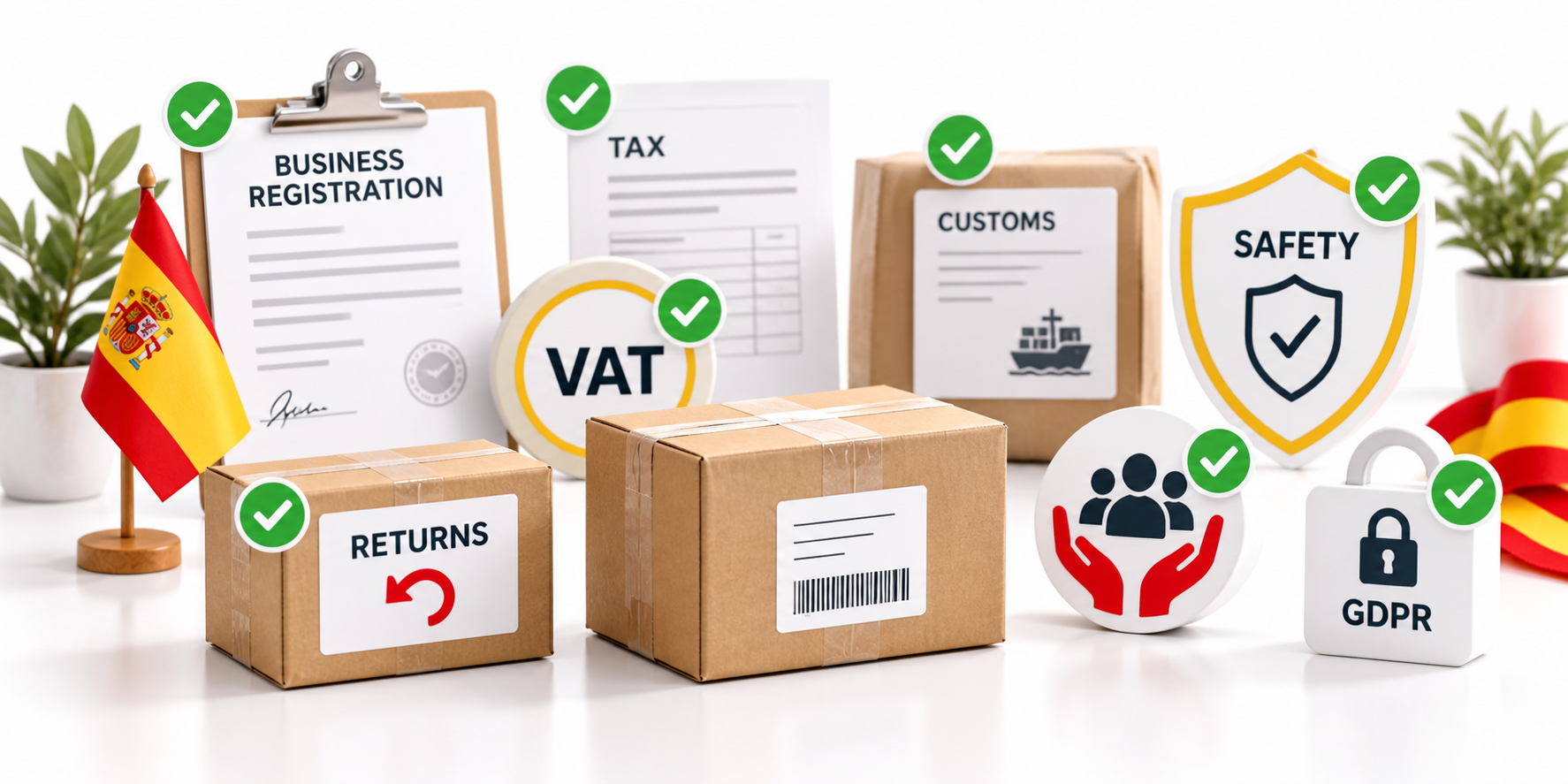
Spain Dropshipping Compliance Checklist
Before launching, check:
- Your business registration requirements
- Your tax obligations
- Your VAT treatment
- Whether IOSS or another VAT scheme applies
- Current customs rules for China-to-Spain shipments
- Product safety and compliance
- Your return and refund policy
- Your process for defective products
- Required store and seller information
- Privacy and GDPR requirements
If you are using a platform such as TeemDrop, its dropship fulfillment services can make the operational side easier to manage because product sourcing, order fulfillment, quality control, and shipping can be handled within one workflow. But using a fulfillment platform does not remove the seller's legal responsibilities.
FAQ
Is dropshipping legal in Spain?
Yes. Dropshipping is legal in Spain in 2026. Sellers must still comply with applicable business, tax, VAT, customs, product safety, and consumer protection rules.
Do I need to be self-employed to dropship in Spain?
If you regularly carry out a profit-making business activity in Spain, you may need to register under the applicable self-employment and tax rules. Your exact situation should be confirmed with the relevant Spanish authorities.
Do I have to pay VAT on dropshipping in Spain?
VAT may apply to dropshipping sales to Spanish customers. The correct treatment depends on the seller, goods, transaction, and import structure.
What is IOSS for dropshipping?
IOSS is an EU VAT scheme that simplifies VAT collection for eligible imported goods sold to EU consumers in consignments with an intrinsic value of up to €150.
Do I have to pay customs duty when dropshipping from China to Spain?
For qualifying low-value consignments up to €150, a temporary €3 customs duty per item applies from July 1, 2026. Other shipments can be subject to different customs rules.
Can I use a Chinese supplier for dropshipping in Spain?
Yes. China to Spain dropshipping is legal, provided the products, import process, taxes, consumer rights, and other applicable requirements are properly handled.
Final Takeaway: Is Dropshipping Legal in Spain in 2026?
Yes, dropshipping is legal in Spain in 2026.
The key is understanding that dropshipping does not remove the responsibilities of an online seller.
If you plan to sell products from China to Spanish customers, focus on five areas:
Business registration + VAT + customs + product compliance + consumer rights.
Once these basics are in place, you can build your store and fulfillment process around them.
For sellers who want to simplify product sourcing, quality control, order fulfillment, and shipping from China, TeemDrop can help connect these operational steps in one workflow. This allows you to spend less time managing individual suppliers and more time building your ecommerce business.
References
[1] European Commission, VAT Rates / Country-specific VAT information.
European Commission — VAT Rates
[2] European Commission, VAT One Stop Shop — Import One Stop Shop (IOSS).
European Commission — VAT One Stop Shop
[3] European Commission, Returns and the right of withdrawal.
Your Europe — Returns and right of withdrawal
[4] European Commission, B2C e-commerce, distance and off-premises selling.
Your Europe — Online selling requirements
[5] European Commission, Guarantees on goods bought in the EU.
Your Europe — Legal guarantees
[6] European Commission, Consumer Rights Directive.
European Commission — Consumer Rights Directive