DropshippingIs Dropshipping Worth It in 2026? What Most Shopify Beginners Get Wrong
Is Dropshipping Worth It in 2026? What Most Shopify Beginners Get Wrong
Dropshipping in 2026 still offers real opportunities, but most beginners underestimate the importance of fulfillment, margins, and long-term systems. Sustainable growth comes from operational stability, not quick wins.
Is Dropshipping Worth It in 2026? What Most Shopify Beginners Get Wrong
A few years ago, dropshipping looked easy.
YouTube was full of Shopify success stories, and TikTok kept pushing viral products every week. Many people believed they could launch a store and start making money quickly.
But in 2026, the conversation looks very different.
Many beginners are now asking:
Is dropshipping still worth it?
Advertising costs are higher, competition is stronger, and customers expect faster shipping and better service. At the same time, social media is filled with people claiming dropshipping is "dead."
The reality is more complicated.
Dropshipping still works, but low-effort strategies no longer scale as they once did. Success today depends much more on fulfillment, supplier reliability, and customer experience.
That is why many Shopify sellers now use platforms like TeemDrop to improve sourcing, shipping, and order management.
Before starting a Shopify dropshipping business, it is important to understand what actually works in 2026 — and why so many stores fail.
Is Dropshipping Still Worth It in 2026?
Yes — but not for everyone.
Dropshipping is still worth it for people who understand how ecommerce has changed.
The opportunity still exists because online shopping continues to grow worldwide. TikTok, Instagram Reels, and YouTube Shorts continue creating demand for new products every day.
But successful dropshipping stores in 2026 operate differently than stores from a few years ago.
Dropshipping Is Still Worth It For:
People Willing to Learn
Ecommerce changes constantly. Sellers who improve their marketing, product research, and customer experience usually perform much better over time.
Sellers Focused on Long-Term Growth
The best stores are no longer trying to make quick money from random products.
Instead, they focus on building repeat customers, stronger branding, and better fulfillment systems.
Beginners With Smaller Budgets
Compared to Amazon FBA or wholesale ecommerce, dropshipping still has lower startup costs and lower inventory risk.
This makes it easier for beginners to enter ecommerce without large upfront investments.
Most successful sellers test products, improve content, and gradually optimize operations.
Sellers Who Ignore Customer Experience
Fast shipping, product quality, and communication matter much more now than they did in the past.
Stores with poor fulfillment often struggle to survive.
People Unwilling to Adapt
The ecommerce market changes quickly. Sellers who continue using outdated strategies often struggle with rising competition.
Why Many Shopify Dropshipping Stores Fail in 2026
One of the biggest reasons people believe dropshipping no longer works is simple:
Most stores fail very quickly.
Every year, thousands of beginners launch Shopify stores. Many of them never become profitable.
But the problem is usually not the business model itself. The problem is how people approach it.
Most Stores Look the Same
A common mistake beginners make is copying products and store designs from social media trends.
As soon as a product becomes viral, hundreds of nearly identical stores appear online. Customers start seeing the same ads repeatedly, which lowers trust and increases competition.
In 2026, generic stores are becoming harder to grow.
Instead of trying to sell everything, they build stores around a specific audience or lifestyle.
Shipping Takes Too Long
Shipping remains one of the biggest pain points in dropshipping.
Customers today compare every online store to Amazon-level delivery speed. Waiting two or three weeks for a product often leads to refunds, disputes, and negative reviews.
Many beginners underestimate how important fulfillment really is.
Fast marketing can generate sales, but poor shipping destroys customer trust quickly.
This is why fulfillment and supplier management are becoming more important in modern dropshipping. Many sellers now work with sourcing and fulfillment platforms like TeemDrop to simplify shipping workflows and improve delivery efficiency.
Beginners Underestimate Advertising Costs
A few years ago, cheap Facebook ads made it easier to test products quickly.
Today, customer acquisition is much more competitive.
Many beginners launch stores expecting immediate profits, only to realize that advertising requires testing, optimization, and patience.
Not every product becomes profitable immediately. Some products fail. Others need better content or stronger positioning before they succeed.
Successful dropshipping stores usually test carefully instead of expecting instant results.
Bad Suppliers Damage Customer Trust
Supplier quality can determine whether a dropshipping business survives long-term.
Common supplier problems include:
Shipping delays
Poor communication
Incorrect products
Inconsistent quality
Inventory issues
When customers receive bad products or late deliveries, trust disappears quickly.
That is why many Shopify sellers now focus more on sourcing reliability instead of simply choosing the cheapest suppliers available.
Many People Expect Fast Money
One of the biggest problems with dropshipping content online is unrealistic expectations.
Social media often shows successful results without showing the difficult parts:
Product testing
Failed ads
Refund requests
Supplier problems
Customer support
For those figuring out how to start dropshipping sustainably, it remains a real ecommerce business that requires continuous learning and testing.
People looking for "easy money" usually quit very quickly.
What Determines Success in Shopify Dropshipping in 2026
Many beginners still believe dropshipping success only comes from finding a "winning product."
In reality, successful Shopify dropshipping stores in 2026 depend on several connected factors, especially fulfillment, content, and customer experience.
Why Product Selection Still Matters
Good products still matter, but long-term demand matters more than short-term trends.
Successful products usually:
Solve a problem
Improve convenience
Create emotional interest
Work naturally in short-form content
Google consumer research also shows that shoppers increasingly prefer products that simplify daily life and solve immediate needs.[1]
Instead of chasing saturated products, successful sellers focus more on products with branding potential.
Why Fulfillment Is Critical for Shopify Dropshipping
Fast shipping has become one of the biggest competitive advantages in ecommerce. According to PwC, speed, convenience, and consistency strongly influence online purchasing decisions.[2]
Customers now expect:
Faster delivery
Better tracking updates
Reliable order processing
Clear communication
Poor fulfillment often leads to refunds, disputes, and lower customer trust.
That is why many Shopify sellers now focus heavily on sourcing and fulfillment efficiency.
Why Short-Form Content Matters More Than Ever
Short-form video content now plays a major role in ecommerce growth.
TikTok, Instagram Reels, and YouTube Shorts continue influencing how customers discover products online. HubSpot reports that short-form video generates some of the highest ROI in social media marketing.[3]
Successful content usually:
Demonstrates products clearly
Shows real-life use
Highlights product benefits quickly
Feels natural on social media
Today, strong content often matters just as much as the product itself.
Why Customer Experience Builds Long-Term Stores
Many beginners focus only on getting the first sale.
Long-term ecommerce stores focus more on customer trust and retention.
Customer experience now affects:
Repeat purchases
Reviews
Refund rates
Brand reputation
Simple improvements like faster responses, reliable fulfillment, and better tracking updates can significantly improve customer satisfaction.
How To Increase Your Chances of Dropshipping Success
There is no guaranteed formula for ecommerce success, but beginners can improve their chances by avoiding common mistakes and focusing on long-term growth.
Start With a Smaller Niche
Focused stores usually perform better than general stores.
Instead of selling random products, focus on a specific audience or lifestyle.
Examples include:
Pet travel accessories
Kitchen organization tools
Desk setup products
Fitness accessories
A niche store feels more trustworthy and easier to market.
Test Products Slowly
Many beginners spend too much money testing products too quickly.
Successful sellers usually test gradually, improve content over time, and analyze performance before scaling aggressively.
Many sellers now choose sourcing and fulfillment partners like TeemDrop to simplify supplier communication and reduce operational problems as their stores grow.
This becomes especially important during high-order periods.
Simple improvements like better tracking updates and faster order processing can reduce disputes and refund requests.
In 2026, fulfillment is no longer a small detail. It is part of the overall brand experience.
Focus on Long-Term Growth
Short-term thinking often leads to unstable stores.
The most sustainable ecommerce businesses focus on:
Better branding
Customer retention
Consistent fulfillment
Product quality
Repeat buyers
Long-term growth usually creates more stable profits than constantly chasing viral products.
How TeemDrop Helps Shopify Dropshippers
As dropshipping becomes more competitive, many sellers are looking for ways to simplify operations and improve fulfillment efficiency.
This is where platforms like TeemDrop can help.
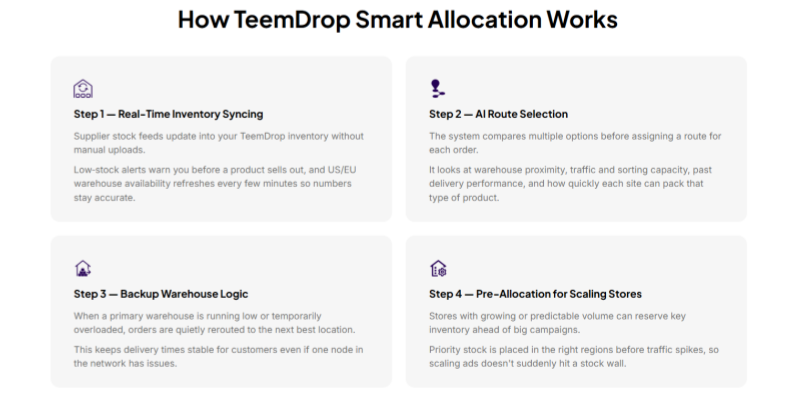
Instead of focusing only on product importing, TeemDrop helps Shopify sellers manage sourcing, fulfillment, supplier communication, and shipping workflows more efficiently.
Faster Product Sourcing
Finding reliable suppliers can take a lot of time, especially for beginners.
TeemDrop helps sellers source products more efficiently and reduce communication delays during the sourcing process.
This allows stores to test products faster and react more quickly to new trends.
Better Supplier Communication
Supplier communication problems are one of the biggest causes of delays and customer complaints.
TeemDrop helps simplify communication between sellers and suppliers, which can improve order accuracy and reduce operational issues.
Clear communication becomes especially important during high-order periods and product scaling.
Fulfillment Management
As stores grow, manual order management becomes more difficult.
TeemDrop helps sellers simplify fulfillment workflows and improve shipping coordination across orders.
Better fulfillment management can help reduce shipping delays and improve customer satisfaction.
Quality Inspection Before Shipping
Product quality problems often lead to refunds, disputes, and negative reviews.
Performing a strict dropshipping quality control routine before shipping helps reduce the risk of customers receiving damaged or incorrect products.
This becomes increasingly important as stores scale and customer expectations rise.
Warehouse Support
Faster processing and better inventory coordination can improve the overall shipping experience.
Warehouse support can help sellers improve delivery efficiency and create a smoother fulfillment process for customers.
AI-Assisted Sourcing
AI-assisted sourcing tools can help sellers discover trending dropshipping products more efficiently, simplifying the entire product research process.
For beginners trying to save time and improve operational efficiency, this can make testing products easier and more manageable.
New users can also receive a $10 coupon after registering on TeemDrop.
Is Shopify Dropshipping Saturated?
This is one of the most common ecommerce questions online.
The answer is no — Shopify dropshipping is not fully saturated.
However, low-quality stores are becoming much harder to grow.
The stores succeeding today usually focus on:
Better branding
Faster fulfillment
Stronger content
Better customer experience
More reliable suppliers
Ecommerce itself is still growing. The difference is that competition is becoming more professional.
Beginners who focus on improving operations instead of chasing shortcuts still have real opportunities to build profitable stores.
Dropshipping in 2026 is harder than it used to be, but the opportunity is still very real.
The business model no longer rewards low-effort stores with slow shipping and poor customer experience. Success today depends more on fulfillment, supplier reliability, product quality, and branding.
For beginners willing to learn and improve gradually, dropshipping remains one of the most accessible ways to start an ecommerce business with lower upfront risk.
Platforms like TeemDrop can help simplify sourcing and fulfillment, especially for Shopify sellers looking to improve operational efficiency and create a smoother customer experience.
The sellers who succeed in 2026 are usually not the ones looking for shortcuts.
They are the ones building better ecommerce businesses step by step.
FAQ
Is dropshipping still profitable in 2026?
Yes, dropshipping can still be profitable in 2026, especially for sellers who focus on product quality, fulfillment, and customer experience. The business model is more competitive today, but ecommerce demand continues growing globally.
Is Shopify dropshipping saturated?
Shopify dropshipping is competitive, but not fully saturated. Generic stores struggle more today, while niche-focused stores with better branding and faster fulfillment still have strong opportunities.
How much money do you need to start dropshipping?
Many beginners start dropshipping with a few hundred dollars. Costs usually include Shopify subscriptions, domain names, product testing, and advertising expenses.
What is the biggest challenge in dropshipping?
Shipping delays and unreliable suppliers remain some of the biggest challenges. Many sellers now prioritize sourcing and fulfillment management to improve customer satisfaction.
References
[1] Think with Google – Consumer Shopping Behavior
More winning products. More sales opportunities. More profits.
Join Teemdrop's VIP community for expert insights, global bestsellers, business roundtables, and exclusive business opportunities to grow your eCommerce profits.