Third-Party Fulfillment: The Complete Guide for Ecommerce Businesses 2026
Running an ecommerce business is no longer just about finding winning products. As customer expectations continue to rise, sellers also need faster shipping, accurate inventory management, and reliable order fulfillment. According to Shopify, shoppers increasingly expect affordable, fast, and transparent delivery, making fulfillment a key factor in customer satisfaction and repeat purchases.
This is why more online sellers are turning to third-party fulfillment instead of managing storage, packing, and shipping themselves. Whether you sell through Shopify, WooCommerce, TikTok Shop, or multiple marketplaces, outsourcing fulfillment allows you to spend less time on operations and more time growing your business.
For businesses looking for an all-in-one solution, TeemDrop combines AI-powered product sourcing, automated order fulfillment, supplier management, quality inspection, and global shipping into one platform. Instead of working with multiple service providers, sellers can manage sourcing and fulfillment more efficiently from a single dashboard.
In this guide, you'll learn what third-party fulfillment is, how it works, its biggest benefits, and how it compares with self-fulfillment so you can decide which model fits your business best.
Quick Answer
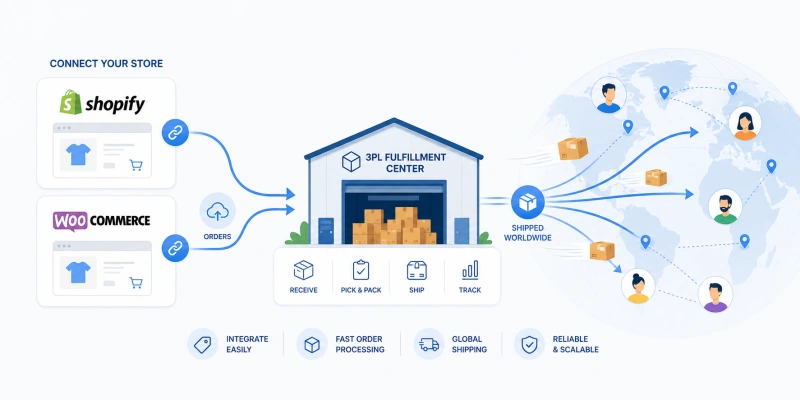
Third-party fulfillment is a service where a fulfillment provider stores inventory, processes orders, and ships products on behalf of ecommerce businesses. It helps sellers reduce operational costs, improve shipping speed, and scale without managing their own warehouse.
What Is Third-Party Fulfillment?
Third-party fulfillment is a logistics service where a specialized company stores your inventory, processes customer orders, packs products, and ships them directly to your customers. Instead of handling warehouse operations yourself, you use a third-party service to manage the fulfillment process on your behalf.
This model is also known as third-party order fulfillment, and it is one of the most common fulfillment methods for modern ecommerce businesses.
Unlike traditional warehousing, a 3rd party fulfillment service usually includes much more than storage. Many providers also offer inventory tracking, shipping management, returns processing, and software integrations that automatically synchronize orders across multiple sales channels.
For growing brands, ecommerce third-party fulfillment reduces operational complexity while making it easier to scale during busy seasons.
How Does Third-Party Fulfillment Work?
Although every provider has slightly different workflows, the process generally follows the same steps:
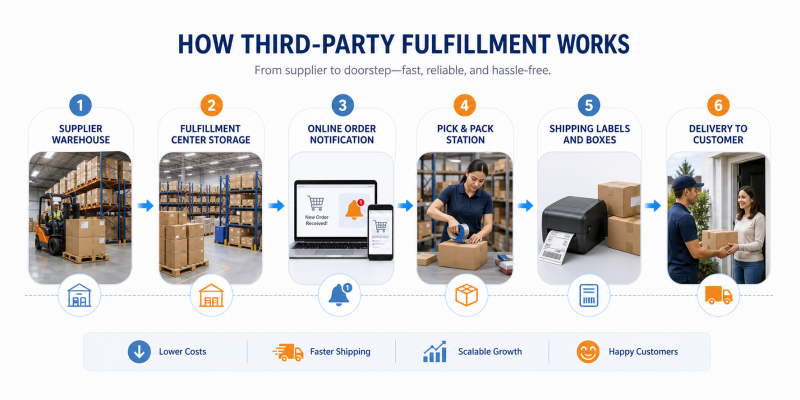
Here's how the process works in practice:
Step 1: Inventory arrives at the warehouse
Products are delivered from your supplier or manufacturer to the fulfillment warehouse.
Step 2: Inventory is stored
The fulfillment provider stores your products and keeps inventory records updated in real time.
Step 3: Orders are automatically received
When customers place orders on your online store, the fulfillment system imports the order automatically.
Step 4: Picking and packing
Warehouse staff locate the products, inspect them if necessary, and pack them for shipment.
Step 5: Shipping and tracking
Packages are shipped using available carriers, and tracking numbers are automatically synchronized back to your store.
For dropshipping sellers, this workflow can be even more streamlined. Platforms like TeemDrop combine sourcing, supplier communication, order synchronization, quality inspection, and shipping through professional fulfillment services, making third-party operations much easier to manage.
Who Should Use Third-Party Fulfillment?
A 3rd party fulfillment solution is ideal for businesses that:
- Receive consistent daily orders.
- Sell through multiple ecommerce platforms.
- Want to reduce warehouse management.
- Plan to expand internationally.
- Need faster delivery without building their own logistics network.
It is also becoming increasingly popular among sellers who combine dropshipping inventory management strategies with 3PL models, in which inventory for best-selling products is pre-stocked to shorten delivery times while maintaining flexible sourcing options.

Benefits of Third-Party Fulfillment
For many online businesses, fulfillment quickly becomes one of the most time-consuming parts of daily operations. As order volumes grow, manually packing boxes, updating inventory, and arranging shipments can limit your ability to focus on marketing, customer service, or product development.
Using a professional third-party fulfillment service allows sellers to outsource these repetitive tasks while improving overall operational efficiency.
1. Faster Shipping Improves Customer Experience
Fast delivery has become a competitive advantage rather than a luxury. According to PwC, speed, convenience, and reliability remain among the most important factors influencing consumers' online shopping decisions.[1]
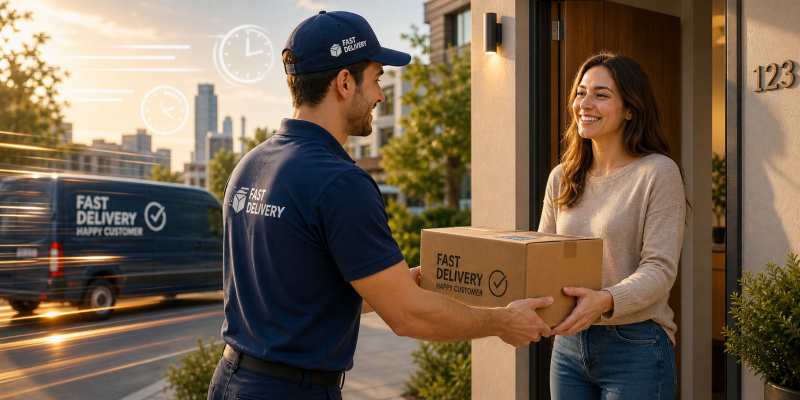
A professional 3rd party fulfillment provider often operates multiple warehouses and has established relationships with shipping carriers, helping reduce delivery times compared with self-managed fulfillment.
For sellers targeting customers in different countries, distributed warehouses can significantly shorten shipping distances while lowering transportation costs.
A smooth delivery experience also contributes to higher customer satisfaction and encourages repeat purchases, making fulfillment an important part of the overall shopping experience.[2]
2. Lower Operating Costs
Running your own warehouse involves fixed expenses such as rent, equipment, labor, packaging materials, and warehouse software.
With third-party warehousing and fulfillment, businesses only pay for the services they actually use. This flexible pricing model helps startups and growing brands avoid large upfront investments while maintaining predictable operating costs.
Instead of hiring warehouse employees, sellers can invest more resources into marketing, product research, or working with ecommerce dropshipping suppliers that streamline fulfillment.
3. Easier Business Growth
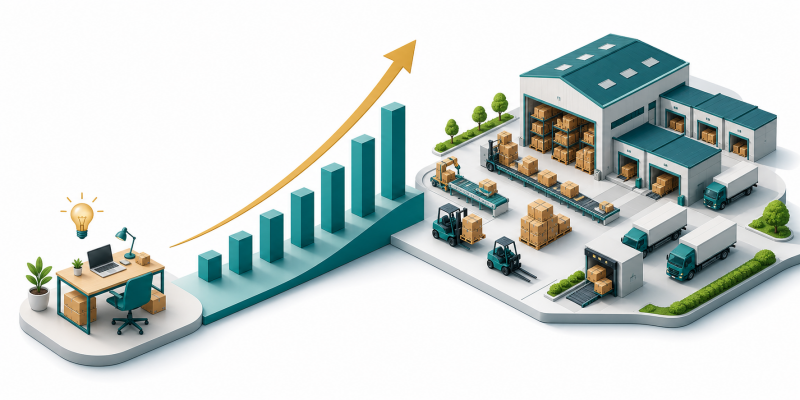
One of the biggest advantages of third-party ecommerce fulfillment is scalability. As global ecommerce sales continue to grow year after year, more businesses need fulfillment solutions that can scale alongside increasing order volumes.[3]
As your order volume increases during holiday seasons, promotional campaigns, or viral product launches, your fulfillment partner can usually handle additional orders without requiring you to rent larger facilities or recruit temporary staff.
This flexibility makes expansion into new markets much easier, especially for international ecommerce businesses.
4. Better Inventory Management
Modern fulfillment 3rd party providers typically offer inventory management systems that synchronize stock levels across multiple sales channels.
This helps reduce overselling, prevents stock shortages, and provides better visibility into inventory performance.
Platforms like TeemDrop further improve inventory management with AI-assisted sourcing and smart fulfillment automation, allowing sellers to monitor product availability while simplifying supplier coordination.
5. More Time to Grow Your Business
Perhaps the biggest benefit is allowing entrepreneurs to focus on activities that directly generate revenue.
Instead of spending hours packing orders or arranging shipments, sellers can concentrate on:
- Launching new products
- Optimizing advertising campaigns
- Improving customer experience
- Building their brand
- Expanding into new marketplaces
For many businesses, choosing the right third-party fulfillment partner is less about outsourcing logistics and more about creating time to scale sustainably.
Third-Party Fulfillment vs. Self-Fulfillment
Not every ecommerce business needs a fulfillment partner from day one. For businesses with only a few weekly orders, packing products at home may still be the most affordable option.
However, as sales increase, self-fulfillment often becomes more difficult to manage. Warehouse space, labor costs, shipping coordination, and inventory tracking can quickly consume valuable time and resources.
The comparison below highlights the main differences.
| Feature |
Self-Fulfillment |
Third-Party Fulfillment |
| Inventory Storage |
Self-managed |
Managed by fulfillment provider |
| Order Processing |
Manual |
Automated |
| Shipping Speed |
Depends on seller |
Usually faster |
| Business Scalability |
Limited |
High |
| Warehouse Investment |
Required |
Not required |
| Labor Management |
Self-managed |
Handled by provider |
| Multi-channel Integration |
Limited |
Commonly supported |
| International Expansion |
More difficult |
Easier |
Self-fulfillment offers greater control and may work well for businesses with low order volumes or highly customized products. However, as operations become more complex, the workload increases rapidly.
In contrast, ecommerce third party fulfillment helps businesses automate daily logistics while improving operational efficiency. This is especially valuable for sellers managing multiple storefronts or planning to grow internationally.
For Shopify merchants, using a 3rd party to fulfill Shopify orders can also simplify order synchronization, reduce manual work, and improve delivery performance without changing the customer shopping experience.
Ultimately, the best choice depends on your business stage. If fulfillment is becoming a bottleneck that limits growth, partnering with an experienced fulfillment provider may be a more scalable long-term solution.
How to Choose the Right Third-Party Fulfillment Partner
Not all fulfillment providers offer the same level of service. Some focus on warehousing, while others provide sourcing, automation, branding, and global shipping in one solution. Choosing the right partner can improve efficiency, reduce costs, and support long-term growth.
Here are six factors to evaluate before selecting a 3rd party fulfillment provider.
1. Warehouse Network
Warehouse location directly affects shipping speed and costs. If most of your customers are in North America or Europe, choose a provider with fulfillment centers close to those markets. Businesses selling globally should also look for providers with international fulfillment capabilities.
2. Platform Integrations
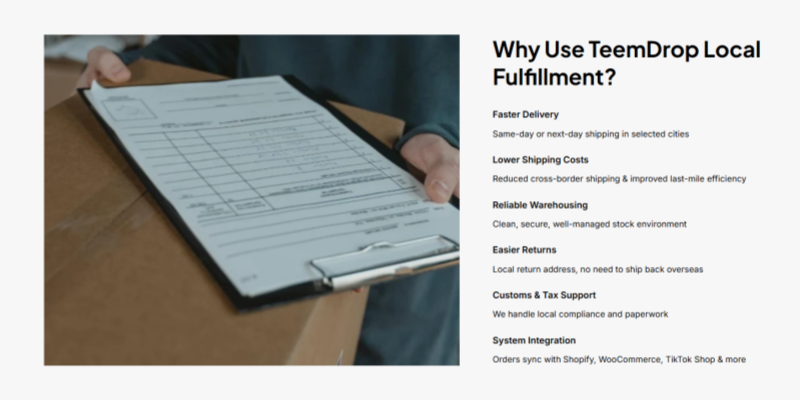
A good third-party fulfillment service should connect seamlessly with your sales channels. Shopify is essential for many merchants, while WooCommerce, TikTok Shop, and other ecommerce platforms are becoming increasingly important.
If you run a WooCommerce store, look for third-party logistics services for WooCommerce that automatically sync orders, inventory, and tracking information. Automation reduces manual work and minimizes fulfillment errors.
3. Transparent Pricing
Fulfillment costs typically include:
- Receiving inventory
- Storage fees
- Pick-and-pack fees
- Shipping costs
- Return processing
The cheapest option isn't always the best. Compare the total cost instead of focusing on a single fee.
4. Automation Capabilities
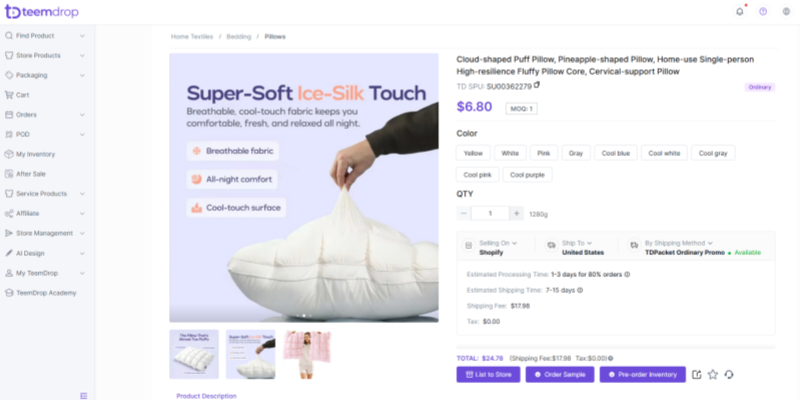
Automation saves time as your business grows. Look for providers that offer:
- Automatic order synchronization
- Real-time inventory updates
- Shipment tracking
- Batch fulfillment
- Order status notifications
These features become increasingly valuable once your order volume increases.
5. Quality Control
Shipping the wrong product or damaged items can quickly hurt customer satisfaction.
Ask whether the provider performs product inspections, verifies packaging, and checks order accuracy before shipment.
For example, TeemDrop includes multi-stage quality inspections before products leave the warehouse, helping sellers reduce fulfillment mistakes and returns while working with reliable dropshipping manufacturer partners.
6. Ability to Scale
Choose a partner that can support your business today and in the future.
If you plan to expand into new countries, launch additional product lines, or sell across multiple channels, your fulfillment provider should be able to grow with you.
Quick Checklist
Before making a decision, ask yourself:
- ✓ Can it integrate with my ecommerce platform?
- ✓ Does it support international shipping?
- ✓ Are pricing and fees transparent?
- ✓ Can it automate order fulfillment?
- ✓ Does it provide quality control?
- ✓ Can it support my business as it grows?
If the answer is "yes" to most of these questions, you're likely evaluating a reliable fulfillment partner.
Best Third-Party Fulfillment Providers in 2026
The best provider depends on your business model, target market, and operational needs. Some companies specialize in domestic fulfillment, while others focus on global sourcing or dropshipping.
Here's a quick comparison of several well-known providers.
| Provider |
Best For |
AI Sourcing |
Global Warehouses |
Shopify Integration |
Branding Support |
Pricing Model |
| TeemDrop |
Sellers looking for an all-in-one sourcing and fulfillment solution |
✅ AI-powered product sourcing |
✅ Global fulfillment network + local warehouses |
✅ Native integration |
✅ Private labeling & custom packaging |
No monthly subscription; pay per order |
| ShipBob |
Established DTC brands |
❌ |
✅ |
✅ |
✅ |
Fulfillment fees + storage fees |
| Amazon Multi-Channel Fulfillment (MCF) |
Amazon sellers expanding to other channels |
❌ |
✅ Amazon fulfillment network |
Limited (via apps) |
❌ |
Pay per fulfillment order |
| CJ Dropshipping |
Sellers sourcing products from China |
Limited |
✅ China-based fulfillment network |
✅ |
Limited |
Pay per order |
| Zendrop |
Beginner Shopify dropshippers |
Limited AI features |
Limited warehouse network |
✅ |
Limited |
Free plan + paid subscription plans |
Why TeemDrop Stands Out
Many fulfillment providers focus only on warehousing and shipping. TeemDrop takes a broader approach by combining sourcing, supplier management, fulfillment, and logistics into one platform.
Key capabilities include:
- AI-powered product sourcing from 1688 and other suppliers
- Automated order fulfillment
- Global shipping solutions
- Local warehouse fulfillment in selected markets
- Product quality inspection before shipment
- Branding and private label support
- Real-time order tracking
- Inventory management and supplier coordination
This integrated approach is particularly useful for businesses that want more than a traditional third-party fulfillment provider.
For sellers combining sourcing and fulfillment, TeemDrop helps reduce the need to manage multiple tools or service providers, making day-to-day operations simpler and more efficient.
If you're looking for third-party suppliers for dropshipping, TeemDrop also provides access to verified suppliers while handling sourcing, fulfillment, and shipping through a unified workflow.
Whether you're shipping ten orders a day or thousands each month, having sourcing and fulfillment connected can improve operational efficiency and reduce communication delays.
Conclusion
As ecommerce continues to become more competitive, efficient fulfillment is no longer optional—it's a key part of delivering a better customer experience.
Whether you're managing a growing Shopify store, running a WooCommerce business, or selling across multiple marketplaces, third-party fulfillment can help reduce operational workload, improve shipping performance, and support sustainable growth.
The right partner should offer more than storage and shipping. Look for a provider that combines automation, transparent pricing, reliable logistics, and room to scale alongside your business.
If you're searching for a solution that integrates AI-powered sourcing, fulfillment automation, supplier management, and global delivery, TeemDrop offers an efficient way to simplify ecommerce operations from product sourcing to final delivery.
FAQs
What is third-party fulfillment?
Third-party fulfillment is a service where a specialized company stores inventory, processes orders, packs products, and ships them directly to customers on behalf of an ecommerce business.
Is third-party fulfillment the same as 3PL?
Generally, yes. A third-party logistics company (3PL) provides logistics services such as warehousing, inventory management, shipping, and returns. Third-party fulfillment is one of the core services offered by many 3PL providers.
How much does a 3rd party fulfillment service cost?
Pricing varies by provider but typically includes receiving fees, storage, pick-and-pack charges, shipping, and optional return handling. Total costs depend on product size, order volume, warehouse location, and shipping destination.
Can small businesses benefit from ecommerce third party fulfillment?
Yes. Many startups begin outsourcing fulfillment once order volume increases or when they want to focus on marketing and business growth instead of warehouse operations.
Can I use a third party service with Shopify or WooCommerce?
Absolutely. Most modern fulfillment providers integrate with major ecommerce platforms, allowing orders, inventory, and tracking information to sync automatically. This makes it easier to manage your business without manual data entry.
What's the difference between third party fulfillment and dropshipping?
With third-party fulfillment, you usually purchase and own inventory before storing it in a fulfillment warehouse. In dropshipping, products are shipped directly from suppliers after customers place orders, meaning sellers typically don't hold inventory. Some businesses combine both models by using dropshipping 3PL strategies for their best-selling products.
References
[1] PwC. Global Consumer Insights Pulse Survey.
https://www.pwc.com/gx/en/industries/consumer-markets/consumer-insights-survey.html
[2] Baymard Institute. E-commerce Checkout Usability Research.
https://baymard.com/research
[3] Statista. E-commerce worldwide – statistics & facts.
https://www.statista.com/topics/871/online-shopping/