How White Labeling Helps You Build Your Own Brand
Want to launch your own brand without manufacturing products from scratch? White labeling makes that possible.
In simple terms, white labeling means selling products made by a manufacturer under your own brand name. Instead of managing production, you focus on branding, marketing, and customer experience while your supplier handles manufacturing.[1]
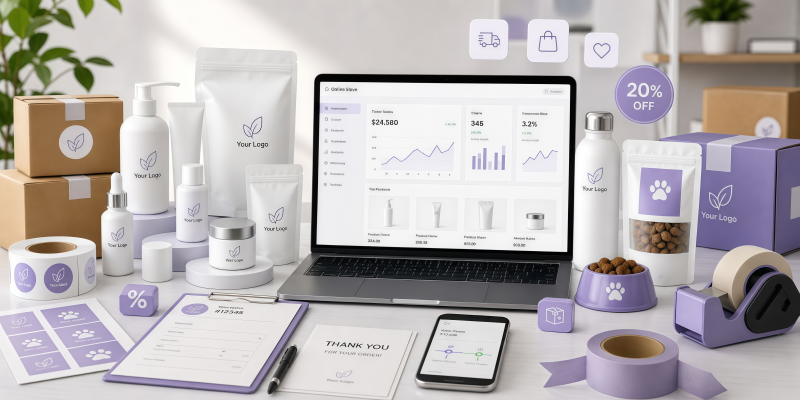
Today, businesses of all sizes use white label products to build recognizable brands across industries such as beauty, pet supplies, home goods, and coffee. With platforms like TeemDrop, sellers can source products, customize branding, and fulfill orders through one streamlined workflow.

What Is White Labeling?
White labeling is a business model in which a manufacturer produces a standard product that another company sells under its own brand.
Instead of investing in product development or manufacturing, businesses customize the branding—such as logos, packaging, and labels—while the supplier handles production.
This approach allows entrepreneurs to launch branded products faster, reduce upfront costs, and focus on marketing and customer experience.
This business model has become increasingly popular because it allows businesses to launch branded products without owning manufacturing facilities.[2]
White Label Product Example
Imagine you want to sell reusable water bottles.
Instead of designing and manufacturing a completely new bottle, you work with a supplier that already produces high-quality bottles.
You simply:
- Add your logo.
- Choose custom packaging.
- Create your own product listing.
- Sell it through your online store.
To customers, the bottle appears to be your own branded product—even though another company manufactured it.
This approach allows entrepreneurs to spend more time growing their brand and less time managing production.
Why More Brands Choose White Labeling
Over the past few years, consumer expectations have changed.
People no longer buy products based only on price. They also look for brands they trust.
That's one reason white label branding has become increasingly popular. Businesses can create a professional brand image without building a manufacturing business from the ground up.
Combined with modern ecommerce platforms like Shopify and WooCommerce, white labeling allows sellers to launch branded products in weeks instead of months.
How Does White Labeling Work?
One of the biggest advantages of white labeling is its simplicity.
Although every supplier has a slightly different process, most businesses follow these five steps.

Step 1: Choose a Product
Everything starts with selecting the right product.
Look for products with steady demand rather than short-term trends. Evergreen categories often offer better long-term growth opportunities.
Examples include:
- Home organization
- Beauty products
- Pet supplies
- Kitchen accessories
- Fitness equipment
- Coffee and beverages
Choosing the right niche is often more important than chasing viral products.
Step 2: Find a Reliable Supplier
Your supplier is one of the most important parts of your business.
A reliable supplier offering private label dropshipping should provide:
- Consistent product quality
- Branding support
- Quality inspection
- Stable inventory
- Fast shipping
- Responsive customer service
Many sellers prefer working with sourcing platforms instead of managing multiple manufacturers individually.
For example, TeemDrop connects sellers with verified suppliers while providing product sourcing, branding support, quality inspection, and fulfillment services in one place. This reduces operational complexity and helps businesses scale more efficiently.
Step 3: Customize Your Brand
This is where your business becomes different from competitors.
Although multiple stores may sell similar products, your brand creates a unique customer experience.
Brand customization may include:
- Logo printing
- Product labels
- Custom packaging
- Thank-you cards
- Brand inserts
- Instruction manuals
These small details help customers recognize your business and encourage repeat purchases.
Step 4: Sell Through Your Store
Once your products are ready, you can list them on channels such as:
- Shopify
- WooCommerce
- TikTok Shop
- Amazon
- Etsy
Many ecommerce platforms also integrate directly with fulfillment providers, making order processing much faster.
Step 5: Fulfill Customer Orders
When customers place an order, your supplier prepares the product, packages it, and ships it directly to the customer.
Depending on your fulfillment partner, global dropshipping warehouse services may include:
- Quality inspection
- Custom packaging
- Inventory management
- Global shipping
- Order tracking
By outsourcing these operational tasks, sellers can spend more time on marketing, customer acquisition, and business growth.
Best White Label Products to Sell in 2026
Once you understand what is a white label product, the next question is usually:
What products can actually be white labeled?
The good news is that almost every ecommerce niche offers opportunities for white labeling products. The key is choosing products with consistent demand, healthy profit margins, and room for branding.
Below are some of the most popular categories for new and growing ecommerce brands.
| Category |
Popular Products |
Why They're Popular |
| Beauty & Skincare |
Facial cleanser, serum, moisturizer, sunscreen |
High repeat purchase rate and strong branding potential. |
| Home & Kitchen |
Water bottles, storage containers, kitchen tools |
Everyday essentials with broad market demand. |
| Pet Supplies |
Pet shampoo, grooming tools, toys, treats |
Growing global pet care industry. |
| Coffee & Beverages |
Coffee beans, tea, drinkware |
Ideal for lifestyle and subscription brands. |
| Fitness |
Resistance bands, yoga accessories, shaker bottles |
Health and wellness continues to grow. |
| Electronics Accessories |
Phone cases, chargers, laptop stands |
Affordable products with consistent demand. |
How to Choose Your First White Label Product
If you're just getting started, choose products that are lightweight, easy to ship, and have consistent market demand. Rather than selling dozens of unrelated items, focus on one niche and gradually expand your product line as your brand grows.

Benefits of White Labeling
For many entrepreneurs, white labeling offers one of the fastest ways to launch a branded ecommerce business. Instead of spending months developing a product, you can focus on building your brand and attracting customers.
Here are some of the biggest advantages.
Launch Faster
With manufacturing already completed, you can focus on branding and selling instead of product development.
Lower Startup Costs
Because suppliers handle production, you avoid the significant investment required to manufacture products yourself.
Build Brand Recognition
Custom packaging and consistent branding help customers remember your business and encourage repeat purchases.
Scale More Efficiently
Adding new products is easier when you already have reliable suppliers and fulfillment processes in place.
White Label vs Private Label vs Print-on-Demand
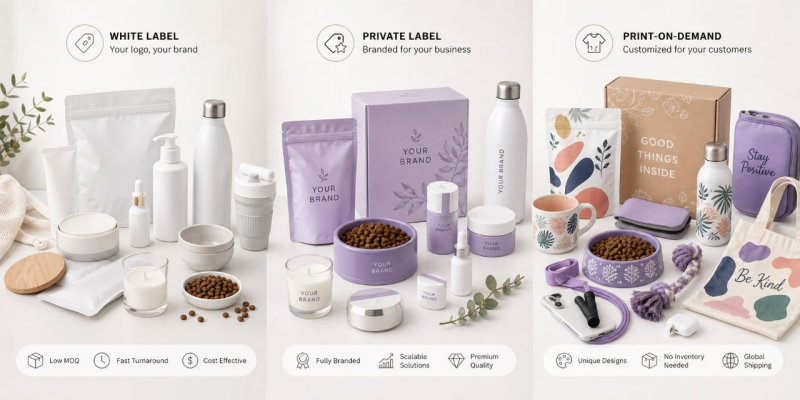
Although these business models are often grouped together, they serve different purposes.
Understanding the differences will help you choose the right strategy for your business.
| Feature |
White Label |
Private Label |
Print-on-Demand |
| Product |
Standard product |
Exclusively developed product |
Blank product printed after an order |
| Branding |
Logo and packaging |
Full product and brand customization |
Custom artwork or graphics |
| Production Time |
Fast |
Longer |
Produced after purchase |
| Upfront Investment |
Low |
High |
Very low |
| Inventory |
Usually managed by supplier |
Often requires larger production runs |
No inventory needed |
| Best For |
Building branded ecommerce stores |
Established brands with unique products |
Designers, creators, and personalized products |
Which Model Should You Choose?
Choose white labeling if you want to:
- Launch quickly
- Build your own brand
- Keep startup costs low
- Sell proven products
Choose private labeling if you want exclusive products with unique formulas or designs.
Choose print on demand products if your business focuses on custom artwork, personalized products, or limited-edition collections.
Many ecommerce brands combine these models. For example, they may sell white label products as their core product line while offering Print-on-Demand merchandise to strengthen their brand and increase average order value.
How to Choose a White Label Supplier
Choosing the right supplier is just as important as choosing the right product.
A poor supplier can lead to inconsistent quality, delayed shipments, and negative customer reviews—even if your branding is excellent.
Before making a decision, consider the following factors.
Branding Options
Not every supplier offers the same level of customization.
If building your own brand is your goal, look for services such as:
- Logo printing
- Custom packaging
- Private inserts
- Product labels
- Branded shipping materials
Product Quality & Inspection
Choose suppliers that consistently deliver high-quality products and perform quality inspections before shipment. This helps reduce returns and protects your brand reputation.
Shipping & Fulfillment
Fast, reliable shipping supported by AI logistics tracking has become a key factor in ecommerce success.
Look for suppliers that offer:
- Global shipping
- Order tracking
- Warehouse support
- Stable delivery times
Platform Integration
Managing orders manually becomes difficult as your business grows.
Working with a platform that integrates with Shopify, WooCommerce, TikTok Shop, and other ecommerce platforms can save time and reduce fulfillment errors.
Why Many Sellers Choose TeemDrop
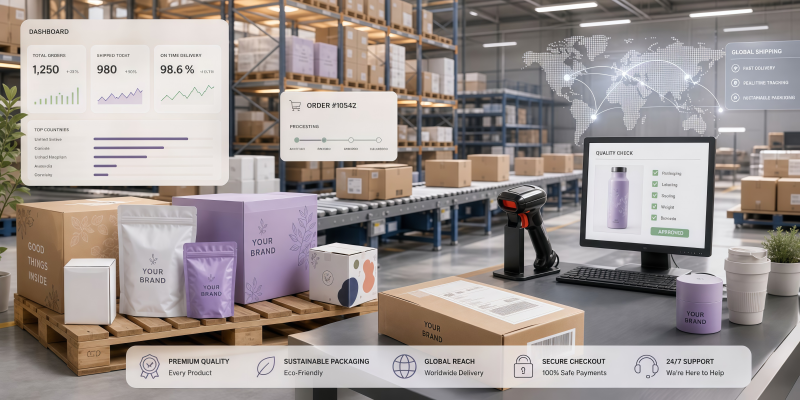
Instead of coordinating multiple suppliers and service providers, many ecommerce businesses prefer an all-in-one solution.
TeemDrop combines:
- AI-powered product sourcing
- Verified manufacturers
- Branding and packaging services
- Multi-stage quality inspection
- Automated order fulfillment
- Global shipping support
This integrated workflow allows sellers to spend less time managing operations and more time growing their business.
Common White Label Mistakes Beginners Make
Starting a white labeling business is relatively simple, but avoiding common mistakes can save both time and money.
Choosing Products Based Only on Price
The cheapest product isn't always the most profitable.
Low-quality products often lead to poor reviews, higher return rates, and lower customer trust.
Instead, look for products that balance quality, reliability, and competitive pricing.
Ignoring Branding
Some new sellers simply add a logo and expect customers to remember their brand.
Successful brands go further by investing in:
- Professional packaging
- Consistent visual identity
- Helpful product inserts
- Strong customer service
Branding creates a better customer experience and helps your business stand out in competitive markets.
Skipping Product Testing
Never assume a product will meet customer expectations.
Testing product quality, packaging, and shipping before launch helps identify problems early and reduces costly mistakes later.
Trying to Sell Too Many Products
Many beginners launch stores with hundreds of unrelated products.
A better approach is to focus on one niche, build trust with customers, and expand gradually as your brand grows.
Conclusion
White labeling has become one of the most accessible ways to build a branded ecommerce business.
Instead of spending years developing products from scratch, entrepreneurs can launch faster by combining reliable manufacturing with strong branding and customer experience.
Success, however, depends on more than simply finding a product. Choosing the right supplier, maintaining consistent quality, creating a memorable brand, and delivering reliable fulfillment all contribute to long-term growth.
Whether you're launching your first Shopify store or expanding an existing ecommerce business, white labeling provides a flexible foundation for building a brand customers recognize and trust.
FAQ
Is white labeling legal?
Yes. White labeling is a common and legal business model when businesses comply with trademark, labeling, and product regulations in the markets where they sell.[3]
How do I white label a product?
To how to white label successfully, choose a reliable supplier, select a product, customize your branding, test product quality, and sell through your preferred ecommerce platform.
Is white labeling good for beginners?
Yes. White labeling is one of the easiest ways to start an ecommerce business because it requires less investment than manufacturing your own products. Success depends on choosing the right supplier and building a strong brand.
Is white labeling profitable?
It can be. Profitability depends on factors such as product selection, branding, pricing, marketing, and supplier quality. Businesses that build a strong brand often achieve higher customer loyalty and better long-term margins than stores competing only on price.
References
[1] Shopify. What Is White Labeling?
https://www.shopify.com/blog/white-label
[2] Investopedia. White Label Product Definition.
https://www.investopedia.com/terms/w/white-label-product.asp
[3] U.S. Small Business Administration. Build Your Brand.
https://www.sba.gov/