Amazon FBA vs. Dropshipping: Which Business Model Is Right for You?
Starting an online business means making an important decision: should you buy inventory before making sales, or work with suppliers who ship products after customers place orders? Both approaches can work, but they come with different costs, risks, and responsibilities.
TeemDrop helps online sellers manage product sourcing, quality control, and order fulfillment, making it a useful resource for entrepreneurs exploring supplier-based ecommerce. Before choosing a service or business model, however, it is important to understand how Amazon FBA and Dropshipping actually work.
In this guide, we will compare the two models, explain their main advantages and disadvantages, and help you decide which approach fits your budget and business goals.
Quick Answer: Amazon FBA vs. Dropshipping
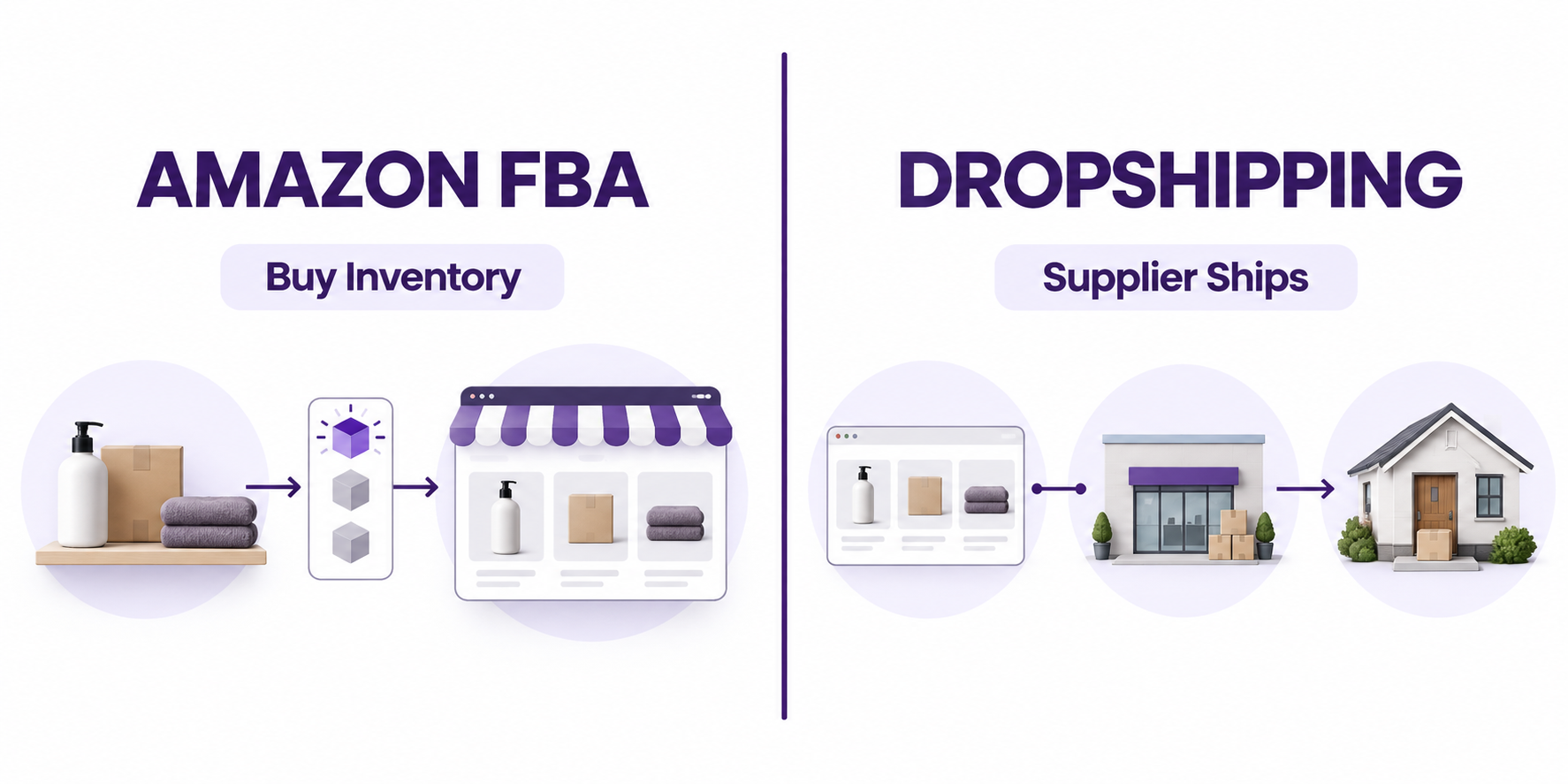
Amazon FBA requires you to purchase inventory and send it to Amazon's fulfillment network. Amazon stores, packs, and ships your products and handles related customer service and returns.
Dropshipping allows you to sell products without holding the inventory yourself. When an order comes in, a supplier fulfills it and ships it to the customer.
Choose Amazon FBA if you can invest in inventory upfront and want Amazon to handle storage and order fulfillment.
Choose dropshipping if you want to avoid buying inventory in bulk and prefer more flexibility when selecting products.
Neither model guarantees higher profits. Compare the total costs, sales potential, and operational requirements before deciding which approach fits your business.
What Is Amazon FBA?
Amazon FBA stands for Fulfillment by Amazon. It is a service that lets sellers outsource storage, packing, shipping, and certain customer service and return processes to Amazon. [1]
How Does Amazon FBA Work?
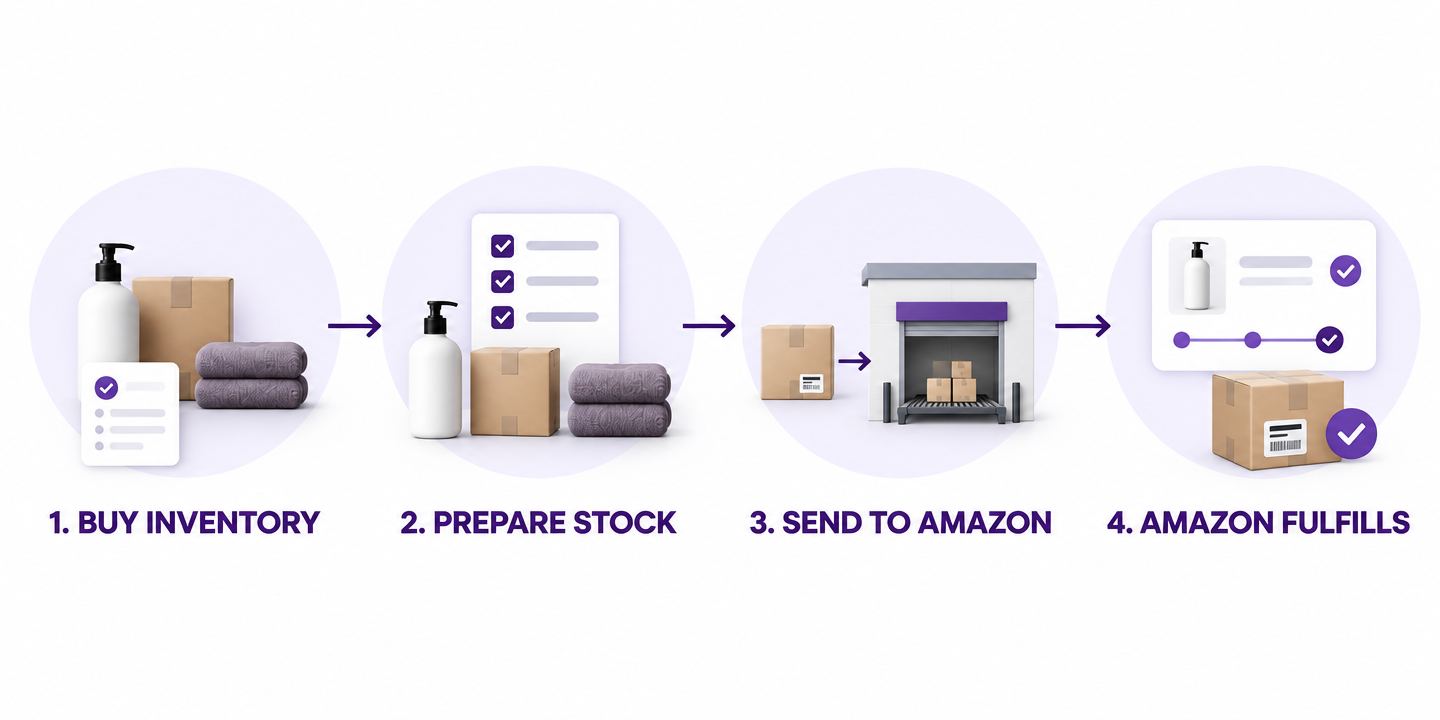
The process generally follows four steps:
- Find products and purchase inventory from manufacturers or suppliers.
- Prepare the products according to Amazon's requirements.
- Ship the inventory to an Amazon fulfillment center.
- Amazon stores the products and processes customer orders when sales occur.
You remain responsible for sourcing decisions, inventory planning, pricing, and overall business performance.
Amazon FBA Pros and Cons
Advantages
- Amazon handles much of the daily fulfillment work.
- Eligible products can benefit from Prime shipping.
- Sellers can use Amazon's existing logistics infrastructure.
- Buying inventory in advance may provide greater control over product selection and quality checks before products enter the fulfillment network.
Disadvantages
- You need to pay for inventory before knowing how quickly it will sell.
- Storage and fulfillment fees affect your margins.
- Unsold inventory can tie up cash and create additional costs.
- You must plan shipments and maintain appropriate inventory levels.
FBA can work well when you have a reliable product, sufficient capital, and a reasonable estimate of future demand. However, purchasing too much inventory too early can put pressure on your cash flow.
What Is Dropshipping?
Dropshipping is an ecommerce business model in which a seller lists products for sale without holding the inventory in advance. When a customer places an order, the seller works with a supplier to source, process, and ship the product directly to the customer. Unlike Amazon FBA, where sellers send inventory to Amazon's fulfillment network, dropshipping relies on the supplier or a fulfillment partner to handle product storage and shipping.
How Does Dropshipping Work?
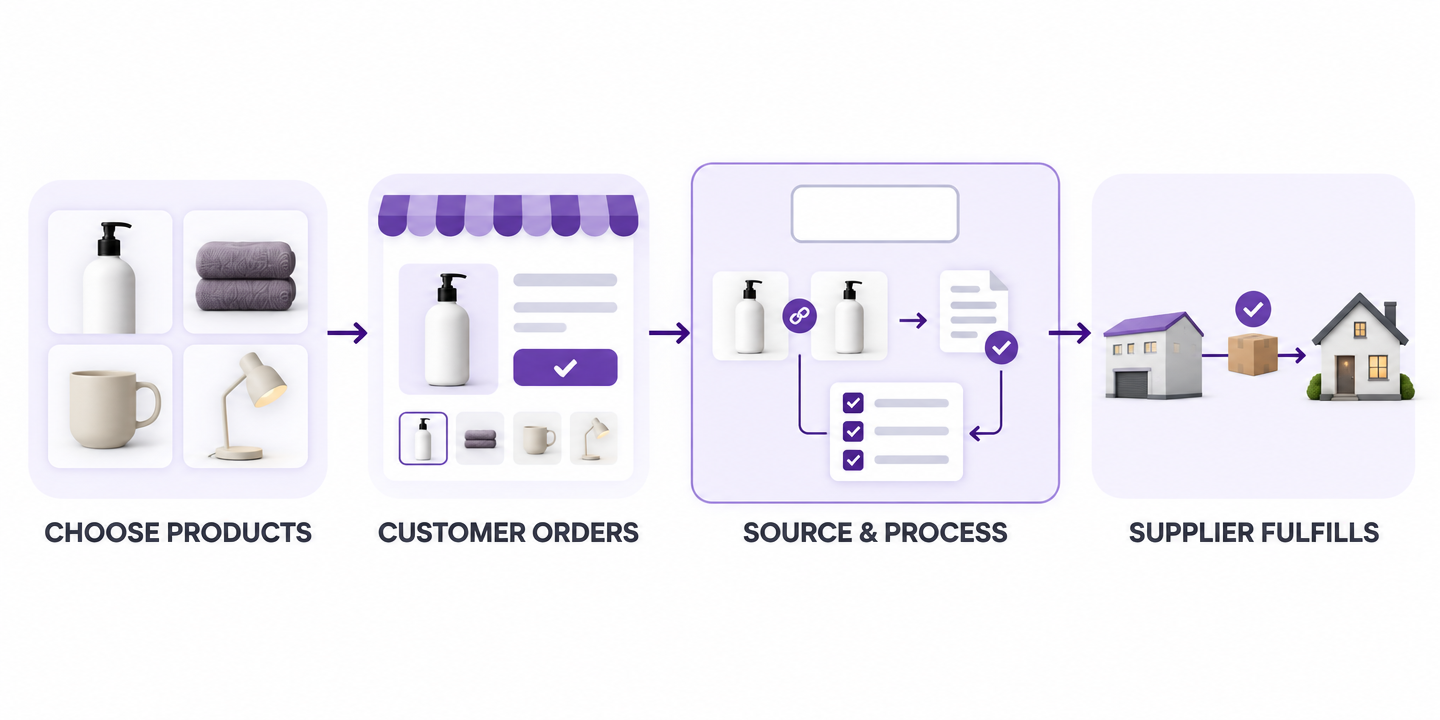
A typical amazon dropshipping business or independent online store follows this process:
- Choose products and find a suitable supplier.
- Create product listings on your chosen sales channel.
- Receive an order from a customer.
- Arrange for the supplier to process and ship the order.
- Track delivery and handle customer questions or problems.
The exact workflow depends on your supplier and sales channel. You remain responsible for your customers, product claims, pricing, and business decisions.
Dropshipping Pros and Cons
Advantages
- Lower upfront inventory investment in many cases.
- Less need to manage your own warehouse.
- More flexibility when choosing products and suppliers.
- Easier to expand your product range without purchasing every item in bulk.
Disadvantages
- Supplier stock levels and product quality may be outside your direct control.
- Shipping delays can affect customer satisfaction.
- Product and shipping costs can reduce profit margins.
- You may have less control over packaging unless your supplier offers customization.
Dropshipping reduces some inventory responsibilities, but it does not eliminate business risk. A reliable supplier and a clear fulfillment process remain essential.
Amazon FBA vs. Dropshipping: Key Differences
The main differences become clearer when you compare how each model handles inventory, fulfillment, costs, and quality.
| Factor |
Amazon FBA |
Dropshipping |
| Upfront inventory |
Usually requires advance purchasing |
Usually avoids bulk inventory purchases |
| Storage |
Amazon fulfillment centers |
Supplier's warehouse or fulfillment facility |
| Order fulfillment |
Amazon handles fulfillment |
Supplier fulfills orders |
| Quality control |
Inventory can be inspected before sending it to Amazon |
Depends on supplier practices and inspection arrangements |
| Shipping |
Uses Amazon's fulfillment network |
Depends on supplier and shipping route |
| Inventory risk |
Risk of unsold stock |
Lower inventory investment, but stockouts remain possible |
| Product flexibility |
Changing inventory can require new purchasing and shipping decisions |
Product sourcing can be more flexible |
| Main cost concerns |
Inventory, storage, fulfillment, and selling fees |
Product costs, shipping, marketing, and selling fees |
Which Model Offers More Control?
With FBA, you purchase inventory before it enters Amazon's fulfillment network. This gives you an opportunity to inspect products in advance, although it does not guarantee that every unit will be defect-free.
With Dropshipping, the supplier plays a larger role in product handling and shipping. You can improve control by choosing suppliers carefully, setting clear quality standards, and arranging inspections before orders are dispatched.
For sellers sourcing products internationally, dropshipping product sourcing is therefore more than finding a low price. It also involves checking product quality, confirming availability, and understanding the full cost of getting an order to the customer.
What About Shipping Speed?
Neither model is automatically faster in every situation.
Amazon FBA can provide fast delivery through its fulfillment network, especially for eligible products. Dropshipping delivery times depend on stock availability, order processing, the shipping method, and the destination.
Before choosing a supplier, check the actual estimated delivery time and available tracking information. Do not rely on a general shipping promise without checking the specific product and destination.
Amazon FBA vs. Dropshipping: Which Is More Profitable?
There is no universal answer. The better option is the one that leaves you with a healthy profit after all relevant costs.
Amazon FBA Costs and Fees
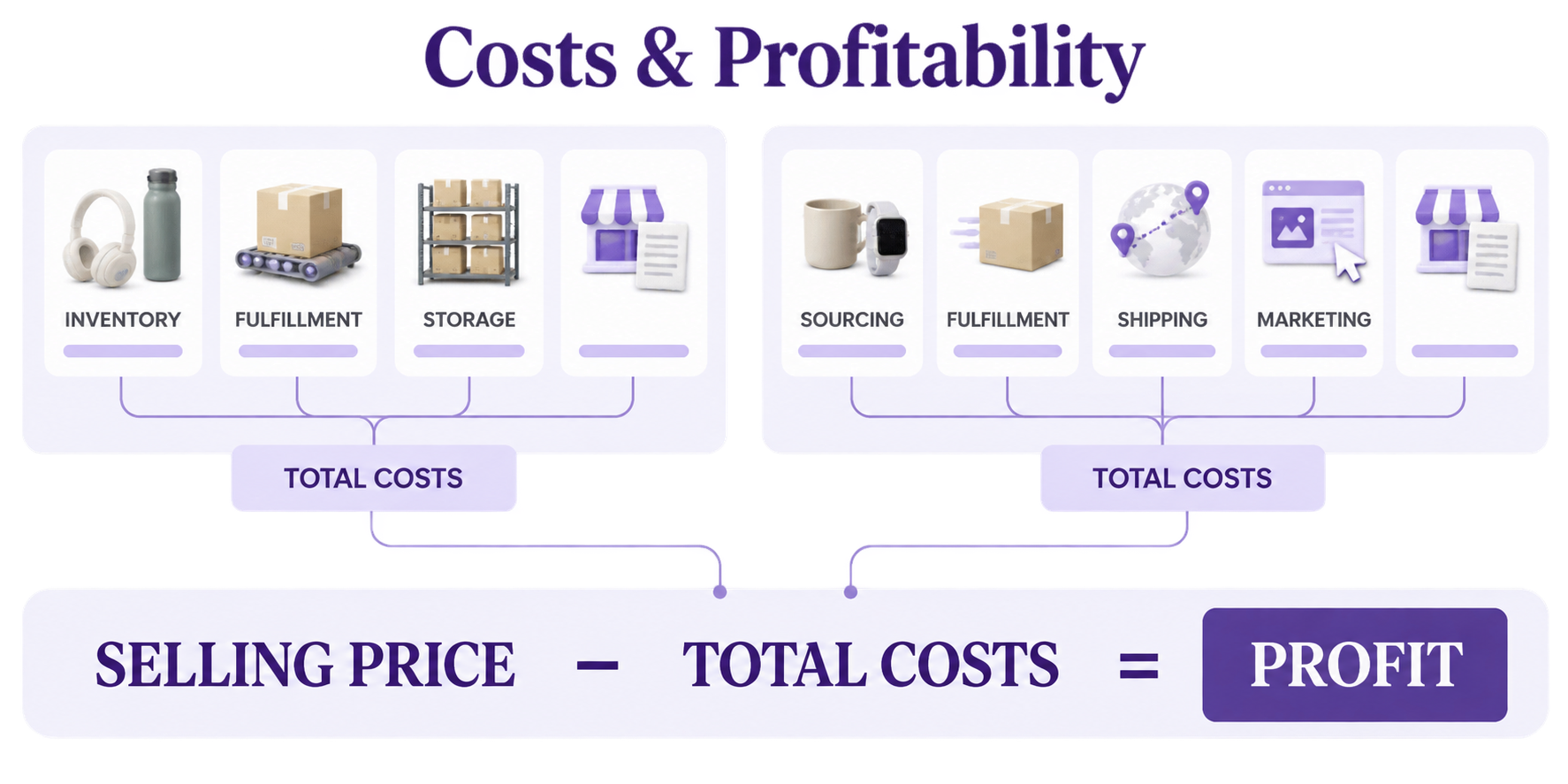
FBA sellers need to account for product purchasing, shipping inventory to Amazon, storage, fulfillment, and applicable selling fees. Slow-moving products can also increase inventory costs.
Amazon provides a Revenue Calculator that lets sellers compare estimated costs and revenue for different fulfillment methods. [2] Use it before committing to a large order.
Dropshipping Costs and Profit Margins
Dropshipping sellers should calculate:
- Product purchasing cost.
- Shipping and fulfillment charges.
- Marketplace or payment processing fees.
- Advertising and marketing expenses.
- Refunds, replacements, and other operating costs.
For example, a product with a low supplier price may still produce a poor margin if international shipping is expensive. Similarly, an FBA product with strong sales may not be profitable if storage and fulfillment costs are too high.
To improve your numbers, compare suppliers using the total landed cost, not just the listed product price. A sourcing partner such as TeemDrop can help you explore product options and fulfillment arrangements before deciding which products make financial sense.
Which Model Is Better for Beginners?
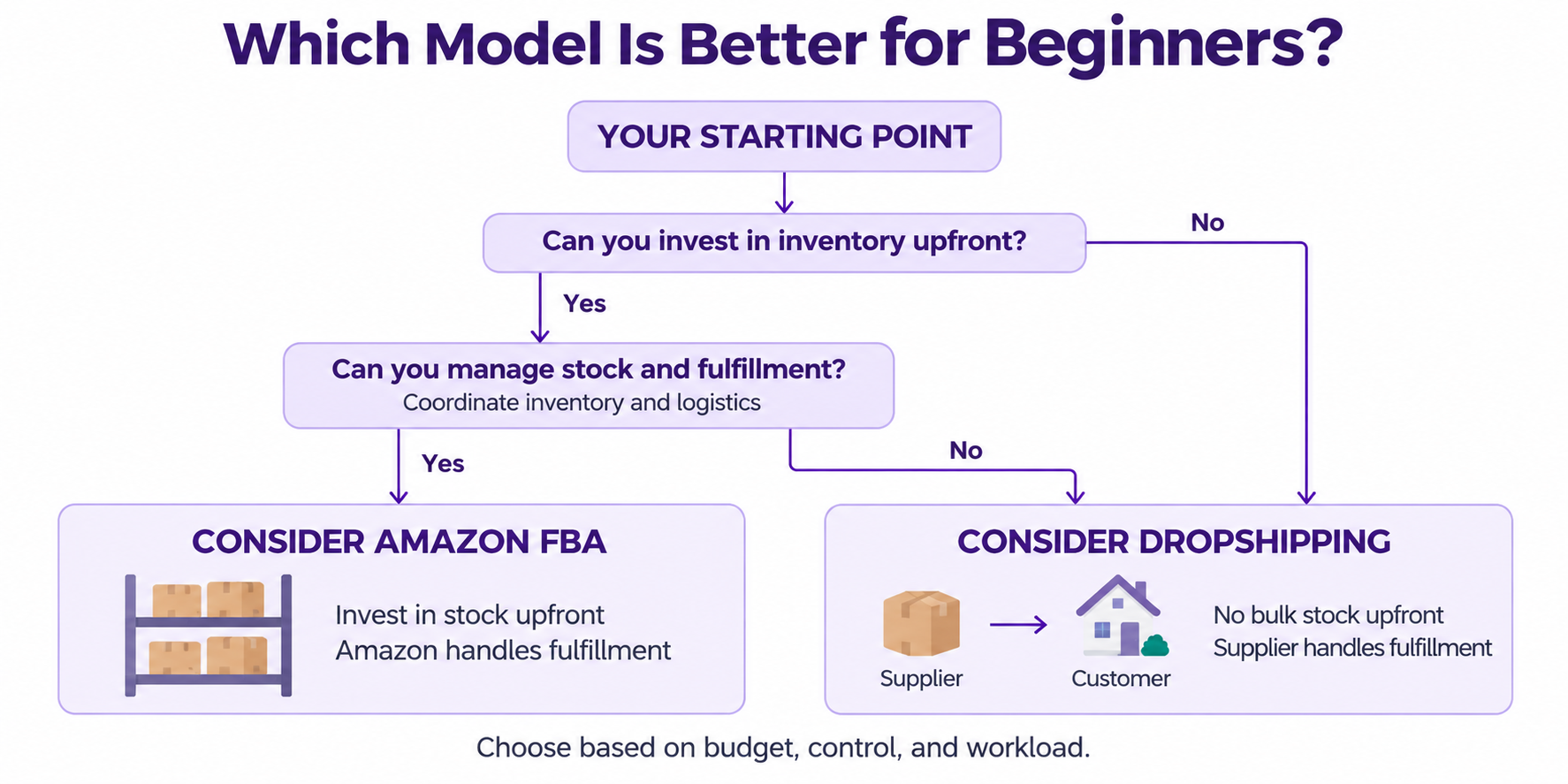
The right choice depends on how much money you can invest, how much operational responsibility you want to manage, and where you plan to sell.
When Amazon FBA Makes More Sense
FBA may be a better fit if you:
- Have enough capital to purchase inventory in advance.
- Have identified products with realistic sales potential.
- Want Amazon to handle storage and order fulfillment.
- Can plan inventory replenishment and manage unsold stock.
This model can suit sellers who want to build a business around a focused product range and are prepared to manage inventory investment.
When Dropshipping Makes More Sense
Dropshipping may be more suitable if you:
- Want to limit upfront spending on inventory.
- Prefer not to operate your own warehouse.
- Need flexibility when sourcing products.
- Want to sell through an independent dropshipping store or another sales channel that supports your fulfillment arrangement.
However, lower inventory costs do not mean you can start without a budget. You may still need money for store operations, marketing, samples, shipping, and customer service.
If you choose Dropshipping, spend time evaluating suppliers before you commit to a long-term arrangement. A low purchase price is not useful if poor quality or unreliable delivery creates costly customer problems.
Can You Combine Amazon FBA and Dropshipping?
Yes. A seller may use different fulfillment methods for different products or sales channels, provided each arrangement complies with the relevant marketplace policies. For example, inventory for products with predictable demand may be sent to Amazon FBA, while other products may be fulfilled by suppliers through a sales channel that permits the arrangement. Before combining methods, check the rules that apply to each channel and calculate the costs separately. [3]
Use Different Fulfillment Methods for Different Products
For example, a seller may purchase inventory for products with predictable demand and use FBA for eligible Amazon orders. For other products, the seller may use a supplier-based fulfillment arrangement through an appropriate sales channel.
This approach can help sellers match inventory investment to product demand rather than forcing every product into the same fulfillment model.
Amazon Dropshipping Rules and Requirements
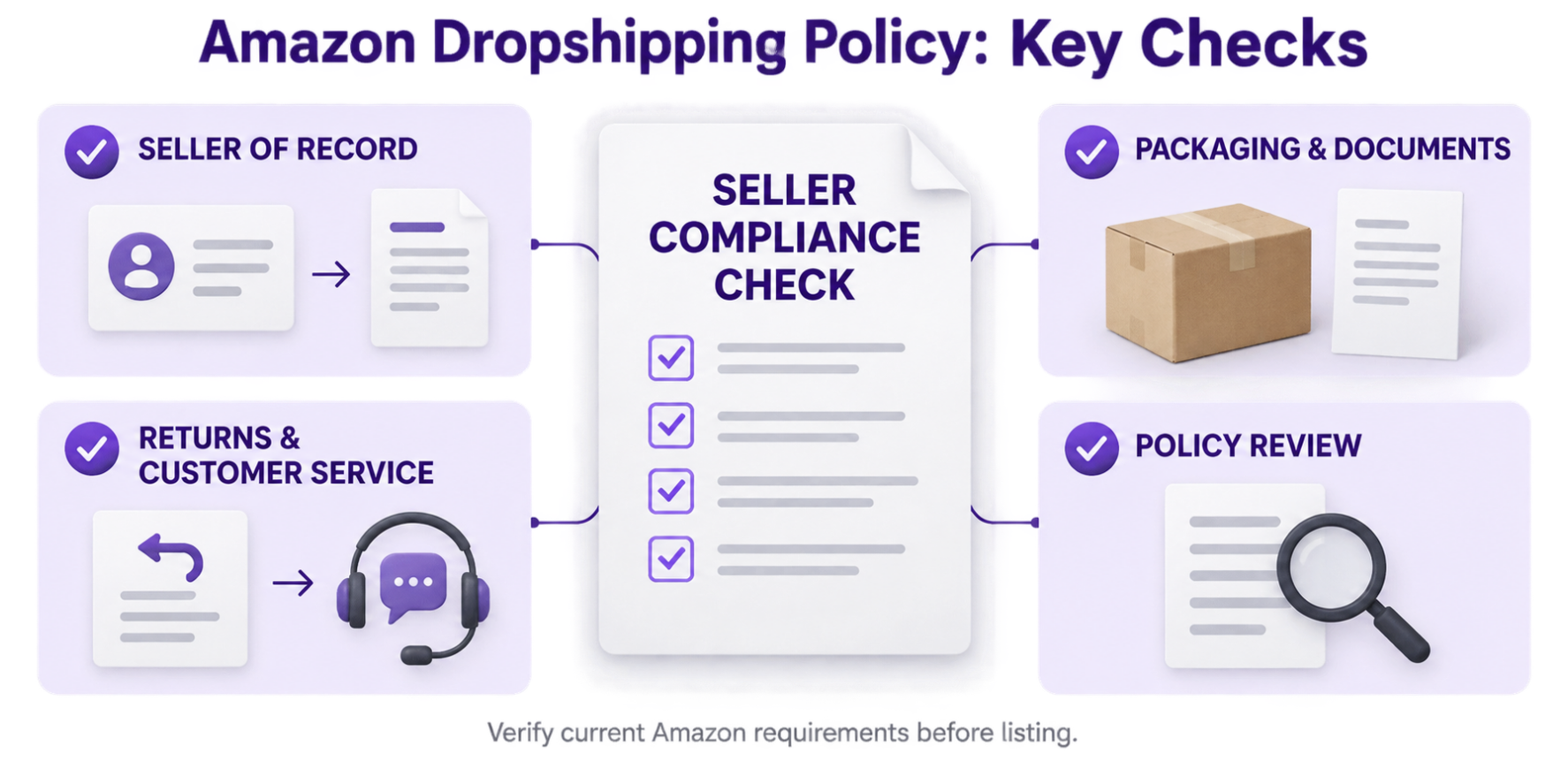
If you are considering dropshipping with Amazon, pay particular attention to Amazon's Dropshipping Policy.
Amazon requires you to be clearly identified as the seller of record. Supplier agreements and shipments must meet its requirements for packing slips, invoices, and external packaging. You must also remain responsible for customer returns and comply with other applicable selling policies. [3]
Do not assume that buying an item from another online retailer and having it shipped directly to your Amazon customer is automatically permitted.
Before starting dropshipping through Amazon, confirm that your supplier can support the required packaging and seller identification arrangements. Also verify that your planned workflow meets Amazon's current rules.
How to Choose a Reliable Dropshipping Supplier
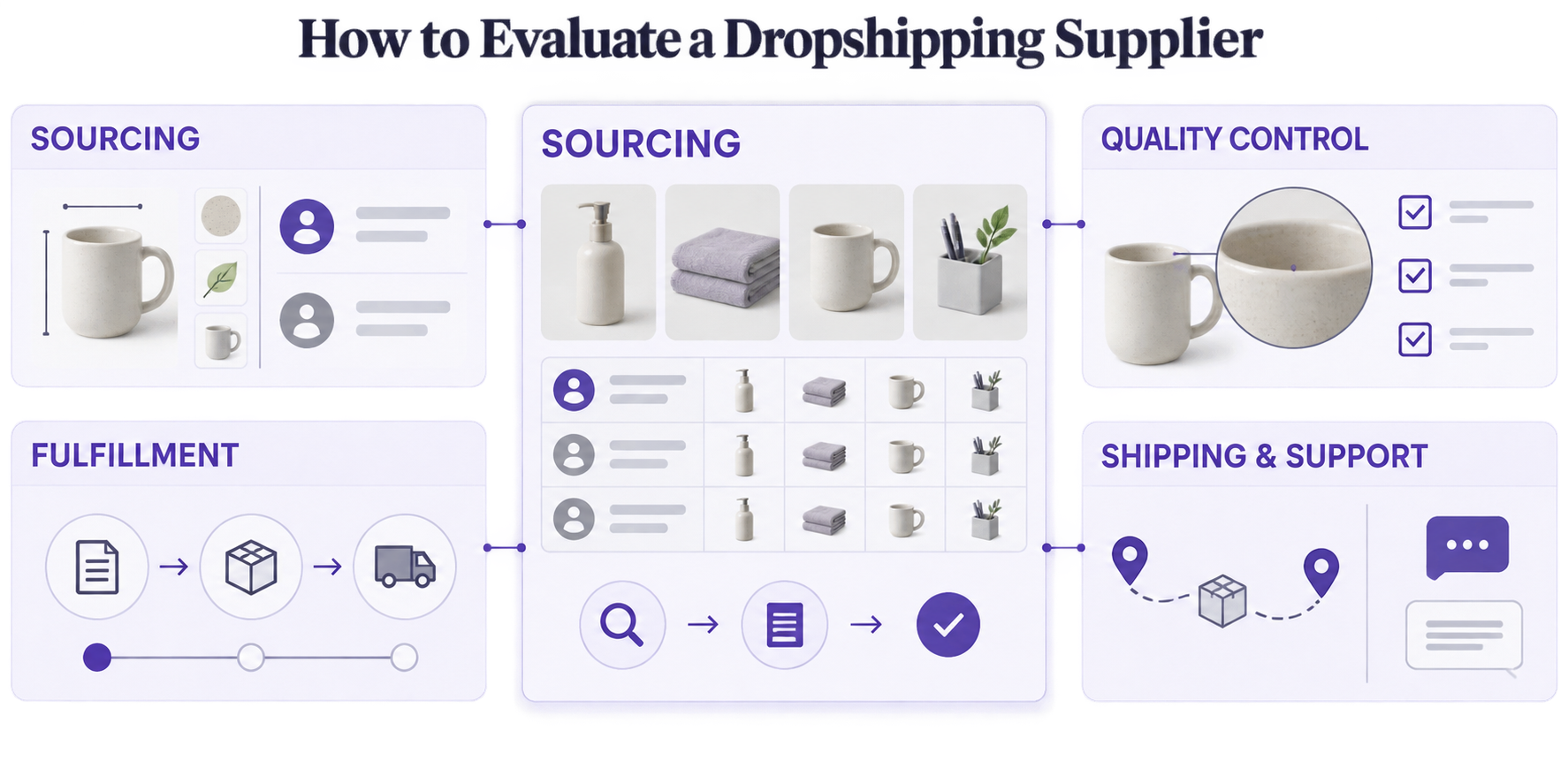
A good supplier can make daily operations easier, while an unreliable one can create shipping delays, quality complaints, and unexpected costs. These checks are especially important when sourcing products internationally.
Compare Product Costs and Supplier Reliability
Look beyond the listed price. Check product availability, order processing time, shipping charges, and the supplier's ability to maintain consistent quality.
TeemDrop supports product sourcing through channels including 1688 and Taobao, helping sellers explore a wider range of products and sourcing options. When comparing suppliers, consider the full cost of each product and whether the supplier can support your expected order volume.
Check Product Quality Before Shipping
Product images and descriptions do not always reflect the quality of the item customers receive.
A clear inspection process can help identify visible defects, incorrect specifications, or packaging problems before an order is shipped. TeemDrop offers quality control services to help sellers manage product quality during fulfillment.
For products with specific requirements, agree on inspection standards and confirm what checks are available before placing orders.
Evaluate Your Dropshipping Fulfillment Service
A reliable dropshipping fulfillment service should offer clear information about order processing, shipping methods, tracking, and problem resolution.
TeemDrop provides sourcing and fulfillment support, international delivery options, and services such as custom packaging and print-on-demand. These options can help sellers build a more organized supply process as their businesses grow.
A dropshipping warehouse or fulfillment partner can be particularly useful when you need help coordinating product handling and shipping. However, available services, delivery estimates, and packaging options vary by product and destination, so confirm the details before relying on them.
Amazon FBA vs. Dropshipping: Which Should You Choose?
Amazon FBA and Dropshipping can both support a successful ecommerce business, but they solve different problems.
FBA may be the better choice if you have inventory capital and want to use Amazon's fulfillment network. Dropshipping may suit you better if you want to reduce upfront inventory investment and keep product sourcing flexible.
Your decision should come down to your budget, sales channel, product costs, and ability to manage suppliers. If you choose Dropshipping, reliable sourcing and fulfillment are essential to delivering a consistent customer experience.
TeemDrop helps sellers manage product sourcing, quality control, and international fulfillment, so you can spend less time coordinating supply tasks and more time developing your business.
FAQs
1. Is Amazon FBA better than Dropshipping?
Neither model is best for every seller. FBA offers Amazon-managed fulfillment but requires upfront inventory investment. Dropshipping reduces the need to purchase inventory in advance but makes supplier reliability and shipping coordination especially important.
2. Is Dropshipping cheaper than Amazon FBA?
Dropshipping often requires less upfront inventory spending. However, supplier prices, shipping, marketing, and selling fees still affect profitability. Compare the total cost of each order before choosing a model.
3. Can you do Dropshipping on Amazon?
Yes, provided you follow Amazon's Dropshipping Policy. You must be the seller of record, meet the applicable packaging and documentation requirements, and remain responsible for customer returns and other seller obligations. [3]
4. Can you use FBA and Dropshipping together?
Yes. You can use different fulfillment methods for different products or channels when permitted. Check the requirements of each sales channel and calculate the costs before combining approaches.
5. How do you find winning Dropshipping products?
Look for products with clear customer demand, competitive total costs, reliable supply, and manageable shipping requirements. Research alone cannot guarantee a winning product, so evaluate supplier quality and expected margins before committing significant money.
References
[1] Amazon. How to Dropship on Amazon in 2025.
https://sell.amazon.com/blog/dropshipping-on-amazon
[2] Amazon. Estimate Fees and Costs.
https://sell.amazon.com/pricing/estimate
[3] Amazon Seller Central. Drop Shipping Policy.
https://sellercentral.amazon.com/help/hub/reference/external/G201808410