Best Product Research Tools for Dropshipping in 2026
Finding winning products is one of the biggest challenges in dropshipping. With so many options online, it's easy to feel stuck or overwhelmed. Many beginners spend hours scrolling through TikTok or marketplaces without clear results.
That's where product research tools come in. They help you filter ideas, track trends, and spot products that already show demand. But tools alone are not the full answer. To build a profitable store, you also need to understand what happens after you find a product. Some platforms, like TeemDrop, go a step further by combining product research with sourcing and fulfillment support.
This guide covers the best product research tools, free methods you can still use today, and what most sellers miss when trying to turn a product into real profit.

What Is Product Research in Dropshipping?
Product research is the process of finding items that people are already interested in buying. Instead of guessing, you use data, trends, and real sales signals to guide your decisions.
In dropshipping, this step matters a lot. The right product can make marketing easier, while the wrong one can waste both time and money.
Good product research usually focuses on:
- Demand (are people buying it?)
- Competition (how many sellers offer it?)
- Potential margin (can you make a profit after costs?)
Many sellers rely on product research tools to speed up this process. These tools collect data from ads, marketplaces, and social media, helping you spot opportunities faster.
But even with the best tools, product research is only the starting point.

Why Product Research Tools Matter (and Where They Fall Short)
Product research tools can save a lot of time. Instead of searching manually, you get access to structured data and insights.
Why they matter:
- They show trending products quickly
- They help you analyze competitors
- They reduce guesswork
For beginners, this can make a big difference. You move from random testing to more informed decisions.
Where they fall short:
- Most tools show products that have already worked
- Many sellers see the same "winning products"
- Data can be slightly delayed
This often leads to saturation. By the time you launch a product, many others may already be selling it.
That's why it's important to see tools as helpers—not guarantees.
Finding a product is only one part of the process. What happens after you find it matters just as much.
Best Product Research Tools for Dropshipping
Choosing the right product research tools can make a big difference in how fast you find winning products—and how well you scale them.
Some tools focus only on product discovery, while others go further by supporting sourcing, fulfillment, and operations. Understanding this difference helps you build a more complete workflow instead of relying on a single tool.
Below is a balanced comparison of popular dropshipping product research tools and platforms.
| Platform |
Core Focus |
Best For |
Key Strength |
| TeemDrop |
Product sourcing + fulfillment + research |
Sellers who want an end-to-end system |
Combines product discovery with sourcing, QC, and fast shipping |
| Minea |
Ad spy & creative analysis |
Marketers & ad-focused sellers |
Tracks high-performing ads across platforms |
| Dropship.io |
Product discovery |
Beginners |
Clean interface and easy product validation |
| EcomHunt |
Curated product ideas |
New sellers |
Ready-to-sell product lists with guidance |
| Helium 10 |
Market & keyword research |
Amazon-focused sellers |
Deep data insights and demand analysis |
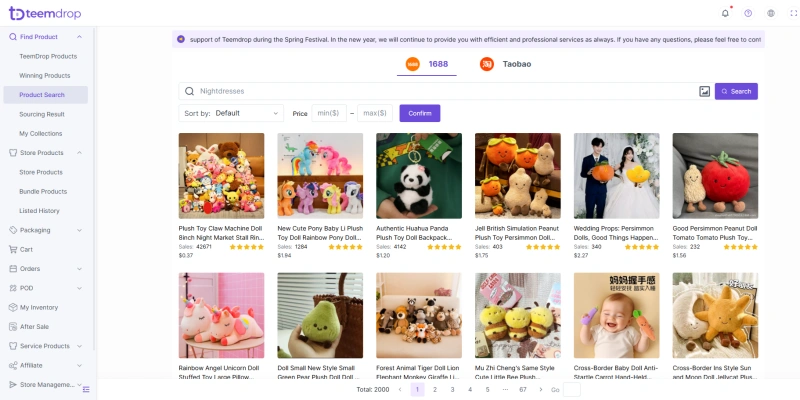
1. TeemDrop Winning Products Hub
TeemDrop offers a built-in product research hub that highlights trending items. It focuses on products that already show strong performance.
Key features:
- AI-powered product sourcing using data from platforms like TikTok and Amazon
- Access to large product catalogs and networks of the best dropshipping supplier
- Built-in quality control and inspection systems
- Faster shipping options (often within 8–12 days for major markets)
This makes it useful for sellers who want to move beyond just "finding products" and focus on building a more stable backend system.
2. Minea
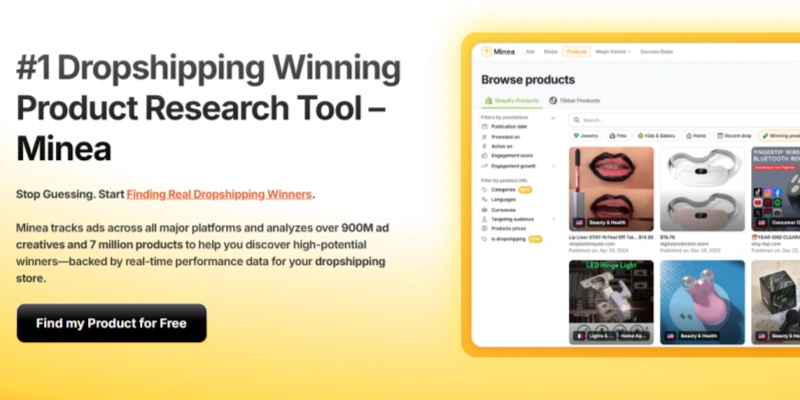
If your product research strategy relies heavily on social media ads, Minea is a powerful option. It is an ad spy tool that tracks advertisements across Facebook, TikTok, and Pinterest.
Key features:
- Tracks ads across TikTok and Facebook
- Helps identify trending creatives
- Useful for validating demand through ad performance
Minea allows you to see which ads are getting the most engagement, including likes, shares, and comments. It gives access to a large ad library across platforms like TikTok and Facebook, making it easier to spot high-performing creatives [1]. This helps you understand not just what is selling, but how it is being marketed. You can filter by e-commerce platform (like Shopify) to ensure you are only looking at dropshipping products.
3. Dropship.io
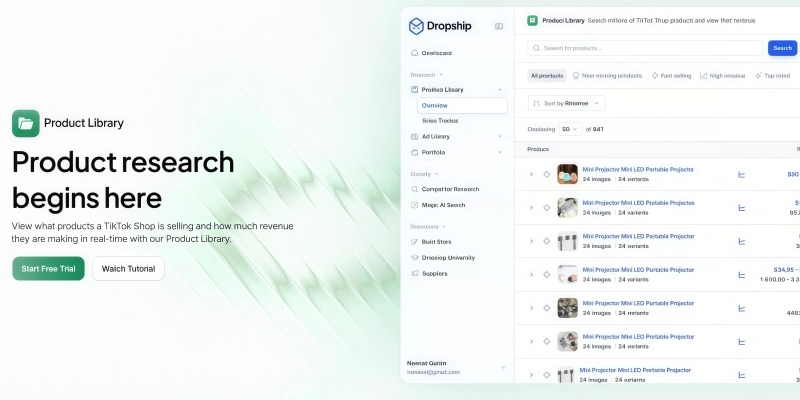
Dropship.io takes a slightly different approach. Instead of just showing you ads, it allows you to track the actual sales data of competitor stores.
Key features:
- Easy-to-use dashboard
- Product performance tracking
- Daily product updates
You can enter a competitor's store into the platform and analyze which products are performing best. It provides insights into product performance, competitor activity, and ad data based on a large pool of listings and stores [2]. This is a very analytical tool. It is perfect for sellers who want hard numbers and want to verify that a product is actually generating cash before they try to sell it.
4. EcomHunt
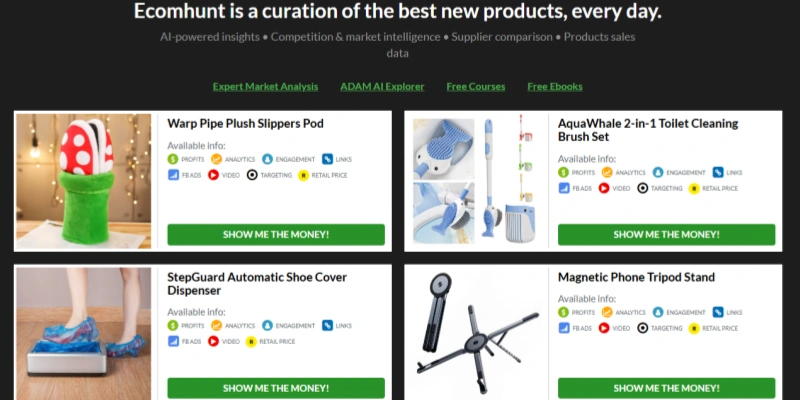
EcomHunt is one of the classic tools in the industry. It functions like a daily catalog of winning products. Every day, their team manually adds new items to the platform that show high potential.
Key features:
- Handpicked products
- Basic profit and marketing insights
- Beginner-friendly
For each item, EcomHunt provides profit estimates, supplier links, and marketing insights. Each product also includes engagement data, competitor examples, and ad creatives to help you evaluate potential more quickly [3]. It is very straightforward and removes a lot of the heavy lifting for new sellers who feel overwhelmed by too much raw data.
5. Helium 10
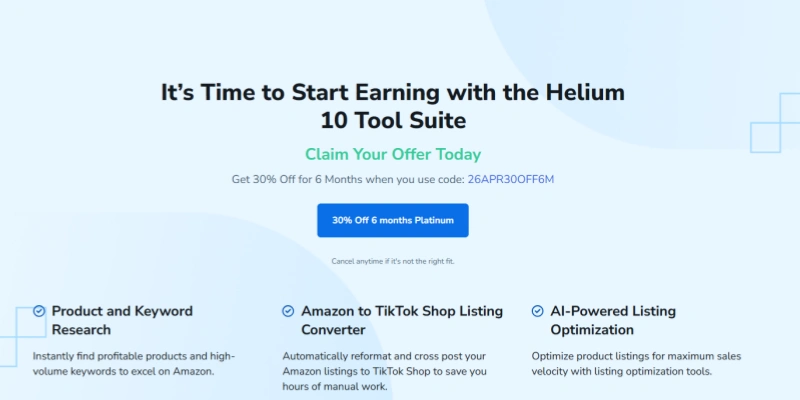
Helium 10 is technically built for Amazon sellers, but clever dropshippers use it too. Amazon is the biggest e-commerce search engine in the world. By using Helium 10, you can see exactly what people are searching for.
Key features:
- Keyword research tools
- Market demand insights
- Competitor tracking
By using Helium 10, you can analyze what people are actively searching for using keyword data and demand insights. It helps identify high-demand opportunities based on real search behavior on Amazon [4].
Free Product Research Methods (Still Worth Using)
You don't always need paid tools to find good products. Many free platforms can still provide useful insights—especially if you know how to use them correctly.
While these methods may take more time, they can help you build a stronger understanding of the market and discover good dropshipping niches organically.
TikTok Creative Center
A powerful (and often underrated) place to discover trending products and viral content.
Instead of guessing what might work, you can see what is already getting attention.
What makes it useful:
- Real-time trending products and hashtags
- High-performing video examples
- Insights into audience engagement
You can also study:
- What kind of hooks are working
- How creators present products
- Which niches are gaining traction
This makes it not just a product research tool, but also a creative research platform.

Amazon Best Sellers
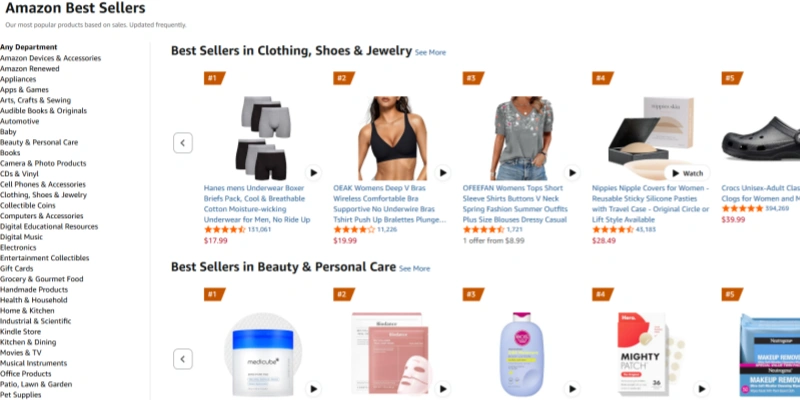
One of the simplest ways to validate product demand.
Unlike social platforms, Amazon reflects actual buying behavior, not just engagement.
What makes it useful:
- Products ranked by real sales performance
- Categories and subcategories for niche research
- Constantly updated rankings
You can use it to:
- Confirm if a product already has demand
- Find related product ideas
- Identify stable, long-term sellers
If a product performs well here, there's a good chance people are willing to pay for it.
Google Trends
A great tool for understanding how interest in a product changes over time.
Instead of focusing on short-term hype, Google Trends helps you see the bigger picture.
What makes it useful:
- Search interest over time
- Regional demand insights
- Seasonal trend patterns
You can use it to:
- Check if a product is growing or declining
- Compare multiple product ideas
- Avoid short-lived trends
This is especially helpful for avoiding products that peak too quickly and disappear.

From Product Research to Real Profits: What Most Sellers Miss
Many beginners believe that finding a winning product is enough. In reality, that’s only part of the journey. Generating a sale is only the front end of the business. The back end of the business ultimately answers: is dropshipping worth it? This is where your profit is actually made or lost.
1. Product ≠ Experience
Two sellers can sell the same winning product but get completely different results. Why? Because the customer experience is different.
The product itself is just an object. The experience includes how the product is packaged, whether it arrives in one piece, and if it looks like the pictures online. If you sell a great product but it arrives in a crushed box smelling like chemicals, the customer will demand a refund. Quality control (QC) is what protects your profit.
2. Speed and Consistency Are the Real Advantages
In modern dropshipping, your biggest advantage is your shipping speed.
If your shipping takes three or four weeks, customers will get angry. They will leave bad reviews, open disputes with PayPal or their credit card companies, and your payment gateways might get shut down. Slow shipping equals wasted ad money. Fast, consistent shipping keeps your business healthy and allows you to scale up safely.

3. Why Many Winning Products Fail After Launch
Many sellers experience a quick burst of sales, followed by a total crash. This usually happens for a few reasons:
- Too many copycats: Other sellers saw the same product on a spy tool and stole your ad angle.
- Fulfillment breaks down: Your supplier gets overwhelmed with your orders and stops shipping them on time.
- Poor customer feedback: The item was of a lower quality than expected, leading to high return rates.
To survive these issues, you need more than just research tools. You need a reliable system to handle the physical goods.
Bridging the Gap Between Product Research and Fulfillment
Product research tools help you find opportunities. But turning those opportunities into profit requires more than just data; it requires seamless dropshipping order fulfillment.
You also need:
- Reliable sourcing
- Quality control
- Efficient fulfillment
This is where many sellers start looking beyond research tools.
Platforms like TeemDrop focus on what happens after product discovery. Instead of helping you find products, they support sourcing, quality checks, and shipping processes.
For example, once you identify a product using research tools, the next step is making sure:
- The product matches expectations
- Orders are fulfilled on time
- Customers receive a consistent experience
By improving these areas, sellers can reduce refunds and build more stable stores.
This doesn't replace product research tools—it complements them.

How to Choose the Right Product Research Stack
Building a successful business requires using the right combination of tools and systems at the right time. Here is how you should think about building your business stack as you grow:
- For Beginners: If you are just starting and have a tight budget, stick to free tools + simple spy methods. Spend time on the TikTok Creative Center and look at Amazon trends. Focus on learning how the market works.
- For Growing Sellers: Once you have a budget and want to save time, upgrade to data tools + ad spy software. Using platforms like Minea or Dropship.io will help you test products much faster and with better accuracy.
- For Advanced Sellers: When you start getting consistent daily orders, your stack needs to evolve. It becomes research tools + sourcing + a fulfillment system. At this stage, many sellers start optimizing not just what they sell, but how they deliver it. This is where partnering with a private agent or a platform like TeemDrop becomes essential to protect your brand.
Final Thoughts: Tools Help You Start, Systems Help You Scale
Product research tools are valuable. They help you discover ideas faster and reduce guesswork. For beginners, they can shorten the learning curve.
But tools alone don’t build a successful store.
Real growth comes from combining:
- Smart product selection
- Strong fulfillment
- Consistent customer experience
If you focus only on finding winning products, you may struggle to scale. But if you build a system around sourcing, delivery, and quality, you give your store a better chance to grow over time.
If you are learning dropshipping step by step, start with the right tools, and then improve what happens after the sale, as that's where many successful stores make the real difference.
References
[1] Minea – AdSpy Tool Features
https://www.minea.com/adspy
[2] Dropship.io – Product Research & Competitor Tools
https://help.dropship.io/en/articles/9329212-getting-started-with-dropship-io
[3] EcomHunt – Product Database & Analytics Features
https://ecomhunt.com/features/classic
[4] Helium 10 – Keyword Research Tools
https://www.helium10.com/tools/cerebro/