CJ Dropshipping Review: Is It Worth Using in 2026?
CJ Dropshipping remains a popular option for product sourcing and basic automation in 2026, but limitations in consistency, branding, and scalability can impact long-term growth for serious sellers.


Need help? Email Us at support@teemdrop.com
 CJ Dropshipping Review: Is It Worth Using in 2026?
CJ Dropshipping remains a popular option for product sourcing and basic automation in 2026, but limitations in consistency, branding, and scalability can impact long-term growth for serious sellers.
If you've been in dropshipping for a while, you've probably noticed something: what worked a few years ago doesn't work the same way today. Customers expect faster shipping, more consistent quality, and fewer delays. That's exactly why platforms like CJ Dropshipping became popular—they offered a middle ground between slow marketplaces like AliExpress and fully managed fulfillment.
The question in 2026 isn’t simply whether CJ works, but how it fits into different stages of a store's growth.
In this review, we break down how CJ Dropshipping actually performs today, based on typical usage scenarios, shipping timelines, and operational limits that start to show at scale.
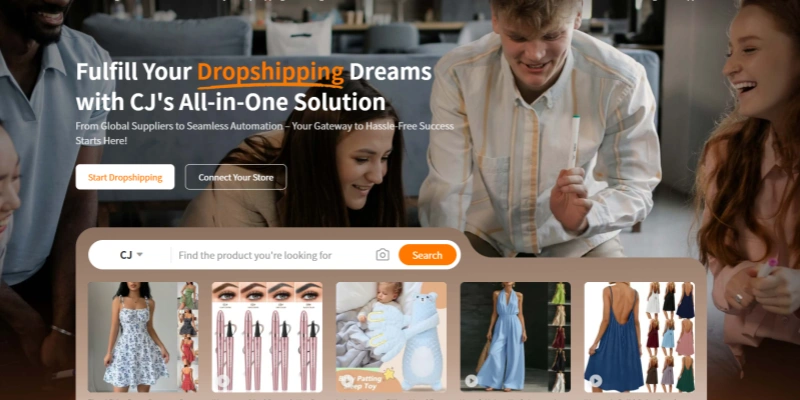
CJ Dropshipping is a dropshipping platform that combines supplier access with fulfillment services, making it easier for online sellers to source and deliver products without holding inventory. At its core, CJ Dropshipping acts as a middle layer between manufacturers and ecommerce stores. Instead of working directly with multiple suppliers, sellers can use CJ to manage product sourcing, storage, and order fulfillment in one place. As highlighted in a recent industry analysis by SaleHoo, the move toward consolidated sourcing platforms is a response to the "supplier fragmentation" problem, allowing retailers to maintain better quality control without managing dozens of individual relationships [1].
The platform integrates with major ecommerce systems like Shopify and WooCommerce, allowing store owners to sync products, process orders, and manage logistics from a centralized dashboard.
In terms of functionality, CJ Dropshipping covers several key areas:
This combination of sourcing and fulfillment services makes CJ Dropshipping a practical option for sellers looking to streamline operations without managing inventory or supplier relationships manually.
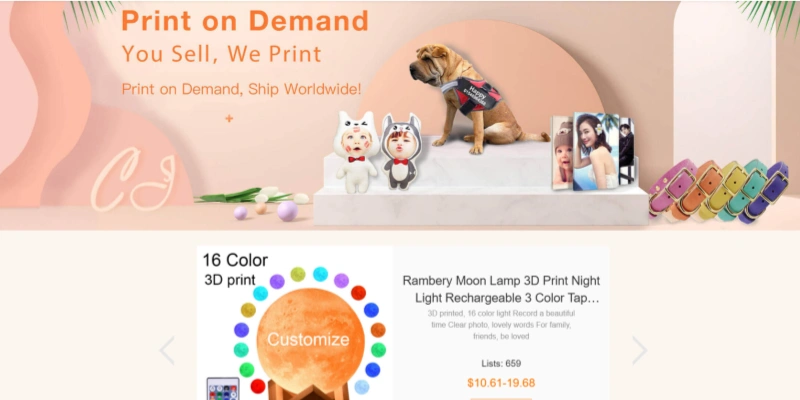
To determine if the platform fits your strategy, here is a breakdown of their core tools:
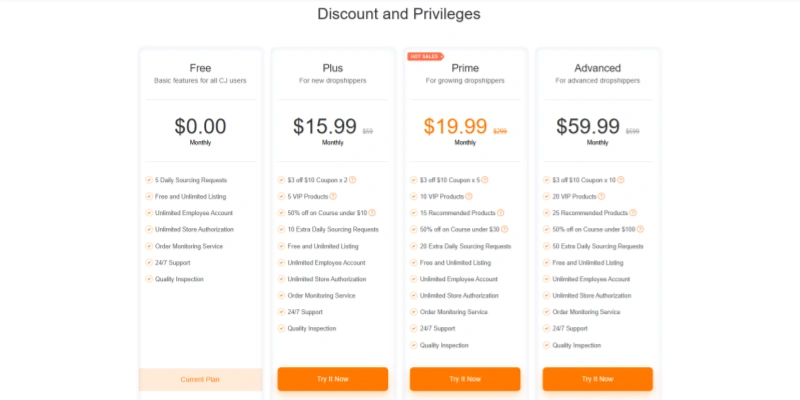
CJ Dropshipping is often described as a "free" platform, mainly because it offers a $0/month plan with basic features. However, in practice, the cost structure is more evenly distributed across the process, and paid plans (starting at around $15.99/month) unlock higher sourcing limits and extra perks.
Pricing is still mainly split into three parts:
In practice, your margins depend heavily on how efficiently you source products.
For example, during testing, delays in sourcing or switching suppliers often led to higher costs or missed opportunities—especially when reacting to trending products.
This type of pricing model is common in fulfillment-based dropshipping, where operational efficiency matters more than fixed platform fees.
Shipping time on CJ Dropshipping varies significantly depending on several factors:
Typical estimates:
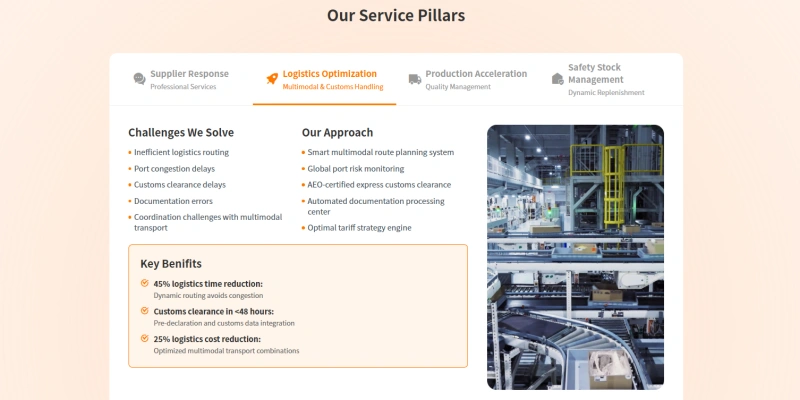
While CJ offers faster shipping than many traditional suppliers, consistency can be an issue. Processing delays, supplier response time, and inventory availability all play a role.
In 2026, shipping speed remains a primary factor in customer satisfaction. The Adobe Experience Cloud points out that modern consumers now equate shipping reliability with brand authority, meaning that even a two-day delay in fulfillment can lead to a significant drop in customer lifetime value (LTV) [2].
Before deciding if CJ Dropshipping is the right fit for your store, it helps to review its main strengths and limitations.
Pros:
Cons:

CJ Dropshipping works well for many sellers in the early stages, especially when testing products and learning the fulfillment process.
As order volume increases, some sellers find that manual sourcing and coordination require more time and attention. At this point, many begin exploring ways to improve efficiency and reduce manual workload.
Different platforms offer different strengths depending on your store’s current stage and goals.
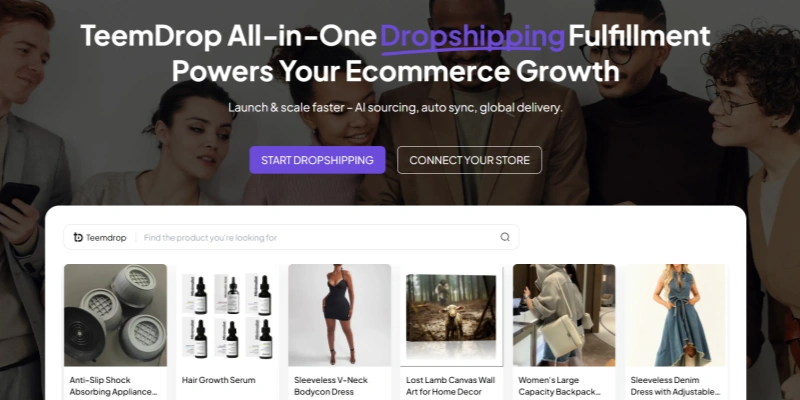
As order volume grows, manual steps like sourcing and supplier communication start to slow things down. Instead of changing platforms entirely, many sellers look for ways to make the process more efficient. A Dropshipping tool — TeemDrop is built for that next stage.
With CJ Dropshipping, sourcing usually means submitting a request and waiting.
Instead of waiting, AI can match products with a reliable dropshipping supplier instantly.
Manual workflows often rely on one supplier at a time.
Unlike that, automated systems can:
Less communication, fewer bottlenecks.
Quality issues don't show up at the start—but they do when you scale.
With built-in checks:
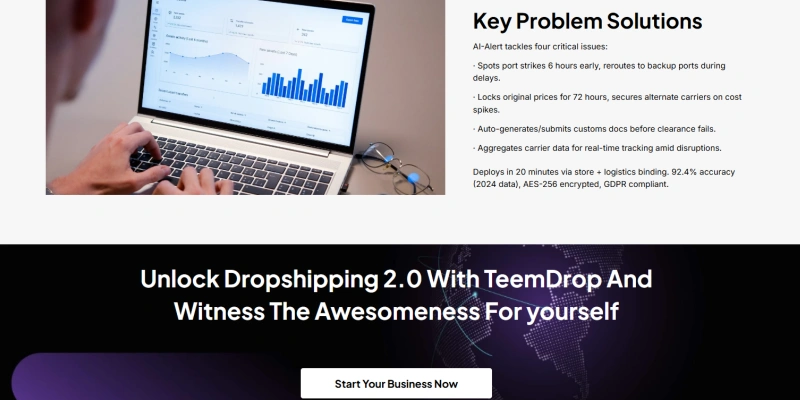
Manual dropshipping involves a lot of small tasks.
With automation, everything connects:
Less manual work, more time to focus on growth.
At a basic level, both platforms help you run a dropshipping business. The difference is more about how the work gets done, especially as your store grows.
Here’s a simple comparison:
| Feature | CJ Dropshipping | TeemDrop |
|---|---|---|
| Sourcing | Manual request-based | AI-driven automatic matching |
| Product Access | 400,000+ products | Broad supplier network (dynamic sourcing) |
| Warehouses | 50+ global warehouses | Distributed supplier network |
| Processing | Depends on agent response | System-driven automation |
| Automation | Partial (order sync) | End-to-end workflow automation |
| Scalability | Limited by manual steps | Built for scaling operations |
Both approaches work—it just depends on what stage you're in.
If you're testing products or running a smaller store, manual control can be enough. But as operations grow, having fewer moving parts and more automation can make things easier to manage.
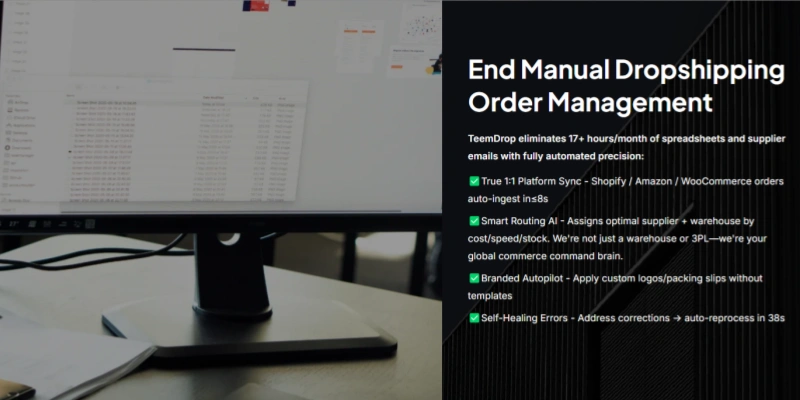
For many sellers, the journey usually starts with CJ Dropshipping.
At the beginning, it helps you get the basics right:
Once you find products that sell, things start to shift. Orders increase, and what used to be simple becomes harder to manage.
You might notice:
That’s usually the point where manual workflows stop being efficient.
Instead of handling everything step by step, many sellers begin looking for ways to simplify operations. This is where tools like TeemDrop come in.
Rather than replacing what you’ve built, the goal is to make it run smoother:
It’s less about switching platforms and more about moving from a manual setup to a system that can keep up with your growth.
CJ Dropshipping is a practical starting point for dropshipping. It helps sellers source products, test ideas, and understand how fulfillment works without upfront cost.
In the early stage, this setup is often sufficient. You can focus on learning the process, validating products, and finding what sells.
As order volume grows, the workflow naturally becomes more complex—more supplier coordination, more orders to manage, and higher expectations around speed and consistency. A case study from Spocket illustrates that this “scaling wall” is a common stage in dropshipping; sellers who move past it are often those who gradually introduce more automated processes to maintain efficiency and protect margins [3].
At this point, some sellers choose to keep their existing workflow, while others explore tools that can simplify operations. Solutions like TeemDrop are designed with automation in mind, particularly around sourcing and fulfillment.
Rather than one option replacing another, it’s more about fit:
For most sellers, any transition happens step by step, depending on how their business evolves.
Yes, CJ Dropshipping is beginner-friendly due to its no-upfront cost and sourcing support. It’s a practical way to learn how dropshipping works.
There's no monthly fee, but costs include product pricing, shipping, and optional services like branding or sourcing.
CJ often offers better sourcing support and faster shipping options compared to AliExpress, but both have their own advantages depending on your needs.
[1] SaleHoo — What is Sourcing in Supply Chain Management?
https://www.salehoo.com/blog/what-is-sourcing
[2] Adobe Experience Cloud — What is customer satisfaction?
https://business.adobe.com/blog/basics/customer-satisfaction
[3] Spocket — How to Scale Your Dropshipping Business to $10k per Month
https://www.spocket.co/blogs/how-to-scale-your-dropshipping-business-to-10k-per-month