How to Find Dropshipping Suppliers for Your Online Store
Starting a dropshipping store is one thing. Finding a supplier who can deliver the right products, meet your shipping expectations, and support your business as it grows is another.
You might find a product that looks promising, only to discover that the supplier has inconsistent stock, slow processing, or unclear return policies. These problems can affect customer satisfaction and reduce your profit.
TeemDrop helps online sellers connect product sourcing with quality control, order fulfillment, and shipping services. The right supplier, however, depends on your products, target market, budget, and business model.
In this guide, you will learn how to find dropshipping suppliers, where to search, how to compare your options, and what to check before choosing a partner.
Quick Answer: How Do You Find Dropshipping Suppliers?
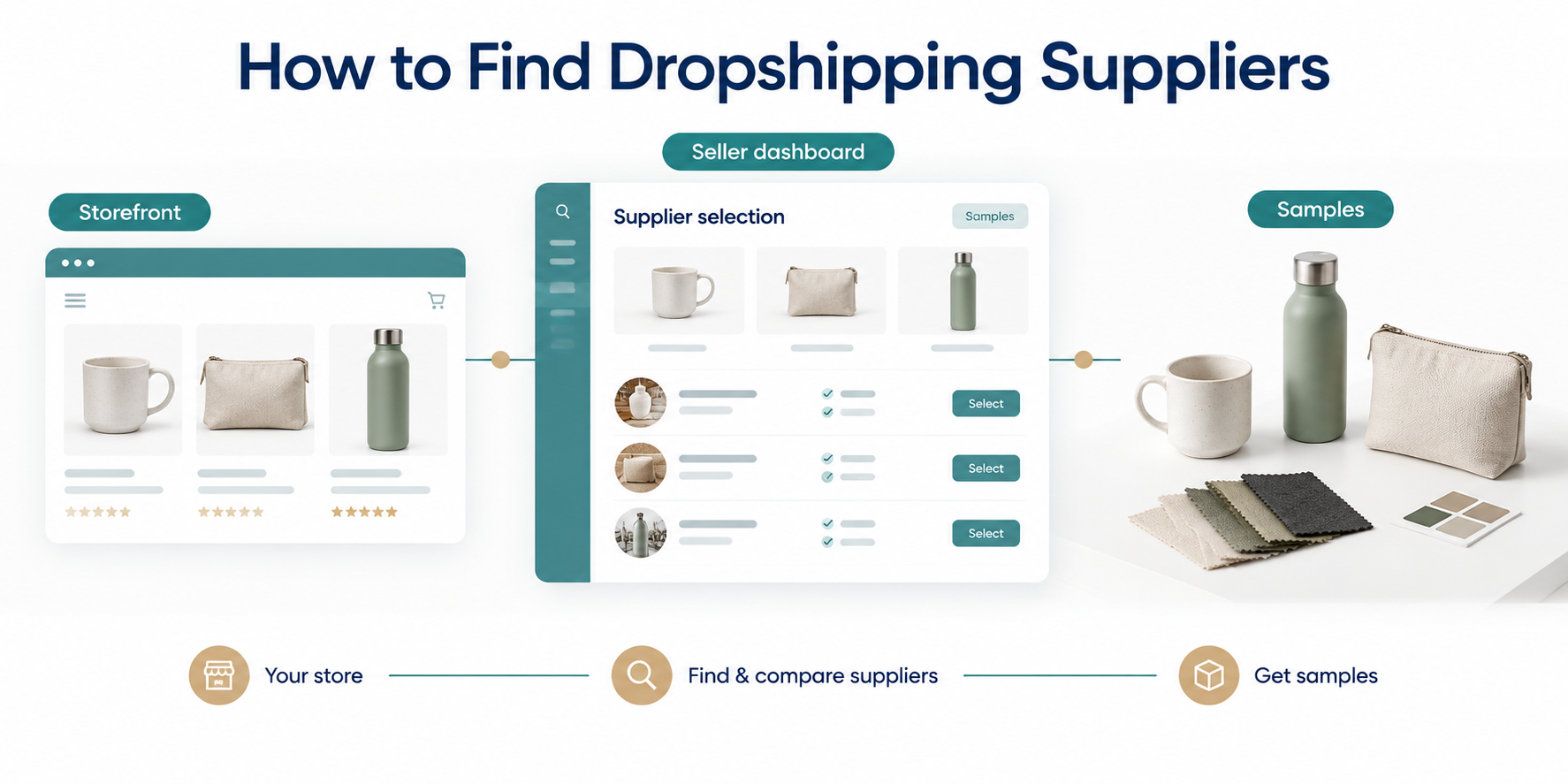
You can find dropshipping suppliers through supplier directories, manufacturers, wholesalers, online marketplaces, industry trade shows, and sourcing or fulfillment service providers. Compare candidates based on product costs, shipping times, inventory reliability, communication, and return policies. Before committing, verify their business information and test important claims whenever possible.
Where to Find Dropshipping Suppliers
Different sourcing channels offer different advantages. The best place to start depends on whether you need a wide product selection, direct manufacturer access, or help managing purchasing and fulfillment.
Find Suppliers Through Dropshipping Supplier Directories
Supplier directories collect information about wholesalers, manufacturers, and other potential suppliers. They can save time when you are exploring a product category or building a list of candidates.
Start by searching for your product category and target market. Then compare suppliers' product ranges, shipping options, business information, and cooperation requirements.
Before paying for directory access, check what it actually provides. Some directories charge membership fees, while others offer free browsing or different access levels. A directory listing also does not automatically guarantee that every supplier is suitable for your business.
Shopify's supplier guidance explains the differences between supplier directories, marketplace apps, and other sourcing methods, helping sellers understand which approach fits their needs.[1]
Find Dropshipping Manufacturers and Wholesalers
If you want more control over product specifications, packaging, or purchasing costs, consider contacting manufacturers and wholesalers.
You can find them through search engines, industry directories, trade associations, and manufacturer websites. Try searches such as:
- custom [product type] manufacturer
- wholesale [product type] supplier
- [product type] factory direct
- [product type] manufacturer dropshipping
When contacting a potential supplier, ask whether it supports dropshipping, individual order fulfillment, or direct shipping to your customers. Some manufacturers focus on bulk orders and may not accept single-item orders.
Direct sourcing can offer more flexibility, but it may require additional negotiation, product checks, and coordination. Always confirm minimum order quantities (MOQs), payment terms, and shipping arrangements before proceeding.
Use Dropshipping Marketplaces and Supplier Platforms
Online marketplaces make it easier to discover products and compare sellers without contacting every manufacturer individually.
For example, AliExpress offers a broad range of consumer products that sellers can explore for potential dropshipping opportunities. Alibaba.com, by contrast, is widely used for business sourcing, including communication with manufacturers and wholesalers, bulk purchasing, and custom product requests.
These platforms serve different needs, so do not assume every seller supports the same fulfillment model.
When comparing sites like AliExpress, look beyond the number of products available. Check seller information, order terms, shipping options, product specifications, and available buyer protections.
Alibaba.com provides buyer resources about its sourcing process and available transaction protections, which sellers can review before placing orders.[2]
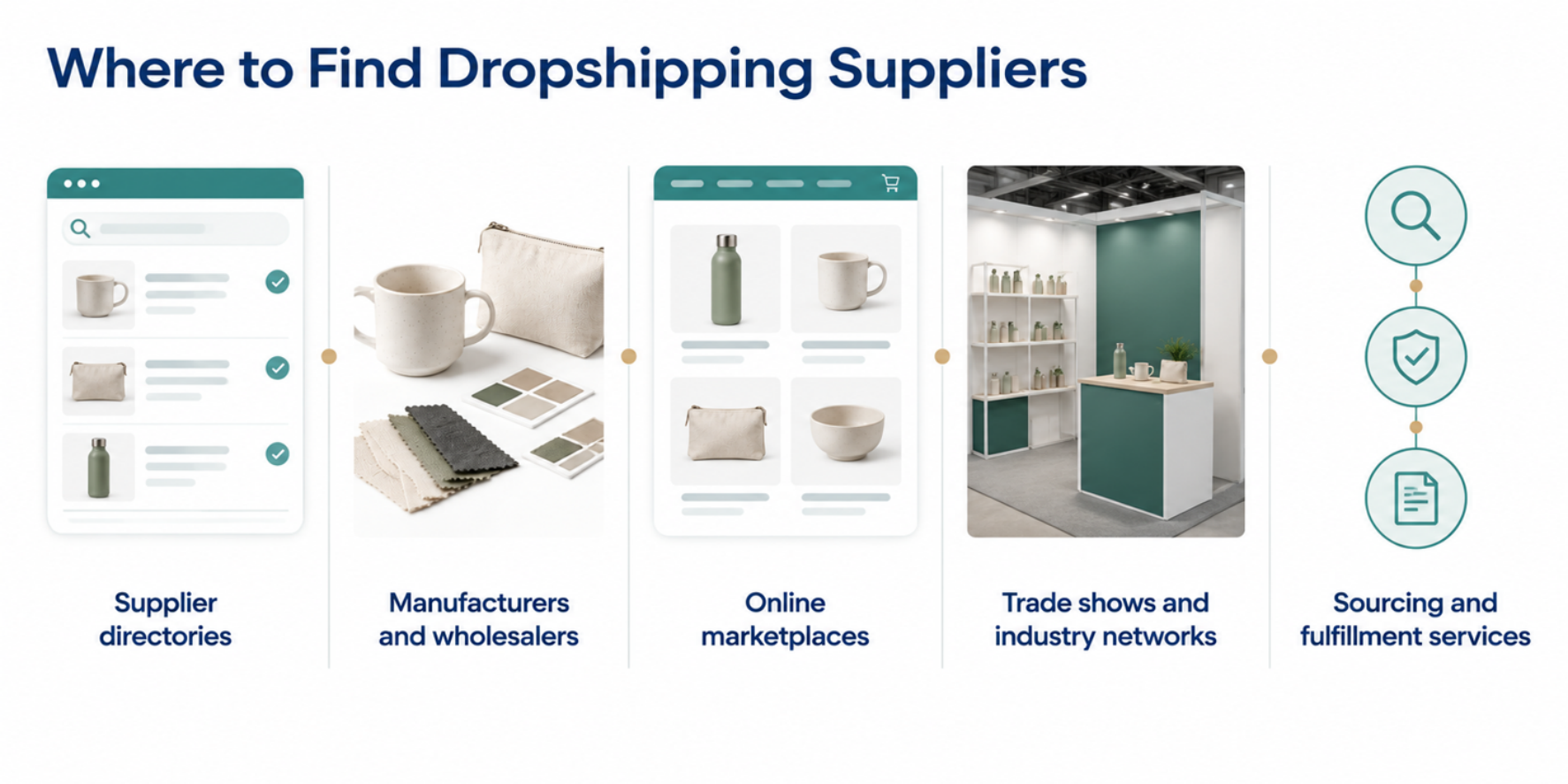
Find Suppliers Through Trade Shows and Industry Networks
Trade shows and professional networks can help you discover suppliers in a specific industry, especially if you need specialized products or customization.
You may be able to inspect samples, ask detailed questions, and discuss production capabilities directly. Online trade events and industry communities can offer similar opportunities without the cost of traveling.
This approach can take more time than browsing an online marketplace. It is often most useful when product quality, customization, or long-term supplier relationships matter more than finding the largest possible product catalog.
Consider Dropshipping Sourcing and Fulfillment Services
Sometimes the challenge is not simply finding a supplier. It is managing product sourcing, quality checks, order processing, and shipping across several separate providers.
A sourcing and fulfillment service can help coordinate some or all of these steps, depending on its actual service scope.
For example, TeemDrop combines product sourcing, quality control, and order fulfillment services, giving sellers an option beyond sourcing products from individual supplier listings. The ai dropshipping platform may suit businesses that want to coordinate several operational steps through one service provider.
This option may suit sellers sourcing products from China or coordinating international order fulfillment. Before choosing a service provider, confirm its actual service scope, supported store integrations, shipping options, and applicable costs.
How to Choose the Best Dropshipping Supplier Channel
Not every sourcing channel fits every dropshipping business. Choose your starting point based on your priorities rather than assuming one method works for everyone.
| Your Priority |
Channel to Consider |
What to Check |
| Broad product selection |
Online marketplaces |
Seller reliability and shipping options |
| Direct product sourcing |
Manufacturers and wholesalers |
MOQ, customization, and payment terms |
| Finding multiple candidates |
Supplier directories |
Listing quality and membership costs |
| Specialized products |
Trade shows and industry networks |
Product expertise and production capabilities |
| Coordinated sourcing and fulfillment |
Sourcing service providers |
Service scope, fees, and order workflow |
For example, a beginner selling standard consumer products may prefer a marketplace because it offers an accessible way to explore different items. A seller developing customized products may benefit more from contacting manufacturers directly.
If your main concern is managing purchasing, dropshipping quality control, and international shipping, compare service providers that can support these steps together.
How to Compare Dropshipping Suppliers
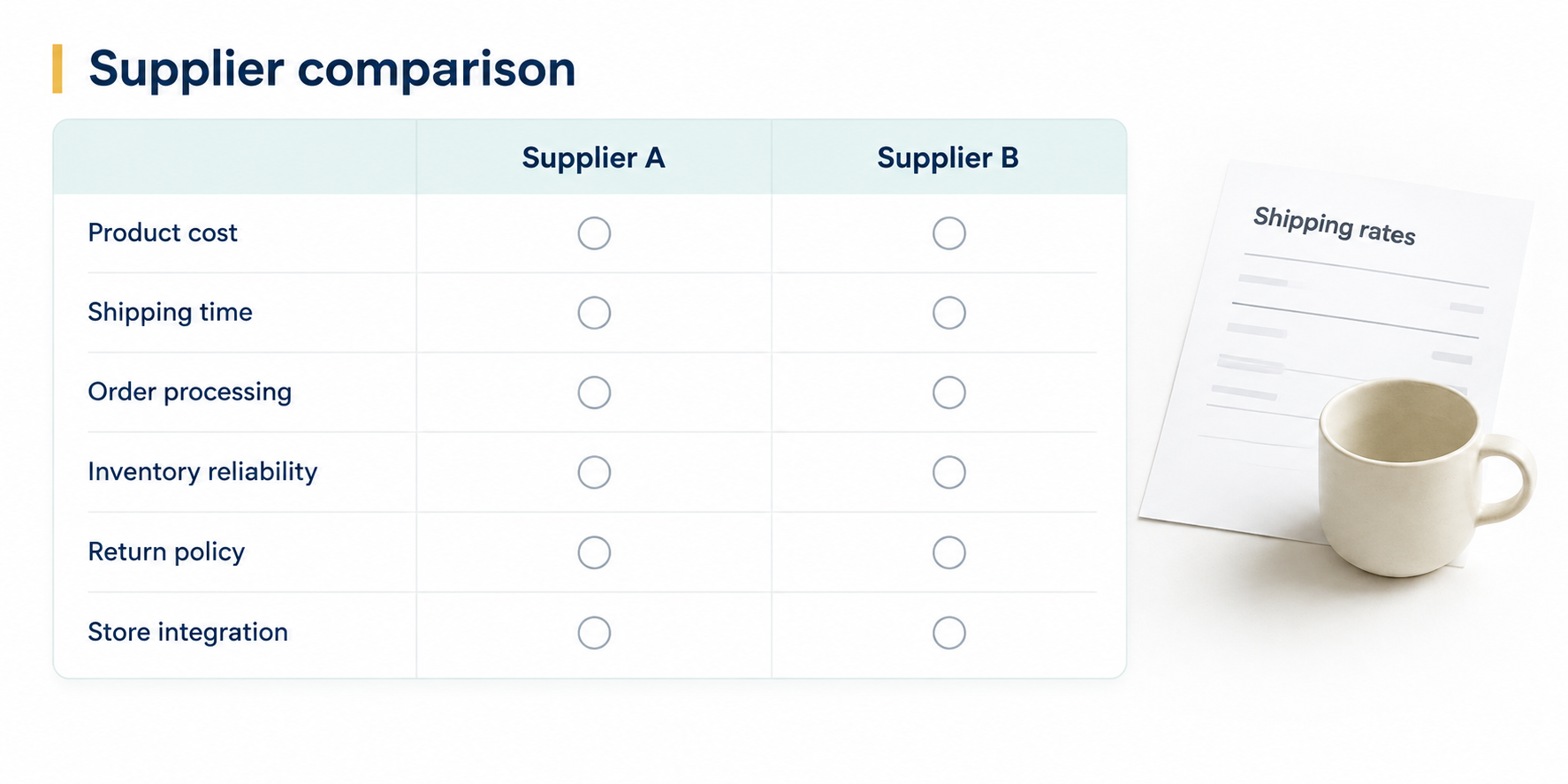
Once you have a shortlist, compare suppliers using the same criteria. This makes it easier to identify differences that could affect your margins and customer experience.
| Comparison Factor |
What to Record |
| Product cost |
Unit price and possible price changes |
| Shipping |
Shipping fee, dispatch location, and estimated delivery time |
| Processing |
Average time between order placement and dispatch |
| Inventory |
Stock update frequency and stockout handling |
| Minimum order |
MOQ or single-item order availability |
| Returns |
Conditions for damaged products, refunds, and returns |
| Integration |
Supported store platforms and order automation |
Compare Dropshipping Supplier Costs and Fees
A low product price does not always mean a low total cost.
Check the product price, shipping charges, packaging costs, service fees, and any applicable subscription or transaction fees. If customization, special handling, or returns may be required, ask how those costs are calculated.
Calculate your estimated cost per order before deciding whether a supplier fits your pricing strategy.
Also, distinguish between a platform subscription and charges for actual services or orders. TeemDrop states that it does not charge monthly subscription fees, while product and shipping costs still apply. Its dropshipping fulfillment pricing provides details about its pricing approach.
Compare Dropshipping Shipping Times and Processing
Shipping speed affects customer expectations, reviews, and repeat purchases.
Ask suppliers about:
- The actual warehouse or dispatch location.
- Average order processing time.
- Available shipping methods and estimated transit times.
- Tracking availability and update frequency.
- Delivery restrictions for your target countries.
Do not confuse processing time with transit time. A supplier might dispatch an order quickly while the carrier still takes several days or weeks to deliver it.
If you sell to customers in the United States or Europe, compare the available routes and delivery estimates for those destinations. TeemDrop's global dropshipping delivery services are one option to evaluate when comparing international fulfillment arrangements.
Check Supplier Inventory and Store Integration
A suitable supplier should have a product range that matches your store and a clear process for handling inventory changes.
Ask how often stock information is updated and what happens when a product becomes unavailable. If you plan to automate order processing, confirm whether the supplier or service supports your store platform and the workflow you need.
Dropshipping auto fulfillment can reduce manual work, but automation alone does not guarantee accurate inventory or successful delivery. Check how orders, tracking details, and stock updates move between systems.
Check Communication and Return Policies
Contact potential suppliers before committing. Ask practical questions about damaged items, incorrect orders, missing packages, and returns.
A reliable business partner should provide clear answers about its responsibilities and procedures. Keep important agreements in writing so you can refer to them if a problem occurs.
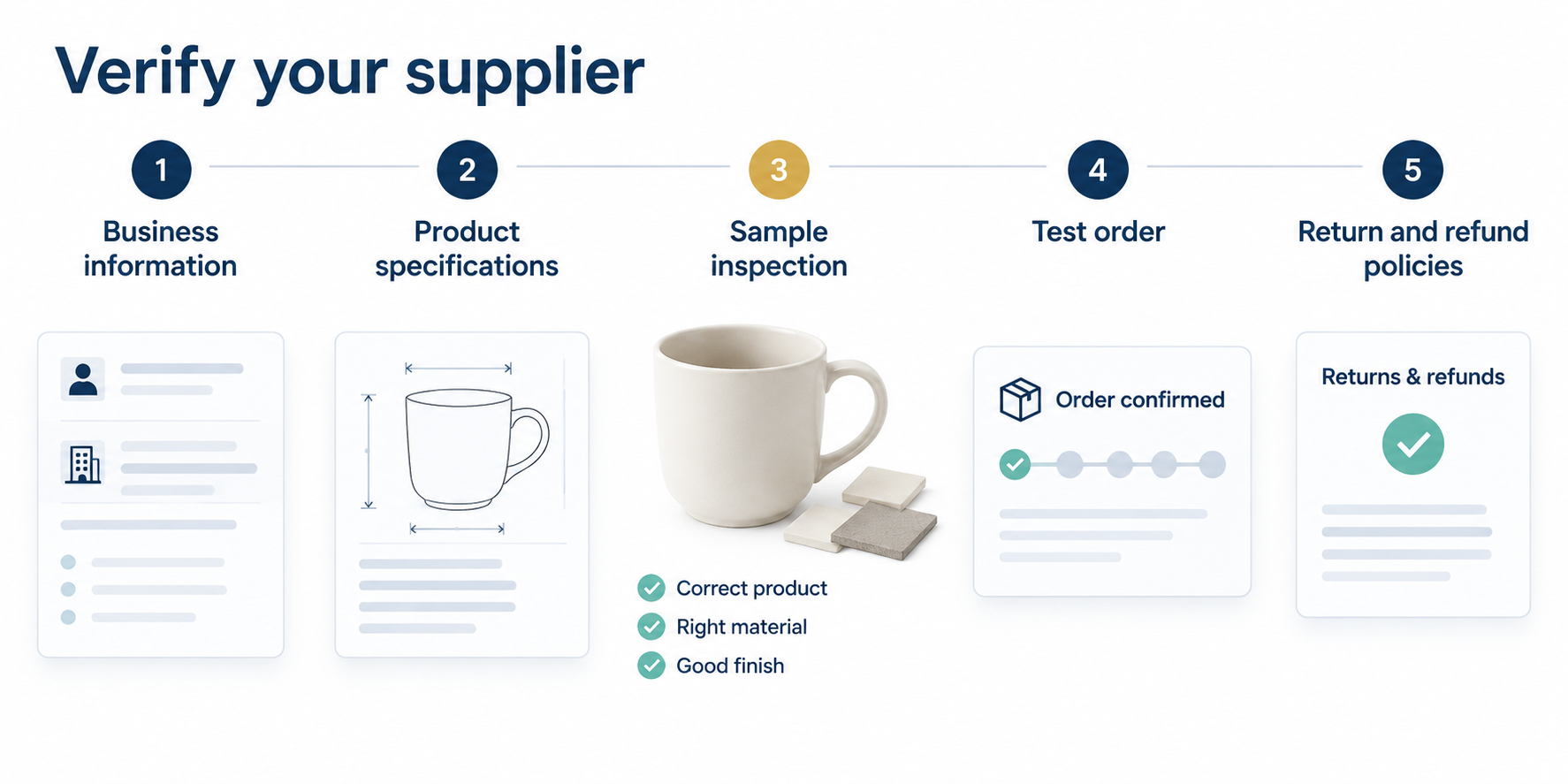
How to Evaluate and Verify a Dropshipping Supplier
After comparing candidates, verify the suppliers that look most suitable. Do not rely only on product photos, marketplace ratings, or sales promises.
Use this simple process:
- Check business information. Verify the supplier's identity, contact details, and available business records.
- Review product details. Confirm materials, dimensions, specifications, and any relevant compliance requirements.
- Consider ordering a sample. Inspect the actual product before offering it to customers.
- Test fulfillment. Where practical, place a test order to check processing, packaging, tracking, and delivery.
- Confirm policies. Get clear answers about stockouts, returns, damaged items, and refunds.
These checks help you assess supplier reliability before customer orders depend on the supplier. Understanding dropshipping supplier quality can also help you compare supplier models and choose the options that best fit your business needs.
Common Mistakes When Finding Dropshipping Suppliers
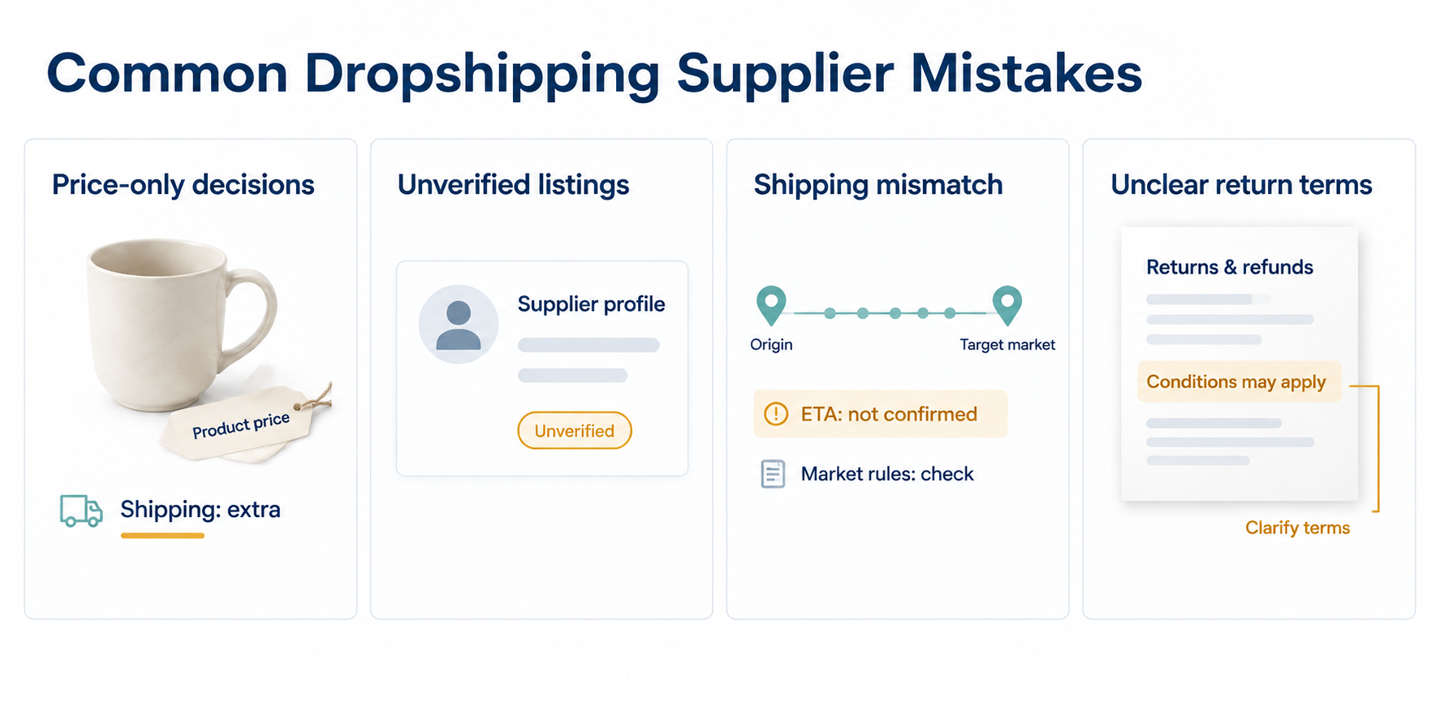
Even when you know where to look, a few common mistakes can make supplier selection harder.
- Choosing based only on price: A cheap product may come with expensive shipping or unreliable fulfillment.
- Trusting every listing: A platform listing or positive review does not replace your own checks.
- Ignoring the target market: A supplier may not offer suitable shipping routes or delivery times for your customers.
- Skipping written terms: Unclear policies can cause disputes over refunds, damaged goods, and missing orders.
- Relying on one supplier: Having a backup option can reduce disruption if stock becomes unavailable.
- Ignoring product compliance: Check applicable safety, labeling, and intellectual property requirements before selling.
A careful selection process may take longer initially, but it can help prevent avoidable problems after your store starts receiving orders.
Dropshipping Supplier Selection Checklist
Before choosing a supplier, confirm that you can answer these questions:
- Does the product fit my store and target market?
- Can I verify the supplier's business information?
- Are product prices and additional costs clear?
- Do I understand the actual dispatch location and shipping timeline?
- Is there a clear process for stock changes?
- Are returns, refunds, and damaged orders covered by written policies?
- Have I checked product quality and fulfillment claims where practical?
- Do I have a backup supplier or alternative sourcing option?
If several important questions remain unanswered, continue comparing suppliers before committing.
FAQs
How can beginners find dropshipping suppliers?
Beginners can start with online marketplaces, supplier directories, manufacturer websites, and sourcing service providers. Define your product and target market first, then compare several candidates instead of choosing the first supplier you find.
Can you find free dropshipping suppliers?
Yes. You can search for suppliers through free online resources, and some platforms offer free registration. However, free access does not mean products, shipping, or fulfillment services are free. Always check the actual costs before placing orders.
How do I find a supplier for a specific product?
Search using the product name alongside terms such as manufacturer, wholesale supplier, or dropshipping supplier. Compare sellers and confirm they can ship individual orders to your customers.
Should I order samples before choosing a dropshipping supplier?
Ordering samples is useful when product quality, materials, sizing, or packaging could affect customer satisfaction. For important products, consider a test order as well, because a sample alone does not verify the supplier's normal fulfillment process.
Can I work directly with manufacturers for dropshipping?
Yes, some manufacturers support dropshipping, but others require bulk purchases or minimum order quantities. Ask about single-item fulfillment, inventory availability, packaging, shipping, and payment terms before agreeing to work together.
Final Thoughts
Finding the right dropshipping suppliers involves more than comparing product prices. You need a sourcing channel that fits your business, suppliers that meet your requirements, and a fulfillment process that supports your customers.
Start by comparing several suppliers, calculating the full cost per order, and verifying important claims before committing. As your store grows, review supplier performance regularly and keep alternative sourcing options available.
If you need support with product sourcing, quality control, and order fulfillment, compare TeemDrop's dropshipping sourcing and fulfillment services with your business requirements, target markets, and budget.
References
[1] Shopify Help Center. Choosing suppliers.
https://help.shopify.com/en/manual/products/dropshipping/creating-a-product-line/choosing-suppliers
[2] Alibaba.com Buyer Central. How Sourcing on Alibaba.com Works.
https://buyer.alibaba.com/page/how_it_wroks.html