How Much Does It Cost to Start Dropshipping in 2026?
Starting a dropshipping business has never been more accessible—but one question still comes up again and again: how much does it actually cost to get started?
The short answer:
Most beginners spend anywhere from $0 to $2,000+, depending on their strategy, tools, and growth goals.
Some sellers start with almost no budget using organic traffic, while others invest in paid ads and automation tools to scale faster. It's not really about the total you spend — it's about using that money the smart way.
In this guide, we'll go through the real dropshipping costs, check out a few different budget setups, and help you figure out exactly how much you need to start in 2026.
The Real Cost of Starting a Dropshipping Business
One of the biggest misconceptions is that starting a dropshipping business is completely free.
You don't need to buy inventory upfront, but that doesn't mean there are zero costs.
So, does dropshipping cost money?
Yes, but significantly less than traditional ecommerce.
Here's why:
- No inventory investment
- No warehouse or fulfillment costs
- Lower operational risk
However, you'll still need to invest in:
- Store setup
- Marketing
- Tools and automation
- Payment processing
In other words, dropshipping is low-cost, not no-cost.
Understanding this distinction is important, especially if you're asking how much money do I need to start dropshipping and want realistic expectations.
Dropshipping Startup Cost Breakdown
To give you an accurate picture, we need to dissect every potential expense you will encounter before making your first sale. Here is a granular look at the core components of your startup budget.
Ecommerce Platform Costs
Your e-commerce platform is the foundation of your business. It is where you build your site, manage product listings, and process customer orders.
Shopify (Subscription Model)
If you are wondering how much money you need to start Shopify dropshipping specifically, you are looking at a predictable recurring expense.
- Monthly fee: ~$39 per month for the basic plan.
- Transaction fee: 2% if you choose a third-party gateway instead of Shopify Payments.
- Hidden cost: Premium themes and necessary paid apps that add up quickly.
WooCommerce (Self-Hosted Model)
- Monthly fee: $0 (the WordPress plugin is free), but you must pay for web hosting.
- Transaction fee: Varies entirely by your chosen payment gateway.
- Hidden cost: Developer fees or technical headaches if you lack the skills to fix website bugs yourself.
eBay (commission-based)
- Monthly fee: Usually free to start (optional store subscription available)
- Transaction fee: Final value fee per sale
- Hidden costs: Listing upgrades, promoted listings (ads)
This option lowers the barrier to entry, but you give up a portion of each sale and may need to spend on visibility to stay competitive.
Domain & Hosting
It is a small expense, but crucial for your brand's SEO completeness and professionalism. You cannot build a trustworthy asset on a free platform subdomain. A custom .com domain typically runs between $10 and $20 per year. If you choose a self-hosted route like WooCommerce, you will also need reliable web hosting, which adds $5 to $30 a month. This is a low-cost, non-negotiable step to look legitimate to your customers.
Dropshipping Tools & Automation
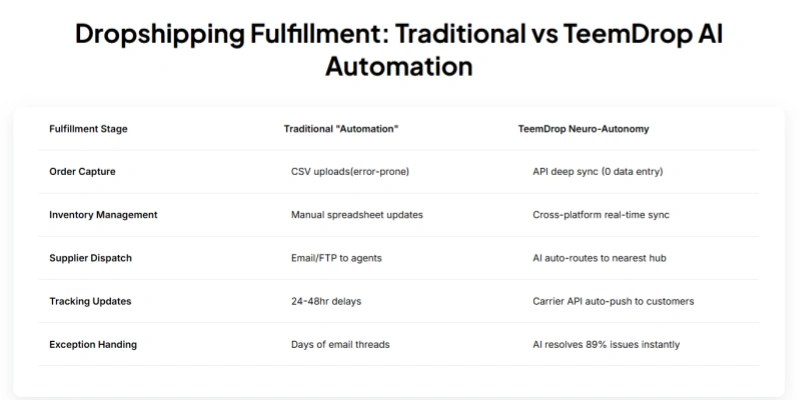
You can technically run a store without tools—but it gets messy fast.
At the beginning, manual work might be manageable. But once orders start coming in, things slow down quickly if you're doing everything yourself.
Manual setup:
- Placing orders one by one
- Updating inventory manually
- Higher chance of mistakes
With automation:
- Orders are processed faster
- Inventory updates automatically
- Much easier to scale
At the beginning, it's pretty normal to use a few different tools and handle things manually. It works fine when you don't have many orders.
But once things start picking up, it gets harder to keep everything in sync—orders, inventory, suppliers. That's usually when people realize the setup isn’t very efficient anymore.
Instead of juggling everything separately, a lot of them switch to something more integrated, like TeemDrop, where sourcing, fulfillment, and product management are all in one place. It makes the day-to-day stuff way simpler, especially as the store grows.
Product Costs & Supplier Fees
This is where dropshipping has a clear advantage.
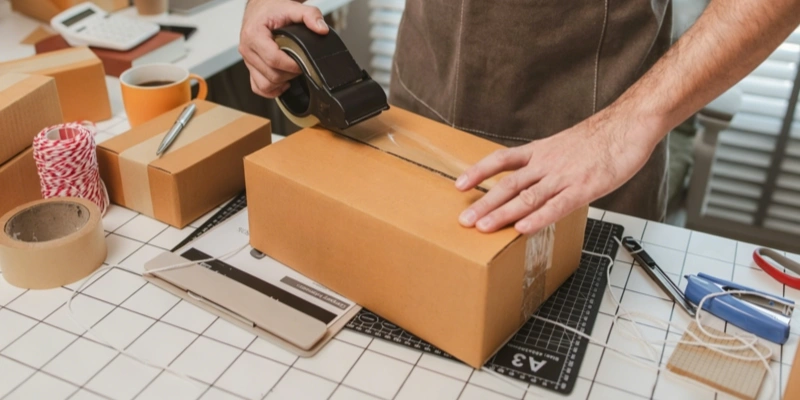
You don’t need to buy inventory upfront. You only pay for a product after someone places an order.
That said, there are still a few costs to expect:
- Ordering samples to check quality
- Testing different suppliers
- Occasionally paying for better sourcing options
The entry cost is low—but it's not zero. The entry cost is low—but it’s not zero. Even though inventory isn't required upfront, major platforms like Amazon emphasize that you are still ultimately responsible for the customer experience, making it crucial to order samples to check product quality and shipping reliability before scaling [1].
A simple way to look at it:
Low upfront, but not completely free.
Marketing & Advertising Costs
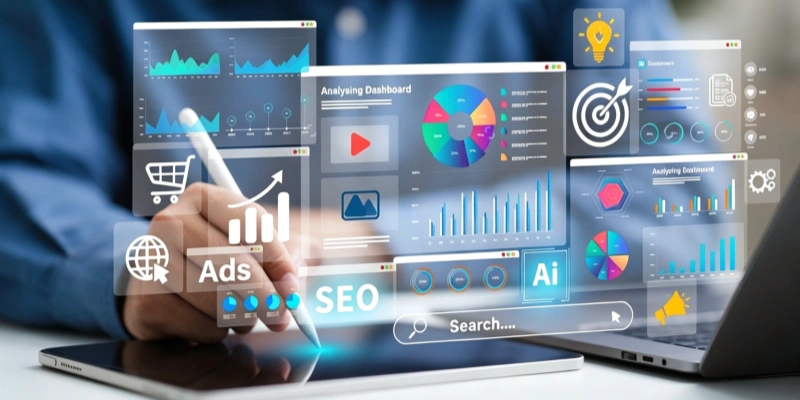
This is usually the biggest expense. Official Shopify guides point out that because dropshipping requires minimal upfront inventory investment, advertising and marketing usually become your primary financial focus when testing products against other retailers selling similar items [2].
You have three main approaches:
1. Organic Marketing (Free)
- TikTok content
- Instagram Reels
- SEO
Cost: $0
Time investment: High
2. Paid Advertising
- Facebook Ads
- TikTok Ads
- Google Ads
Cost:
$5–$50/day (testing phase)
This is where most of your budget will go if you want faster results.
3. Influencer Marketing
- Product seeding
- Paid promotions
Cost varies widely depending on influencer size.
Payment Processing Fees
This is one of those costs people forget about.
Every time you make a sale, there's a fee:
- Around 9% + $0.30 per transaction
It doesn't feel like much at first, but over time it adds up. It's not really part of your startup budget—but it does affect how much you keep.
Shipping, Taxes & Hidden Costs
This is where things can catch people off guard.
Some common hidden costs include:
- Shipping fees (especially international orders)
- Returns and refunds
- Taxes depending on where you sell
- Currency conversion fees
For example, international shipping can easily hit $10–$20 per order, and taxes can range from around 4% to 10% in some regions.
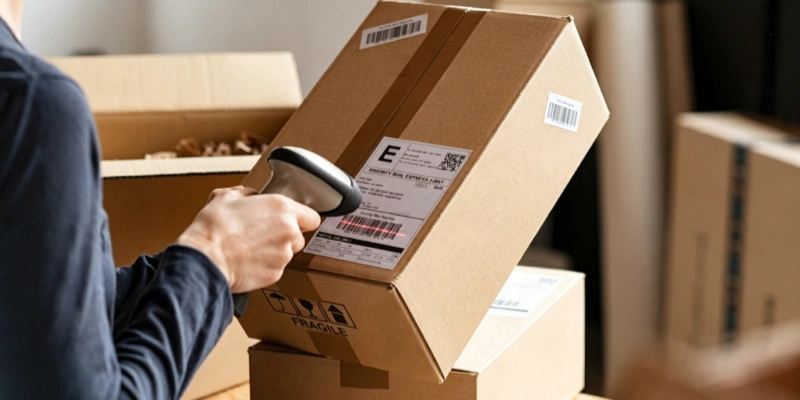
Logistics experts at FedEx note that hidden costs like unexpected shipping fees, platform charges, and returns are notorious for significantly lowering your actual profit margin per sale if not planned for properly [3].
Overall, dropshipping costs are still much lower than traditional ecommerce. But they're made up of a lot of smaller pieces.
The difference between a profitable store and a struggling one often comes down to how well you manage these details—not just how much you spend.
Dropshipping Startup Budget: How Much Do You Really Need?
Now let's answer the real question:
How much money do you need to start dropshipping?
Instead of a single number, it's better to look at different scenarios.
Starting with $0 (Free Method)
This is the "no budget" approach most beginners try first.
Typically, it looks like this:
- Posting short-form content on TikTok
- Driving traffic organically
- Selling through marketplaces like eBay
- Handling orders manually
Pros:
- No financial risk
- Easy to get started
Cons:
- Takes time to see results
- Hard to scale consistently
This approach works if you’re just testing things out or don't want to spend money up front. But it's slow, and results are less predictable.
Budget Setup ($500–$1,500)
This is where most people start once they're serious about building a store.
A typical setup includes:
- A Shopify store
- A domain
- A few essential tools
- A budget for testing ads
Most of the money usually goes into ads, not the store itself.
Pros:
- Faster product testing
- More control over traffic
- Easier to scale if something works
Cons:
- Requires upfront investment
- You need to manage your budget carefully
This range—around $500 to $1,500—is considered a practical starting point. It gives you enough room to test products properly without overspending.
Aggressive Scaling ($2,000+)
This is for people who want to move faster and are ready to take on more risk.
At this level, the focus shifts from "starting" to "scaling":
- Testing multiple products at the same time
- Increasing ad spend quickly
- Using more advanced tools
Pros:
- Faster results if you find a winning product
- More data to make decisions
Cons:
- Higher risk if products don't perform
- Easier to lose money without experience
This approach is usually better for sellers who already understand how ads and product testing work.
Can You Start Dropshipping for Free?
The short answer is yes—you can start dropshipping without spending money.
Many beginners begin with organic traffic, especially on platforms like TikTok, or by selling through marketplaces like eBay. This approach removes most upfront costs and lets you test the model without financial pressure.
However, "free" usually comes with trade-offs.
You'll likely be doing everything manually, from product research to order fulfillment. Growth also tends to be slower since you're relying on organic reach instead of paid traffic.
If you're looking for a detailed breakdown, this guide on how to start a dropshipping business for free walks through the exact steps beginners can follow to get started without upfront investment.
In reality, starting for free is a good way to learn, but most stores eventually require some level of investment to grow consistently.
How to Reduce Your Dropshipping Startup Costs
Keeping costs low at the beginning isn't about cutting everything—it's about spending in the right places and avoiding unnecessary tools or risks.
Here are a few practical ways to do that.
1. Start with Organic Traffic
Ads can burn through your money really fast, especially while you're still testing products. If your budget is tight, it makes way more sense to begin with organic traffic. Posting consistently on TikTok or Instagram can bring in visitors without spending a dime upfront. It’s slower, sure, but it gives you time to figure out what actually sells before you start throwing money at ads.
2. Use All-in-One Platforms
A lot of beginners miss this one at first, but stacking too many tools quietly eats up your budget. Each app might seem cheap on its own, but it all adds up—especially when you’re barely using half the features.
That's why a lot of sellers keep it simple and switch to platforms like TeemDrop that handle sourcing, fulfillment, and orders all in one place. It saves money and makes life way easier once the orders start rolling in.
3. Test Before Scaling
It's easy to get excited and spend too much too early.
Instead of going all in on one product, start small. Test a few options, see what gets traction, then put more budget behind what’s working. This way, you’re not risking too much on something unproven.
4. Avoid Tool Stacking
More tools don't necessarily mean better results.
In fact, too many tools usually just mean more costs and more complexity. It also makes things harder to manage once orders start coming in.
Keeping your setup simple in the beginning makes a big difference. As you grow, you can always add what you actually need—but most stores don’t need five different apps on day one.
Is Dropshipping Worth the Cost in 2026?
The ecommerce landscape is more competitive—but also full of opportunities if you approach it the right way.
So a lot of people end up asking: Is dropshipping worth it in 2026?
The short answer is yes—but only if you treat it like a real business, not a quick win.
Dropshipping is still attractive because:
- Low barrier to entry
- Flexible business model
- Can scale if you find the right setup
That said, results don't come automatically.
What actually makes a difference is:
- Product selection
- How you handle marketing
- How well you control your costs
So when people ask how much it costs to open a shop that actually makes money, it's not just about the budget.
It comes down to how you use it.
Final Thoughts
How much money do you need to start dropshipping in 2026?
It depends on your approach:
- $0 → Slow, organic growth
- $500–$1,500 → Balanced, recommended
- $2,000+ → Fast scaling
The real takeaway is this:
Dropshipping success isn't about spending more—it's about spending smarter.
If you can keep your costs under control and avoid unnecessary spending early on, you don't need a big budget to get started.
What matters more is having a setup that you can actually manage as things grow. A lot of sellers start with wholesale dropshipping, then gradually switch to more efficient systems once they have consistent orders.
That's usually when tools like TeemDrop start to make more sense—less about adding features, and more about keeping everything running smoothly as you scale.
FAQ
Can you start dropshipping with no money?
Yes, you can. Just go the organic route with TikTok or marketplaces. The catch is that growth will be way slower than when you use paid ads.
Is $100 enough to start dropshipping?
It’s possible, but you’ll be pretty restricted. You'll probably run into problems with ads, tools, and testing. Most beginners are better off starting with at least $500.
What is the average dropshipping startup cost?
Most beginners spend between $500 and $1,500. That usually covers setting up the store, grabbing the tools you need, and some initial marketing.
References
[1] Amazon — What is dropshipping?
https://sell.amazon.com/learn/what-is-dropshipping
[2] Shopify — How To Start a Dropshipping Business: 9 Essential Steps
https://www.shopify.com/blog/how-to-start-dropshipping
[3] FedEx — Pros and Cons of Dropshipping: A Guide for Online Business
https://www.fedex.com/en-kr/small-business/streamline-operations/dropshipping-pros-and-cons.html