Can You Start Amazon Dropshipping with No Money? A Beginner's Guide
Starting an online business can be expensive when you need to purchase inventory before making your first sale. This is why Amazon dropshipping appeals to beginners: suppliers store and ship products after customers place orders, reducing the need for upfront inventory investment.
But can you really start an Amazon dropshipping business without money? Not entirely. You still need to cover selling fees, supplier payments, shipping, and potential refunds.
In this guide, we explain how to start with a small budget, find reliable suppliers, and manage the costs of running an Amazon dropshipping business.
Quick Answer: Can You Start Amazon Dropshipping Without Money?
Amazon dropshipping can reduce upfront costs because you do not need to buy inventory in bulk. However, you still need funds for selling fees, supplier payments, shipping, and refunds. Reliable suppliers and enough working capital are essential for starting sustainably.
How to Dropship on Amazon Without Money
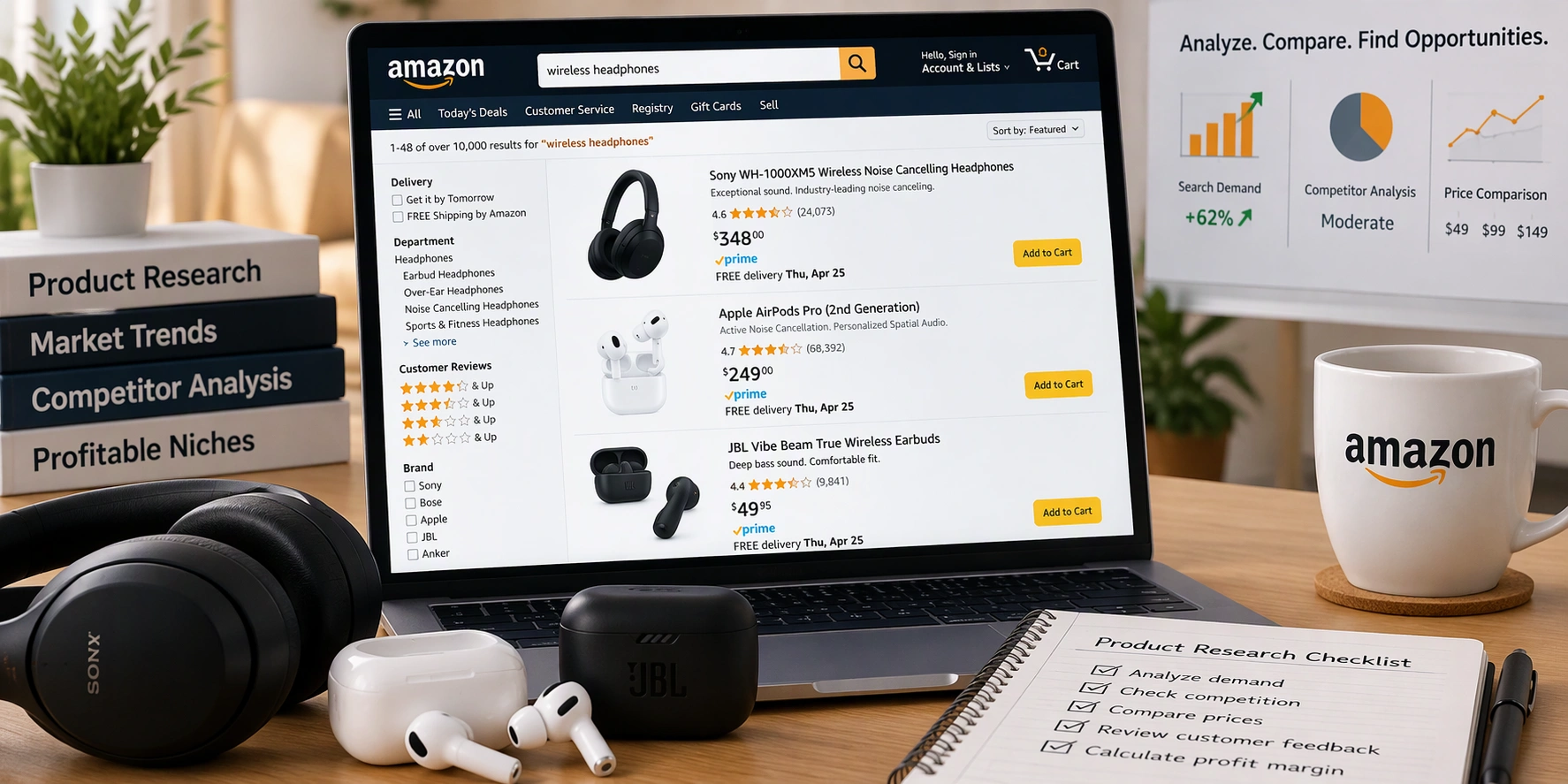
If you want to understand how to start dropshipping for free on Amazon, focus on reducing unnecessary costs rather than expecting to spend nothing. These seven steps can help you build a more practical starting plan.
Step 1: Research Products for Your Amazon Dropshipping Business
Start by looking for products with steady demand, manageable competition, and enough profit margin after expenses. You don't need expensive research tools at the start. Try these free resources:
- Amazon Best Sellers: Review popular products and categories to understand current demand.
- Amazon search suggestions: Find related searches and product ideas.
- Customer reviews: Identify common complaints about product quality, size, or usability.
- Google Trends: Compare search interest and check for seasonal demand.
Before choosing a product, calculate its selling price, supplier cost, shipping, Amazon referral fee, and other expenses.
For example, if a product sells for $25, costs $14 including shipping, and has $4 in Amazon fees, only $7 remains before advertising, refunds, and other expenses.
Focus on products with reliable supply and realistic profit potential rather than popularity alone. You can also research winning dropshipping products and compare potential products with their sourcing costs before making a decision.
Step 2: Find Reliable Amazon Dropshipping Suppliers
Your supplier has a direct impact on product quality, shipping speed, and customer satisfaction. A low product price is not useful if orders arrive late or customers receive the wrong items.
You can look for suppliers through several channels:
- Manufacturers and wholesalers: Contact businesses that supply products directly.
- B2B marketplaces: Compare product prices and supplier information across different sellers.
- Dropshipping platforms: Use platforms that help sellers find products and manage fulfillment.
- Sourcing and fulfillment partners: Work with a service provider that can source products, check quality, and arrange shipping.
If you are sourcing products from China, marketplaces such as 1688 and Taobao offer access to a wide range of products. However, finding a product on a marketplace does not automatically mean the seller is ready to fulfill Amazon orders.
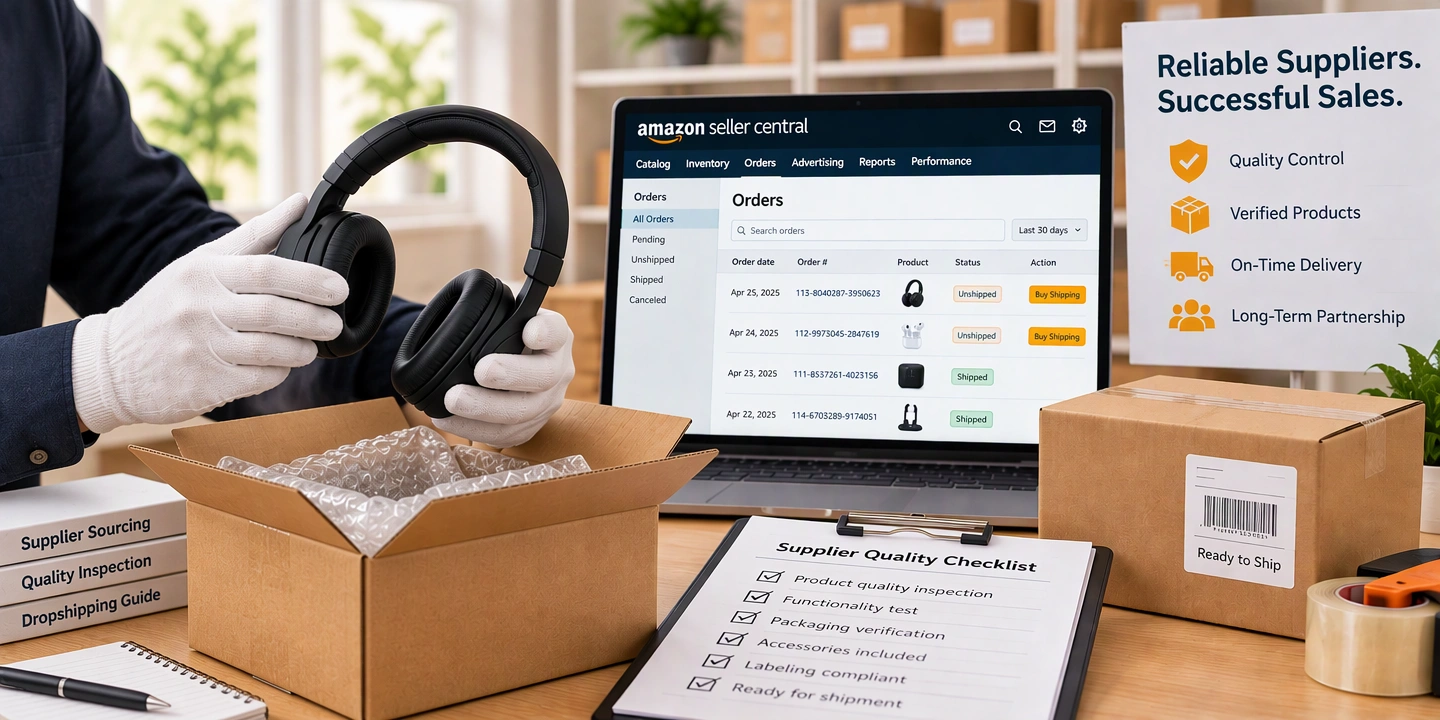
Before choosing a supplier, check:
- Product quality: Request samples or arrange product inspections.
- Processing time: Confirm how quickly orders can be prepared.
- Shipping performance: Check available shipping methods and estimated delivery times.
- Inventory stability: Ask how stock levels are updated.
- Packaging requirements: Confirm that shipments can follow Amazon's dropshipping policy.
- Returns and refunds: Understand how damaged, incorrect, or delayed orders are handled.
Amazon's seller-of-record policy is especially important when choosing a supplier. You must remain the seller of record, and your supplier must agree to remove third-party seller information from packing slips, invoices, and external packaging. You are also responsible for accepting and processing customer returns. [1]
TeemDrop helps sellers source products from 1688 and Taobao, coordinate product procurement, and arrange fulfillment. Its sourcing and quality control services can help sellers manage product selection and product checks before shipment. However, you should confirm that any supplier or fulfillment arrangement meets Amazon's packaging and seller identification requirements before using it.
When comparing Amazon dropshipping suppliers, evaluate their product quality, processing time, inventory accuracy, shipping options, and return policies rather than choosing based on price alone.
Step 3: Choose the Right Amazon Selling Plan
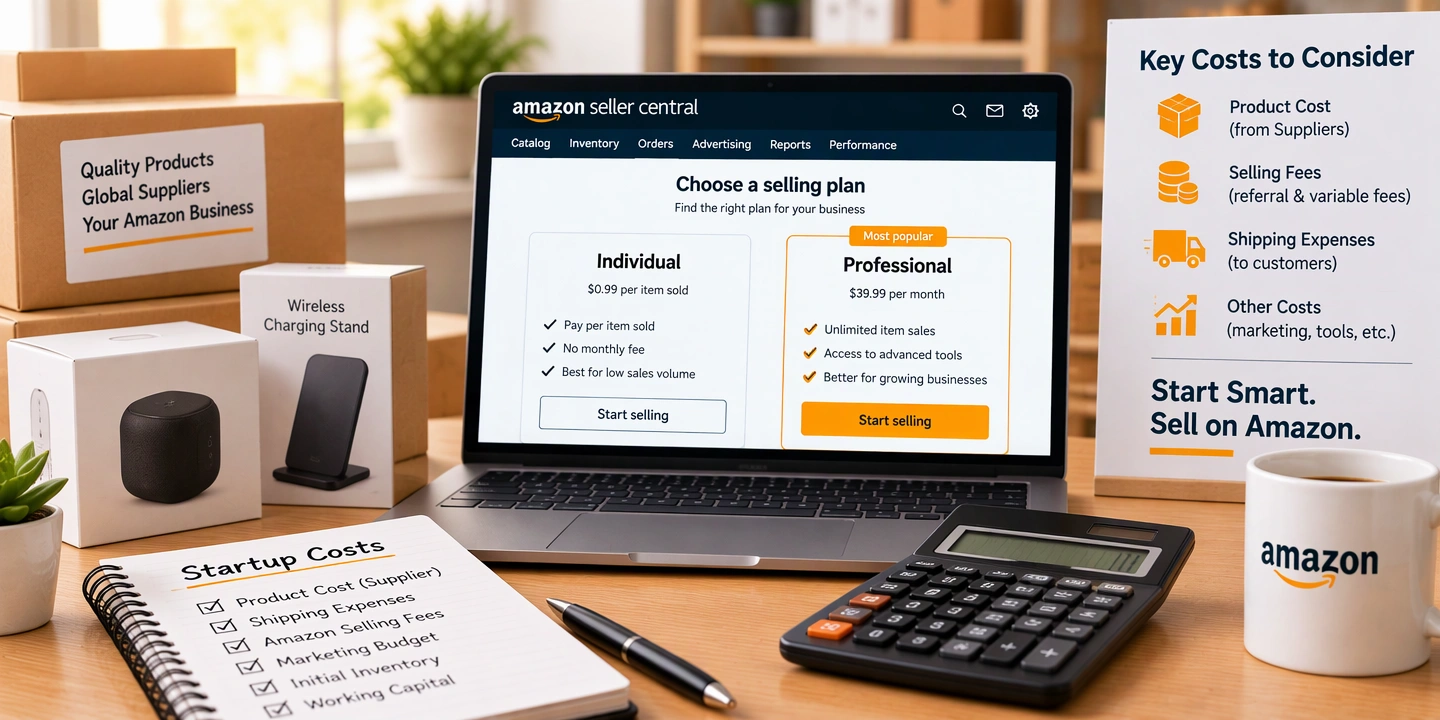
For sellers using the Amazon US marketplace, there are two main selling plans: Individual and Professional. Choosing the right plan can help you manage your initial selling costs.
| Selling Plan |
US Marketplace Cost |
Best For |
| Individual |
$0.99 per item sold, plus applicable selling fees |
Beginners with lower sales volume |
| Professional |
$39.99 per month, plus applicable selling fees |
Sellers who need advanced tools or expect higher sales volume |
The Individual plan does not charge a monthly subscription fee, making it a practical option for beginners who want to start small. The Professional plan has a fixed monthly fee and provides access to additional tools and features.
Both plans also have referral fees, which vary by product category. Optional services may create additional costs. Check Amazon's official selling plan and fee information before choosing a plan. [2]
Do not upgrade simply because other sellers recommend it. Compare the plan costs with your expected sales and the features you actually need.
Step 4: Create Optimized Amazon Product Listings
Once you have selected your products and suppliers, the next step is creating your Amazon listings.
Start by checking whether the product is eligible for sale in your chosen category. Some categories and products require approval, while others have additional restrictions.
If the product already exists in Amazon's catalog, you may be able to add your offer to the existing product page. You generally cannot freely change shared product details, such as the main title or images.
If you are creating a new listing, pay attention to:
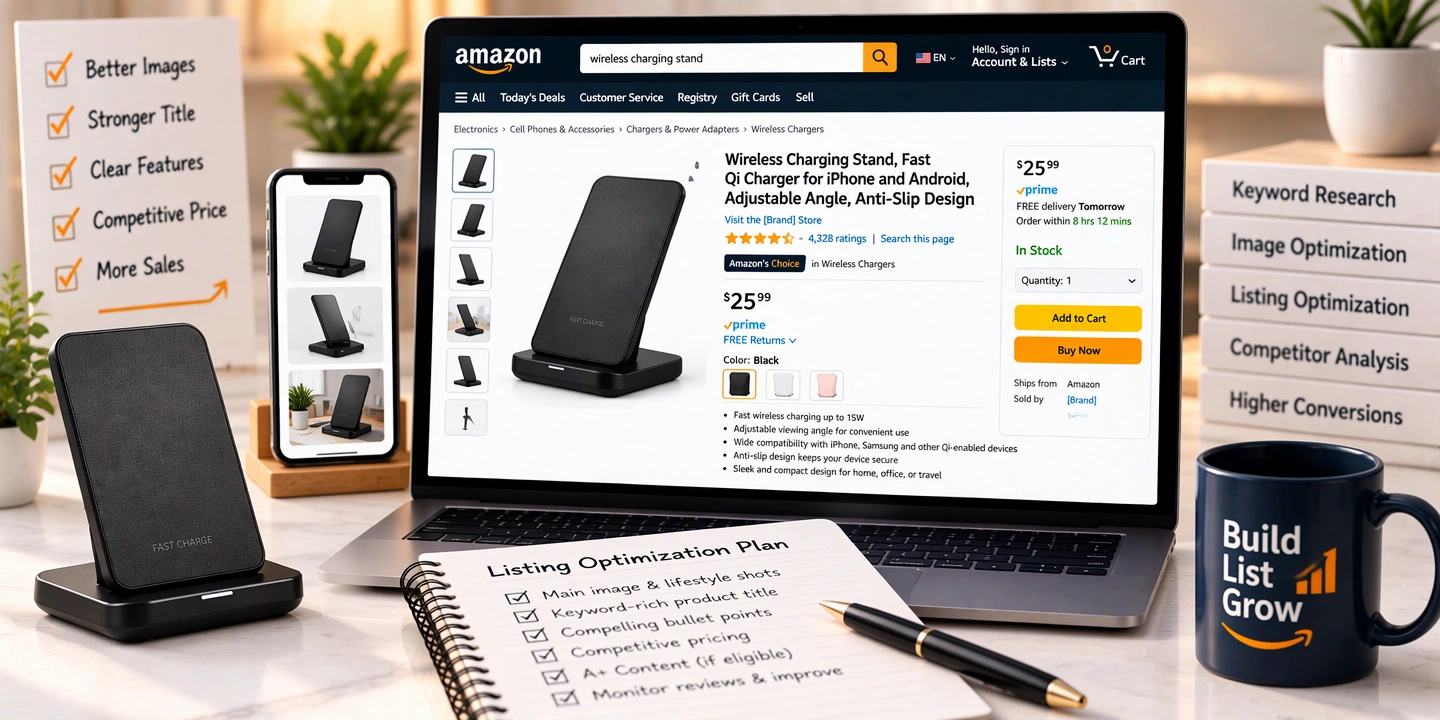
- Product titles: Clearly describe the product and include relevant search terms naturally.
- Product images: Use accurate, high-quality images that represent the actual item.
- Product descriptions: Explain the product's main features and practical benefits.
- Product attributes: Complete relevant information, such as size, color, material, and compatibility.
- Pricing: Include supplier costs, shipping, Amazon fees, and your target profit.
Accurate product information helps customers understand what they are buying and reduces avoidable order issues. Beginners can use Amazon Seller Central's basic listing tools instead of paying for additional software immediately.
Step 5: Promote Your Amazon Listings with a Limited Budget
A product listing does not guarantee sales. To improve its chances of attracting customers, focus on:
- Using relevant keywords naturally in titles and descriptions.
- Completing product attributes accurately.
- Setting competitive prices after calculating all costs.
- Maintaining reliable inventory and shipping information.
- Sharing listings through relevant social media channels.
Amazon Sponsored Products can provide additional visibility, but they require an advertising budget. If you use ads, start with a small budget and monitor performance.
Remember that search visibility, Featured Offer eligibility, and sales depend on several factors, including product relevance, price, availability, and seller performance.
Before choosing between FBA and supplier-based fulfillment, understand the differences between dropshipping on amazon and Amazon FBA, especially their inventory requirements and operating costs.
Step 6: Fulfill Amazon Orders Without Holding Inventory
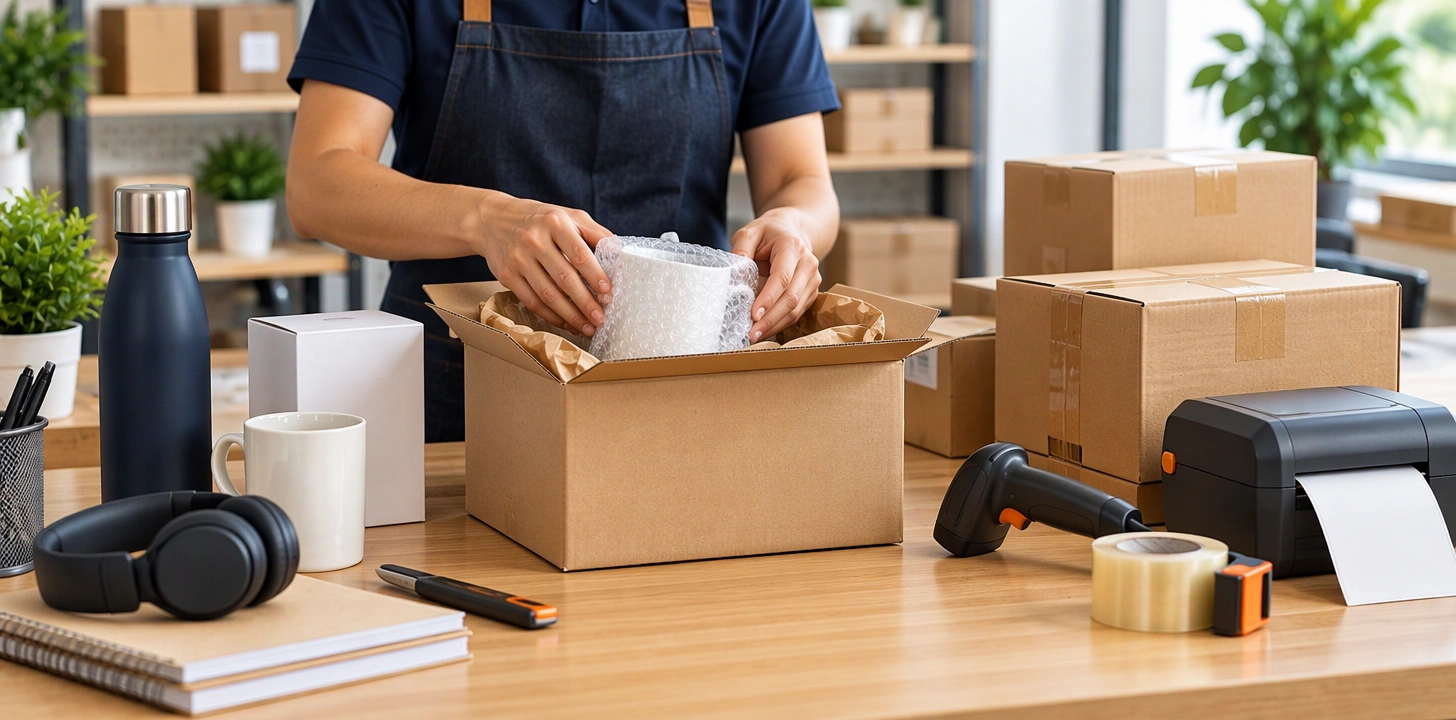
One major advantage of dropshipping on Amazon is that you do not need to store products yourself.
The basic order process works like this:
- A customer places an order on Amazon.
- You confirm the order and check supplier inventory.
- You send the purchase details to your supplier.
- You pay the supplier for the product and shipping.
- The supplier prepares and ships the order according to your requirements.
- You obtain valid tracking information and update the order in Amazon Seller Central.
You can manage these steps manually when you have only a few orders. However, manual processing becomes time-consuming as order volume increases.
A sourcing and fulfillment partner can help coordinate product purchasing, quality checks, order processing, and shipping. TeemDrop provides these services alongside global delivery options, helping sellers manage more of their supply chain through one platform.
Before using a fulfillment partner for Amazon orders, confirm that its packaging, seller identification, and shipping process meet Amazon's requirements. A supplier's standard shipping process is not automatically Amazon-compliant.
Step 7: Manage Amazon Customer Service and Returns
Even when suppliers handle product preparation and shipping, you remain responsible for the customer experience on Amazon.
This means you should:
- Respond to customer questions within Amazon's required timeframes.
- Monitor tracking information and investigate delivery delays.
- Contact suppliers when products arrive damaged or incorrect.
- Explain the return process clearly to customers.
- Process refunds according to Amazon's policies.
Do not assume that your supplier will handle every customer service issue. A supplier may help investigate product problems or arrange returns, but the Amazon seller remains responsible for meeting marketplace requirements.
Good customer service also helps you identify recurring supplier problems before they affect more orders.
Amazon Dropshipping Costs: How Much Money Do You Really Need?
Although how to dropship on Amazon without money is a popular search, it is more realistic to think in terms of low startup costs.
You may avoid buying inventory in bulk, but several expenses still need to be covered.
Amazon Dropshipping Startup Costs
| Cost |
What to Expect |
| Selling plan |
$0.99 per item sold or $39.99 per month |
| Referral fees |
Varies by product category |
| Product costs |
Paid to your supplier for each order |
| Shipping |
Depends on product, destination, and delivery method |
| Advertising |
Optional, depending on your growth strategy |
| Returns and refunds |
Money should be reserved for unexpected issues |
You can reduce expenses by starting with an Individual plan, using free research tools, and avoiding unnecessary paid software. However, do not ignore the costs that come with fulfilling orders.
Can You Pay Suppliers After Receiving Amazon Payments?
Not always. This is one of the most important cash flow issues for beginners.
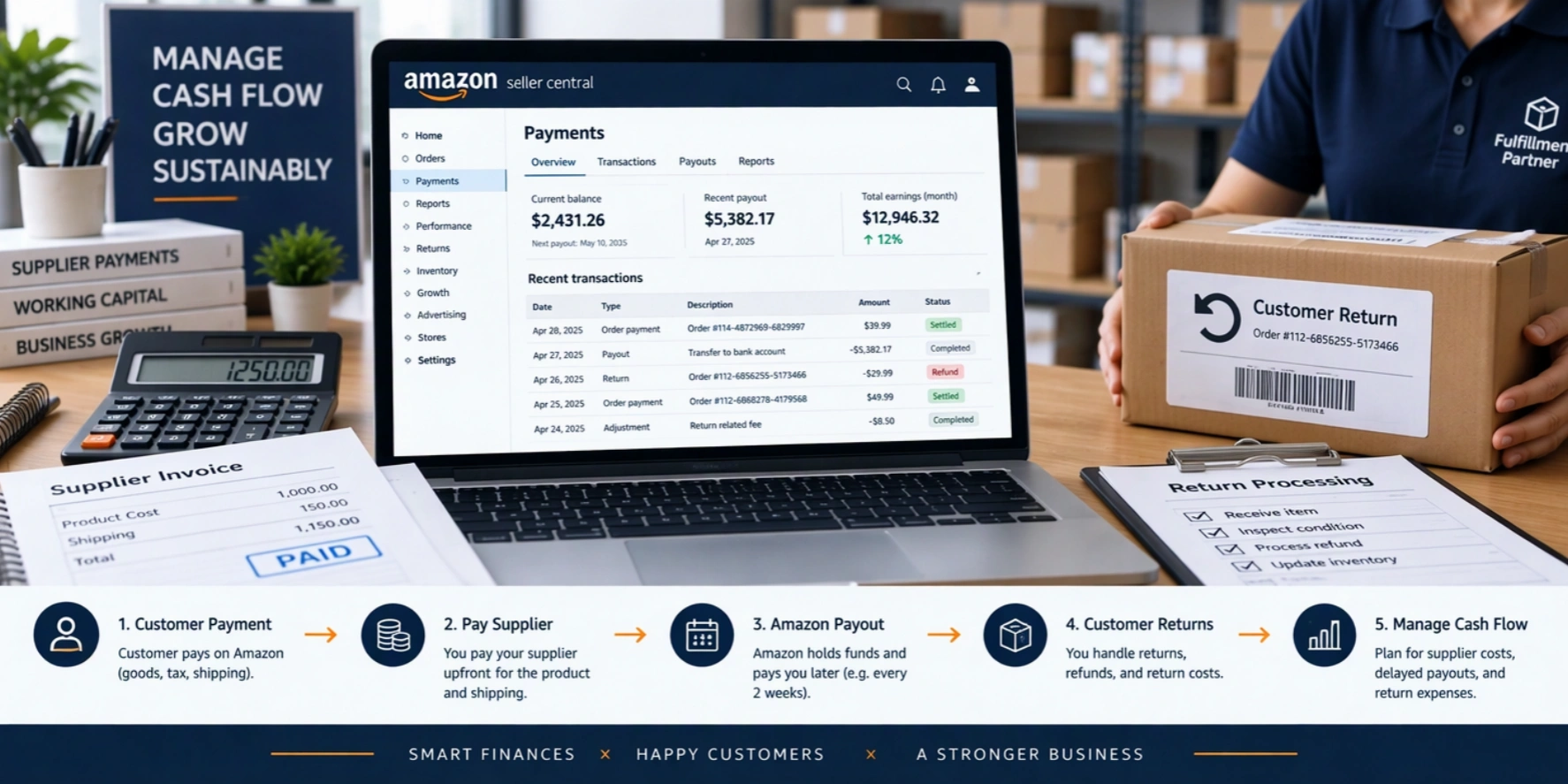
Amazon generally settles seller accounts every two weeks. After Amazon initiates a payment, it can take up to five business days for the money to appear in your bank account. Reserves and other adjustments may also affect the amount available. [3]
For example, imagine you receive five orders, and each product costs $15 including shipping. You may need $75 to pay your supplier before the corresponding Amazon payout reaches your bank account.
This means you need some working capital, even if you do not purchase inventory in advance.
Low upfront investment is possible, but zero working capital is not a realistic assumption for every seller.
Pros and Cons of Dropshipping on Amazon
Before building an Amazon dropshipping business, understand both the benefits and the limitations.
| Advantages |
Disadvantages |
| No need to purchase inventory in bulk |
You depend on supplier stock and performance |
| Lower storage and warehouse expenses |
You have less direct control over fulfillment |
| Access to Amazon's existing customer base |
Marketplace fees reduce profit margins |
| Flexible product selection |
Competition can be high |
| Lower upfront inventory risk |
Refunds and delayed payouts create cash flow pressure |
Amazon dropshipping reduces the need for upfront inventory and warehouse management, but it does not remove supplier, fulfillment, or cash flow risks. Your results depend on how well you manage these responsibilities.
Amazon Dropshipping Tips for Beginners on a Small Budget
If you are learning how to dropship on Amazon for free, focus on these practices to control costs and reduce operational risks.
Start with a Small Product Range
Begin with a manageable selection so you can monitor product quality and profit margins.
Prioritize Reliable Suppliers Over the Lowest Prices
Choose suppliers based on quality, stock accuracy, and delivery performance, not price alone.
Monitor Inventory and Shipping Performance
Check stock availability and tracking regularly to avoid preventable order problems.
Keep Money Available for Unexpected Expenses
Keep funds available for refunds, replacements, and supplier payments.
Use Free Tools Before Paying for Automation
Start with Seller Central and basic tools, then invest in automation when manual work becomes difficult to manage.
When your order volume grows, learning how to automate dropshipping orders can help you understand which fulfillment tasks can be automated. Check platform compatibility before choosing an automation workflow for Amazon orders.
FAQs
Can I Start Amazon Dropshipping with No Money?
You can start with very little upfront investment because you do not need to buy inventory in bulk. However, you still need funds for supplier payments, shipping, Amazon fees, and possible refunds. Starting with no available working capital can make order fulfillment difficult.
Does Amazon Allow Dropshipping?
Yes. Amazon allows dropshipping when sellers follow its policy. You must remain the seller of record, ensure that third-party supplier information does not appear on customer-facing packaging or documents, and handle customer returns. [1]
How Do I Find Free Amazon Dropshipping Suppliers?
You can search for suppliers through manufacturers, wholesalers, B2B marketplaces, and dropshipping platforms. However, finding a supplier for free does not mean its products or fulfillment services are free. Always check product costs, shipping, quality, and Amazon packaging requirements.
How Much Does Amazon Charge for Dropshipping?
Amazon does not have a separate dropshipping subscription fee. Sellers pay the applicable selling plan fee and category-based referral fees. The Individual plan costs $0.99 per item sold, while the Professional plan costs $39.99 per month, plus applicable selling fees. [2]
Is Amazon Dropshipping Profitable for Beginners?
It can be profitable, but results depend on product demand, competition, supplier costs, shipping, Amazon fees, and customer service. Beginners should calculate profit margins before listing products and avoid relying only on high sales volume.
Do I Need to Buy Inventory Before Selling on Amazon?
No. With dropshipping, you generally purchase products from your supplier after receiving customer orders. However, you should confirm stock availability and have enough working capital to pay suppliers before Amazon releases your sales proceeds.
Conclusion: Start Amazon Dropshipping with a Smarter Plan
Starting an Amazon dropshipping business without a large budget is possible, but it still requires careful cost and cash flow management. Focus on choosing profitable products, working with reliable suppliers, and following Amazon's dropshipping policy.
As your business grows, product sourcing, quality control, and order fulfillment become increasingly important. TeemDrop helps sellers source products from 1688 and Taobao while coordinating procurement and fulfillment through one platform.
References
[1] Amazon Seller Central – Drop Shipping Policy
[2] Amazon – Selling on Amazon: Pricing and Selling Plans
[3] Amazon – How Amazon Seller Payments Work