Facebook Ads for Dropshipping: How to Set Up, Target, and Optimize Campaigns
Finding a product and building a Shopify store are only the first steps in dropshipping. Attracting potential customers and turning visits into sales can be more challenging, especially in competitive markets.
For sellers using TeemDrop or other dropshipping platforms, Facebook Ads for dropshipping offer a way to reach potential buyers through Facebook and Instagram. However, clicks alone do not guarantee profit. Product margins, advertising costs, and reliable fulfillment all affect business results.
This guide explains how to set up Facebook ads, choose products, target audiences, manage budgets, and optimize campaigns as your store grows.
Quick Answer: How Do You Run Facebook Ads for Dropshipping?
To run Facebook Ads for dropshipping, set up a Meta ad account, connect your store to the Meta Pixel, and choose a product with enough margin to cover advertising costs. Create ads for a relevant audience, start with a manageable budget, and track purchases, CPA, and ROAS. Optimize campaigns using sales data and prepare reliable fulfillment before scaling.
Why Use Facebook Ads for Dropshipping?
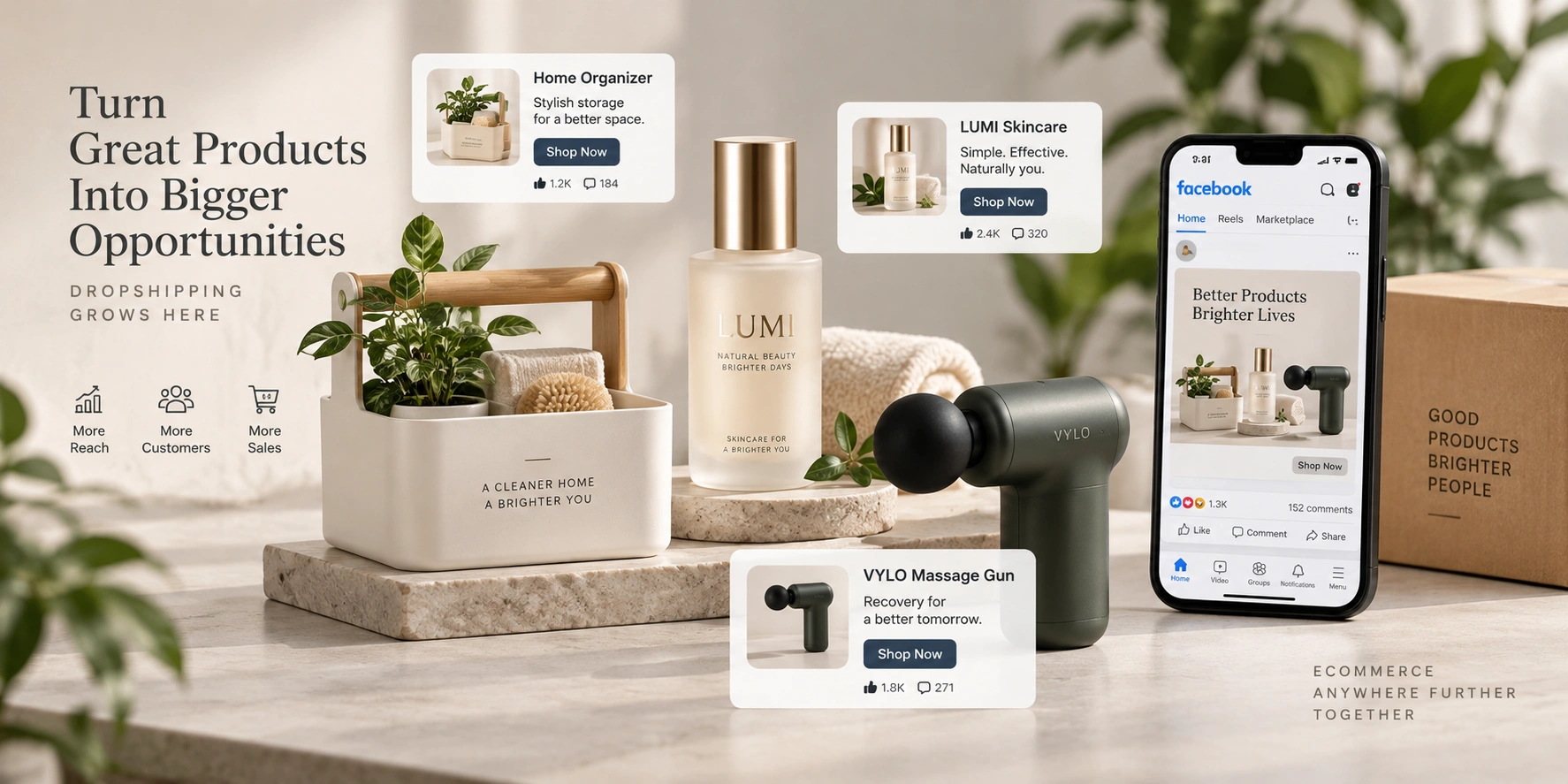
Facebook and Instagram provide access to a large audience, making them useful channels for promoting products to potential customers. Unlike waiting for organic traffic, paid advertising allows sellers to actively reach people who may be interested in their products.
Here are some reasons why dropshipping sellers use Facebook ads:
- Broad audience reach: Promote products to potential customers in different countries and markets.
- Interest-based targeting: Reach people based on selected interests, behaviors, and other available audience signals.
- Visual product promotion: Use videos, images, and carousels to demonstrate product features.
- Retargeting: Reconnect with visitors who viewed products or added items to their carts.
- Performance tracking: Measure clicks, purchases, and advertising costs to understand campaign results.
However, Facebook advertising also has challenges. Competition can increase advertising costs, and similar products may make it difficult to stand out. Poor product quality, slow shipping, and unclear product pages can also turn paid traffic into wasted spending.
Facebook ads can generate traffic, but they cannot fix a weak product or an unreliable shopping experience.
How to Set Up Facebook Ads for Your Dropshipping Store
Before launching your first campaign, prepare your advertising account, tracking tools, and online store.
Create a Meta Business Portfolio and Ad Account
Start by creating a Meta Business Portfolio and connecting your Facebook Page. Then create or add an advertising account and set up a valid payment method.
Keep your business assets organized and make sure you have the necessary permissions to manage your Page, ad account, and tracking tools.
Connect Your Shopify Store to Meta Pixel
Meta Pixel helps track actions visitors take on your website, such as viewing products, adding items to their carts, and completing purchases.
For a Shopify store, use the official Facebook & Instagram sales channel to connect the relevant Meta assets. Where appropriate, configure the Conversions API alongside the Pixel to help share website events with Meta.
Check that important events, especially Purchase, are recorded correctly. Accurate event tracking helps Meta measure customer actions and optimize campaigns. For a dropshipping store focused on website sales, choose the Sales campaign objective and select the appropriate website conversion location and purchase event when available. Use Traffic when your main goal is website visits rather than purchases. [1]
Prepare Your Store Before Launching Ads
Your store should be ready to convert visitors before you spend money on advertising.
Check that:
- Product descriptions explain the main benefits and specifications.
- Product images clearly show what customers will receive.
- Prices and shipping costs are easy to understand.
- Shipping, refund, and contact information are available.
- The checkout process works properly on mobile devices.
A well-prepared product page gives visitors a clearer reason to buy after clicking your ad.
How to Choose the Right Products for Facebook Ads
Not every dropshipping product is suitable for paid advertising. Products with clear benefits, visible demonstrations, and enough profit margin are generally easier to promote and evaluate through Facebook ads.
Look for Products With Clear Selling Points
Products with visible benefits are often easier to demonstrate in Facebook ads.
Look for products that:
- Solve a common problem.
- Have practical or visually interesting features.
- Appeal to a recognizable customer group.
- Can be demonstrated through short videos.
- Offer enough margin after product and shipping costs.
For example, a home organization product can use a short before-and-after video to show its practical value. This gives potential buyers a quick visual reason to consider the product.
Analyze Product Demand and Competitors
Research the market before investing in advertising.
Use the Meta Ad Library to review competitors' active advertisements, including their messaging, creative formats, and product presentation. This can help you generate ideas, but an active ad does not necessarily mean the campaign is profitable. [2]
You can also use Google Trends to compare search interest and identify potential seasonal demand.
When evaluating dropshipping suppliers, pay attention to product consistency, sourcing costs, and their ability to handle orders reliably.
Calculate Product Profit Margins Before Advertising
Before running Facebook ads, calculate your product's contribution margin after variable costs. Consider:
- Product sourcing and shipping costs
- Payment processing fees
- Expected refunds and replacements
- Other order-related expenses
For example, if a product sells for $40, with $15 in product and shipping costs and $5 in other variable costs, $20 remains to cover advertising and profit.
This gives you a starting point for setting a realistic target CPA.
How to Target the Right Audience With Facebook Ads
Choosing the right products is only one part of building a successful campaign. Store owners also need to understand different dropshipping advertising strategies to match their marketing approach with their budget, products, and target audience.
Define Your Ideal Customer Profile
Before creating an audience, think about who would actually buy your product.
Consider:
- Age range and location.
- Interests and lifestyle.
- Shopping habits.
- Problems the product can solve.
- Reasons someone might choose your product over alternatives.
For example, if you sell kitchen organization products, you might start by testing audiences interested in home organization, cooking, or home improvement.
Treat these audiences as starting points, then use campaign data to refine your targeting.
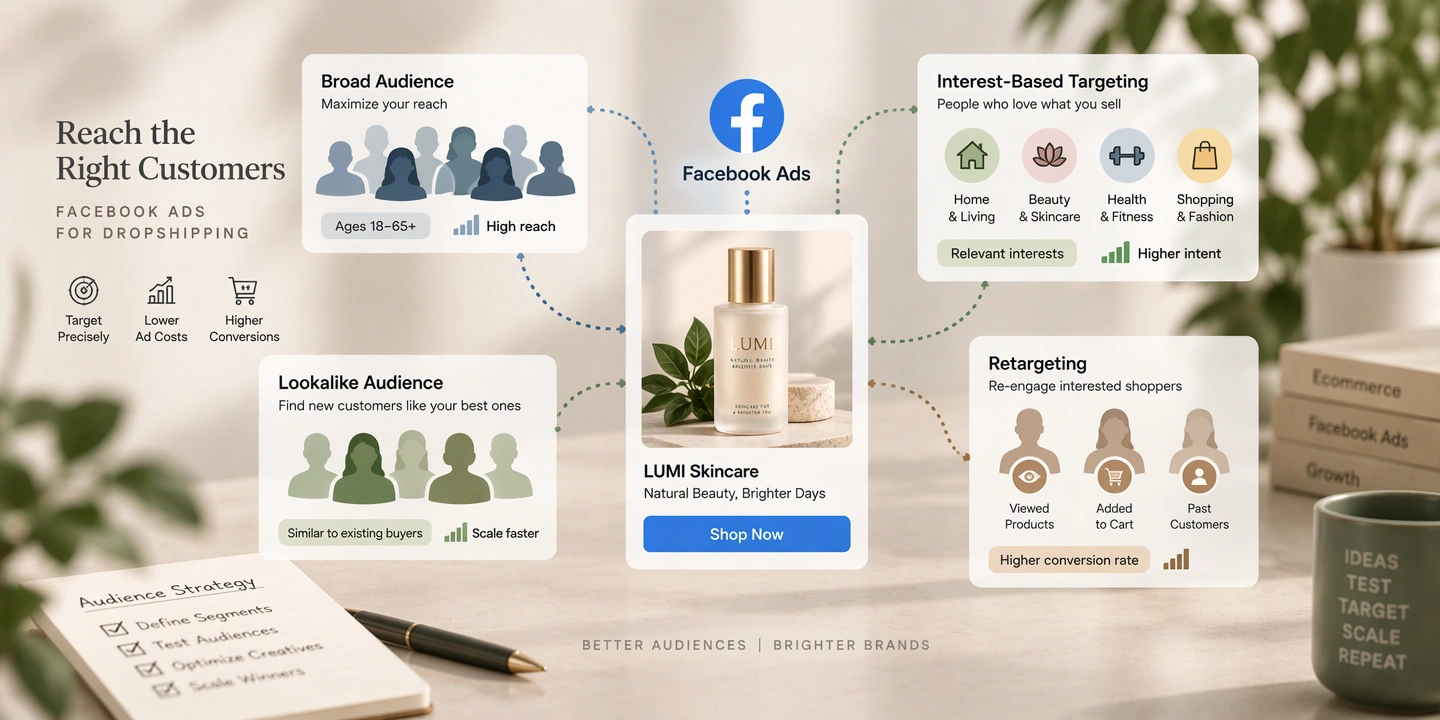
Broad Targeting vs. Interest-Based Targeting
Two common approaches are broad targeting and interest-based targeting.
Neither method is always better. Broad targeting may work well when Meta has enough useful signals, while interest-based targeting can help you test initial customer assumptions.
Start with a manageable structure and compare actual results instead of creating too many audience groups.
Use Retargeting to Reach Interested Shoppers
Not everyone purchases during their first visit. Some visitors need more time to compare products or consider the price.
You can create retargeting audiences based on available website activity, such as:
- People who viewed product pages.
- Visitors who added products to their carts.
- People who started checkout.
- Previous customers who may be interested in related products.
Show these audiences relevant product information, customer feedback, or an appropriate offer. Make sure your tracking and audience settings follow applicable privacy requirements.
How to Create High-Converting Facebook Ads for Dropshipping
Effective Facebook ad creatives for dropshipping should quickly show what a product does and why potential customers might want it. Focus on clear benefits rather than simply displaying the product.
Choose the Right Facebook Ad Format
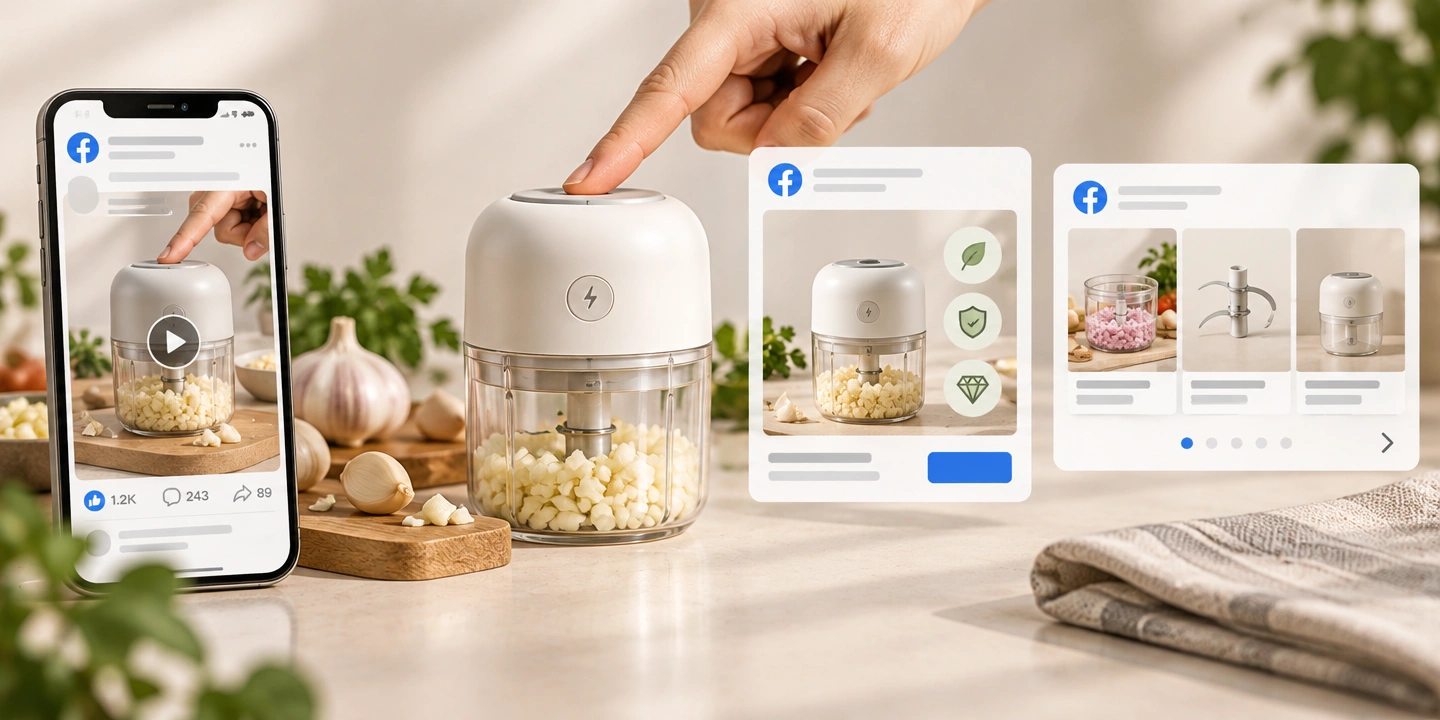
Different formats help communicate different product features.
Beginners can start with short product demonstration videos and clear images, then compare their results to identify the most effective format.
Follow a Simple Facebook Ad Creative Structure
A simple product video can follow this structure:
- Hook: Capture attention in the first few seconds.
- Problem: Show a situation customers can recognize.
- Product Demo: Demonstrate how the product works.
- Benefits: Explain its practical value.
- Social Proof: Include genuine customer feedback when available.
- CTA: Encourage viewers to visit your product page.
For example, a cleaning product video can show a common cleaning challenge, demonstrate the product, and finish with a clear call to action.
Write Facebook Ad Copy That Encourages Clicks
Good ad copy should be clear, specific, and easy to understand.
Focus on three elements:
- Primary Text: Introduce the customer problem and explain the product benefit.
- Headline: Highlight the main reason to consider the product.
- Call to Action: Tell customers what to do next.
Avoid exaggerated claims, fake reviews, and promises you cannot support. Your advertisement should accurately represent the product customers will receive.
How Much Should You Spend on Facebook Ads for Dropshipping?
There is no universal Facebook Ads budget for dropshipping. Your spending should depend on product margins, available funds, and how much data you need to evaluate campaign performance.
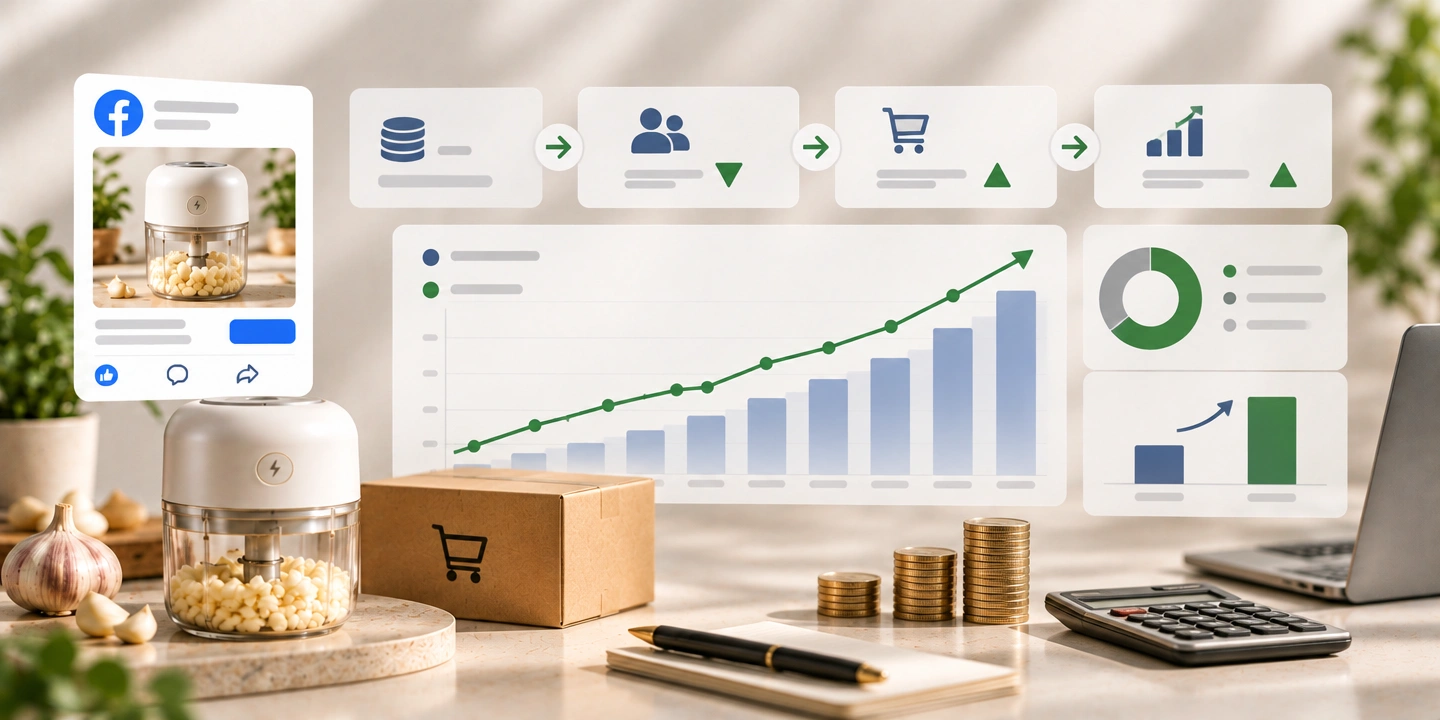
Set a Realistic Facebook Ads Testing Budget
Start with an affordable testing budget and keep your campaign structure simple.
- Focus on one product or a small group of related products.
- Test a few different ad creatives.
- Avoid spreading a limited budget across too many ad sets.
- Set clear conditions for reviewing or pausing campaigns.
Do not increase spending based on clicks alone. Look for meaningful actions and purchases before making further investments.
Understand CPA, ROAS, and Break-Even ROAS
Three important metrics help you understand whether your advertising is financially sustainable.
Consider a product with the following costs:
- Selling price: $40
- Product and shipping costs: $15
- Other variable costs: $5
- Contribution before advertising: $20
Break-Even ROAS = Selling Price ÷ Contribution Before Advertising
$40 ÷ $20 = 2.0
This means the campaign needs to generate $2 in attributed revenue for every $1 spent on advertising to cover the costs included in this example.
A ROAS above 2.0 does not automatically mean the business is profitable. You should also account for fixed expenses, refunds, and any costs not included in the calculation.
How to Optimize and Scale Facebook Ads for Dropshipping
After launching your ads, monitor campaign performance regularly to spot opportunities and cut wasted spend.
Track the Most Important Facebook Ads Metrics
Monitor these metrics in Meta Ads Manager and your store analytics.
Analyze these metrics together. A high CTR but low purchase rate, for example, may indicate that your ad attracts attention but your product page or checkout needs improvement.
Identify and Fix Common Advertising Problems
Use campaign data to identify possible issues rather than changing everything at once.
When possible, make one meaningful change at a time. This makes it easier to understand which adjustment affects performance.
Scale Winning Facebook Ad Campaigns
Once a campaign generates consistent purchases at an acceptable CPA, increase its budget gradually. You can also test new creative angles, explore related audiences, and introduce suitable product variations.
Before scaling, check whether your margins and fulfillment operations can support the additional orders. Do not make decisions based on one successful day; look for repeatable results.
How to Manage Orders and Fulfillment as Your Facebook Ads Scale
Successful Facebook campaigns can increase order volume, but your suppliers and fulfillment process must keep pace. Poor product quality, stock shortages, or slow delivery can lead to complaints and refunds.
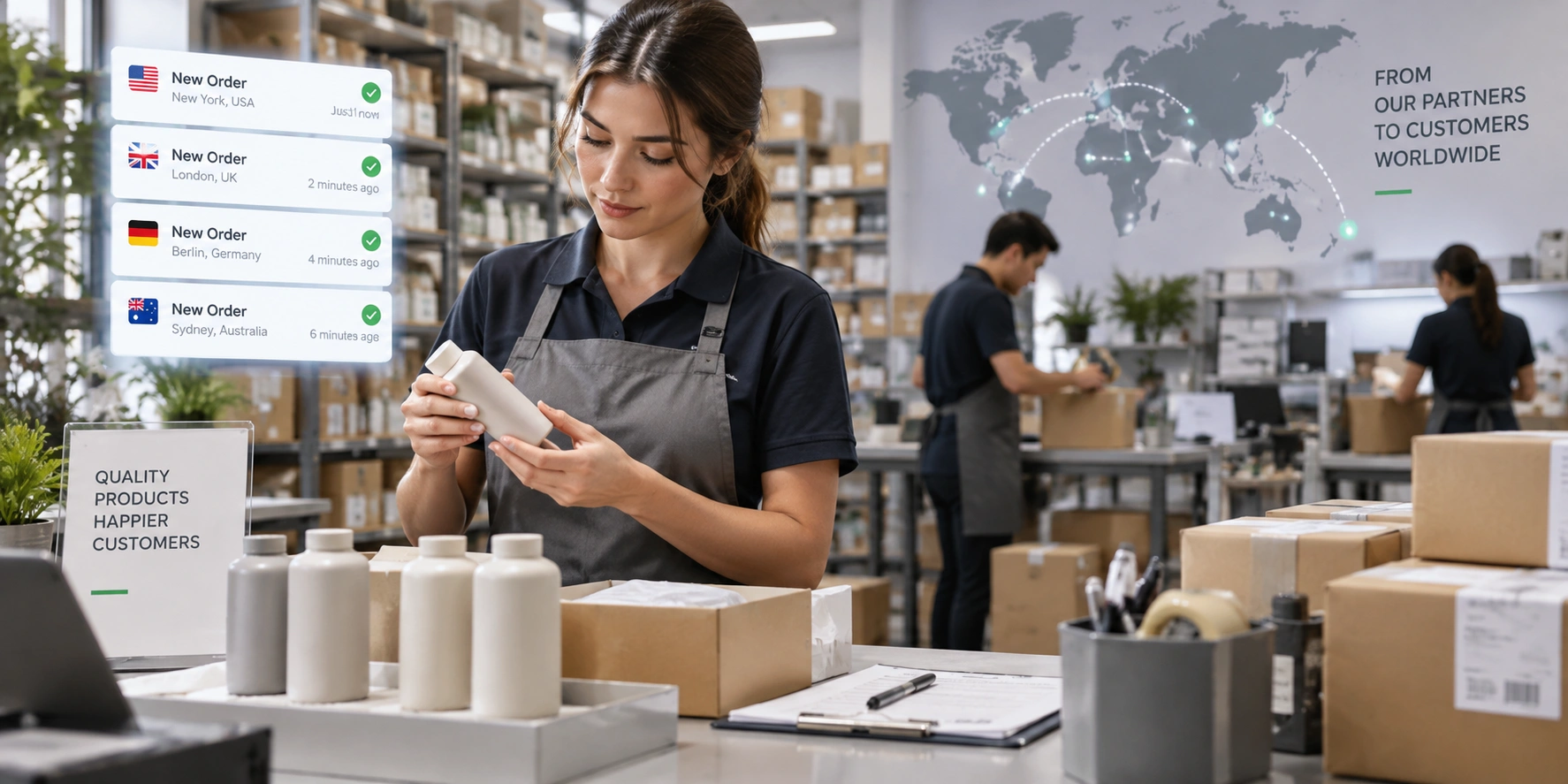
Why Fulfillment Matters After Your Ads Start Converting
Before increasing your ad budget, make sure your supply chain can support higher order volumes.
- Supplier reliability: Choose dependable suppliers with stable product availability.
- Product quality: Use proper product quality control inspections to identify defects before dispatch.
- Order processing: Ensure orders can be handled efficiently as sales increase.
- Delivery: Select suitable shipping methods for your target markets.
These factors affect customer satisfaction, refunds, and the profit generated by your campaigns.
Streamline Product Sourcing and Order Fulfillment
Managing suppliers, inspections, and shipping separately can become difficult as your store grows. TeemDrop connects product sourcing, store integration, quality inspection, and dropshipping fulfillment in one platform.
With TeemDrop, sellers can:
- Source products from 1688 and Taobao.
- Use AI-assisted product research and supplier matching.
- Arrange product inspections before shipment.
- Connect supported Shopify stores and synchronize eligible orders.
- Manage order processing and international shipping.
TeemDrop's sourcing network also provides access to more than 10,000 factories and manufacturers, helping sellers coordinate their supply chain as order volume increases.
FAQs
1. Are Facebook Ads good for dropshipping?
Yes. Facebook Ads help dropshipping sellers reach potential buyers, demonstrate products, and generate store traffic. However, campaign performance depends on product demand, advertising costs, conversion rates, and fulfillment reliability.
2. How do I run Facebook Ads for dropshipping?
Create a Meta advertising account, connect your Shopify store to the Meta Pixel, and select a product with sufficient profit margin. Then choose a relevant audience, launch your campaign with a manageable budget, and optimize it using purchase and conversion data.
3. How much should I spend on Facebook Ads for dropshipping?
Your budget depends on product margins, target CPA, and available funds. Start with an affordable testing budget and increase spending only when campaign data shows consistent sales at an acceptable acquisition cost.
4. What type of Facebook ads work best for dropshipping?
Video ads work well for product demonstrations, image ads highlight key features, and carousel ads show multiple product variations. Test different formats to find what works best for your product and audience.
5. How do I calculate ROAS for dropshipping Facebook ads?
Divide attributed advertising revenue by total ad spend. For example, $300 in attributed revenue from $100 in advertising spend gives you a ROAS of 3.0. Remember that ROAS does not include all business expenses, so compare it with your actual costs and profit.
6. Why are my Facebook Ads not generating sales?
Facebook Ads may fail to generate sales because of weak product demand, ineffective creatives, incorrect audience targeting, or a poor product page. High prices and unclear shipping information can also discourage purchases. Review your campaign data and store conversion funnel to identify where potential customers drop off.
Conclusion
Facebook Ads can help dropshipping sellers attract potential customers and increase sales, but long-term results depend on more than advertising performance.
Choose products with healthy margins, test different creatives, and optimize campaigns using CPA and ROAS. As your sales grow, reliable sourcing and fulfillment become equally important. TeemDrop helps connect these operations so you can focus on growing your store.
References
[1] Meta for Developers – Pixel and Conversions API Onboarding
https://developers.facebook.com/docs/facebook-business-extension/fbe/get-started/pixel-capi-onboarding/
[2] Meta – Ad Library
https://www.facebook.com/ads/library/
[3] Meta for Developers – Fire Pixel Events
https://developers.facebook.com/docs/facebook-business-extension/fbe/guides/pixel-events